Pickleball was invented to create a simple, social game families could enjoy together.
If you have ever wondered why was pickleball invented, you are in the right place. I’ve coached new players, studied the sport’s history, and watched it spread across parks and driveways. In this friendly deep dive, I will explain why was pickleball invented, how smart design choices made it work, and why the original idea still drives its explosive growth today. Stick with me, and you’ll see the full story and lessons you can use on court.
The short origin story: Bainbridge Island, 1965
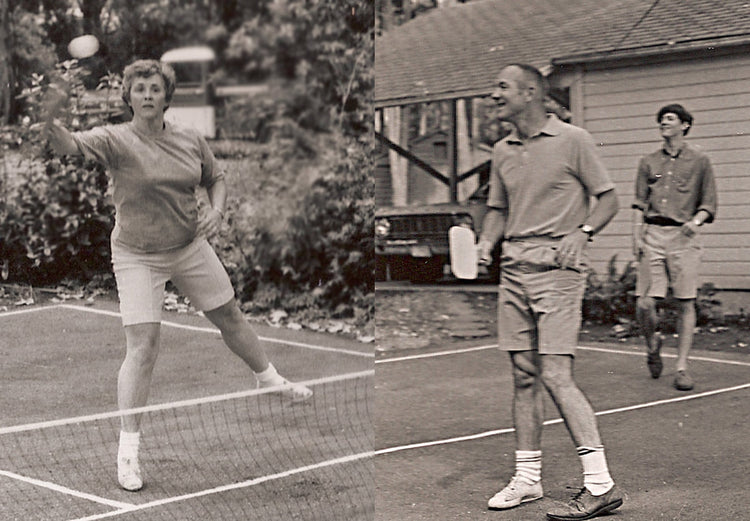
In the summer of 1965, three dads—Joel Pritchard, Bill Bell, and Barney McCallum—looked for an easy game to entertain their families on Bainbridge Island, Washington. A badminton net stood in the yard, but they lacked the shuttlecocks and racquets. So they grabbed a perforated plastic ball and made paddles from plywood. They lowered the net, drew lines, and wrote simple rules that blended tennis, badminton, and ping-pong.
They did not set out to build a sport empire. They wanted a game anyone could learn in minutes. That is the core answer to why was pickleball invented. It was about access, joy, and family time, not trophies or tech.
The real problem it solved
Ask any PE teacher or park director and you’ll hear the same pain points. Mixed ages. Limited space. Tight budgets. Different skill levels. The founders tackled all of that in one go. Why was pickleball invented? To solve a daily, practical problem: get people moving together without complex gear or steep learning curves.
Here is what the game solved from day one:
- Low barrier to entry. A paddle, a plastic ball, a small court.
- Easy to learn. Simple rules. Short rallies. Quick wins.
- Safe and gentle. A light ball and short court reduce strain.
- Social by design. Doubles play and close spacing drive connection.
- Flexible spaces. A driveway, a gym floor, or a painted tennis court works.
When people ask why was pickleball invented, the best short answer is this: to make shared play possible when time, space, and skills do not match.

Why these design choices made it work
Every part of the setup points back to why was pickleball invented. The founders picked what worked, fast.
Equipment
- Perforated plastic ball. Slows the game, lowers impact, and keeps rallies longer.
- Solid paddles. Cheap to make, easy to control, durable in any weather.
- Court size. About one third of a tennis court, so more games fit in less space.
Rules
- Underhand serve. Lowers the skill gap and helps new players get the ball in.
- Double bounce rule. One bounce per side after the serve keeps play fair.
- Non-volley zone. The kitchen stops net-dominant play and reduces injuries.
These choices answered why was pickleball invented in a very practical way. They created instant play without years of practice. They also made it fun for kids, parents, and grandparents at the same time.
Where the name “pickleball” came from
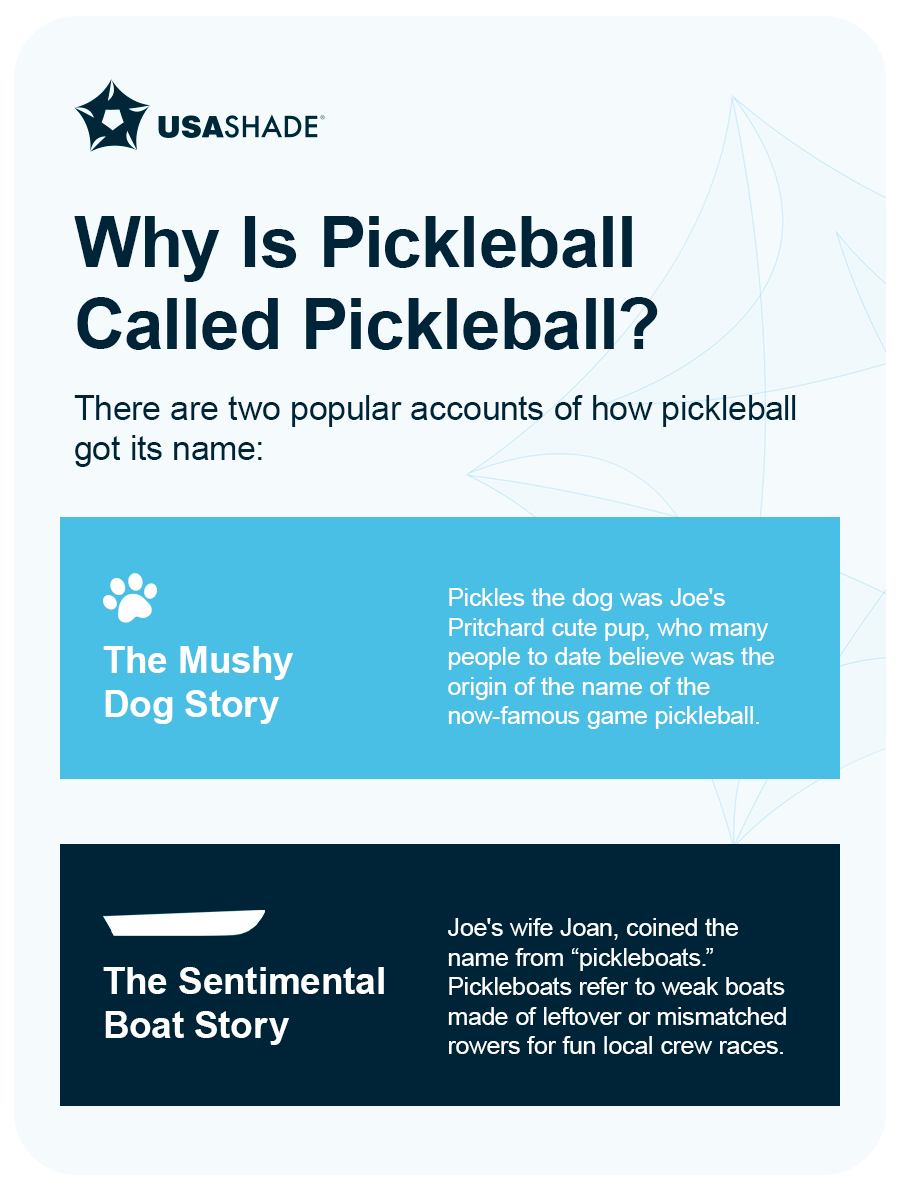
Two stories explain the name, and both have strong roots. One says the Pritchards’ dog, Pickles, chased the ball and “pickle’s ball” became pickleball. The other says it came from “pickle boat,” the rowing term for a mixed crew, which fits a sport made from mixed rules.
Historical notes suggest the dog arrived after the game. Family accounts support the pickle boat idea. The sport’s archives preserve both stories. When people ask why was pickleball invented and why it has that name, the best answer is simple. It was a backyard blend, and the playful name matched the playful spirit.

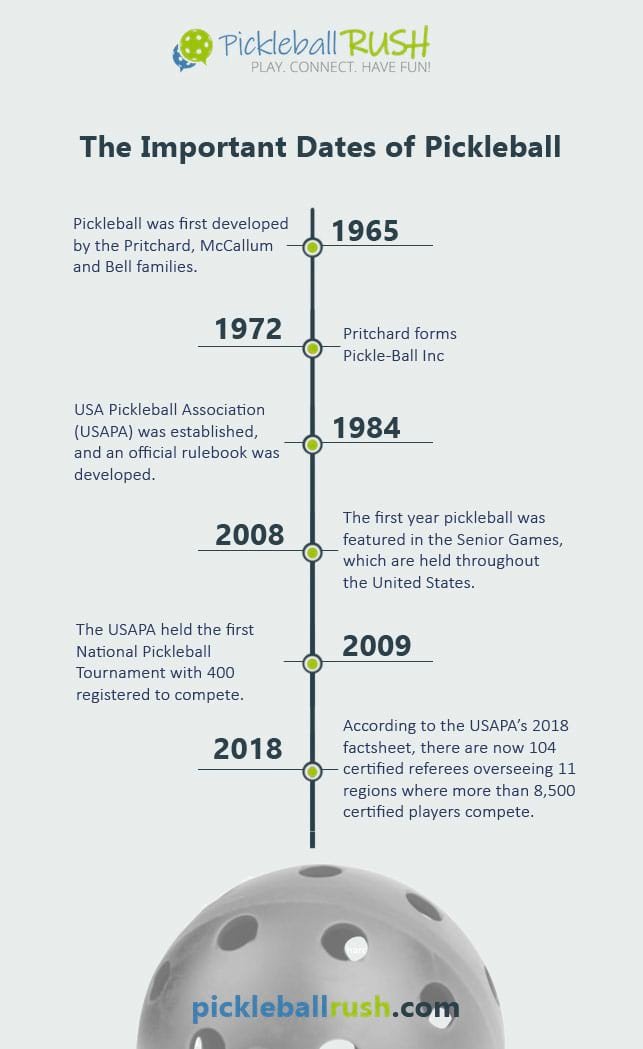
From backyard to national pastime: key milestones
The game spread neighbor to neighbor, park to park, then state to state. Volunteers built courts, clubs, and rulebooks. Media noticed the easy entry and the fun vibe. Here are landmarks often cited in the sport’s history:
- Late 1960s–1970s. First permanent courts appear around Seattle; early local tournaments run.
-
- One of the first known formal tournaments is held in Tukwila, Washington.
- 1980s. A national rules body forms, setting standard rules and organizing play.
- 2000s. Sunbelt communities adopt the game; seniors spread it nationwide.
- 2010s–2020s. Parks, schools, and brands scale up; industry data shows triple-digit growth.
This steady growth supports the core idea behind why was pickleball invented. People want easy, social play that fits modern life.

Why the invention still matters today
Why was pickleball invented is more than a history note. It explains today’s boom. Open-air play mattered during lockdowns. Small courts let parks serve more players per hour. Quick learning keeps friends engaged on day one. Light impact welcomes new and older athletes.
Modern surveys show strong year-over-year growth, with millions of active players. Corporate leagues, school programs, and city grants echo the founders’ first goal. We still need games that bring people together, fast. That is why was pickleball invented, and why it wins now.
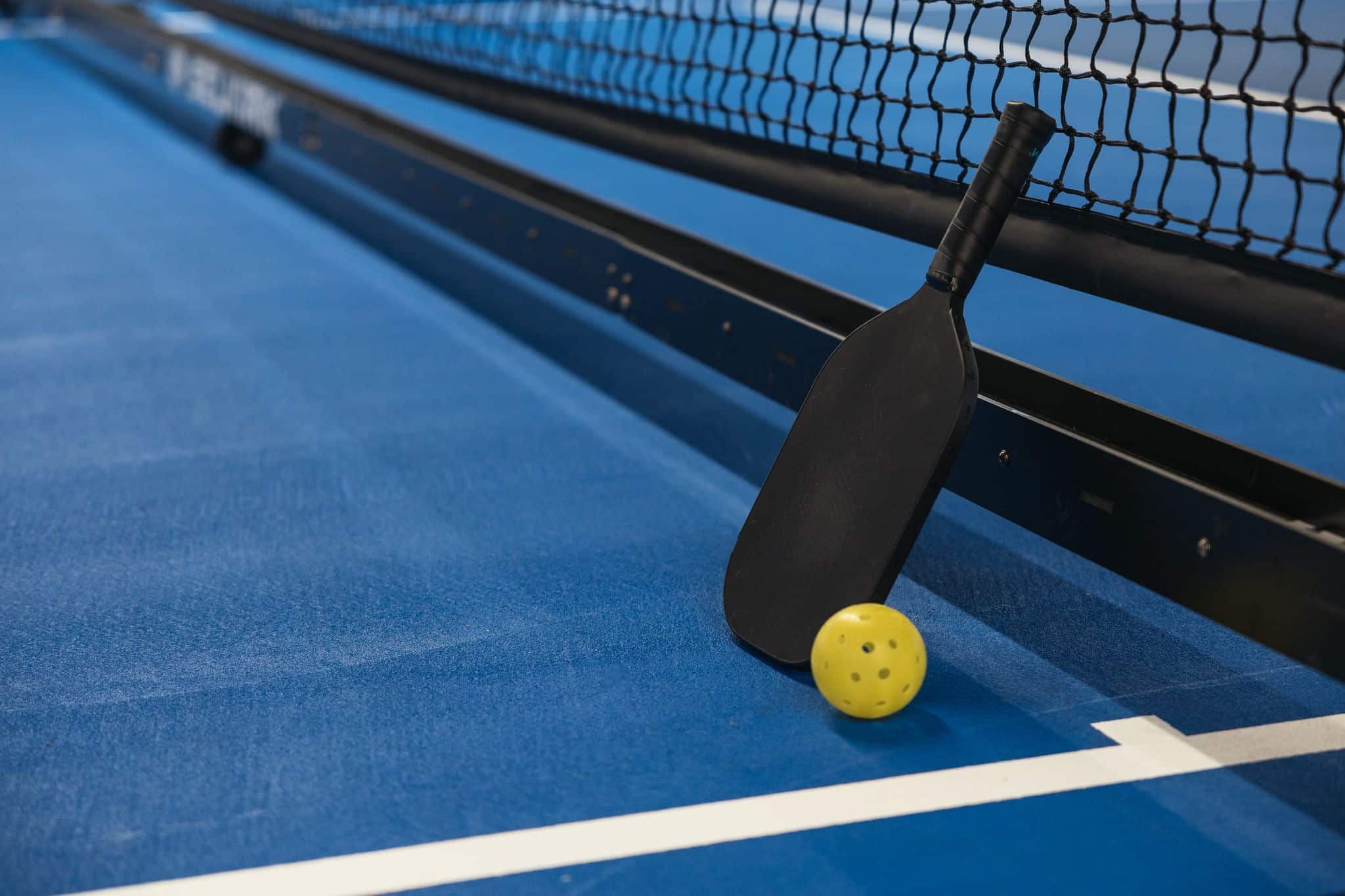
What I’ve learned teaching new players
I run intro sessions at a local rec center. I always start with the story of why was pickleball invented. It sets the tone. People relax when they hear it began as a backyard fix for a rainy day. They stop worrying about “doing it right” and start playing.
Here are tips I share, drawn from that origin:
- Keep it simple. Use a light ball and a loaner paddle. Save gear talk for later.
- Start with dinks. Soft shots help players find feel and control.
- Use the kitchen early. It teaches footwork and safe spacing.
- Celebrate small wins. The first long rally is a big deal.
- Mix teams. Pair newer players with calm, patient partners.
These steps honor the reason why was pickleball invented. They make the game welcoming and fun from the first serve.

Frequently Asked Questions of why was pickleball invented
Who invented pickleball and when?
Three friends—Joel Pritchard, Bill Bell, and Barney McCallum—created it in 1965. They lived on Bainbridge Island in Washington.
Why was pickleball invented in the first place?
It was invented to give families an easy, affordable game they could play together. The goal was simple fun, not elite sport.
Why is the court smaller than a tennis court?
A smaller court fits more places and needs less running. It keeps rallies longer and reduces the risk of injury.
How did the rules answer why was pickleball invented?
Underhand serves and the double bounce rule lower the skill gap. The kitchen reduces unsafe net rushes and keeps play fair.
Did a dog named Pickles inspire the name?
Some say yes, others point to the “pickle boat” term from rowing. Both stories are part of the sport’s lore.
Why was pickleball invented instead of just playing tennis or badminton?
They lacked the right gear that day and wanted a game anyone could start fast. Mixing elements solved the problem with what they had.
Why has pickleball grown so fast lately?
It is easy to learn, social, and low impact. Public courts, simple gear, and media buzz amplify the effect.
Conclusion
The heart of this sport is clear. It began as a friendly fix: a small-court, light-ball game that anyone could enjoy right away. That is the lasting answer to why was pickleball invented, and it still guides every great session on court today. Grab a paddle, invite a friend, and try a short rally. If this guide helped, subscribe for more beginner tips, gear guides, and smart practice ideas.