An Ernie is a sideline volley around the kitchen to attack dinks.
If you’ve wondered what is an ernie in pickleball and how it works in real games, you’re in the right place. I’ve coached players through this shot for years, and I’ll show you how to use it with control and confidence. Read on to get a full guide to what is an ernie in pickleball, from rules to footwork, drills, and smart match play.

What Is an Ernie in Pickleball?
An Ernie (often spelled Erne, after pro Erne Perry) is a volley taken near the kitchen by moving outside the sideline to cut off a crosscourt dink or soft shot. You strike the ball out of the air while you are set beside the non-volley zone, not inside it. The goal is to take time away and angle a sharp put-away.
Many players search what is an ernie in pickleball because the name sounds odd. Think of it as a surprise sideline ambush. You leave the court, slide beside the kitchen, and volley the ball before it bounces.
Key points that define an Ernie:
- You contact the ball while outside the kitchen and its lines.
- You often start near the NVZ line, then step or jump beside the sideline.
- You angle the volley down and away, often into open space.

Why Players Use the Ernie
The Ernie punishes lazy crosscourt dinks. It also forces your rivals to lift the ball or change patterns. When done well, it leads to free points.
Here is why what is an ernie in pickleball matters for strategy:
- Time pressure. Your opponent sees a blur and has no time to reset.
- Sharp angles. You can find the open court fast.
- Pattern break. It stops endless dink rallies and tilts momentum.
From my match logs, a clean Ernie swings a rally more than any other kitchen play. It sends a message: do not float dinks to the sideline.
Rules That Make an Ernie Legal
Before you try it, know the rules. The USA Pickleball rulebook is clear on non-volley zone play and volleys.
Legal checks for what is an ernie in pickleball:
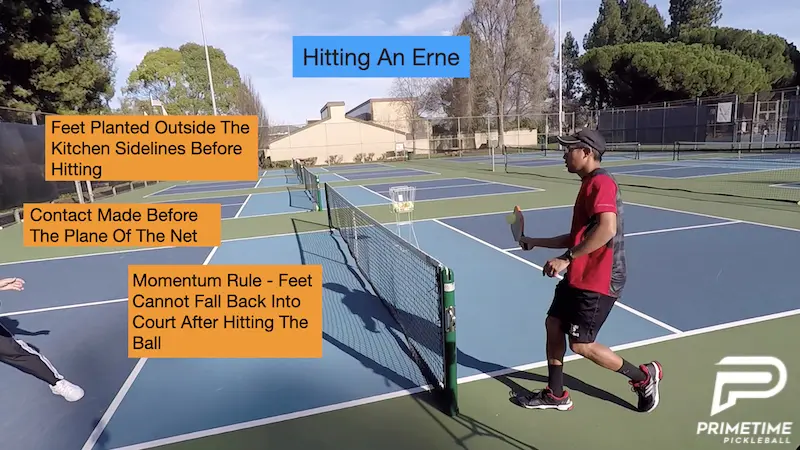
- You may stand outside the court to hit. That is legal.
- For a volley, you cannot touch the kitchen or its lines with your feet or anything you wear. This holds until your momentum stops.
- You may jump over the corner of the kitchen. Do not touch the NVZ during the volley or due to momentum.
- Your paddle may cross the net after contact as a follow-through. You cannot hit the ball before it crosses the net plane to your side.
- Net and post contact is a fault. Do not touch them.
When in doubt, think “contact outside the NVZ, no touch of the line, and let the ball cross the net plane first.”

Step-by-Step: How to Execute an Ernie
Learning what is an ernie in pickleball starts with clean footwork and timing. Use this simple plan.
Read the setup
- Watch for crosscourt dinks that drift near the sideline.
- Look for a predictable pattern over two or three shots.
- Check that your partner is balanced and ready.
Move to position
- Take a small split step as your rival hits.
- Slide outside the sideline, beside the kitchen.
- Keep your shoulders square and paddle up.
Take the volley
- Step through with your outside foot for reach.
- Strike out in front with a short punch.
- Aim sharp crosscourt or to the middle gap.
Recover fast
- Land and reset your stance.
- Step back into the court if the ball comes back.
- Keep the rally pattern in mind for the next play.
Coaching cue: Quiet feet, loud paddle. Small steps, short swing.
Common Mistakes and How to Fix Them
I see the same errors when players first learn what is an ernie in pickleball. Use these fixes to level up fast.
Mistake: Touching the NVZ line during the volley.
- Fix: Start wider. Think “outside foot on the paint outside the court.”
Mistake: Swinging too big.
- Fix: Compact punch. Elbow in. Meet the ball, do not chase it.
Mistake: Moving too early and getting burned down the line.
- Fix: Hide your move. Time it as the opponent starts the dink swing.
Mistake: Hitting flat into the net.
- Fix: Keep the paddle face firm and aim a foot above the net tape.
Advanced Ernie Variations
Once you trust your base move, try these options. They keep rivals guessing and solve what is an ernie in pickleball in more ways.
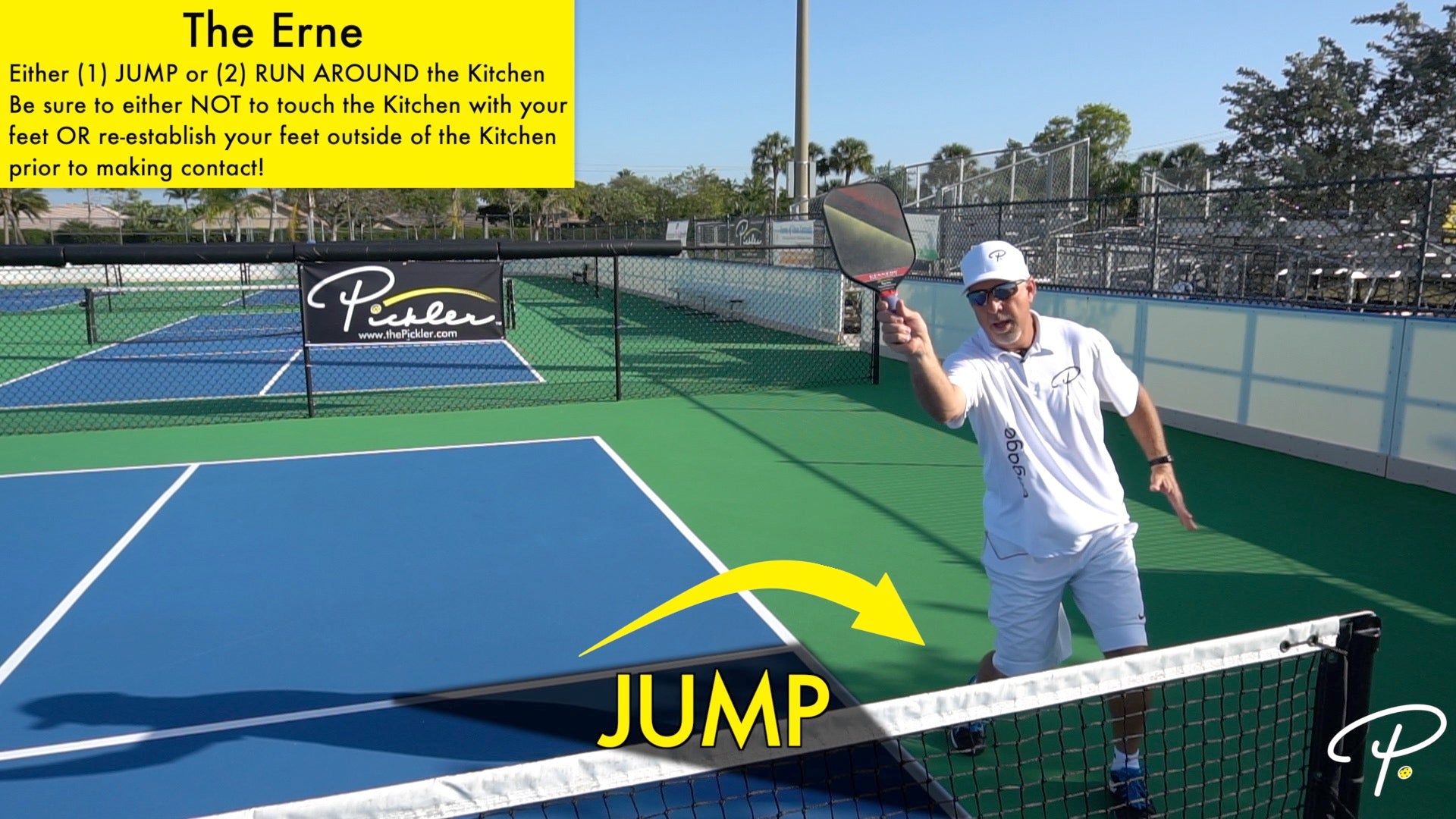
Jump Ernie
- Take off outside the court.
- Contact in the air.
- Land outside the NVZ with control.
Backhand Ernie
- Use a stable wrist and a short push.
- Great when the ball gets on you fast.
Fake-to-Ernie
- Show early like you will poach.
- Stop and hold your ground to draw an error.
Use the right tool for the right ball. Do not force it.

Drills to Practice the Ernie
To master what is an ernie in pickleball, drill like you play. Keep reps short and sharp.
Cone lane drill
- Place two cones outside the sideline beside the kitchen.
- Shuffle through the lane, stop, and shadow volley.
- Add a fed ball once your feet feel smooth.
Pattern feed
- Partner feeds three crosscourt dinks.
- You Ernie on the third ball.
- Reset and switch roles.
Live read drill
- Play crosscourt dinks only.
- You can Ernie any ball that drifts too wide.
- Track clean contacts in sets of ten.
Goal cues:
- Head still at contact.
- Paddle up on the move.
- One step, then strike.
Safety, Court Awareness, and Etiquette
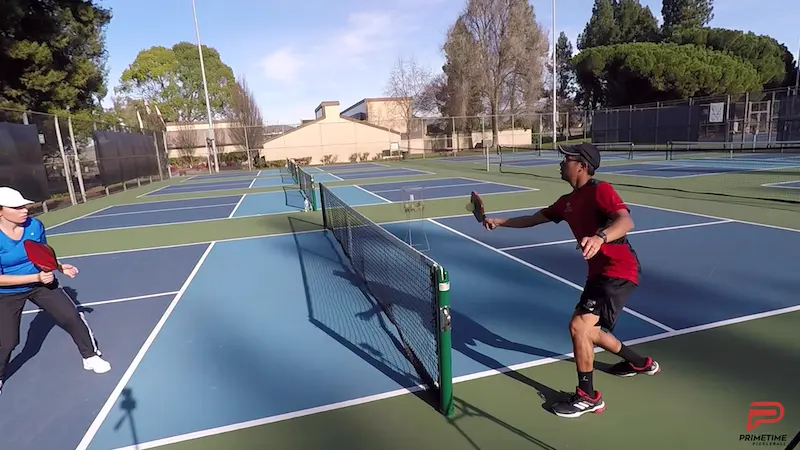
An Ernie happens fast near the net. Keep it safe and fair.
Safety checks:
- Call “yours” or “mine” with your partner before you move.
- Keep eyes on the net post and the edge of the court.
- Do not dive or reach across the net.
Etiquette:
- No feet in the kitchen on a volley.
- Give space after contact; avoid body contact at the net.
- If unsure, replay the point in rec play.
These habits build trust and help others learn what is an ernie in pickleball without fear.

Equipment Tips for Better Ernies
Gear will not replace skill, but it helps.
What to look for:
- Paddle shape. An elongated face gives reach at the sideline.
- Swing weight. A midweight paddle adds pop with control on short swings.
- Grip size. A firm hold without squeeze lets you punch clean.
I switched to a midweight thermoformed paddle last season. My sweet spot on Ernie punches grew, and mishits dropped. Small changes add up when you explore what is an ernie in pickleball at speed.
Strategy: When to Use, When to Hold Back
Smart timing wins more than raw speed. Make the Ernie a threat, not a habit.
Use it when:
- The rival floats dinks wide and soft.
- Your partner can cover the middle.
- You see a tell in their swing path.
Skip it when:
- The ball is low and dipping at your feet.
- Your team is off-balance.
- The opponent loves lobs and fakes.
A good rule for what is an ernie in pickleball: if you cannot reach with a short punch, wait. Patience beats hero shots.
Frequently Asked Questions of what is an ernie in pickleball
Is it spelled Ernie or Erne?
Both appear, but Erne is common in rule and coaching talk. It comes from player Erne Perry.
Can I touch the kitchen line on an Ernie?
Not on a volley. Touching the NVZ line or surface during or after the volley due to momentum is a fault.
Do I have to jump to do an Ernie?
No. Many Ernies use a simple sidestep outside the sideline. Jumping is optional and riskier.
How do I know when to try an Ernie?
Watch for wide, slow crosscourt dinks that drift near the sideline. If you can reach with a short punch, go.
Is an Ernie legal if I stand out of bounds?
Yes. You can stand outside the court to hit the ball. Make sure you do not touch the NVZ on a volley.
What is the best target for an Ernie volley?
Aim sharp crosscourt to the open lane or at the backhand hip. Keep it low and fast.
How does an Ernie compare to an ATP?
An ATP goes around the post off a ball that traveled wide. An Ernie is a volley interception near the sideline before the bounce.
Conclusion
Now you know what is an ernie in pickleball, why it works, and how to use it with clean footwork, safe spacing, and smart timing. Start with patterns you can read. Add a short punch, then build to jump and backhand options. Track your wins and misses so you learn faster.
Pick one drill today and log ten clean Ernies by the weekend. Share your results, ask questions, and keep exploring what is an ernie in pickleball in your own play. If this helped, subscribe for more simple, game-ready tips.