A dink is a soft, controlled shot that lands in the opponent’s kitchen.
If you’ve ever wondered what is a dink in pickleball, you’re in the right place. I’ve taught hundreds of new players how to build rallies, control pace, and win with dinks. This guide breaks down technique, strategy, drills, and common mistakes, so you can master the dink fast and play smarter at every level.

Understanding the dink
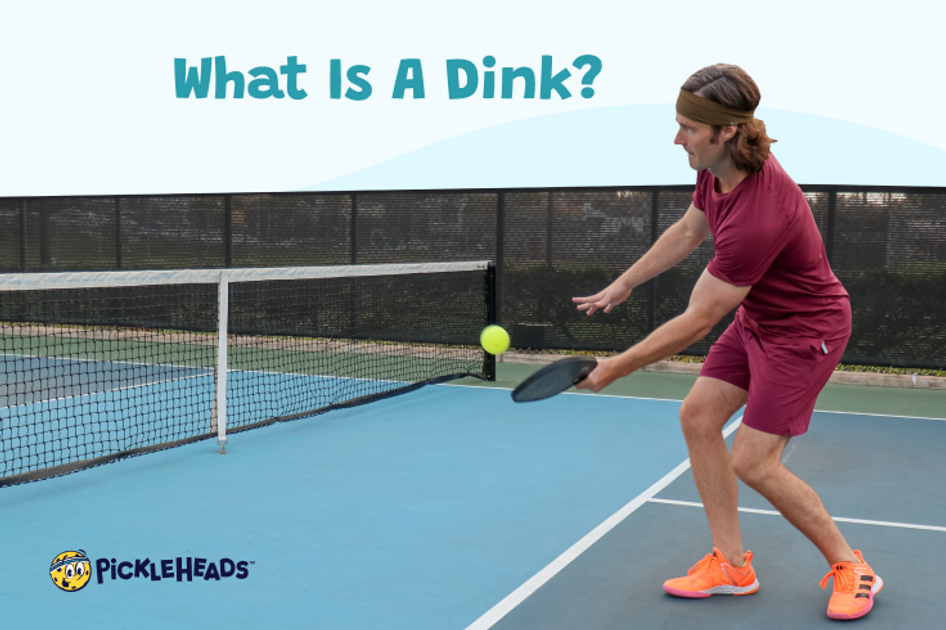
A dink is a gentle shot hit from near the non-volley zone line (the kitchen). It arcs over the net and lands short in your opponent’s kitchen. It forces a low contact on their next shot. The goal is control, not speed.
Think of it as chess with a paddle. You trade short, soft shots to draw a pop-up. Then you attack. When people ask what is a dink in pickleball, I say it is the game’s pressure valve. It slows the rally, resets chaos, and creates openings.
Key traits of a good dink:
- Soft swing and relaxed grip for touch and feel
- Arc that clears the net by a few inches
- Ball lands close to the net, often near the sideline
- Target is the opponent’s feet or backhand
In doubles, dinking is a core skill. Many points are won only after a patient dink exchange. If you still ask what is a dink in pickleball, it is the rally tool that sets up winners, not the winner itself.
Why the dink matters
The dink changes the pace. It turns a firefight into a plan. It helps you move from defense to neutral to attack without forcing a risky swing.
How the dink wins points:
- It forces awkward contact. Low balls are hard to attack.
- It draws errors. Players clip the net or pop the ball up.
- It targets weak zones. Backhands and feet are tough to handle.
- It sets patterns. You can bait an attack and counter it.
At higher levels, players use what is a dink in pickleball to manage space and time. They win by building pressure with inch-perfect placements.
How to hit a proper dink
Follow these steps for clean, repeatable dinks. If you need a simple answer to what is a dink in pickleball technique, this is it.
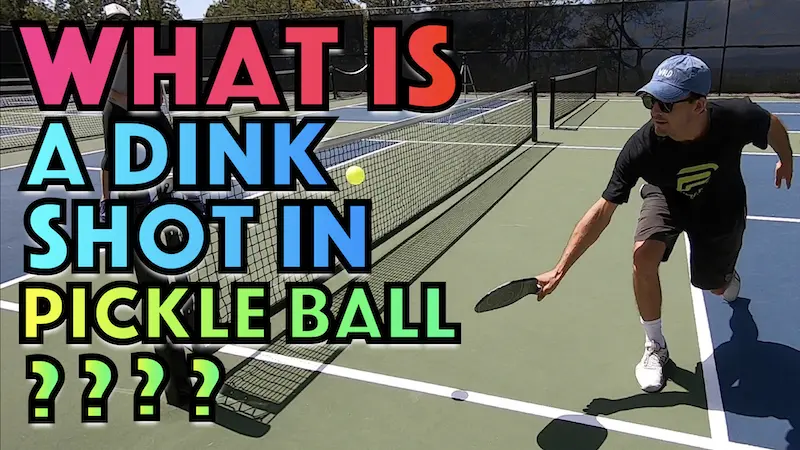
- Start stance: Feet shoulder-width. Knees soft. Chest over toes.
- Grip: Continental or slight eastern. Hold light, like a handshake.
- Paddle path: Short and smooth. Lift from legs, not the wrist.
- Contact point: In front of your body. Low to high, just a few inches.
- Paddle face: Open a bit to add lift. Do not carve too much.
- Target: Crosscourt first. You have a longer distance and lower net.
- Margin: Clear the net by a safe two to six inches.
- Recovery: Paddle up. Reset your feet. Expect the ball back.
Pro tip: Think of tossing an egg over the net. That is what is a dink in pickleball feel. Soft hands. No cracks.
Footwork that makes dinks easy
- Split step as your opponent hits.
- Sidestep, do not cross your feet.
- Stay near the kitchen line. Bend from your hips, not your back.
- Get behind the ball. Meet it in front. No reaching if you can help it.
Targets to use
- Crosscourt sideline to stretch the opponent
- Middle seam to cause confusion in doubles
- Short to the backhand to set up a pop-up

Common mistakes and quick fixes
If you are still working out what is a dink in pickleball, these fixes help fast.
- Hitting too hard: Soften your grip. Count “one-two” and slow the swing.
- Leaving the ball high: Lower your contact point. Aim for net tape plus a fist.
- Flicking the wrist: Lock the wrist. Use your legs to lift the ball.
- Reaching and poking: Move your feet. Meet the ball early and out front.
- Playing only straight dinks: Mix crosscourt to gain margin and angles.
- Standing tall: Bend your knees. Keep your head steady through contact.
Drills to master the dink
You can build touch fast with simple, short sets. When players ask what is a dink in pickleball training plan, I share these.
Solo wall drills (5 minutes):
- One bounce, soft lift to a tape line on the wall
- 50 reps forehand, 50 reps backhand
- Focus on quiet hands and a low contact point
Partner kitchen dinks (8 minutes):
- Crosscourt only, then straight on
- Add a target cone two feet from the net
- Play to 21 clean dinks without a miss, then switch sides
Pattern drills (7 minutes):
- Three crosscourt dinks, one middle. Repeat.
- Add a surprise speed-up on ball five. Partner counter or reset.
Constraints for touch:
- Only net tape height or lower
- Only land inside the first three feet of the kitchen
- One foot must touch the ground at contact to avoid jumping swings
Variations and when to use them
Learning what is a dink in pickleball also means knowing which version to play and when.
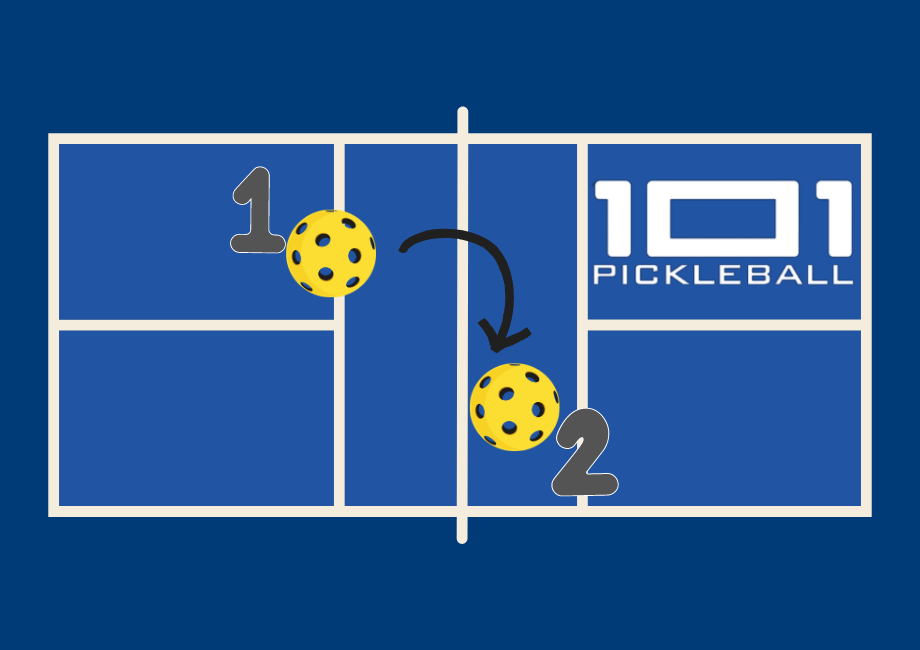
- Crosscourt dink: Best margin and angle. Use it as your default rally ball.
- Straight dink: Use for quick changes and to jam the opponent’s body.
- Volley dink: Take it early out of the air. Reduce their time. Keep it soft.
- Roll dink (topspin): Add a small brush to roll to their backhand. Use to bait a pop-up.
- Push dink (deep kitchen): Land near the kitchen line to pin feet and stop attacks.
- Dink lob: Rare but deadly. Lift over a crowding opponent who leans in.

Dinking strategy for doubles and singles
Once you grasp what is a dink in pickleball, plug it into smart plans.
Doubles patterns:
- Crosscourt build: Work crosscourt, then change down the line at the right time.
- Middle squeeze: Dink to the seam to force misreads.
- Two-on-one: Target the weaker dinker until a pop-up comes.
Singles tweaks:
- Use the dink to pull the opponent off the court.
- Dink short, then pass to the open court.
- Blend dinks with deep resets to break rhythm.
Pressure moments:
- Freeze at the line. Do not drift back.
- Play two safe dinks after each error. Regain feel.
- Attack only when the ball sits above net height.

Rules and etiquette around the kitchen
To play and teach what is a dink in pickleball well, know the rules that shape it.
Key rules that matter:
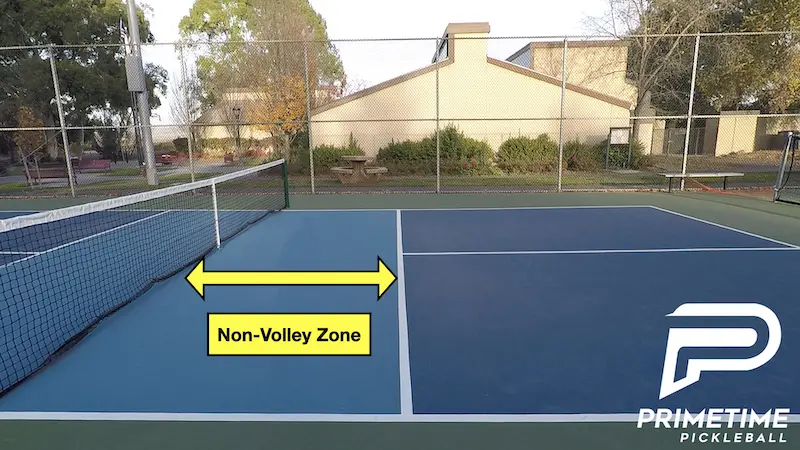
- You cannot volley while touching the non-volley zone or its line.
- Stepping into the kitchen to hit a ball off the bounce is legal.
- Serve and return must bounce. After that, you can volley if you are not in the kitchen.
- If momentum carries you into the kitchen after a volley, it is a fault.
Etiquette tips:
- Call balls honestly. When in doubt, it is in.
- Keep the pace friendly in rec play. Announce score loud and clear.
- Avoid crowding the net if your momentum is wild. Safety first.
Gear that helps your dinks
Gear will not replace reps, but it can help touch.
- Paddle core: A softer polymer core gives more dwell time and feel.
- Paddle face: Raw carbon or textured surfaces help with spin control.
- Weight: 7.8–8.4 oz is a sweet spot for many. Add lead tape at 3 and 9 for stability.
- Balls: Outdoor balls are firmer and faster. Indoor balls are softer and slower.
- Shoes: Court shoes with good grip let you stop and start near the line.
If you wonder what is a dink in pickleball gear choice, it is about feel. Choose tools that calm the ball, not launch it.
A quick 15-minute practice plan
Use this short routine three times a week. It locks in touch and footwork.
- Minutes 0–3: Shadow swings at the kitchen. Focus on a short path and quiet wrist.
- Minutes 3–7: Crosscourt dinks to a target. Aim net tape plus a fist.
- Minutes 7–10: Straight dinks with a depth cone three feet from the net.
- Minutes 10–13: Add one surprise speed-up each rally. Partner resets with a soft block.
- Minutes 13–15: Game to five, dinks only. Winner by two.
Track progress:
- Count consecutive clean dinks
- Note misses: long, wide, or into net
- Adjust targets and pace next time
Lessons from my own matches
When I first learned what is a dink in pickleball, I overhit. I tried to win with every ball. My coach made me play entire games where every attack had to follow three straight dinks. It was hard. It also changed my game.
Personal takeaways:
- Soft hands come from soft legs. Bend more. Grip less.
- Crosscourt is a friend on tough days. The angle and lower net save you.
- The best attack is the one you wait for. Let the ball rise above net height.
- A missed dink is often footwork, not touch. Move first. Swing second.
One day, I faced a power player. I aimed every third dink to his backhand foot. He popped two balls. I finished both at shoulder height. That day taught me that patient patterns beat raw force.
Frequently Asked Questions
What is a dink in pickleball, in simple terms?
A dink is a soft shot that lands in the opponent’s kitchen. It keeps the ball low and sets up mistakes.
Is a dink the same as a drop shot?
Not quite. A third-shot drop travels farther from the baseline. A dink is a short, soft shot near the kitchen during a rally.
Can I volley a dink?
Yes, as long as you are not touching the kitchen or its line. Many players use volley dinks to take time away.
Where should I aim my dinks?
Aim crosscourt first for safety and angle. Mix in middle seams and the backhand foot to create errors.
How do I add spin to a dink?
Use a mild brush with a stable wrist and small swing. Keep the arc, and do not trade control for spin.
Why do I pop dinks up?
Your contact is likely too high or late. Meet the ball earlier, bend more, and relax your grip.
What grip is best for dinking?
A continental grip works well for both sides. It supports touch, resets, and quick changes.
Conclusion
The best answer to what is a dink in pickleball is simple: it is your control shot. It slows the game, shapes rallies, and sets traps. Build a base with clean crosscourt dinks, then layer in depth, seams, and soft volleys. Small swings. Big gains.
Try the 15-minute plan this week and track your streaks. Want more tips and drills like this? Subscribe, share your biggest dink challenge, and I’ll help you solve it.