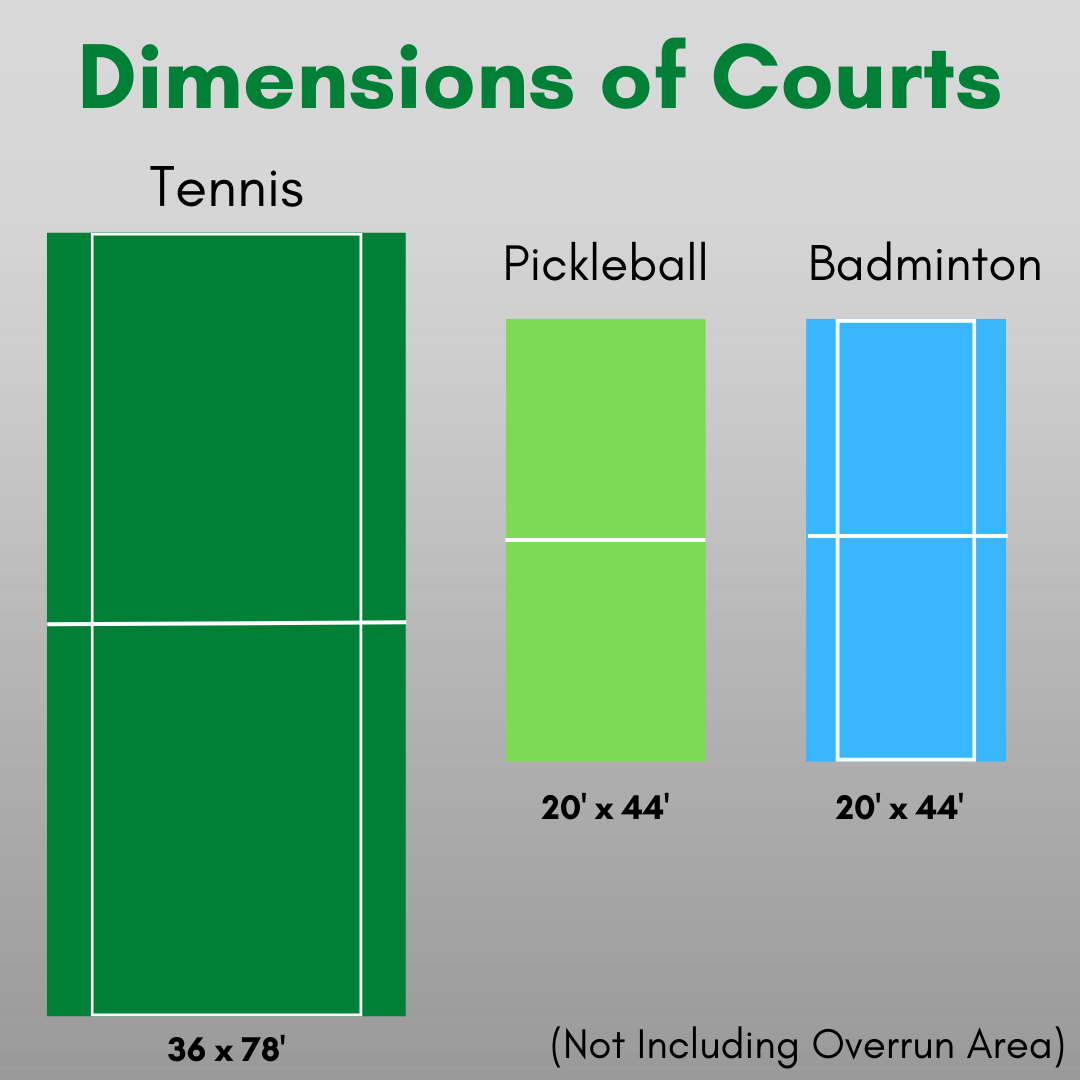
A pickleball court is a 20×44-foot rectangle split by a low center net.
If you wonder what does a pickle ball court look like, think neat lines, bold colors, and a no-volley “kitchen” near the net. I’ve built, painted, and played on many courts. This guide shows what does a pickle ball court look like, step by step, with clear tips you can trust.

Court dimensions at a glance
If you ask what does a pickle ball court look like in size, here is the core. The standard playing area is 20 feet wide by 44 feet long. That size does not change for singles or doubles. The court is split into two equal sides by a net at the center.
Courts sit inside a bigger safety zone. Recreational layouts use about 30 by 60 feet. Pros like about 34 by 64 feet. That extra space helps players chase lobs and avoid fences.
Important numbers most builders use are based on the official rulebook. These numbers match community and school standards. Keep them close when you design or shop.
Quick facts:
- Court size: 20 ft by 44 ft
- Non-volley zone depth: 7 ft from the net on each side
- Service box size: 10 ft wide by 15 ft deep
- Net height: 36 inches at sidelines, 34 inches at center
- Line width: 2 inches, usually white
If someone asks, what does a pickle ball court look like, start with these numbers. They define the game’s pace and feel.
Lines and zones explained
Lines tell you where to stand, serve, and attack. If you still wonder what does a pickle ball court look like, picture these clear zones.
- Baselines: They run along the back edge on each side. Serves start behind them.
- Sidelines: They run the long edges. Balls landing outside are out.
- Non-volley zone (the kitchen): A 7-foot strip on both sides of the net. You cannot volley while standing in it.
- NVZ line: The kitchen boundary line. It counts as part of the kitchen.
- Centerline: It runs from the kitchen line to the baseline. It splits each side into left and right service boxes.
- Service boxes: Two boxes on each side. You must serve crosscourt into the correct box.
All lines are 2 inches wide. They should contrast with the surface. White is most common. On shaded courts, off-white improves visibility.
Pro tip from my first stencil job: lay lines last and seal tape edges. Paint bleeds look messy. Good lines make the whole court look pro.
When people ask, what does a pickle ball court look like, the kitchen and those crisp boxes are what they remember.

Net height and equipment
The net is the heart of the court. It shapes pace and spin. A proper net makes play fair and fun.
- Height: 36 inches at the sidelines, 34 inches at the center
- Length: Spans the 20-foot width, with small side posts
- Tension: Tight but not drum-tight. A center strap is ideal.
- Portable nets: Great for driveways and gyms. Pick a sturdy frame.
Check net height often. I keep a simple stick marked at 34 and 36 inches. A sagging net changes shots and harms your serve groove.
If a friend asks what does a pickle ball court look like, tell them to look for that slight center dip. That is the giveaway of a correct pickleball setup.
Surfaces, colors, and textures
You have many surface options. Each choice changes speed, comfort, and cost.
Common surfaces:
- Asphalt with acrylic coatings: The popular outdoor choice. Durable and grippy.
- Concrete with acrylic coatings: Stable and long-lasting. Needs a vapor barrier in wet zones.
- Modular tiles: Snap-together pieces for quick builds. Softer on joints.
- Indoor wood or synthetic: Found in gyms. Use indoor balls.
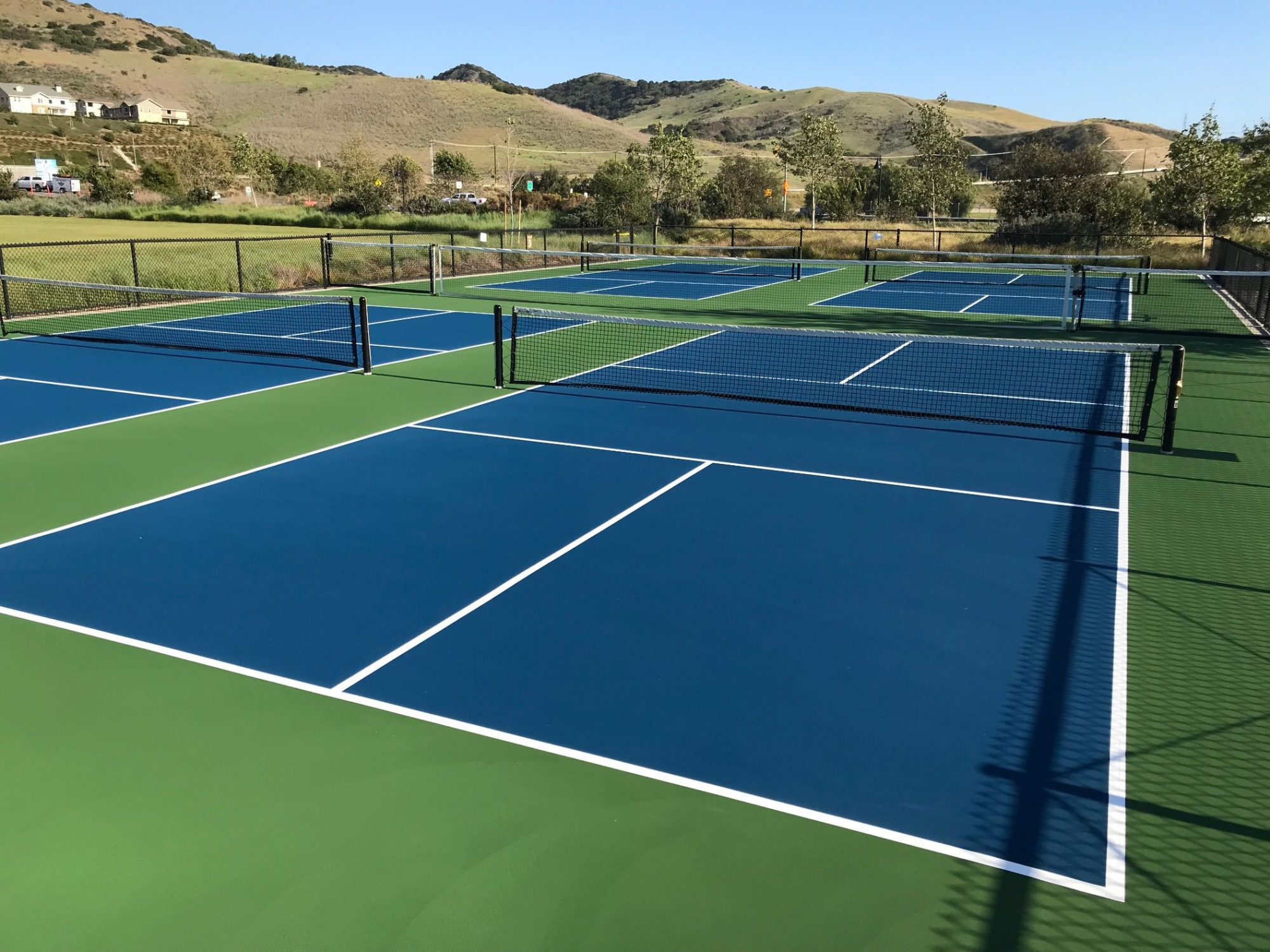
Color schemes often use two tones. One shade for the kitchen. Another for the service areas. Many parks use blue for play zones and green outside. High contrast helps you read lines in bright sun.
A light textured finish avoids slips and skids. I ask for a medium grit. Too smooth feels slick. Too rough eats balls and knees.
Curious what does a pickle ball court look like in color? Think clean two-tone blocks with sharp borders. It is simple and striking.

Space, fencing, and lighting
A court is more than paint. The space around it matters. It keeps play safe and smooth.
Perimeter space:
- Minimum overall area: 30 by 60 feet
- Ideal area: 34 by 64 feet
- Clear runouts: 5 to 7 feet behind each baseline, 3 to 5 feet on each sideline
Fencing:
- Height: 8 to 10 feet is common
- Coating: Black vinyl chain-link reduces glare
- Windscreens: Cut wind and noise a bit; also boost ball contrast
Lighting:
- Target level: About 30 to 50 foot-candles for rec play
- Pole height: Often 16 to 20 feet
- Color temperature: 4000–5000K for bright, neutral light
Court orientation:
- North–south helps reduce sun in players’ eyes
- Avoid strong uplights that cause glare on the ball
I learned the hard way that cramped runouts cause more trips and stops. Give your feet room. If someone asks what does a pickle ball court look like at night, say bright, even light and no harsh shadows over the kitchen.
Indoor vs outdoor courts
Indoor courts feel fast. Outdoor courts feel open. Both use the same lines and net rules.
Indoor:
- Surface: Wood, synthetic, or tiles
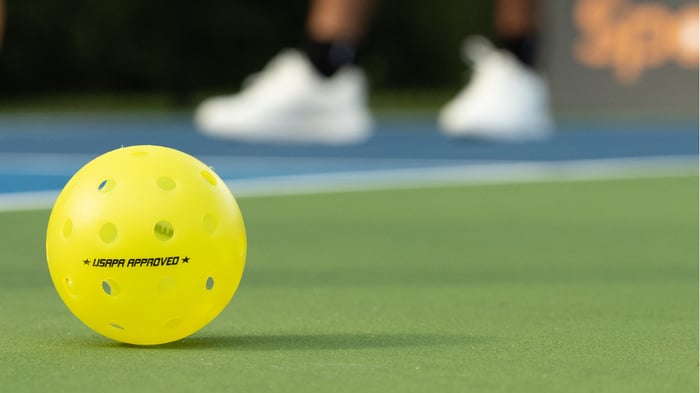
- Ball: Indoor balls have larger holes and softer bounce
- Pros: Weather-proof, less wind, steady lighting
- Watch-outs: Lines can glare under strong gym lights
Outdoor:
- Surface: Asphalt or concrete with acrylic
- Ball: Outdoor balls have smaller holes and are stiffer
- Pros: Fresh air, more space, more courts in parks
- Watch-outs: Sun, wind, heat, and noise
Wondering what does a pickle ball court look like indoors? Picture taped or painted lines on a gym floor with portable nets. Outdoors, think acrylic colors, fences, and wind screens.

Converting a tennis or badminton court
You can fit four pickleball courts on one tennis court. That is a smart way to serve lots of players.
Tennis conversion basics:
- Use portable nets and temporary lines at first
- Align two courts per side of the tennis net
- Keep at least 5 feet from fences where possible
- Add semi-permanent nets and posts once demand grows
Badminton conversion basics:
- Badminton courts are 20 feet wide by 44 feet long already
- Lower the net to pickleball height
- Add a 7-foot kitchen line on each side
Tip from my first park retrofit: use roll-on temporary lines to test sight lines and spacing. You will see traffic flow and noise. Then place permanent lines. If anyone asks what does a pickle ball court look like on a tennis court, the answer is a neat grid of two-tone rectangles tucked inside the big rectangle.
Common mistakes and pro tips
Small misses in layout can cause big headaches. Here is what to avoid and what to do.
Mistakes to avoid:
- Kitchen too shallow or too deep
- Net too high at center
- Lines too thin or low contrast
- No extra space behind baselines
- Poor drainage and puddles
Pro tips:
- Slope the surface about 1 percent for drainage
- Use UV-stable coatings in sunny areas
- Add benches, shade, and water nearby
- Install acoustic panels if neighbors are close
- Keep a net height stick in your gear bag
From my first court paint job, I learned to double mask edges. From my second, I learned to add shade. People stay longer when they can rest. If a neighbor asks what does a pickle ball court look like done right, show them a dry, bright, and quiet space with room to breathe.

Budget, timeline, and maintenance basics
Costs vary with site, surface, and extras. A simple court is cheaper than a full complex.
Budget factors:
- Site prep: clearing, grading, drainage
- Base: asphalt or concrete thickness
- Coatings: number of color coats and grit level
- Fencing and lights: big cost drivers
- Accessories: nets, benches, windscreens, storage
Typical timelines:
- New outdoor court: several weeks to a few months
- Simple restripe: one to two days, plus cure time
Maintenance tips:
- Sweep and blow leaves weekly
- Wash with mild soap every few months
- Check net height each session
- Recoat acrylic every 4–7 years, depending on use
If someone asks what does a pickle ball court look like over time, say it should stay bright and even. Good care keeps bounce true and play safe.
Frequently Asked Questions of what does a pickle ball court look like
What are the official dimensions of a pickleball court?
A pickleball court is 20 feet wide and 44 feet long. The non-volley zone is 7 feet deep on each side.
How high is the net on a pickleball court?
The net is 36 inches high at the sidelines and 34 inches at the center. A center strap helps hold that lower point.
What is the kitchen, and why is it important?
The kitchen is the non-volley zone next to the net. You cannot volley while in it, which balances power and touch.
Can I fit a pickleball court in my driveway?
Many driveways can fit a short-term court with tape and a portable net. Check for a flat 20 by 44-foot space and safe clearances.
What colors work best for court surfaces?
Use high-contrast colors like blue and green with white lines. Two-tone layouts help players read the kitchen and service boxes fast.
How much space do I need around the court?
Plan for at least 30 by 60 feet overall. More space, like 34 by 64, feels safer and plays better.
How many pickleball courts fit on a tennis court?
You can fit four standard pickleball courts on one tennis court. Use portable nets and add lines with tape or paint.
Conclusion
Now you can picture every part of the layout, from the kitchen to the net. You know what does a pickle ball court look like in size, color, and space. You also know how to set one up indoors or outside.
Take this guide to your park, gym, or driveway. Mark lines, set a proper net, and invite friends to play. Want more guides and local build tips? Subscribe, ask a question, or share your court plans in the comments.