
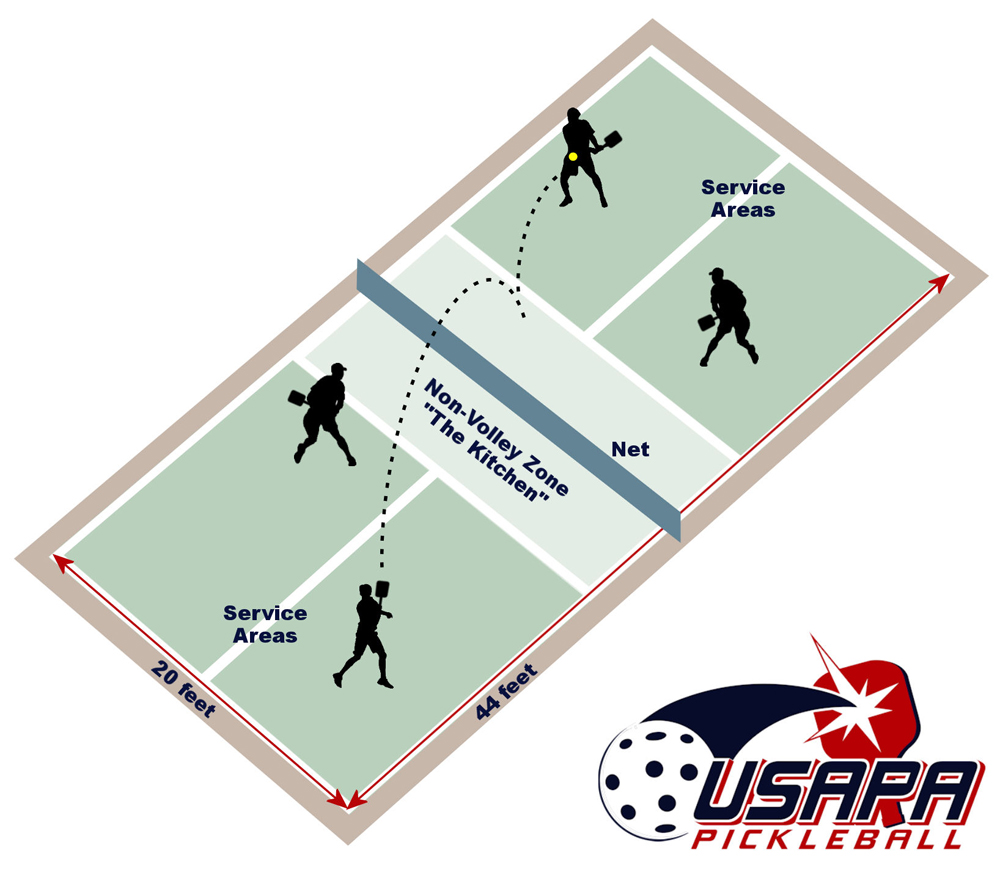
The kitchen pickleball is the non-volley zone by the net.
If you want better control, smarter shots, and more wins, master the kitchen. I’ve coached many players on the kitchen pickleball strategy, from day-one beginners to medal chasers. In this guide, I’ll break down rules, tactics, and drills in clear steps. You’ll learn how to use the kitchen to slow the game, attack smart, and defend with calm.

What Is the Kitchen in Pickleball?
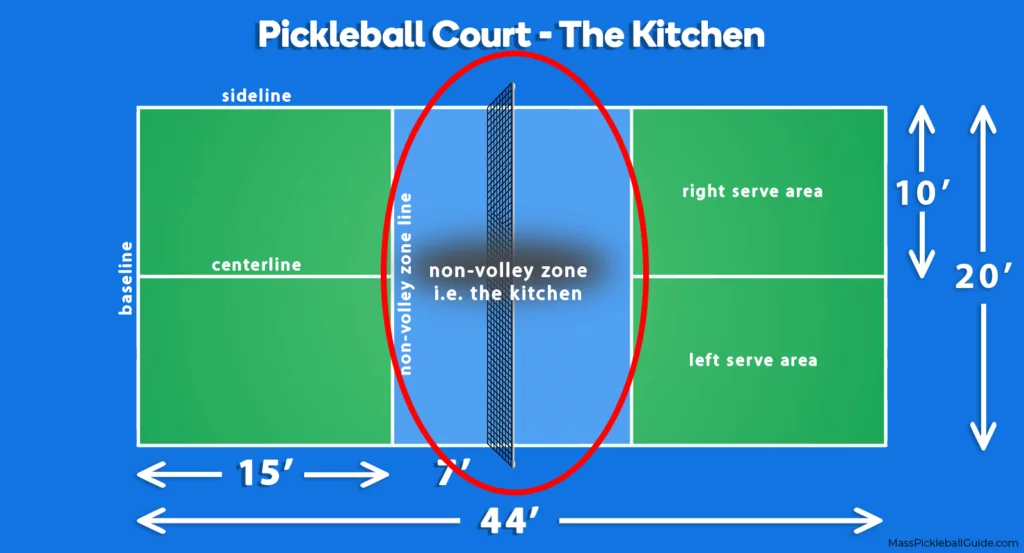
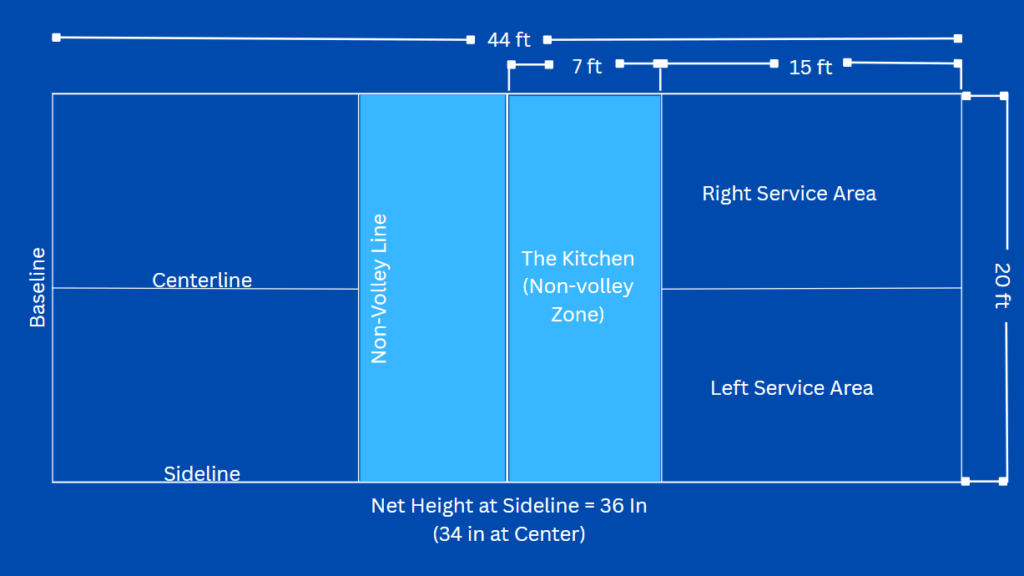
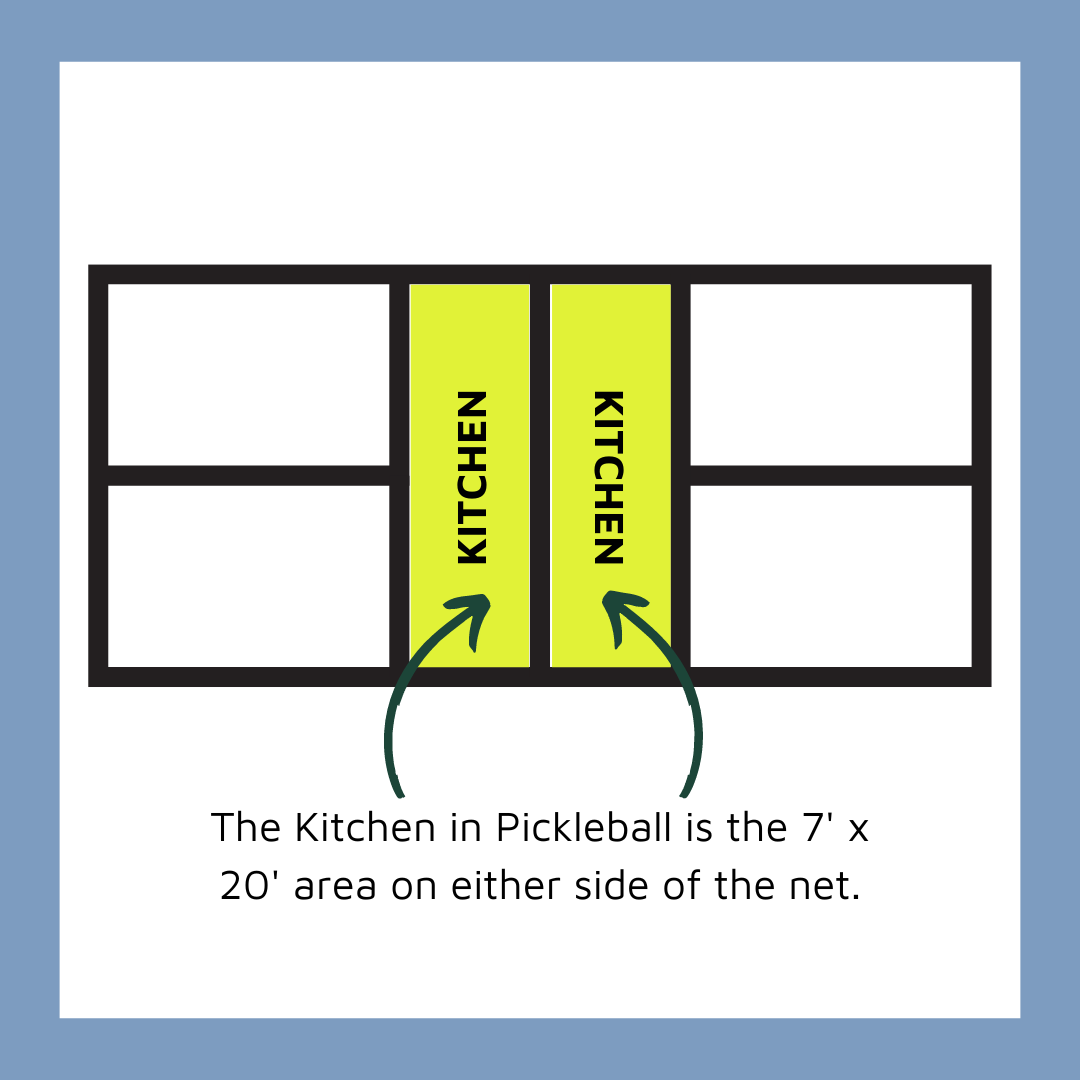
The kitchen is the non-volley zone. It runs seven feet from the net on both sides of the court. The line is part of the kitchen. If you touch that line, you are in the zone.
The core rule is simple. You cannot volley while in the kitchen. A volley is a shot hit in the air, before the bounce. This rule is what makes the game fair and fun.
Here is why it matters. The kitchen kills cheap smashes at the net. It forces soft play, angles, and patience. When you master the kitchen pickleball, you control pace and space. That wins points.

The Official Rules of the Kitchen (NVZ)
These are the key rules for the kitchen pickleball, using language aligned with the USA rulebook.
- You cannot volley while any part of your body touches the kitchen or its line.
- Momentum counts. If you volley and then your body or paddle falls into the kitchen, it is a fault.
- You can step into the kitchen any time after the ball bounces.
- The serve must land beyond the kitchen line. The kitchen and line are out on serves.
- You can jump over the kitchen after a volley. But you must not land in the kitchen.
- A paddle drop or hat drop into the kitchen after a volley is also a fault.
Two quick examples:
- If you volley with toes behind the line, then your cap falls into the kitchen, that is a fault.
- If the ball bounces in the kitchen and spins back toward the net, you may reach over the net to hit it. You must not touch the net or the opponent’s court.
Why the Kitchen Matters
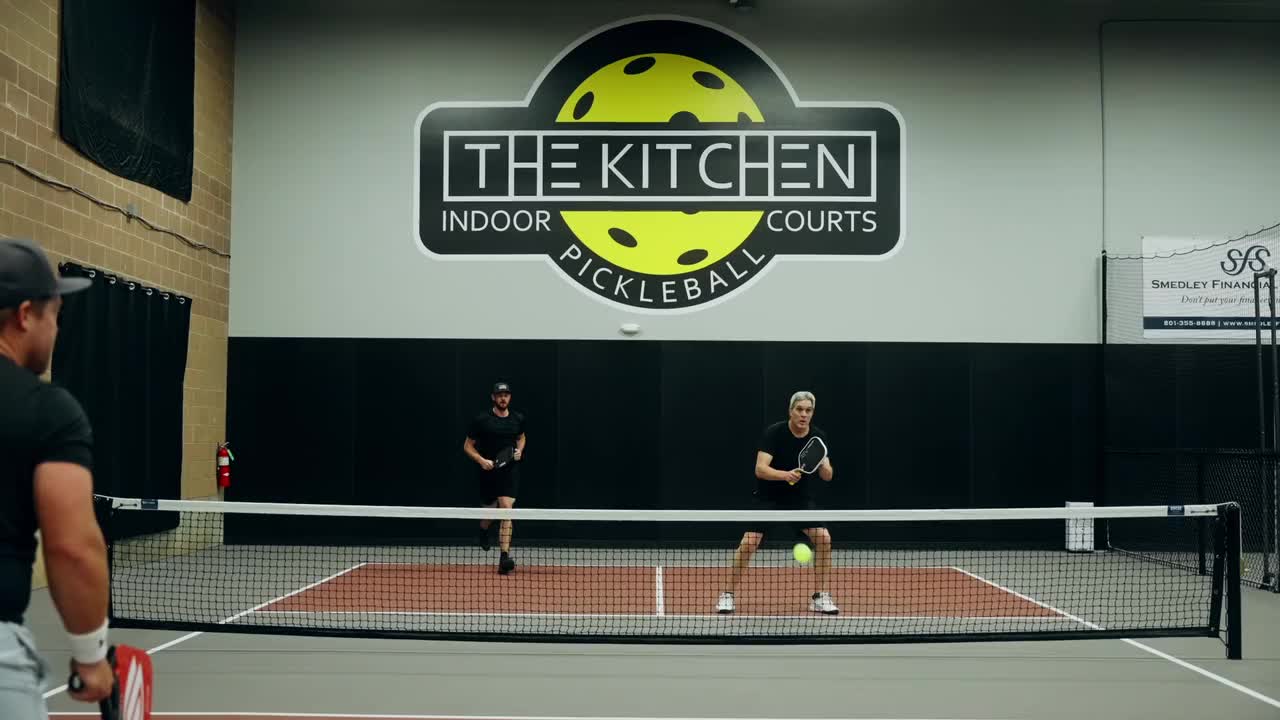
The kitchen shrinks time for the hitter. It also shrinks angles. When both teams are at the line, the ball travels a short path. This creates fast hands and soft hands battles.
Winning teams use the kitchen to slow the game on defense. Then they look for a pop-up to attack. The kitchen pickleball turns raw power into a chess match. Good players love that.
Footwork and Positioning at the Kitchen Line
Great kitchen play starts with feet. Keep your toes one shoe length behind the line. Bend your knees. Keep the paddle up, near chest height.
Use a split step as your opponent hits. This readies your body for any ball. Stay light on your feet. Small steps beat big lunges.
Partner spacing matters. Keep a small gap between you and your partner. Think two paddle lengths. Move as a unit. Cover the middle first. The kitchen pickleball game is won by quiet feet and calm space.
Dinking: The Soft Game That Sets Up Wins
A dink is a soft shot that lands in the kitchen. It arcs low and short. The aim is to force a mistake or set up a high ball.
Key tips:
- Use a relaxed grip. Aim for a 3 or 4 out of 10.
- Contact out front. Keep your wrist steady.
- Shape the ball. A gentle arc clears the net by a few inches.
- Target crosscourt more. You get a longer, safer distance.
Mix it up. Change depth and spin. Slide one to the sideline. Then hit one to the middle. The kitchen pickleball game rewards simple, smart patterns.
Attacking From the Kitchen Line
Do not swing big in the kitchen. Use a short punch. Keep the paddle path small. Think quick jab, not full swing.
Look for:
- Balls above net height near your chest.
- Floaters with no spin.
- Weak dinks that sit up.
Attack into the body or into the hip. Then close the net with your feet. If they block low, reset the point with a soft dink. The kitchen pickleball attack is short, sharp, and safe.

The Third Shot Drop Into the Kitchen
The third shot drop is the bridge from serve to the kitchen. Your goal is a soft ball that lands in the kitchen. That lets you and your partner move up.
Helpful cues:
- Use a smooth, low-to-high swing.
- Aim to land the ball three to five feet inside the kitchen.
- Clear the net by a paddle face.
- Step forward as you hit, then follow your shot.
If your drop floats high, back off a step. Reset. You can try a fifth shot drop instead. In the kitchen pickleball flow, patience is power.
Drills to Master the Kitchen
Use short, focused drills. Ten minutes a day can change your game fast.
Solo or partner drills:
- Wall dinks. Stand close to a wall. Tap the ball soft and low, 50 reps.
- Box targets. Place four small targets in the kitchen. Hit 20 dinks to each.
- Hand battles. Stand at the line with a partner. Tap quick volleys at 50% speed. Focus on control.
- Drop ladder. From the baseline, hit 10 drops. Move up after each good drop.
- Pressure dinks. Play in pairs. First to five unforced dink errors loses.
Track your numbers. Aim for 80% success or better. The kitchen pickleball skill grows with simple reps.

Common Mistakes and How to Fix Them
Here are errors I see a lot, plus fixes that work.
- Stepping on the line during a volley. Fix: Keep toes a shoe length back. Say “space” to yourself on each point.
- Overhitting dinks. Fix: Soften your grip. Count “one-two” to slow your swing.
- Backing off the line too soon. Fix: Stay forward after a good dink. Only back up to reset a fast attack.
- Big swings on speed-ups. Fix: Use a punch, not a loop. Short path. Small follow-through.
- Aiming only crosscourt. Fix: Mix middle targets. Middle wins points in the kitchen pickleball battles.
Gear and Court Setup That Affect Kitchen Play
A few small tweaks can help a lot.
- Paddle. A control paddle with a softer face helps dinks and drops.
- Balls. On hot days, balls get softer and faster. Plan for lower bounce.
- Shoes. Use court shoes with good grip. You need safe stops near the line.
- Net tension and height. A tight, true net rewards clean arcs.
- Lines. Clean chalk or tape. A clear line helps avoid foot faults.
The kitchen pickleball gear choice should match your style. If you like touch, pick control gear. If you like hand speed, pick a quick, light build.
Advanced Doubles Tactics at the Kitchen
Once you hold the line, add team moves.
- Stacking. Start on one side so each player keeps a strong side. Rotate fast after serve or return.
- Poaching. Jump the middle ball when you read a weak dink. Cover the line if your partner does this for you.
- Signals. Use simple hand signs behind the back. Show who will crash middle or stay.
Build patterns. Two slow dinks, then a speed-up to the body. Or dink wide, then attack into the open middle. The kitchen pickleball team that owns the middle often owns the match.
Etiquette, Safety, and Ref Tips in the Kitchen
Play fair and stay safe around the line.
- Call foot faults kindly and clear. If unsure, do not call it.
- Do not crowd the net if you might trip after a volley.
- Dry sweat from your paddle. Drops into the kitchen after a volley cause faults.
- Know the rule on momentum. If your shot or body takes you in, it is a fault.
I have reffed local matches. Calm, clear calls lower stress. The kitchen pickleball area is tight. Good manners keep it fun for all.
A Simple 14-Day Kitchen Plan
Use this plan to build strong habits fast.
Days 1–3
- Ten minutes of wall dinks.
- Ten minutes of drop ladder.
- Five minutes of split step timing with shadow swings.
Days 4–7
- Target dinks to four spots, 60 balls.
- Hand battle at 60% speed, 5 rounds of 20.
- Third shot drops, 30 balls from each side.
Days 8–11
- Add attack reads. Partner feeds mixed dinks and floaters.
- Middle control drill. Aim chest high at the middle on attacks.
- Serve and drop patterns. Serve, drop, advance, hold the line.
Days 12–14
- Game-like sets to 11. Track unforced errors in the kitchen.
- Review video if you can. Look at feet, paddle height, and space.
- One goal per game. For example, no big swings in the kitchen.
Stick to it. The kitchen pickleball skills will feel smooth in two weeks.
Frequently Asked Questions of the kitchen pickleball
What is the kitchen in pickleball?
It is the non-volley zone, seven feet from the net. You cannot volley while in it or touching its line.
Can I step into the kitchen after the ball bounces?
Yes. You may enter the kitchen any time after the ball bounces. You must still avoid touching the net or crossing the plane.
Is it a fault if my momentum carries me into the kitchen after a volley?
Yes. If you volley and then your body, paddle, or gear touches the kitchen, it is a fault. Momentum counts even after the ball is dead.
Can I jump over the kitchen to hit a volley?
You may jump and hit the volley. But you must land outside the kitchen. If you land in the kitchen, it is a fault.
Does the kitchen line count as part of the kitchen?
Yes. The line is part of the non-volley zone. If you touch it during a volley, it is a fault.
Can my paddle break the plane over the net in the kitchen?
Yes, after the ball bounces on your side, you can reach over the net. You cannot touch the net or the opponent’s court.
How close should I stand to the kitchen line?
Keep your toes a shoe length behind the line. This helps avoid foot faults while still pressing the net.
Conclusion
The kitchen is where smart pickleball lives. Learn the rules. Build calm feet. Shape soft dinks. Then pick safe, sharp attacks. That simple plan wins more points and lowers stress.
Start today. Run the 14-day plan. Track your errors. Share a win or question in the comments. Want more on drills and gear? Subscribe and keep building your kitchen pickleball edge.