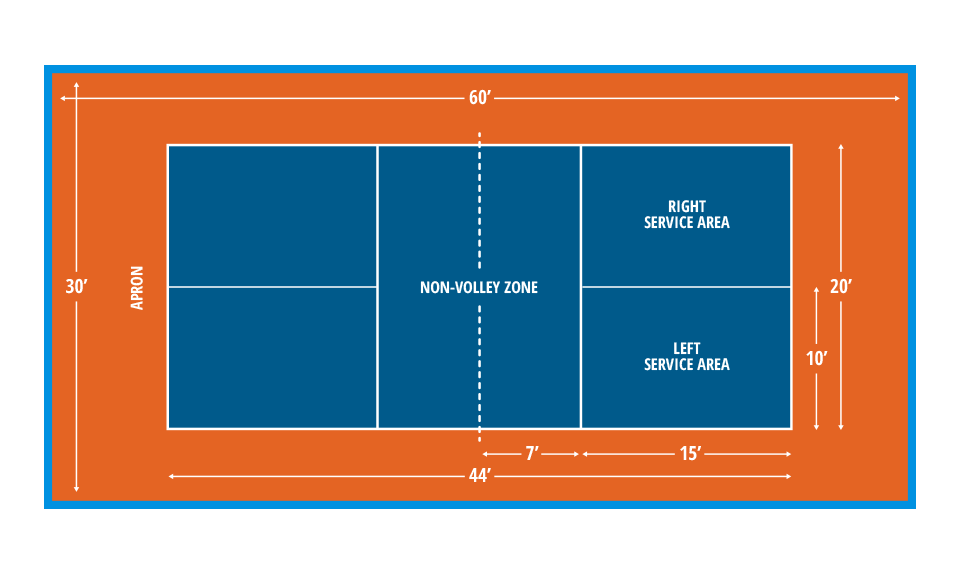
A standard pickleball court is 20×44 feet; net 36″ at posts, 34″ at center.
If you want to build, mark, or convert a court, you need more than a number. In this guide, I break down the standard pickleball court size with clear steps, pro tips, and real examples. You will learn what matters, what to avoid, and how to get a true regulation layout that feels great to play on.
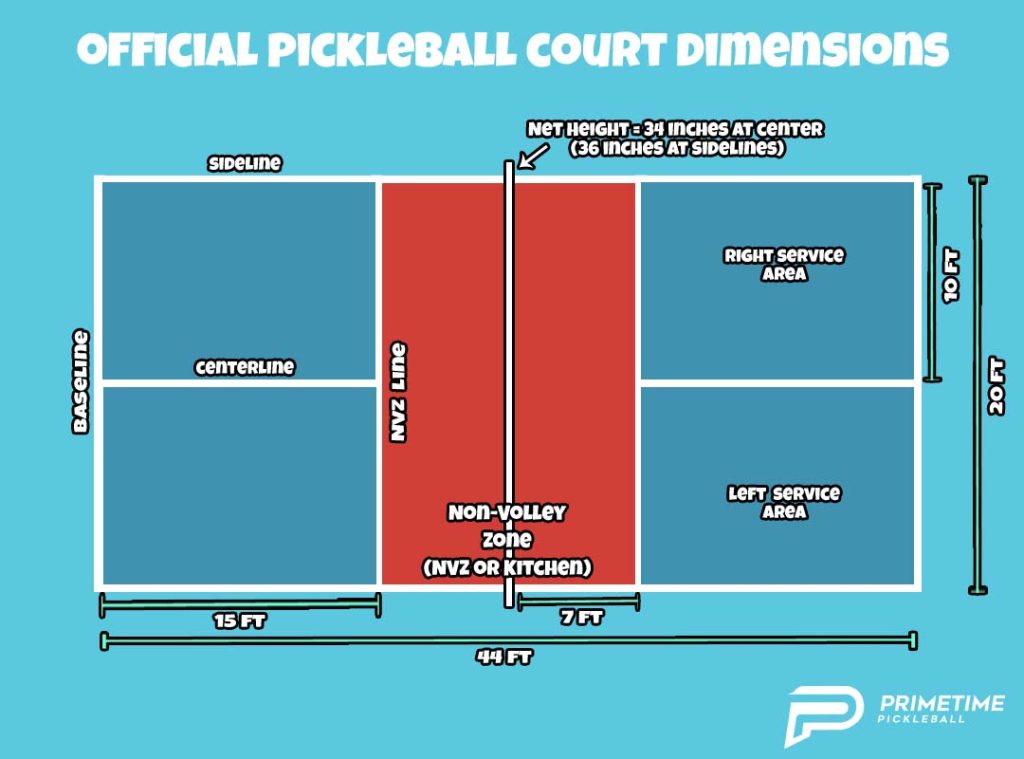
Official standard pickleball court size and lines
The standard pickleball court size is 20 feet wide by 44 feet long. That size is the same for singles and doubles. All boundary lines are included in these dimensions.
Key lines and zones:
- Non-volley zone, also called the kitchen, is 7 feet from the net on each side.
- Service courts are 10 feet wide by 15 feet long on each side of the centerline.
- Lines are 2 inches wide. Lines are in, except the kitchen line on a serve, which is short.
- Baselines and sidelines form the outer edges. The centerline runs from the kitchen line to the baseline.
From experience, most layout errors come from not counting line width and not measuring from the correct corner. Measure twice. Snap a chalk line. Then paint or tape. That keeps the standard pickleball court size true and square.
Net height, post placement, and center strap
The net is 36 inches at the sidelines and 34 inches at the center. A small sag is normal. A center strap or a marked tie keeps the net at 34 inches mid-court.
Set posts about 12 inches outside each sideline. This helps get clean net tension and keeps hardware out of the way. If wind is strong, add sandbags or weights to portable nets. A tight, level net makes third-shot drops more predictable and fair.

Total play area and clearances for a standard pickleball court size
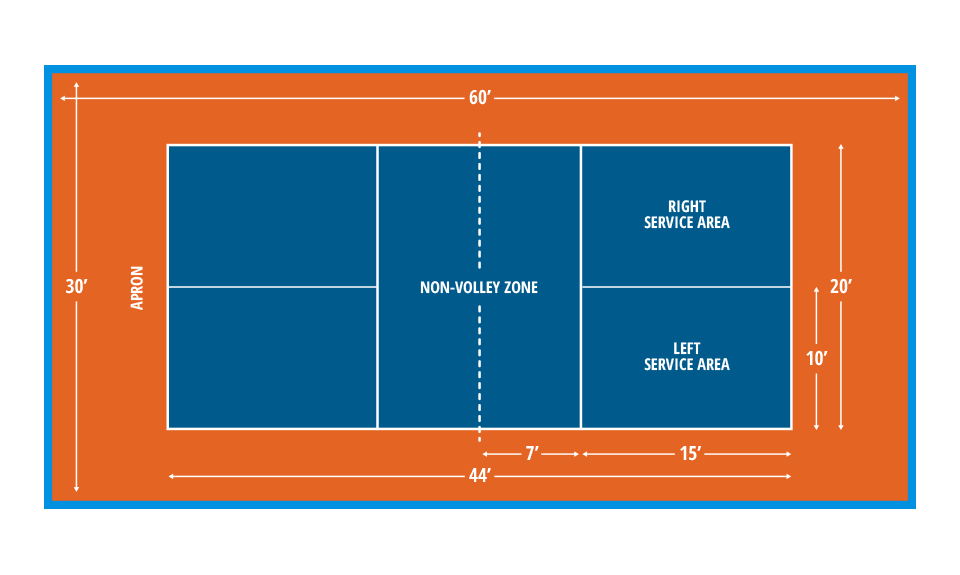
The court itself is 20×44, but you need space to move. The minimum total play area is 30×60 feet. The preferred size, used in many events, is 34×64 feet. That gives more room behind baselines and along sidelines.
Practical clearances:
- Behind each baseline: 10 to 12 feet is best.
- Along each sideline: 5 to 8 feet helps with wide balls and safety.
- Orientation: North–south limits sun glare in the eyes.
These buffers protect players and reduce foot traffic on the court. They also make the standard pickleball court size feel “right” during fast points and lobs.

Indoor vs outdoor factors that affect a standard pickleball court size
Indoors, aim for 18 to 20 feet of clear ceiling height. Twenty-four feet feels great for lobs. Watch for lights or beams above the kitchen line. Outdoors, plan gentle drainage away from the court. A slope of about 1 percent is common.
Surface friction matters. Textured acrylic gives grip and a smooth bounce. Indoors, wood floors are fast. Rubber floors can slow the ball. Both still use the same standard pickleball court size, but bounce, noise, and feel change a lot, so test balls and paddles before play.

Converting driveways, gyms, and tennis courts to a standard pickleball court size
You can build a regulation layout in many places if you respect the buffer space. Here is how I have done it in common settings.
Tennis court overlays:
- One tennis court is 60×120 feet. You can fit up to four pickleball courts with safe walkways.
- Two courts also work with wider alleys and less line clutter.
- Face courts north–south if you can. Use contrasting colors for clarity.
Basketball gyms:
- A high-school gym (about 50×84 feet) can host two courts side by side with room to spare.
- Use removable 2-inch tape or snap-in tiles to protect the floor.
Driveways and parking lots:
- Check for 30×60 feet minimum.
- Use chalk first. Then tape once the layout is perfect.
- Watch slope and drains so water does not pool in the kitchen.
These setups keep the standard pickleball court size and help you scale play without a full build.

Line colors, paint, and surface tips for a standard pickleball court size
Use a line color that clearly contrasts the surface. White is common, but bright yellow or textured acrylic lines also work. Keep all lines 2 inches wide to match rules.
Helpful tips:
- Use textured, non-slip paint on playing areas and lines.
- Allow proper cure time before play to avoid scuffs.
- If taping, choose high-bond, low-residue, 2-inch tape that resists stretch.
- Clean and degrease before you tape or paint so lines stay crisp.
A crisp look is not just style. It protects the integrity of the standard pickleball court size and reduces disputes.

How court size shapes play, strategy, and safety
Court size drives tactics. The kitchen gap is 14 feet, so dinks and counters happen fast. That short gap rewards soft hands. The service box is 15 feet deep, so deep serves and returns push opponents back and open the kitchen line.
Safety and flow:
- Enough space behind the baseline stops trips and rolled ankles.
- Clear, bright lines help players judge balls and avoid collisions.
- Correct net height makes lobs fair and overheads safe.
Even small misses in the standard pickleball court size change ball bounce and footwork. That is why precision matters.
Setup mistakes to avoid when marking a standard pickleball court size
I see these mistakes a lot during club pop-ups and home builds:
- Measuring to the outside of tape, not the inside edge of lines.
- Forgetting that lines are 2 inches wide and part of the court.
- Skipping square checks. Use the 3-4-5 triangle or diagonal measures to keep corners true.
- Using stretchy tape that shrinks in sun and rain.
- Ignoring runoff space behind the baselines.
Fix these early, and your standard pickleball court size will play true for months.
Simple measuring checklist and tools
Tools I trust:
- Two 100-foot tape measures and a chalk line.
- Four stakes or heavy cones for corners.
- String line, 2-inch tape or line paint, and a level.
- A net with a center strap or a 34-inch stick.
Quick layout steps:
- Mark a 20×44 rectangle. Confirm diagonals match.
- Snap chalk for baselines and sidelines. Add 2-inch line width inside the rectangle.
- From the net, mark 7 feet for the kitchen lines on both sides.
- Split each side with a centerline from kitchen line to baseline.
- Set posts 12 inches outside each sideline. Tension the net to 36 inches at posts, 34 at center.
Walk the court and check every line with the tape. If it looks off to the eye, re-measure. It is faster to fix now than later.
Budget ranges for building or taping a standard pickleball court size
Costs vary by region, surface, and labor. These rough ranges match what I see on real jobs:
- Basic tape lines and a portable net: 150 to 400 dollars.
- Removable floor tiles for a garage or gym zone: 1,500 to 6,000 dollars.
- Outdoor acrylic resurfacing and lines on an existing slab: 4 to 9 dollars per square foot.
- New post-tension concrete slab, fencing, lighting, coatings, and lines: 20,000 to 45,000 dollars per court, sometimes more.
Plan for maintenance. Budget for cleaning, touch-up paint, and net replacement. Small care keeps the standard pickleball court size safe and fun.
Frequently Asked Questions of standard pickleball court size
Is the standard pickleball court size the same for singles and doubles?
Yes. Singles and doubles both use 20×44 feet. You do not change any lines when you switch formats.
How wide are the lines on a pickleball court?
Lines are 2 inches wide. They count as in, except the kitchen line on a serve.
What is the height of a pickleball net at the center?
The net is 34 inches at the center. It is 36 inches at the sidelines.
How much extra space do I need around the court?
Aim for a 30×60-foot total area at minimum. For events, 34×64 feet gives better safety and flow.
Can four pickleball courts fit on one tennis court?
Yes. A standard 60×120-foot tennis court can fit up to four courts with clear walkways. Use contrasting colors to reduce confusion.
What is the kitchen distance from the net?
The kitchen is 7 feet from the net on both sides. The gap between kitchen lines is 14 feet.
Are there different sizes for indoor pickleball courts?
No. The standard pickleball court size is the same indoors and outdoors. Only ceiling height and surface change.
Conclusion
A regulation court is simple on paper, but the details make it shine. Measure clean lines, keep the net true, and give players safe space to move. The standard pickleball court size rewards careful setup with better rallies, fewer disputes, and more fun.
Ready to lay out your first court or upgrade an old one? Use the checklist above, share this guide with your crew, and tell me how your build goes in the comments.