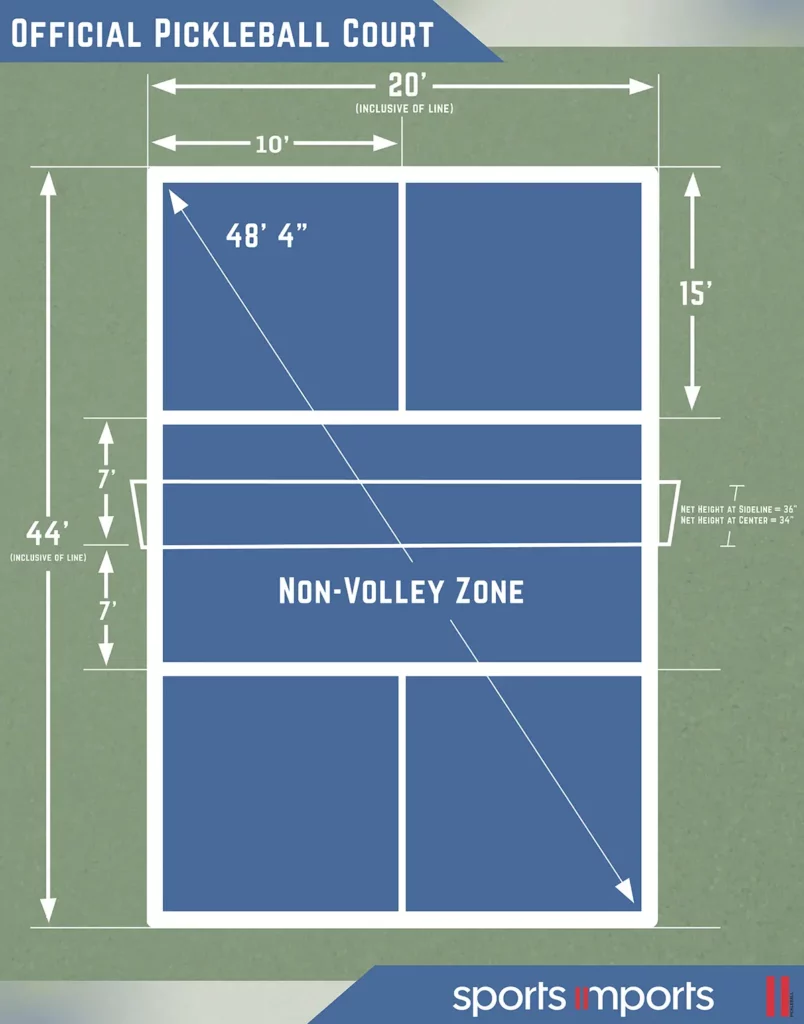
A full-size pickleball court needs about 30 by 60 feet of space.
If you are planning a home setup, a school gym, or a park layout, getting the space right will make or break play. In this guide, I break down the space needed for pickleball court layouts for single and multi-court builds. You will see clear numbers, easy tips, and real examples from projects I have helped plan.

Standard pickleball dimensions and safety clearances
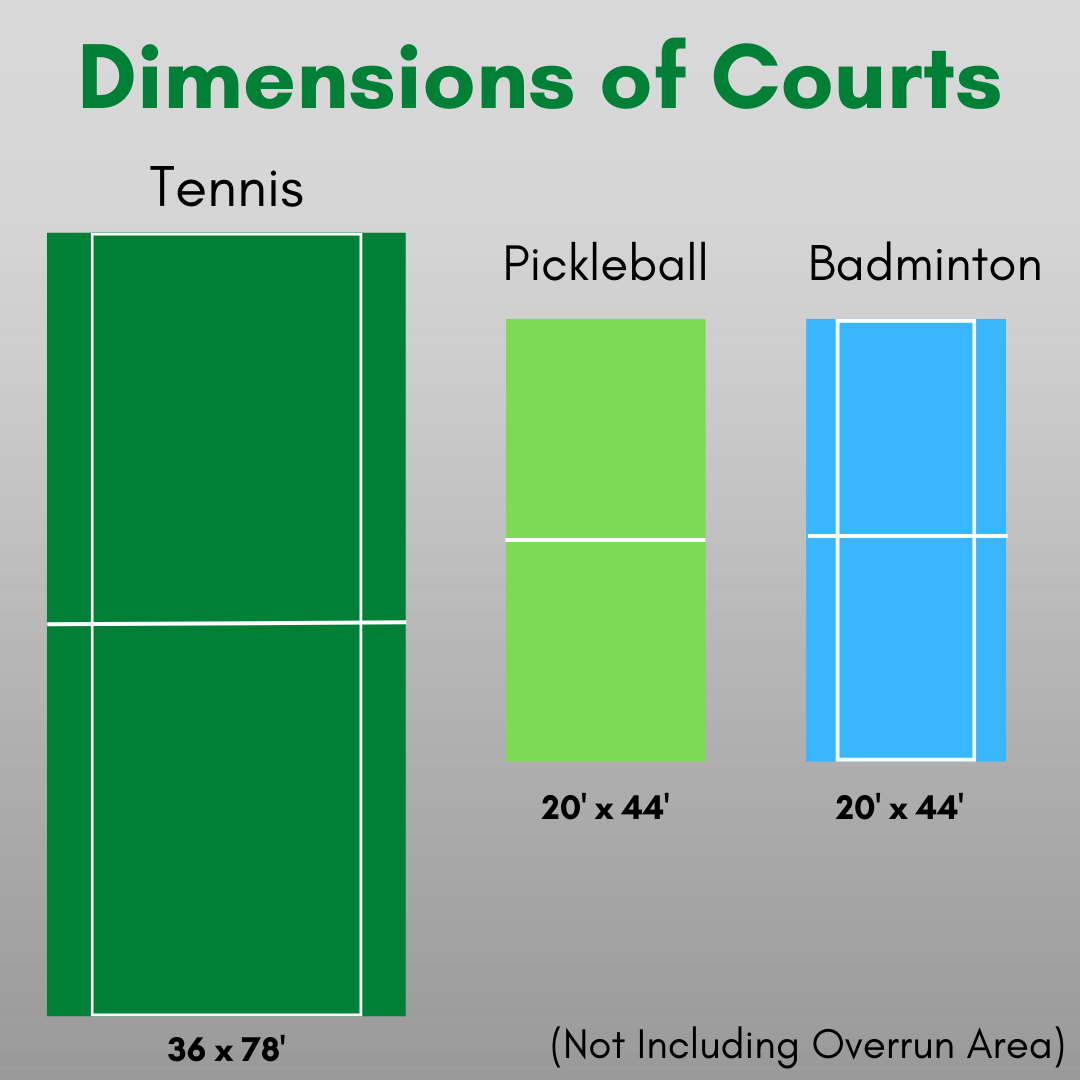
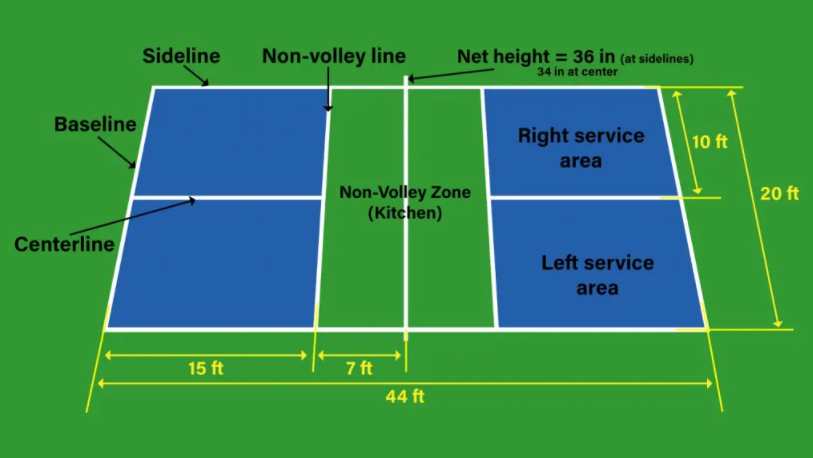
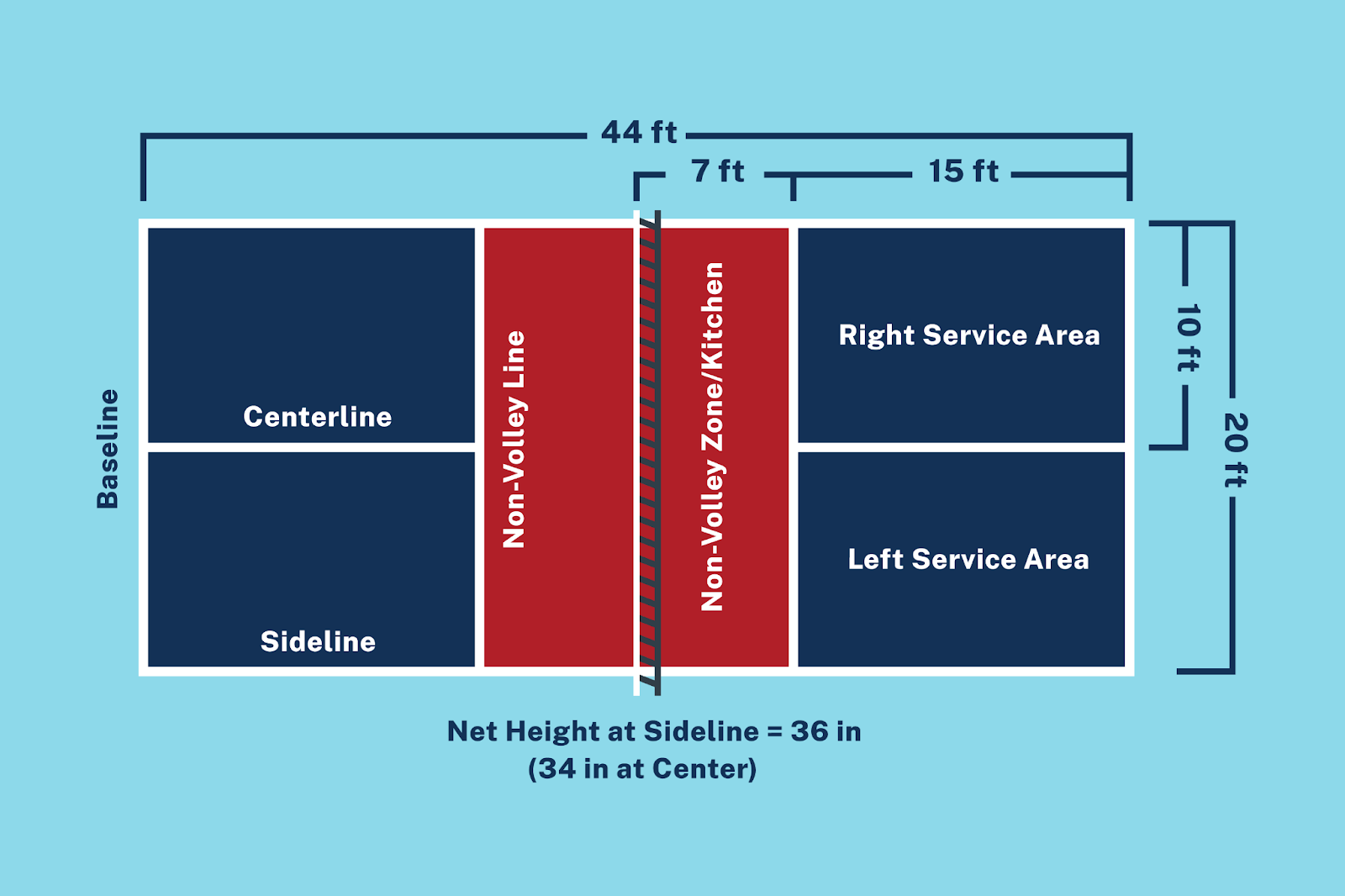
A regulation pickleball playing surface is 20 by 44 feet. That is the in-bounds area under the rules. But players need more room to move and swing.
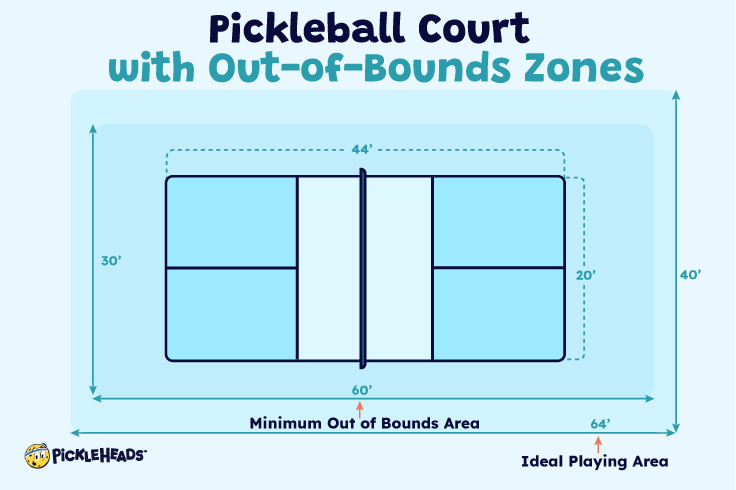
Most builders use a 30 by 60 feet total pad. This leaves 5 feet clear on each side and 8 feet behind each baseline. Many clubs upgrade to 34 by 64 feet for extra comfort and fewer wall hits.
Key numbers at a glance:
- Playing lines: 20 by 44 feet
- Total recommended pad: 30 by 60 feet (about 9.14 by 18.29 m)
- Premium comfort pad: 34 by 64 feet (about 10.36 by 19.51 m)
- Overhead clearance indoors: 18 feet minimum, 20–22 feet ideal
These ranges align with common facility standards and match what you will see in well-run venues.
Total space needed for a single pickleball court
The exact space needed for pickleball court planning depends on setting and budget.
Good baseline targets:
- Minimum workable: 30 by 60 feet. This fits most homes and parks.
- Ideal for leagues: 34 by 64 feet. This is easier on players and cuts down on collisions.
- Fencing: Keep at least 5–7 feet from side lines to fence. Aim for 8–10 feet from baselines to fence or walls.
- Indoor ceiling: 18 feet clear height is the floor. Taller is better for lobs.
Why the extra room matters:
- Players chase lobs and wide angles.
- Paddles need swing space near fences or walls.
- Referees, benches, and bags need safe spots.
If you only remember one number, make it 30 by 60 feet. That is the core space needed for pickleball court builds.
Multi-court layouts and aisle spacing
If you are lining three to twelve courts, walkways matter. Tight layouts save money but can cause traffic jams. Use these patterns I rely on when mapping gyms and parks.
Side-by-side courts:
- Tight fit: 30 by 60 pads with 6 feet between playing areas
- Standard fit: 32–34 feet center-to-center width
- Premium fit: 34 feet pad width with 4–6 feet aisles beyond fences
End-to-end spacing:
- Keep 8–10 feet between baselines of adjacent courts
- Add 10–12 feet where you want benches, scorer’s tables, or referee chairs
Facility flow tips:
- Plan 4-foot-wide gates in fences for quick access
- Place water and trash at the ends, not mid-aisle
- Mark arrows on floors in gyms to guide traffic
When I set up a six-court gym, we used 34 by 64 pads and 10-foot aisles. It felt roomy, cut ball roll-throughs, and kept games on time.

Backyard, driveway, and small space solutions
You can still play if your yard is tight. The space needed for pickleball court fun can scale down for practice and family play.
Options that work:
- Full court on a 30 by 60-foot slab with a portable net
- Compact court using 30 by 56 feet if you accept smaller back runouts
- Skinny singles (half-width) on 10 by 44 feet for drills and fitness
- Driveway stripes with throw-down lines and a folding net
Small-space tips:
- Use edge padding on fences or walls near baselines
- Pick a quieter ball to be a good neighbor
- Paint or tape clear out-of-bounds so rallies stay fair
If you plan to expand later, set your posts for a 20 by 44 layout now. You can add runout space and fencing in a second phase.

Indoor versus outdoor space factors
Indoor builds need height and safe offsets from walls. Outdoor builds need drainage and wind planning.
Indoors:
- Target 18 feet clear height, 20+ feet is better
- Keep 5–7 feet to walls on sides and 8–10 feet behind baselines
- Avoid columns in swing zones; pad any unavoidable posts
- Use non-glare lights; aim for 30–50 footcandles
Outdoors:
- Cross slope 1% for drainage (about 1/8 inch per foot)
- Orient courts north–south to reduce sun in eyes
- Plan wind breaks or hedges if your site is gusty
- Consider noise screens near homes
Both settings can meet the space needed for pickleball court standards. Just tune the buffers to your players and site.
Surface, lines, and net hardware footprint
Lines, nets, and posts need room beyond the 20 by 44 play lines. That adds to the space needed for pickleball court projects.
What to plan:
- Line width: 2 inches standard, bright and high-contrast
- Post sleeves: Set outside the sidelines if using permanent nets
- Portable nets: Base feet extend a few inches beyond the net; allow clearance
- Storage: Leave a corner or closet for nets, balls, and brooms
Simple rule: Do not let hardware intrude into runout zones. Players will thank you with fewer scrapes.
Safety, ADA access, and spectator flow
Space is not only for play. It is for people. Design for easy movement and safe viewing.
Add these clearances:
- Paths: 4 feet wide minimum for ADA mobility
- Gates: 4 feet wide, flat thresholds
- Benches: Place outside the fence or at least 3 feet beyond out-of-bounds
- Shade: Canopies set far enough back so posts are not hazards
For tournaments, add a command corner. You need a table, first aid kit, and a space to post brackets. Good flow keeps events smooth and stress-free.

Noise, lighting, and neighbors: planning your site
Pickleball has a distinct pop. Be a thoughtful neighbor and plan for it.
Smart moves:
- Use acoustic screens on fences if homes are close
- Plant tall hedges to soften sound and wind
- Aim lights down and shield them to avoid glare
- Set courts away from property lines when you can
For the best experience, check local rules on lighting hours and sound. This will help you keep peace and play more.
Budget and permitting basics linked to space
The space needed for pickleball court design can trigger permits. It can also touch setbacks, easements, and drainage laws.
Before you build:
- Verify setbacks from property lines and utilities
- Confirm surface type is allowed (asphalt, concrete, or modular tile)
- Plan drainage to your own land or a legal outlet
- Price fencing, lights, surfacing, and paint, not just the slab
A simple 30 by 60-foot court is more than paint on a rectangle. A bit of planning saves you from expensive do-overs.
Step-by-step: measure and stake your court space
Here is the quick field method I use for first checks.
- Measure a 30 by 60-foot rectangle with tape and stakes.
- Snap chalk lines for the outer pad.
- Mark a 20 by 44-foot rectangle centered inside.
- Check clear distances to fences, trees, walls, and doors.
- Confirm a smooth slope and no puddling after a hose test.
- Walk the runouts with a paddle to feel swing space.
If everything feels tight, expand to 34 by 64 feet. That small change can transform play.
Common mistakes to avoid
These errors show up a lot and hurt play right away.
- Building only the 20 by 44-foot box with no runouts
- Posts or fences set too close to sidelines or baselines
- Low indoor ceilings that kill lobs and fun
- Forgetting gates, storage, or ADA paths
- Overstuffing multi-court layouts with narrow aisles
Fixing space errors later costs more than doing it right the first time. Use the space needed for pickleball court standards from day one.
Frequently Asked Questions of space needed for pickleball court
What is the minimum space needed for pickleball court at home?
Plan at least 30 by 60 feet. This fits a regulation playing area with basic runouts and a portable net.
How much overhead height do I need for indoor pickleball?
Aim for 18 feet minimum. If you can, go 20–22 feet to handle lobs and reduce ceiling hits.
Can I fit two pickleball courts on one tennis court?
Yes. Many facilities fit two, sometimes four, on a tennis court with tape and portable nets. Use clear aisles to stop ball roll-through.
What if my backyard is smaller than 30 by 60 feet?
Try skinny singles on 10 by 44 feet or a compact court with reduced back runouts. It is great for drills, kids, and casual play.
How far should a fence be from the court lines?
Keep 5–7 feet from sidelines and 8–10 feet from baselines. This protects players and reduces wall or fence contact.
Do I need a permit to build a backyard pickleball court?
Rules vary by city. Check setbacks, drainage, and lighting codes before you start to avoid fines or changes later.
What surface works best for a small court?
Concrete with acrylic coating is common, but modular tile is gentle and quick to install. Choose based on budget, climate, and noise.
Conclusion
The right layout starts with one core idea: give players room to move. A 30 by 60-foot pad is the standard space needed for pickleball court builds. If you have space, 34 by 64 feet feels great and plays safer.
Map your site, stake the corners, and test the flow. When the clearances look and feel right, you will have a court that people love to play on. Ready to plan your build? Drop your questions below, subscribe for more guides, and share your layout wins with the community.