A pickleball court is 20 by 44 feet with 7-foot kitchens.
If you want the size of pickleball court nailed down with zero guesswork, you’re in the right place. I’ve marked, measured, and played on dozens of courts. In this deep yet simple guide, I’ll explain the size of pickleball court, show you how to set it up, and help you avoid costly mistakes. Whether you’re curious or building one, this will save you time and stress.
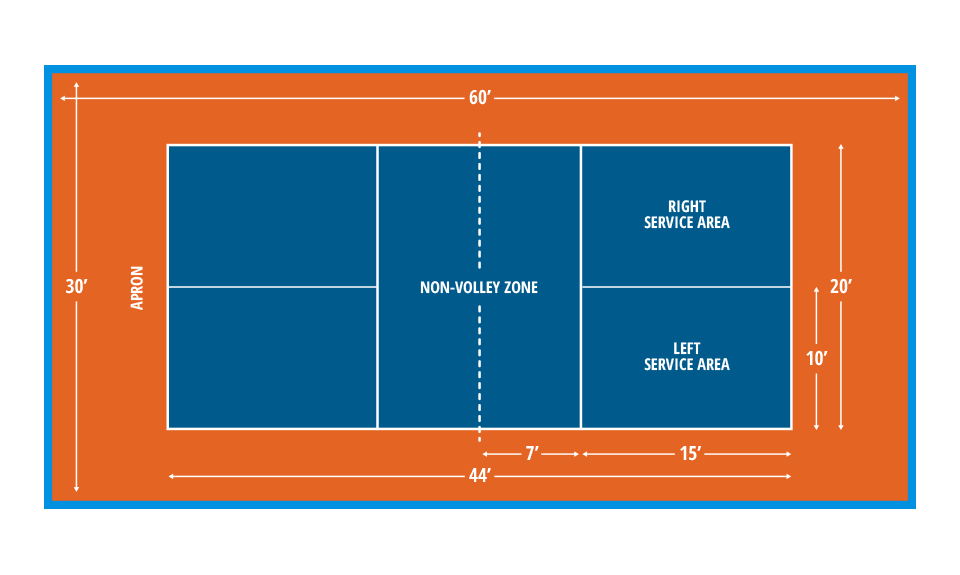
Official court dimensions
The official size of pickleball court is 20 feet wide by 44 feet long. This covers both singles and doubles. The non-volley zone, also called the kitchen, is 7 feet from the net on each side. All lines are 2 inches wide, and every line is in.
The net is lower in the middle. It is 36 inches high at the sidelines and 34 inches at the center. The service courts are split down the middle with a centerline. The size of pickleball court includes the width of the boundary lines.
When people ask for the size of pickleball court, I give them this memory tip. Think “20 by 44, kitchen 7, lines are in.” It sticks and keeps layout jobs simple.
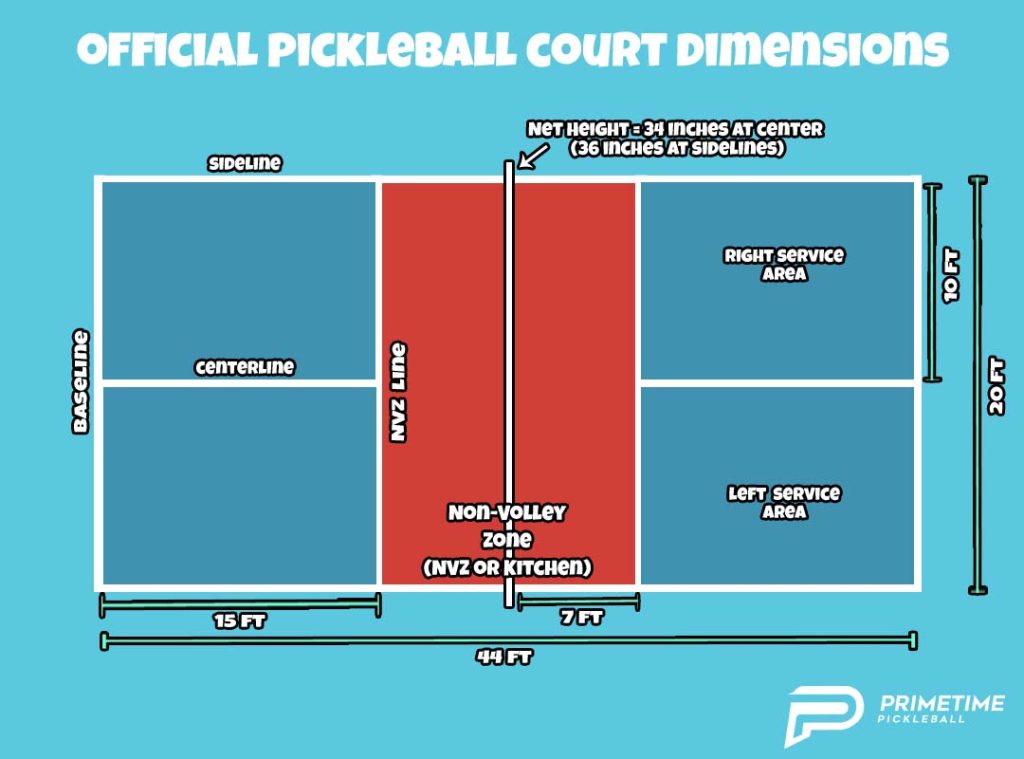
Court layout and zones explained
The baseline runs across the back. The sidelines run the length of the court. The non-volley zone line marks the kitchen at 7 feet from the net. The centerline divides each side into left and right service courts.
Each service box is 10 by 15 feet. That gives enough room to serve and return with control. If you are new, stand a step behind the baseline to avoid foot faults. When I coach players, kitchen foot faults are the first thing we fix.

Net specifications and post placement
The net posts should be 22 feet apart, measured inside to inside. This allows the net to extend a bit beyond the 20-foot court width. The height must be 36 inches at the sides and 34 inches in the center. A center strap helps keep that dip consistent.
If the net sags too much, dinks will float and hard drives will clip. I carry a small tape measure in my bag. Two quick checks take 30 seconds and make games fair. Knowing this supports the right size of pickleball court in day-to-day play.
Space around the court and safety clearance
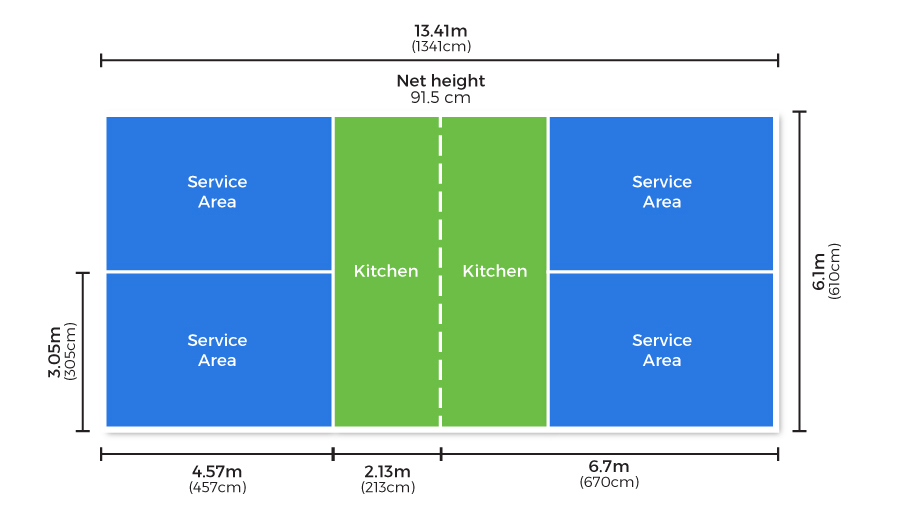
Beyond the 20 by 44 playing area, you need safe run-off space. The suggested minimum total area is 30 by 60 feet. For better play and events, 34 by 64 feet is preferred. I push for the larger pad when possible. It helps on lobs and wide angles.
Adequate space also keeps players from crashing into fences or walls. For indoor gyms, look for clean walls and at least 18 to 20 feet of clear ceiling height. This keeps high lobs in play. The size of pickleball court is only part of the picture. The buffer zone matters just as much.

Converting a tennis, badminton, or driveway into a court
You can fit up to four pickleball courts on one standard tennis court with careful planning. Use temporary nets or roll-out nets. Tape or paint the lines so they pop against the tennis lines. Check that neighbors are okay with sound and play hours.
Badminton singles is 17 by 44, which is close in length but narrow. You will still need a true 20-foot width for proper play. On a driveway, use chalk or thin painter’s tape and a portable net. Measure twice before marking. This keeps the size of pickleball court accurate and reduces rework.
Tips I use on conversions:
- Use a bright, non-slip line color. This helps depth perception.
- Test bounce with the actual ball you will use.
- Add corner tacks or marks so lines don’t drift during play.
- If noise is an issue, use a softer ball and add windscreens.
Indoor vs outdoor courts and surface choices
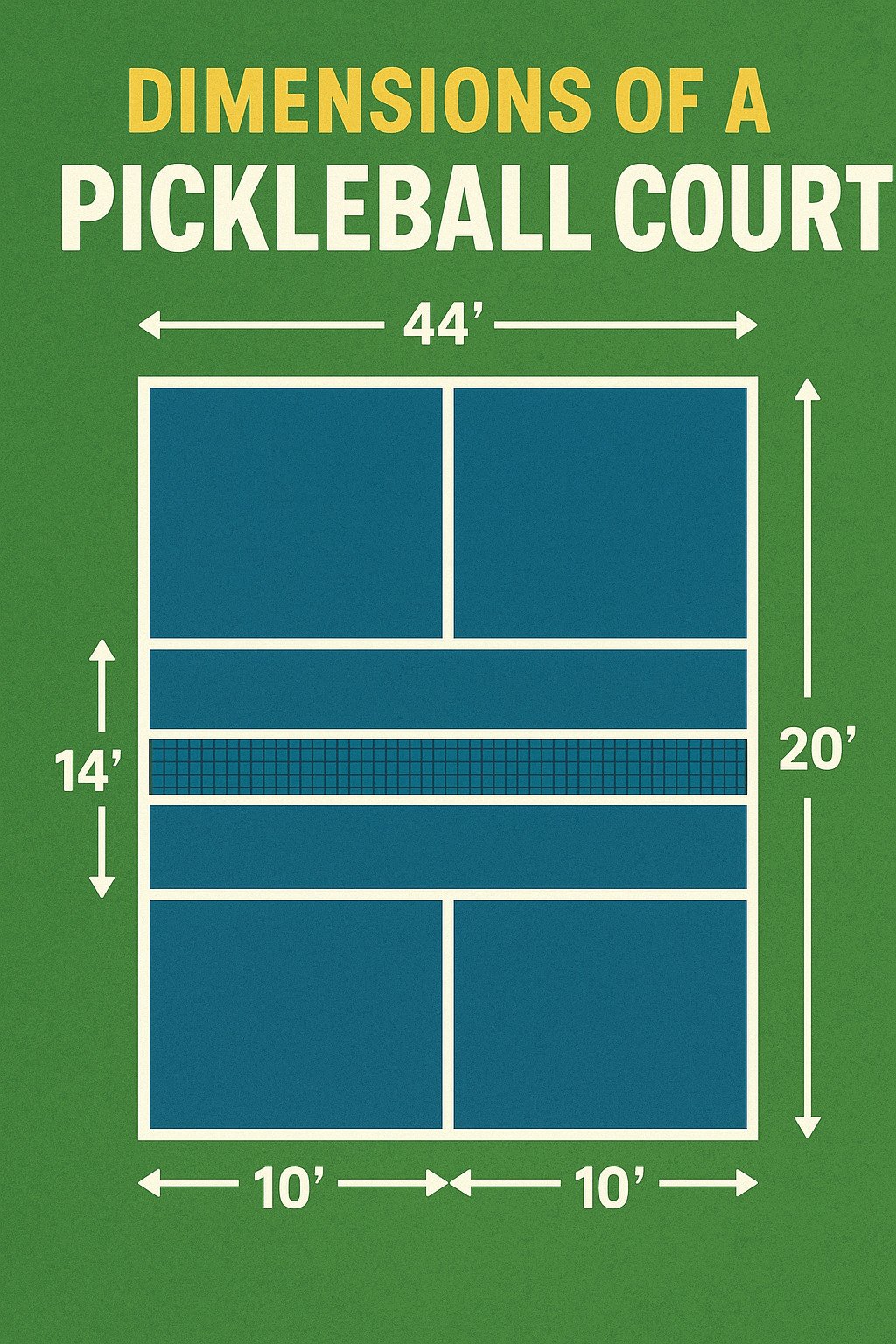
The lines and core dimensions do not change indoors or outdoors. The size of pickleball court stays 20 by 44 either way. But surface type changes feel and bounce. Indoors, you often see hardwood or sport tile. Outdoors, acrylic over asphalt or concrete is common.
Outdoor courts need more grip and UV-stable paint. Indoors, glare control and lighting matter more. I prefer a textured acrylic topcoat outdoors. It gives a true bounce and safer stops. Always choose high-contrast line colors, so the kitchen line stands out.

Measurement checklist and step-by-step layout
Want a simple way to mark an accurate court? Here’s my quick process.
Tools you need:
- Two 50-foot tape measures
- Chalk line or painter’s tape
- Square or two tapes to “square” corners
- Portable net and two stakes
- Marker flags or cones
Steps I follow to get the size of pickleball court right:
- Mark the court center. Set the net line and find the midpoint.
- Measure 10 feet to each side for the net span target.
- Square the corners. Use the 3-4-5 rule or two tapes to get a true 90-degree corner.
- Measure 22 feet from the net line to each baseline.
- Mark the 7-foot kitchen line from the net on both sides.
- Split the service courts with the centerline.
- Check all distances again before painting or taping.
Mistakes to avoid:
- Skipping the re-measure step. One inch off at one corner can skew the whole court.
- Using low-contrast lines. Hard to see. Easy to miss calls.
- Forgetting run-off space. The court fits, but play will feel cramped and unsafe.
Frequently Asked Questions of size of pickleball court
Is the size of pickleball court the same for singles and doubles?
Yes. Singles and doubles use the same 20 by 44-foot court. Only the number of players changes, not the layout.
How wide are the lines on a pickleball court?
Lines are 2 inches wide. All lines are considered in during play.
What is the height of the pickleball net?
The net is 36 inches high at the posts and 34 inches high at the center. This slight dip is part of the design.
What is the minimum space I need to build a court?
Aim for at least 30 by 60 feet. If you can, 34 by 64 feet feels safer and plays better.
Does the size of pickleball court include the lines?
Yes. The court dimensions include the line width. If a ball touches any part of the line, it is in.
How far is the kitchen from the net?
The non-volley zone extends 7 feet from the net on each side. The line itself is part of the non-volley zone.
Can I put a pickleball court in my driveway?
Often yes, if your driveway is large enough. Measure carefully and use temporary lines and a portable net.
Conclusion
You now know the exact size of pickleball court, how to measure it, and how to build a safe space that plays right. Use the 20 by 44 core, add smart run-off, and check net height before every session. Small steps lead to better games and fewer calls.
Ready to take the next step? Grab a tape, mark your spots, and set up your first court this week. Want more tips and tools? Subscribe for updates or drop a comment with your layout questions so I can help.