
A pickleball measures 2.87–2.97 inches across and weighs 0.78–0.935 ounces.
Curious how pickleball size affects your game, gear, and even court setup? You’re in the right place. I’ve coached new and seasoned players, tested balls in heat and cold, and measured paddles and nets by the book. This friendly guide explains pickleball size from ball to paddle to court, with clear tips you can use today.

What Does Official Pickleball Size Mean?
When people ask about pickleball size, they usually mean the ball. The ball has strict rules. These rules keep play fair across parks, leagues, and tournaments.
Here are the key specs most players should know:
- Diameter: 2.87–2.97 inches
- Weight: 0.78–0.935 ounces
- Bounce: 30–34 inches when dropped from 78 inches on a hard surface at room temperature
- Holes: 26–40 machine-drilled holes, round and even
- Color: Any solid color, easy to see
Why it matters:
- Consistent bounce helps clean footwork and timing.
- A tight diameter range keeps rallies fair and familiar.
- Hole count and pattern change how the ball flies and handles wind.
In testing sessions, I check bounce and roundness first. A ball that goes “out of round” feels odd off the paddle. It floats, then dies. If you’ve felt that strange wobble mid-rally, size and shape were likely off.
Pickleball Ball Size: Indoor vs Outdoor Variations
Indoor and outdoor balls share the same official pickleball size. The main difference is the holes and wall hardness. That changes control, spin, and wind response.
Common traits:
- Indoor balls: Usually 26 larger holes, softer feel, quieter on gyms floors
- Outdoor balls: Usually 40 smaller holes, firmer shell, better wind stability
Practical notes from the court:
- Windy day rule of thumb: outdoor balls fly truer and stay on line.
- Cold weather makes outdoor balls brittle. Carry a fresh sleeve. Warm them in your bag.
- Hot days can soften some balls. Bounce rises and control drops a bit.
If your local park has noise rules, look for “quiet” balls. Some soft balls reduce sound but must still fit the official pickleball size to stay match-ready. Try a sleeve first to see if they fit your game.

Paddle Size and Grip Size That Fit the Rules
Paddles do not have a fixed “pickleball size,” but they must fit limits. This keeps power and reach fair.
Key paddle rules:
- Max length: 17 inches
- Length plus width: 24 inches or less, including edge guard and cap
- No thickness limit, but face must pass deflection tests
- No rough or sticky hacks on the face
Grip size is personal. Most adult grips range from 4.0 to 4.5 inches in circumference. Your best grip size helps control and reduces strain.
How to find your grip size:
- Ruler test: Measure from palm center to tip of ring finger. Use that number in inches as a start point.
- Finger test: When holding the paddle, you should fit an index finger between palm and fingertips.
From my own play and coaching:
- A grip that is too thick can strain your forearm. It can trigger elbow pain.
- A grip that is too thin makes you squeeze too hard. That also tires the arm.
- I add thin overgrips to fine-tune. One wrap can shift feel without breaking rules.
If you like two-handed backhands or extra reach, pick a longer handle within limits. It still must fit the 24-inch sum rule.

Pickleball Court and Net Size: Quick Reference
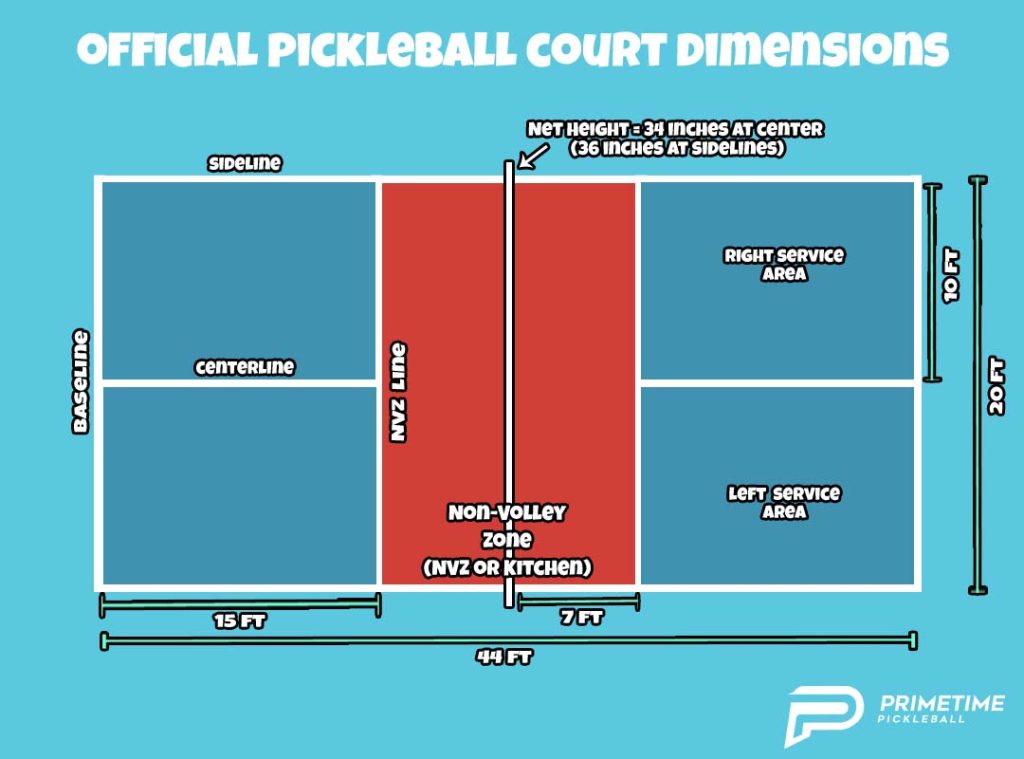
Court size matters as much as ball and paddle. Standard court lines and net height shape tactics, dinks, and drops.
Court size:
- Width: 20 feet
- Length: 44 feet (including the baseline)
- Non-volley zone (kitchen): 7 feet from the net on each side
- Line width: 2 inches
Net size:
- Height at sidelines: 36 inches
- Height at center: 34 inches
- Span: about 22 feet between posts
Why it helps to know:
- A clear picture of court size helps you pace shots and recover fast.
- Kitchen depth changes your drop shot target and footwork.
- Correct net height keeps lobs and drives honest for both sides.
When I chalked a driveway court for clinics, I learned to measure twice. A short kitchen by even a few inches changes angles a lot. Accurate court size makes practice translate to match play.

How to Measure Pickleball Size at Home
You can test gear in minutes. This helps spot duds and stay within rules.
Ball checks:
- Diameter: Use calipers if you have them. No calipers? Measure circumference with a soft tape, then divide by 3.14 to estimate diameter.
- Weight: Use a kitchen scale. Toss out balls that fall outside 0.78–0.935 ounces.
- Bounce: Drop from 78 inches onto a hard floor. Look for 30–34 inches of rebound.
- Roundness: Spin the ball on a table. If it wobbles, it may be out of round.
Paddle checks:
- Length and width: Use a ruler or tape. Make sure length plus width is 24 inches or less.
- Handle fit: Wrap an overgrip if the grip feels thin. Re-measure to keep control.
Court and net checks:
- Kitchen line: Measure 7 feet from the net on both sides.
- Net height: Use a simple center strap or a tape measure to set 34 inches in the middle.
These quick tests keep your gear in line and your game consistent. In my bag, I always keep a small tape measure and a spare overgrip.

Age and Adaptive Size Considerations
Youth, seniors, and adaptive players can all benefit from smart choices that still respect pickleball size rules.
What works well:
- Kids: Lighter paddles, thinner grips, and softer indoor balls help form clean strokes.
- Beginners: Midweight paddles with medium grips reduce arm strain and add control.
- Wheelchair players: Same court size and net height in adaptive play. A two-bounce rule applies in matches, so a ball with steady bounce is key.
Tip from clinics:
- If a player struggles with control, start with an indoor ball on smooth courts. It slows the rally and builds confidence.
All of these choices stay within the core pickleball size standards, so you can switch to official balls anytime.
Buying Guide: Picking the Right Pickleball Size for You
The best choice depends on your court, climate, and style. Since the official pickleball size range is narrow, look for small details that suit you.
Match your pick:
- Outdoor parks: Firm outdoor balls with 40 holes handle wind and sun.
- Indoor gyms: 26-hole balls reduce skids and noise.
- Cold climates: Store balls warm and pick durable shells that resist cracks.
- Control seekers: Slightly softer balls and paddles with a smaller grip can add touch.
- Power hitters: A stiffer ball and a paddle with a head-heavy balance add pace.
What I’ve learned:
- Test two brands side by side. Even within the same pickleball size, feel changes.
- Bring a backup ball style for windy days.
- If your wrist or elbow is sore, downsize grip by one overgrip layer or use a lighter paddle.
This small gear tuning leads to big gains in comfort and results.
Care, Storage, and Lifespan: Keep Size and Performance Consistent
Good care keeps balls within size and bounce targets longer. It also protects paddles from warping.
Simple habits:
- Do not leave balls or paddles in a hot car. Heat changes ball bounce and paddle glue.
- Rotate balls in play to even out wear.
- Rinse dusty balls. Debris can change friction and flight.
- Store paddles flat. Avoid pressure on the face and edge.
When to replace balls:
- They feel egg-shaped or wobble.
- They split or turn too soft.
- Bounce drops below the normal range.
With these steps, you protect that precise pickleball size and the feel you trust.
Frequently Asked Questions of pickleball size
What is the official pickleball ball size?
The official diameter is 2.87–2.97 inches, and weight is 0.78–0.935 ounces. This tight range keeps bounce and flight consistent.
Are indoor and outdoor pickleballs different sizes?
They share the same official size. The difference is hole count and shell firmness, which changes flight and feel.
What is the standard pickleball court size?
A standard court is 20 by 44 feet with a 7-foot non-volley zone on each side. Lines are 2 inches wide.
How high is a pickleball net?
The net is 36 inches at the sidelines and 34 inches at the center. Keep a small strap or tape handy to check height.
What is the max pickleball paddle size?
Length cannot exceed 17 inches, and length plus width must be 24 inches or less. This includes the edge guard and end cap.
What grip size should I use?
Most adults use 4.0–4.5 inches in circumference. Pick the size that lets you relax your hand and still control the face.
Do temperature changes affect pickleball size or bounce?
Yes, heat can soften balls and raise bounce, while cold can make them brittle and lower bounce. Store gear at room temperature when possible.
Conclusion
Pickleball size guides the way we play, from the ball in your hand to the lines under your feet. Know the official ranges, test your gear, and match your setup to your court and climate. Small, smart changes bring big gains in comfort, control, and fun.
Take the next step. Check your balls, grip, and net height this week. Subscribe for more easy, research-backed tips, and share your setup questions in the comments.