Great pickleball serves use simple mechanics, smart targets, and steady routines.
If you want a serve that wins easy points and sets up your next shot, you’re in the right place. I’ve coached hundreds of players, from curious first-timers to tournament regulars, and I’ll walk you through the pickleball serve tips that actually move the needle. We will cover rules, mechanics, spin, placement, and drills you can do today. Stick with me and you’ll leave with clear, proven pickleball serve tips you can trust.
Master the legal fundamentals
A strong serve starts with a legal serve. Small rule slips cause cheap faults. Know these before you go hard.
- Contact must be below your navel. Keep the strike low and relaxed.
- The paddle head must be below your wrist at contact. Use an upward swing.
- At least one foot stays behind the baseline at contact. Do not touch the baseline or court.
- Serve crosscourt into the opposite service box. The ball must land past the kitchen line.
- You get one serve attempt. Serves that clip the net and land in are live, not lets.
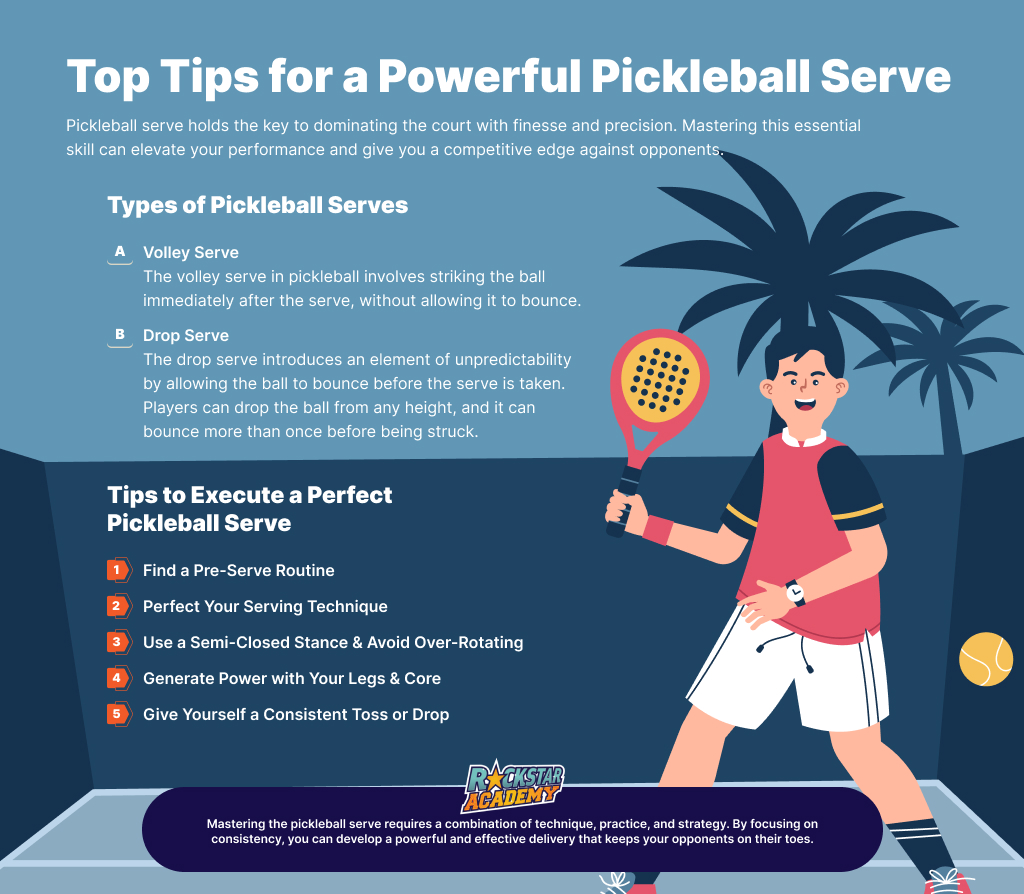
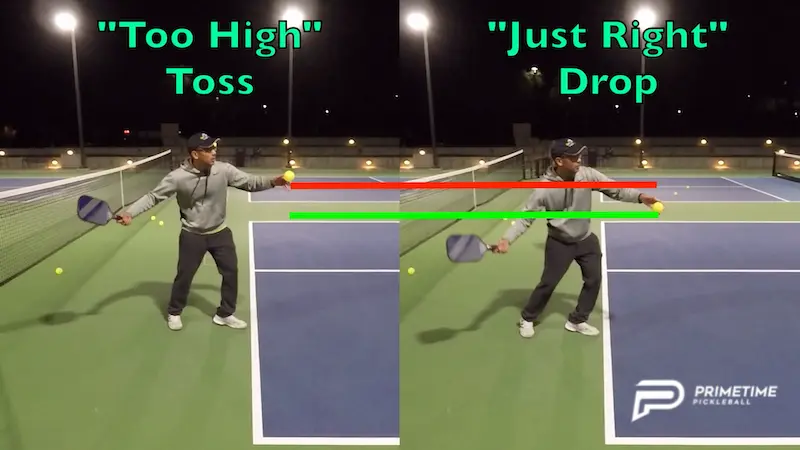
- You can choose a volley serve or a drop serve. The drop serve is simple and very legal friendly.
- You have about 10 seconds to serve after the score call. Build a quick routine.
- You cannot use a chainsaw-style spin on a volley serve. Keep the release simple and clean.
I check these with new players every week. Most faults come from feet on the line or a rushed swing. Clean up the basics first, then add pace and spin. These pickleball serve tips keep your serve legal under current standards.
Build a repeatable setup: grip, stance, contact
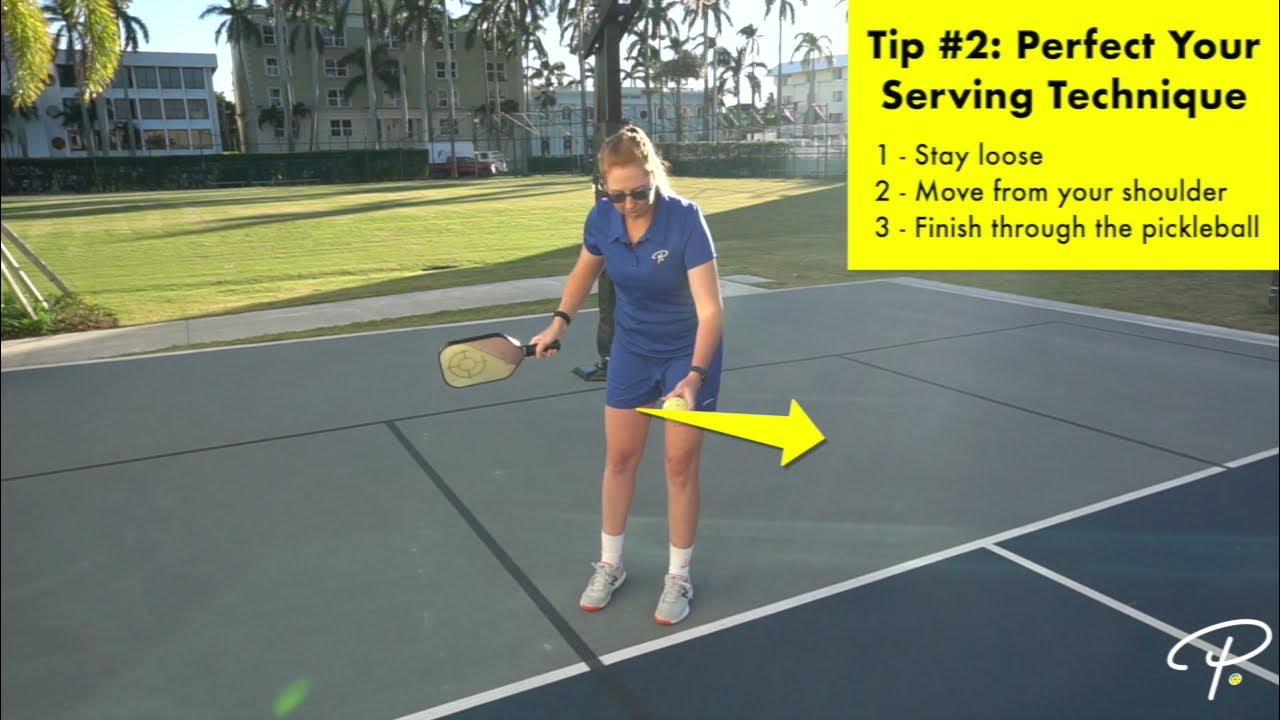
Your serve should feel like a short, smooth dance. Same steps, same beats, every time.
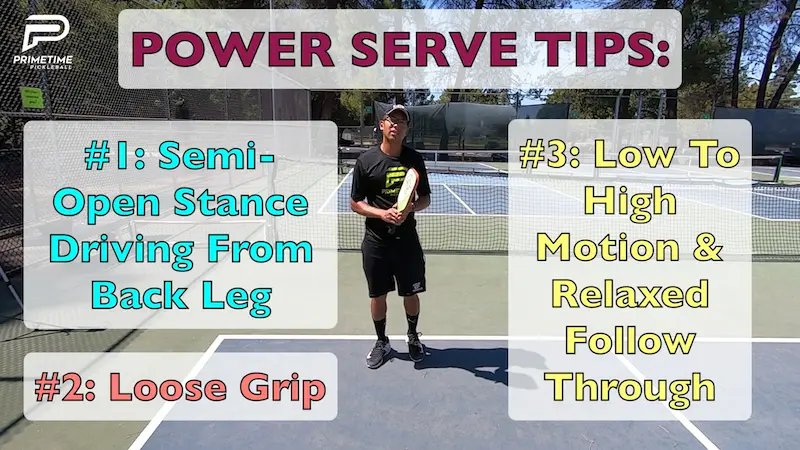
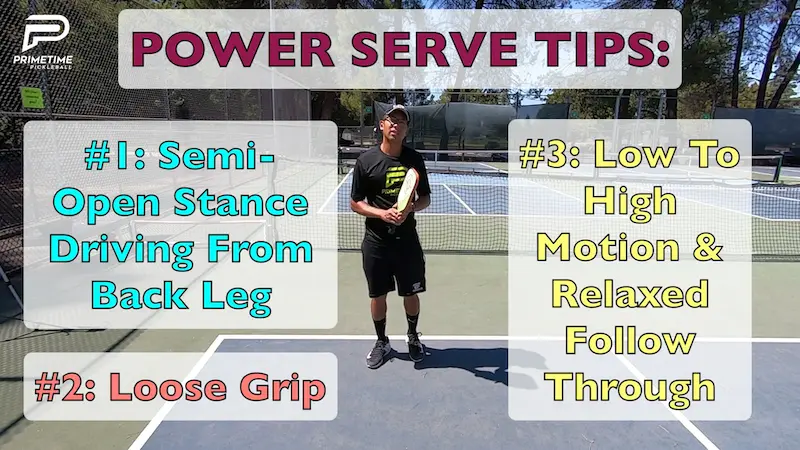
- Grip: Use a continental grip. It feels like a handshake. It gives easy control and varied spin.
- Stance: Stand at least one shoe length behind the baseline. Front foot at a slight angle to the target.
- Ball position: Hold the ball in front of your lead hip. Keep the arm relaxed.
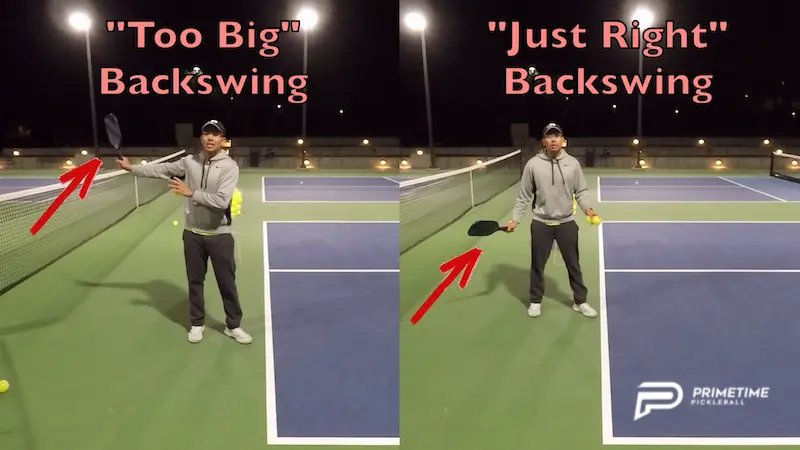
- Swing path: Smooth, low-to-high swing. Brush up on the ball for safe net clearance.
- Contact point: Out in front and below the navel. Meet the ball with a firm wrist.
- Finish: Point the paddle toward your target. Let the arm rise to shoulder height.
For a drop serve, just let the ball fall from your hand. No toss. No push. Let it bounce, then swing up through it. If nerves creep in, I count a calm “one-two” before contact. These simple pickleball serve tips build a steady routine you can trust under pressure.
Serve types you should master
You do not need ten serves. You need a few serves you can place on demand. Start with these and layer in pace later.
Deep flat serve
- How: Smooth, firm swing with a square face. Aim deep middle or deep backhand.
- When: Use as your stock ball. It sets up a weak return and gives you time to move in.
Slice serve
- How: Brush from high to low across the outside of the ball. Paddle face slightly open.
- When: On the deuce side to a right-hander’s backhand. It skids and stays low.
Topspin kick serve
- How: Brush up the back of the ball. Aim a bit higher over the net.
- When: When returners stand close to the baseline. It jumps at their chest or shoulder.
Body serve
- How: Aim at the returner’s sternum. Use moderate pace.
- When: Great against big forehands or long backswings. It jams and forces blocks.
Short angle serve
- How: Take pace off and hit a soft, sharp angle crosscourt.
- When: When opponents stand far back. Make them sprint forward and pop the return.
Lob serve
- How: Open the paddle and swing up. Big height, deep landing.
- When: Mix it in after a few hard serves. It breaks rhythm and draws errors.
I ask players to pick two “comfort serves” per side. One heavy, one light. That choice alone upgrades your strategy. These pickleball serve tips help you build a small but lethal menu.

Spin, speed, height, and placement
Think of your serve like a triangle: spin, speed, and height. You can trade one to gain another.
- Net clearance: Aim 6 to 18 inches above the net for most serves. A little extra height is cheap safety.
- Depth: Deep wins. Land near the baseline to shrink angles and time.
- Spin: Slice skids. Topspin drops. Use spin to shape the bounce you want.
- Pace: Swing at 70 to 85 percent for best control. Power comes from clean timing, not muscle.
- Targets: Deep middle, deep backhand, and at the body. Change looks, not form.
When I chart matches, the best servers do not hit aces. They force a short or floating return. Then they own ball three. If you remember one of these pickleball serve tips, make it this: aim deep first.
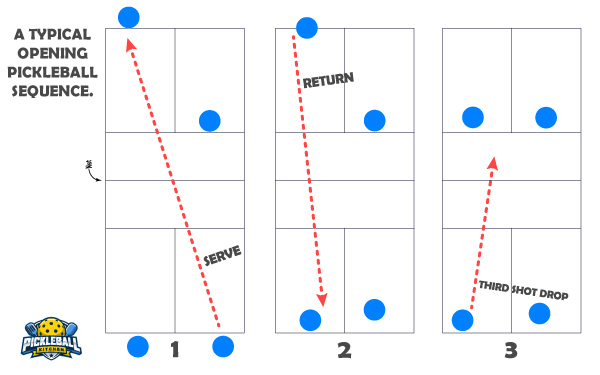
Tactical pickleball serve tips for doubles and singles
Your serve is a plan, not just a swing. Serve with your next shot in mind.
Doubles
- Serve deep to the weaker backhand, then step in and look for a third-shot drop.
- Body serve a poacher to stop their jump. Then roll a soft third into the middle.
- Mix pace. Two firm serves, then a soft short angle. Keep them guessing.
Singles
- Serve to the backhand, then run a forehand to the open court.
- Use a body serve to jam, then approach behind a deep drive.
- Change height. High, heavy topspin, then a low slice. Break their timing.
On big points, I like deep middle. It cuts angles and keeps returns in front of me. Simple and safe. These pickleball serve tips turn your serve into a pressure tool.

Drills and a 20-minute practice plan
Good serves grow in quiet, not in matches. Put in short, sharp reps.
Target ladder
- Place four cones deep: backhand corner, body, middle, forehand corner.
- Hit five balls per cone. Track how many land within two feet of the line.
Spin ladder
- Five flat, five slice, five topspin. Repeat twice.
- Focus on shape, not power. Note your net clearance.
Serve plus one
- Serve, then shadow your third shot. Drop to the kitchen or drive deep.
- Build the habit loop: serve plan, third-shot plan.
Pressure game
- Ten serves. You must hit seven in with depth. If you miss, restart at zero.
- Add a small cost, like a quick jog. It builds focus.
20-minute plan
- Minutes 1 to 4: Warm up and footwork.
- Minutes 5 to 9: Target ladder.
- Minutes 10 to 14: Spin ladder.
- Minutes 15 to 18: Serve plus one.
- Minutes 19 to 20: Pressure game and notes.
Write results. Improvement you can see keeps you coming back. These drill-based pickleball serve tips cement skill fast.
Common mistakes and quick fixes
- Serving short: Aim higher and aim deeper. Use more topspin for a safe drop.
- Net clips: Slow down the swing. Lift with your legs and send the apex higher.
- Wild misses: Shorten your backswing. Smooth through the ball.
- Foot faults: Start a full shoe behind the line. Say “back-behind-hit” as a cue.
- Wrist flicks: Lock the wrist and swing from the shoulder. Feel a firm face at contact.
- One predictable serve: Rotate targets. Heavy deep, then soft short angle.
When I see three straight nets, I ask players to “brush up and hold the finish.” Simple cue, instant gains. Keep these pickleball serve tips handy on court.

Gear, balls, and court conditions
Small gear choices change the serve feel more than you think.
- Paddle: A grippy face adds spin. A heavier paddle adds plow but can tire the arm.
- Grip size: If your grip is too big, you lose snap. Too small, you spray balls.
- Balls: Outdoor balls are firmer and fly faster. On hot days they get lively.
- Shoes: Stable shoes help your base. A solid base makes clean contact.
- Weather: In wind, aim bigger targets. Into wind, add more lift. With wind, take some pace off.
I carry two paddles with slight weight changes. On slow courts I go heavier. On fast courts I prefer control. These practical pickleball serve tips help your gear fit your goals.
Rules, etiquette, and updates to watch
Rules do evolve. The core remains steady, but details matter.
- The volley serve must be underhand with contact below the navel and paddle head below the wrist.
- The drop serve lets you drop the ball and hit after the bounce. No toss is needed.
- Spin on the release for a volley serve is restricted. Keep the release clean.
- No let serves. If the ball hits the net and lands in, play on.
- Call the full score before serving. Give your opponent a clear cue.
- Check the latest rulebook each season. Local events may use the newest updates.
I review rules with new league players before week one. It saves headaches later. Clear rules plus smart pickleball serve tips lead to confident starts.
Frequently Asked Questions of pickleball serve tips
What is the best serve for beginners?
Start with a deep flat serve to the middle. It is simple, safe, and sets up an easy third shot.
How do I add power without losing control?
Use your legs for lift and keep a smooth tempo. Hit 80 percent speed with a firm finish toward your target.
Is the drop serve easier to keep legal?
Yes. You drop, let it bounce, and swing up. It removes toss errors and helps with timing.
Where should I aim most serves in doubles?
Aim deep middle or deep backhand. Those targets cut angles and force weaker returns.
Can I serve with lots of spin?
Yes, but use it with a purpose. Slice to skid low or topspin to drop deep and kick up.
How do I stop foot faults on the serve?
Start a full shoe behind the line and freeze your feet at contact. Build a quick verbal cue like “back-behind-hit.”
Should I mix speeds, or keep one pace?
Mix speeds. Change pace after you win a point with power to keep the returner off balance.
Conclusion
Your serve does not need to be flashy. It needs to be legal, deep, and repeatable. Build a simple routine, pick two trusted serves, and aim smart targets. Then add spin and pace as your control grows.
Use these pickleball serve tips today. Go to the court with a 20-minute plan and track your hits. If this helped, subscribe for more drills, share with a partner, or leave a comment with your toughest serve challenge.