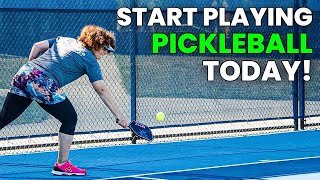
Pickleball is easy to learn, low-impact, and fun for all ages.
If you’re curious about pickleball for beginners, you’re in the right place. I coach new players every week, and I’ve helped hundreds go from nervous first swings to confident rallies. In this friendly guide, I’ll break down pickleball for beginners step by step, from gear and rules to skills and strategy. You’ll get simple tips, real examples, and a plan you can follow today.

What Is Pickleball?
Pickleball is a paddle sport that blends tennis, badminton, and ping-pong. You play on a small court with a net, a paddle, and a plastic ball. It can be singles or doubles, but most beginners start with doubles. The game is fast, social, and easy on the joints.
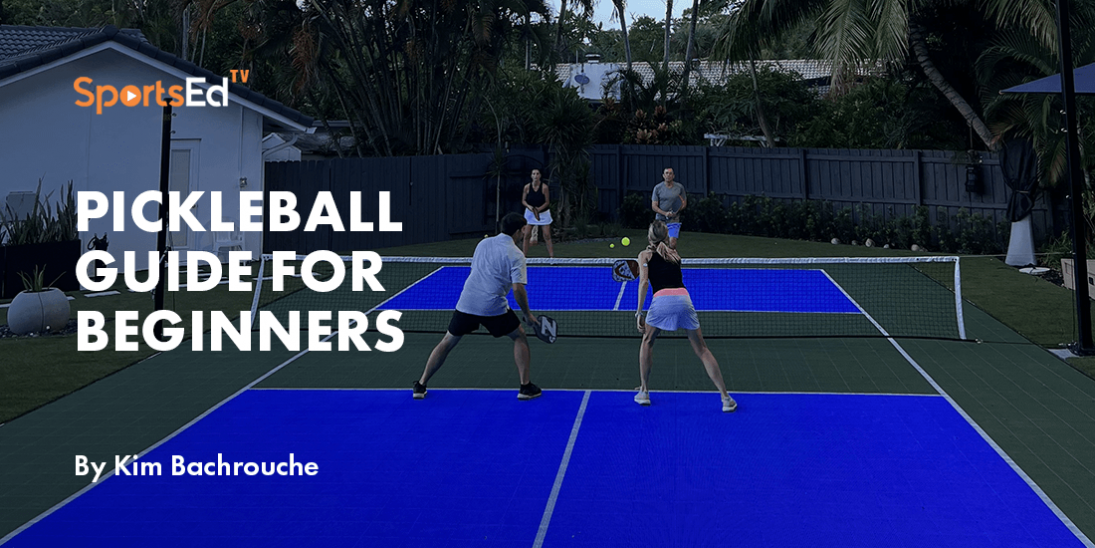
The court is 20 feet by 44 feet. The net is 36 inches high at the sides and 34 inches in the middle. The non-volley zone, called the kitchen, is seven feet from the net on each side. You can’t volley while standing in the kitchen.
Scoring is simple once you try it. Only the serving team scores points. Games often go to 11, win by two. You serve underhand from behind the baseline to the opposite service box.
Why Pickleball Is Perfect For Beginners
Pickleball for beginners works because the court is small and the paddle is light. You do not need years of training to enjoy a rally. You can learn the basics in one session.
It is also easy on knees and shoulders. You move less than in tennis and you swing shorter. The social side is strong too. You can meet people fast at any open play.
I have seen full beginners rally for 10 shots in their first hour. That early success fuels fun and quick growth. Pickleball for beginners delivers real wins on day one.

Essential Gear Checklist
You only need a few items to start. Pick gear that fits your hand and budget. Comfort matters more than fancy specs at first.
- Paddle: Start with a midweight paddle. A weight around 7.6 to 8.4 ounces suits most. Pick a grip that matches your hand so your wrist stays relaxed.
- Balls: Outdoor balls have smaller holes and feel firmer. Indoor balls have larger holes and feel softer. Buy a few of each if you will play both.
- Shoes: Wear court shoes with good grip. Running shoes are not ideal because they do not support side steps well.
- Eye protection: A clear pair of sport glasses helps. Balls can move fast at the net.
- Overgrip and tape: An overgrip boosts feel. Edge tape protects the paddle rim.
- Bag and water: Keep your gear dry and always bring water.
If you are shopping, ask to demo paddles. Hold them and take a few swings. For pickleball for beginners, feel and control beat raw power.

Rules Made Simple
You serve underhand and hit the ball below your waist. The serve must land in the opposite service box. It cannot land in the kitchen. After the serve, the return must bounce. Then the serving team must also let it bounce once. This is the two-bounce rule.
You cannot volley while standing in the kitchen. If your momentum carries you into the kitchen after a volley, that is a fault. Keep toes behind the line before you swing in the air.
Only the serving team can score. In doubles, both partners get a turn to serve before a side out, except at the start of the game when only one player serves. Announce the score before you serve so all players know the number.

Step-by-Step: Your First Game
Start with a warm-up. Do light jogs, side steps, and arm circles. Shadow a few serves and dinks. Feel the paddle and the ball.
Serve to the back third of the box to keep returns deep. Return deep too, and head toward the kitchen line. Aim your third shot high and soft so it drops in the kitchen. That sets up a calm rally.
Play smart spots. Hit crosscourt to give yourself a bigger target. Aim for feet, hips, and the middle of the court. Keep the ball low. This simple plan makes pickleball for beginners safe and steady.
Core Skills And Techniques
Good grip sets up every shot. I teach a relaxed, continental-style grip for most strokes. It lets you switch from soft dinks to firm volleys without a big change.
Footwork comes next. Stay on the balls of your feet with knees soft. Take small steps near the kitchen. Slide into shots rather than lunging late.
Key shots to learn first:
- Dink: A soft shot that lands in the kitchen. Keep your paddle face calm and your wrist quiet.
- Volley: Block firm balls with a short punch. Aim low and to the middle.
- Serve: Use a smooth, low-to-high swing. Place the ball more than you try to blast it.
- Return: Hit deep to push the other team back. Then move to the kitchen line.
- Third shot drop: Lift the ball high and soft so it arcs into the kitchen. It buys you time to get to the net.
Do 10 minutes of each skill per practice. This builds balance and trust in your swing. Pickleball for beginners improves fast with short, focused reps.
Strategy For Winning Doubles
Team shape matters. Both players want to get to the kitchen line and hold it. That position wins most points.
Talk often. Call “mine,” “yours,” and “switch” early. Aim for the middle to cause doubt. Most errors come from poor calls, not bad swings.
Play high-percentage targets:
- Deep serves and returns to reduce rushes.
- Soft dinks crosscourt where the net is lower.
- At feet or hips to force pop-ups.
- To the weaker backhand of your rivals.
Pickleball for beginners should keep it simple. Win the soft game first. Power comes later.

A 30-Day Beginner Plan
This plan fits busy life. Three days a week works well. Add a fourth day if you feel fresh.
Week 1: Learn court lines, serve form, and dink touch. Do 50 easy serves each day. Play mini-dink games to 7.
Week 2: Add returns and third shot drops. Drill drop-feed balls to the kitchen. Aim 8 out of 10 in.
Week 3: Work on volleys and resets. Do block volleys from mid-court. Practice split steps before each shot.
Week 4: Blend skills under pressure. Play games to 11 using only soft balls at the net. Track unforced errors. Pickleball for beginners grows when you measure small wins.
Keep a note on what caused your misses. Adjust one thing at a time.

Common Mistakes And How To Fix Them
Standing too far back from the kitchen line. Fix it by taking two small steps forward after each safe shot.
Swinging too big on volleys. Use a short punch with the paddle out front. Think “quiet hands.”
Hitting every third shot hard. Use a soft drop to gain the net. Power when you have a clear put-away.
Serving without a plan. Pick a simple target before you swing. Deep to the backhand is a great choice.
Skipping warm-ups. Do five minutes for joints and feet. It prevents pain and boosts touch. Pickleball for beginners should feel easy, not risky.
Safety, Etiquette, And Community
Warm up, hydrate, and take breaks. Use sun block outdoors. Wear eye protection in fast games.
Call lines fair and loud. If you are not sure, call it in. Respect the kitchen rules and your rivals.
Join open play at local parks or clubs. Many sites post beginner hours. Ask to rotate in and learn names. Pickleball for beginners often starts with one friendly game and a smile.
Buying Guide: Choosing Your First Paddle
Weight affects control and comfort. Midweight paddles are the sweet spot for most new players. If your arm gets sore, try slightly lighter.
Core and face matter too. Polymer cores feel soft and quiet. Fiberglass faces add pop. Carbon fiber gives control and a clean feel on dinks.
Grip size must fit your hand. If you feel strain, it is likely too big. If the paddle twists, it is too small. Try overgrips to fine-tune. Pickleball for beginners should favor control and comfort over max power.
Glossary Of Key Terms
- Kitchen: The non-volley zone near the net where you cannot volley.
- Dink: A soft shot that lands in the kitchen.
- Volley: A shot hit out of the air before it bounces.
- Third shot drop: A soft shot on the third hit that lands in the kitchen.
- Reset: A soft control shot to slow a fast rally.
- Side out: When the serve goes to the other team.
- Split step: A small hop before the ball is hit to prepare your feet.
Use this list while you practice. It will speed up your learning curve and make pickleball for beginners clear and calm.
Frequently Asked Questions of pickleball for beginners
What gear do I need to start?
You need a paddle, two to four balls, and court shoes. Add eye protection and a water bottle for safety and comfort.
How long does it take to learn the basics?
Most players learn the basics in one to two sessions. You can rally the same day and play real games within a week.
What is the kitchen and why does it matter?
The kitchen is the non-volley zone near the net. You cannot volley while in it, so footwork and control are key.
Do I need lessons or can I self-learn?
You can self-learn with videos and drills. A single lesson can speed things up by fixing grip, footwork, and serve form early.
How do I find people to play with?
Check local parks, community centers, and club open play hours. Social groups and apps often list beginner days and mixers.
Is pickleball safe for older adults?
Yes, it is low-impact and joint-friendly. Warm up well, wear proper shoes, and build up play time slowly.
What score do we play to in casual games?
Most games go to 11 and you must win by two. Only the serving team can score points.
Conclusion
Pickleball is simple to start, yet rich in skill and strategy. With the right paddle, a grasp of the rules, and a few core drills, you will feel real progress fast. Use the 30-day plan, play often, and track your small wins.
Make your first step this week. Find a local open play, bring a friend, and try two games. If this guide helped, share it with someone curious about pickleball for beginners, subscribe for more tips, or leave a comment with your questions.