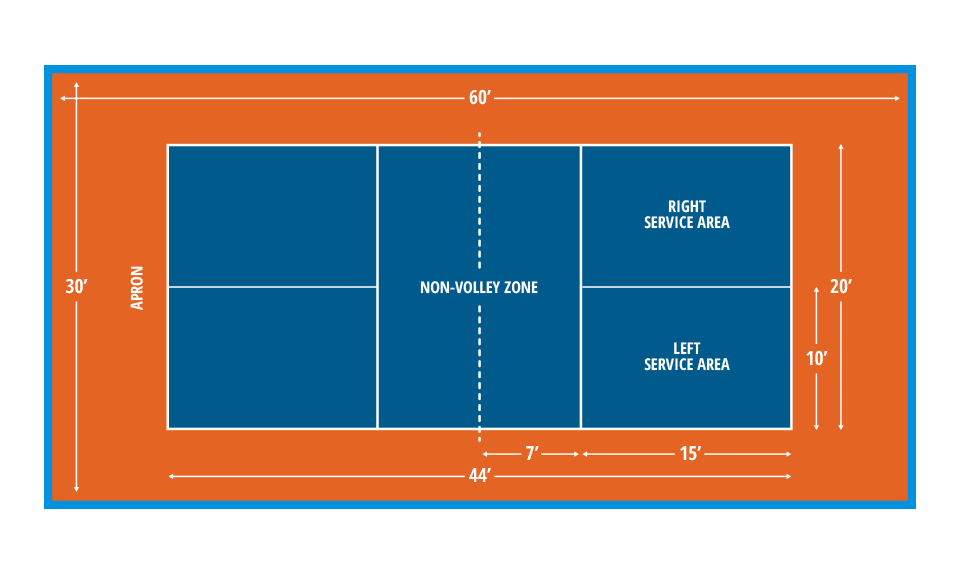
A pickleball court is 20 feet by 44 feet with 7-foot kitchens.
If you want crisp play, fair rallies, and fewer foot faults, nailing the exact pickleball court size matters. I’ve laid out and played on courts in gyms, driveways, and parks, and the right dimensions change the game. In this guide, I’ll break down pickleball court size in simple steps, with pro tips, clean diagrams you can copy, and field-tested advice for any setup.
Official pickleball court size and lines
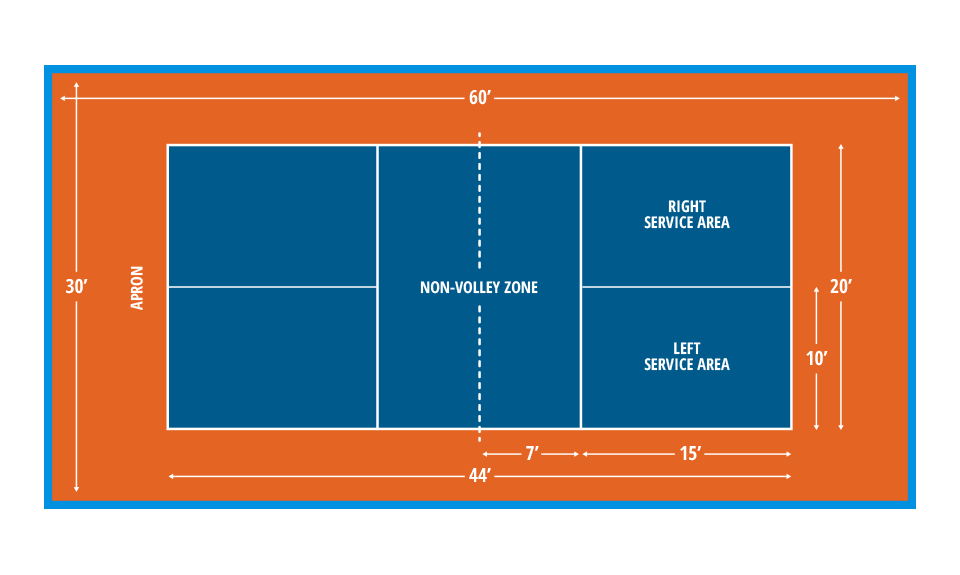
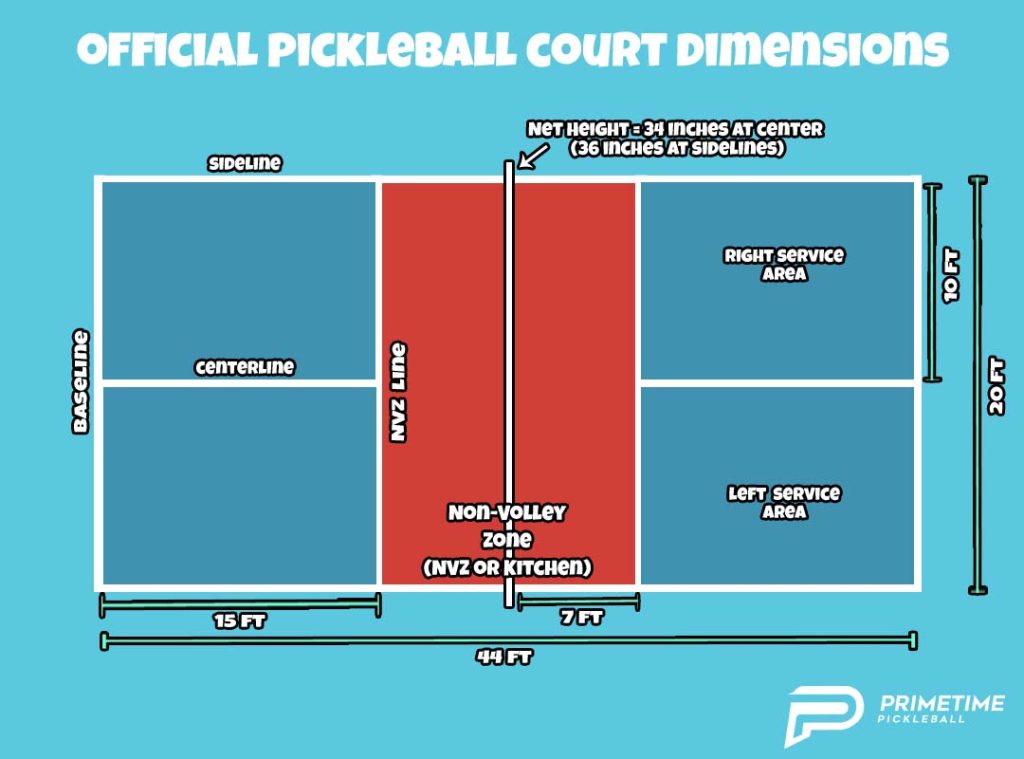
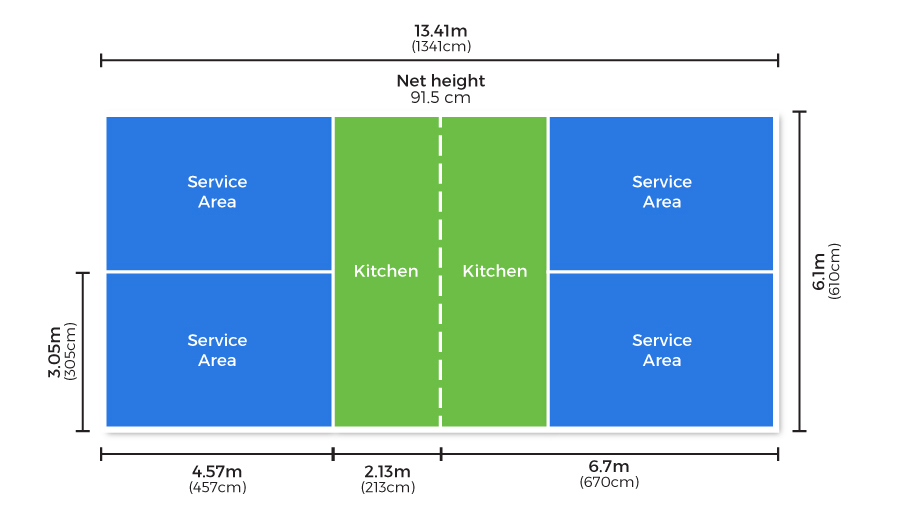
Getting the basics right sets the tone for good play. The official pickleball court size is 20 feet wide by 44 feet long for both singles and doubles. The net spans the 20-foot width and sits at 36 inches at the sidelines and 34 inches in the center.
Key dimensions at a glance
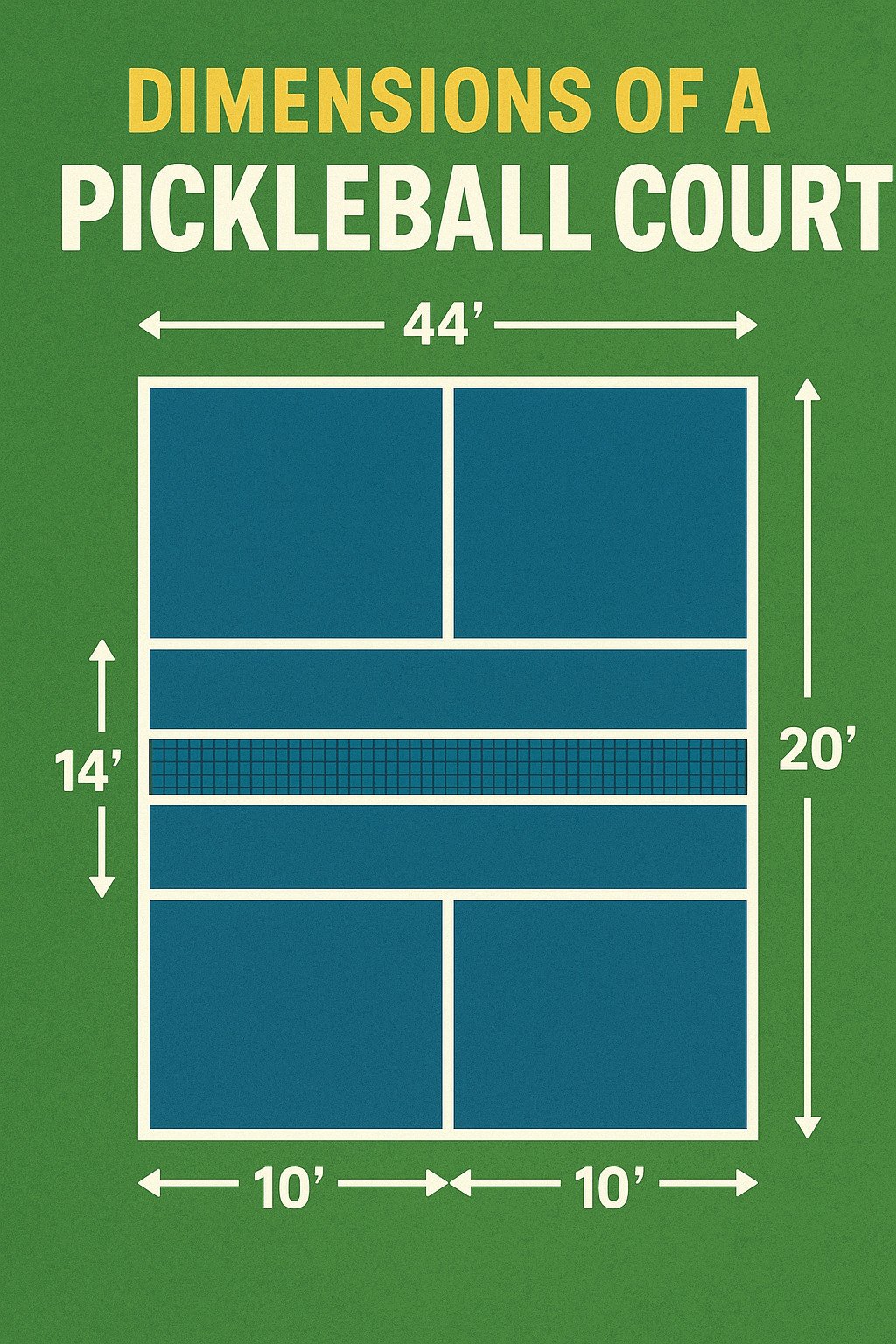
- Court size: 20 ft by 44 ft
- Non-volley zone (kitchen): 7 ft from the net on each side
- Service court depth: 15 ft from the kitchen line to the baseline
- Service court width: 10 ft each side of the centerline
- Baseline to net: 22 ft
The non-volley zone
- The kitchen is the 7-foot area on both sides of the net.
- You can step in to play a ball that bounces, but not to volley.
- Accurate kitchen lines keep play safe and fair.
Lines and widths
- All lines are 2 inches wide and are part of the area they define.
- Mark these: baselines, sidelines, non-volley lines, centerlines, and service court lines.
- Use bright, high-contrast paint or tape for clear edges.
Metric conversions
- Court: 6.10 m by 13.41 m
- Net height: 0.914 m at the sidelines, 0.864 m in the center
- Kitchen: 2.13 m each side
I’ve seen many new players ask if the pickleball court size is flexible. It’s not. Stick to the standards and the game will feel right.
Singles vs doubles: does the pickleball court size change?
Singles and doubles use the exact same pickleball court size. That’s part of the game’s charm. Players switch styles, not courts.
- Same 20 by 44 feet layout.
- Same 7-foot kitchen rule.
- Only the serve and strategy change between formats.
If a club suggests a different pickleball court size for singles, push back. It hurts consistency and practice.

Total space needed around the court
The playing lines are not the whole story. You also need safe run-off space. For parks and clubs, I recommend a minimum playing area of 30 feet by 60 feet. For better comfort, aim for 34 feet by 64 feet.
- Side clearances: 5 to 7 feet each side
- Baseline clearances: 8 to 12 feet behind each baseline
- Fencing: keep at least 3 feet from sidelines to fence
- Orientation: north–south to reduce sun glare
A tight room can work, but players will pull back on overheads. Give the court breathing room. Your knees will thank you.
Indoor vs outdoor court specifications
The pickleball court size does not change indoors. But the setup does. Floors, lighting, and ceiling height shape the play.
- Ceiling height: 18 to 20 feet minimum; 26 to 30 feet is ideal for lobs
- Lighting: even, glare-free, 50+ foot-candles over the court
- Surfaces: cushioned acrylic, modular tiles, or sealed wood for gyms
- Ball choice: indoor balls have bigger holes and play a bit slower
Outdoors, use a textured acrylic system on asphalt or concrete. Indoors, check for dead spots and glare. Both affect how the court feels, even with the same pickleball court size.

Building multi-court layouts and tennis conversions
One tennis court can host up to four pickleball courts with shared run-off. This setup is common for clubs and parks.
- Typical layout: two courts per tennis half, nets parallel to tennis net
- Shared space: add buffers between courts for safety
- Lines: use different colors to avoid confusion
- Net systems: portable rolling nets or semi-permanent posts at 22 feet apart
Noise can rise with four courts. If neighbors are close, consider acoustic screens and softer paddles. Clear rules and court signs help reduce chaos when many players share space.
When converting, keep the standard pickleball court size exact. Mistakes with the kitchen line are the most common error I see on conversions.
How to mark and measure a pickleball court step by step
You can mark a court in an afternoon with two people, a tape, and painter’s tape. Here is my reliable method.
- Prep your area
- Sweep the surface. Remove dust and grit.
- Snap chalk lines to guide straight runs.
- Set the baselines and sidelines
- Mark a 20-foot baseline.
- From the midpoint, measure 22 feet toward the net for each side to set court length.
- Square the corners with the 3-4-5 rule: measure 15 feet on the baseline and 20 feet on the sideline; adjust until the diagonal is 25 feet.
- Place the net
- Posts 22 feet apart, center to center.
- Net height: 36 inches at posts, 34 inches in the center with a strap or measured tie.
- Mark the non-volley zone
- Measure 7 feet from the net on both sides. Snap a straight line across the width.
- Divide service courts
- From kitchen line to baseline is 15 feet.
- Mark a centerline down the middle to create two 10-foot-wide service boxes.
- Finish lines
- Make all lines 2 inches wide.
- Use bright tape for temporary lines. For paint, mask first for clean edges.
- Test and tweak
- Roll a ball along lines to check straightness.
- If anything is off, fix it now. The pickleball court size must be exact to feel right.
Pro tip: On slick floors, use removable vinyl court tape rated for sports. Some cheap tapes leave residue or peel in heat.

Common mistakes to avoid
I’ve fixed a lot of DIY courts. These are the errors I see most.
- Short kitchens: Marked at 6.5 feet instead of 7 feet
- Crooked centerline: Causes bad service calls and arguments
- No run-off space: Leads to collisions near walls or fences
- Low net center: Plays slow and favors dinks too much
- Mixed lines: Tennis and pickleball marks in the same color
Double-check every measurement. The pickleball court size is simple, but small errors add up.

Accessibility and adaptive play tips
Everyone should feel welcome on the court. A few design choices help a lot.
- Wider gates and smooth paths to the court
- Level thresholds and flush transitions to avoid trips
- Clear, high-contrast lines for low-vision players
- Extra baseline space for mobility devices
For adaptive drills, a full pickleball court size still works well. Give more time between points and use softer balls if needed.
Maintenance, colors, and visibility
Good upkeep makes a court play true. Color choices also affect depth and focus.
- Colors: mid-to-dark court color with a lighter, contrasting kitchen
- Lines: bright white or optic yellow for contrast
- Cleaning: blow off grit weekly; scrub stains as needed
- Resurfacing: every 4 to 6 years outdoors, based on wear
- Drainage: keep water away from baselines to protect joints
Well-kept lines reduce missed calls. The standard pickleball court size stays the same, but clean edges make it feel bigger and faster.
Frequently Asked Questions of pickleball court size
What is the official pickleball court size?
A standard court is 20 feet wide by 44 feet long. This is the same for singles and doubles.
How big should the total playing area be with run-off?
Aim for 30 by 60 feet at minimum. For comfort, 34 by 64 feet is better.
What is the height of a pickleball net?
The net is 36 inches high at the sidelines and 34 inches at the center. Posts are set 22 feet apart.
How wide are the lines on a pickleball court?
All lines are 2 inches wide. Lines are part of the area they define.
How deep is the non-volley zone (kitchen)?
The kitchen is 7 feet from the net on each side. You cannot volley while standing in it.
Do singles and doubles use different court sizes?
No. Singles and doubles share the same pickleball court size. Only strategy and serve patterns differ.
Can I fit four pickleball courts on one tennis court?
Yes, four courts can fit with shared space. Use clear colors and good buffers for safety.
Conclusion
Pickleball plays best on a precise court. Lock in the standard 20 by 44 feet, give it safe run-off, and keep lines clean and bright. With the right pickleball court size and setup, rallies feel fair, movement feels natural, and players of all levels have more fun. Grab a tape, follow the steps, and build a court you’re proud of. If you found this helpful, share it with your crew or drop your questions so I can help you dial in your space.