
A regulation pickleball court is 20 feet by 44 feet with a 34-inch center net.
If you want a clear, expert guide to pickleball court dimensions, you’re in the right place. I have built, taped, and inspected many courts. In this guide, I explain each line, zone, and measurement in plain words. You will learn how to measure, mark, and avoid common mistakes. By the end, you can set up accurate pickleball court dimensions anywhere.
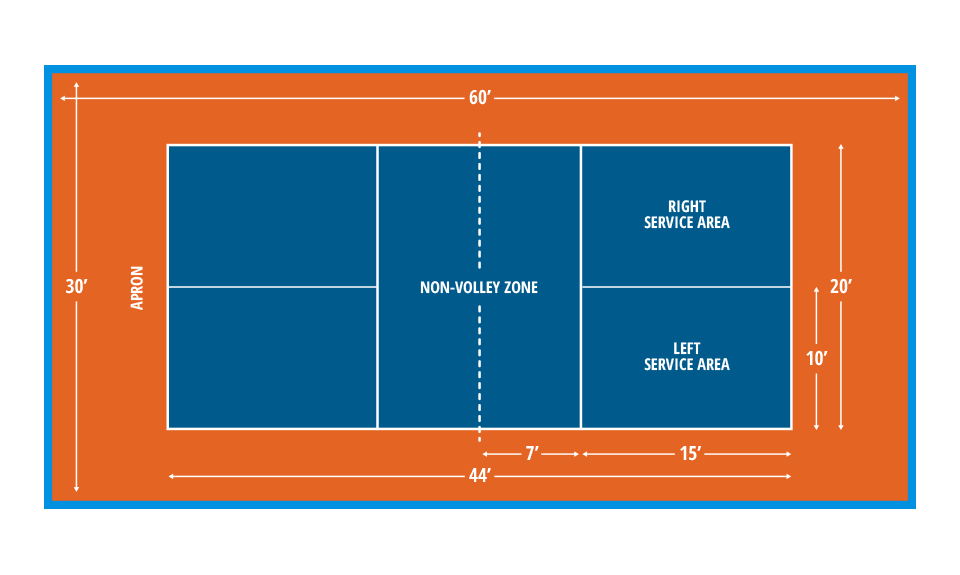
Official pickleball court dimensions at a glance
A regulation pickleball court is 20 feet wide and 44 feet long. This size is the same for singles and doubles. The non-volley zone, known as the kitchen, is 7 feet deep on each side of the net. The service areas are each 10 feet wide by 15 feet deep.
The net stands 36 inches high at the posts and 34 inches at the center. Lines are 2 inches wide and count as in. The centerline runs from the kitchen line to the baseline and divides the left and right service areas.
The net spans 22 feet across the top. Posts sit just outside the sidelines, so the playing width stays true. If you use a strap, it sets the center to 34 inches. Accurate pickleball court dimensions help with fair play and clean calls.

Lines and zones explained
Each line has a job. Knowing the layout helps avoid fault calls and setup errors.
- Baselines run along the back of the court. Serves must land past the kitchen line and inside the far service box.
- Sidelines run the 44-foot length of the court. Balls that touch any line are good.
- Non-volley zone lines sit 7 feet from the net on both sides. You cannot volley while touching this zone or its line.
- Centerlines split each side into left and right service boxes. The serve must cross into the diagonal box.
I tell players to think of the kitchen like a porch. You can stand there, but you cannot catch a ball in the air from the porch. That image helps new players honor the zone. Clear pickleball court dimensions make these lines easy to set and enforce.
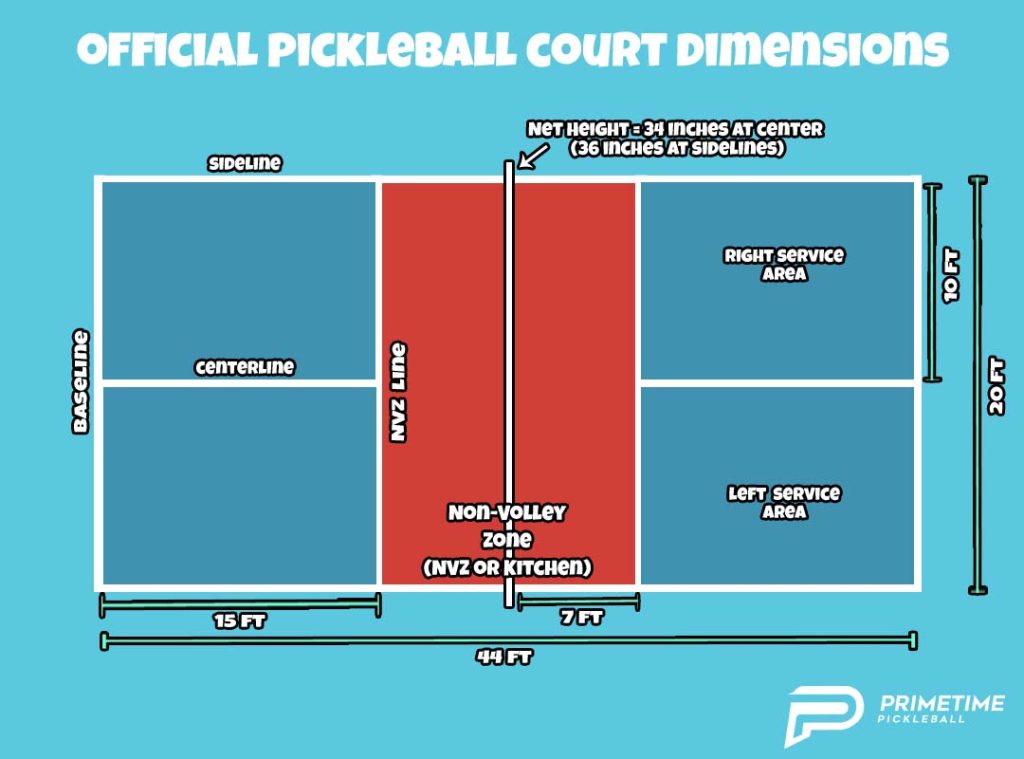
Net height, posts, and tension
The net height is 36 inches at the sides and 34 inches at the middle. This drop is part of the design. It gives room for drives down the center. A simple center strap or a tape measure at mid-court keeps it spot on.
Use sturdy posts placed just outside the sidelines. Keep the net tight, but not so tight that it bows. Check the height before matches. I keep a 36-inch stick by the post and a 34-inch mark on my tape. Accurate net setup supports true pickleball court dimensions.
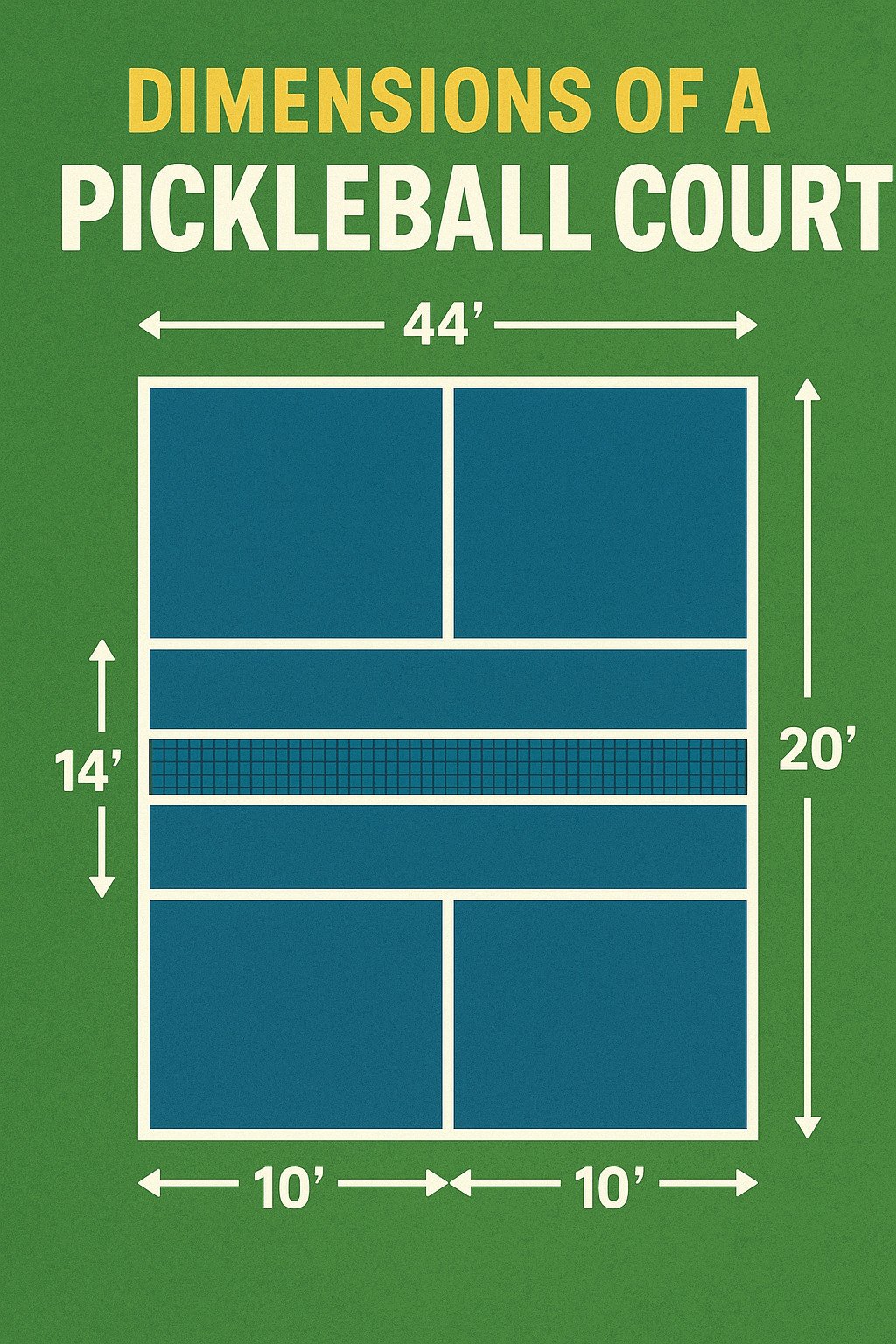
Recommended playing area and layout plans
You need safe space around the court to move. The minimum playing area is 30 feet by 60 feet. The preferred area is 34 feet by 64 feet. This gives room for serves, lobs, and safe chases.
For multi-court layouts, run courts north to south if you can. This reduces sun glare. Leave at least 10 feet between baselines of back-to-back courts. Mark walkways, benches, and gates outside the run-off area. Good layouts keep pickleball court dimensions clear and safe.

Surface, paint, and line specs
A sound surface makes play fair and gentle on joints. Asphalt or post-tension concrete works well. A light texture acrylic coating helps grip. Keep the slope low for drainage, about 1 percent or less.
Use high contrast colors. Many choose a darker inbounds and a lighter out-of-bounds. Lines should be 2 inches wide, bright, and crisp. Use quality masking tape and two light coats. Clean lines make pickleball court dimensions easy to see for players and refs.

How to measure and build a regulation court
Here is a simple way I use on fresh sites and temp courts. It is fast and accurate.
- Mark a rectangle 20 feet by 44 feet.
- Check the diagonal. It should be about 48 feet 4 inches. If both diagonals match, the court is square.
- Set net posts just outside the 20-foot width. Hang the net and set heights to 36 inches at posts and 34 inches in the center.
- From the net, measure 7 feet on each side. Snap a chalk line for the kitchen.
- Mark baselines at 22 feet from the net on both sides.
- Split each side with a centerline from the kitchen line to the baseline.
- Tape and paint 2-inch lines. Remove tape slow for clean edges.
I like to measure the kitchen from the net cord, not the post. That keeps the 7-foot depth true. These steps keep your pickleball court dimensions precise.
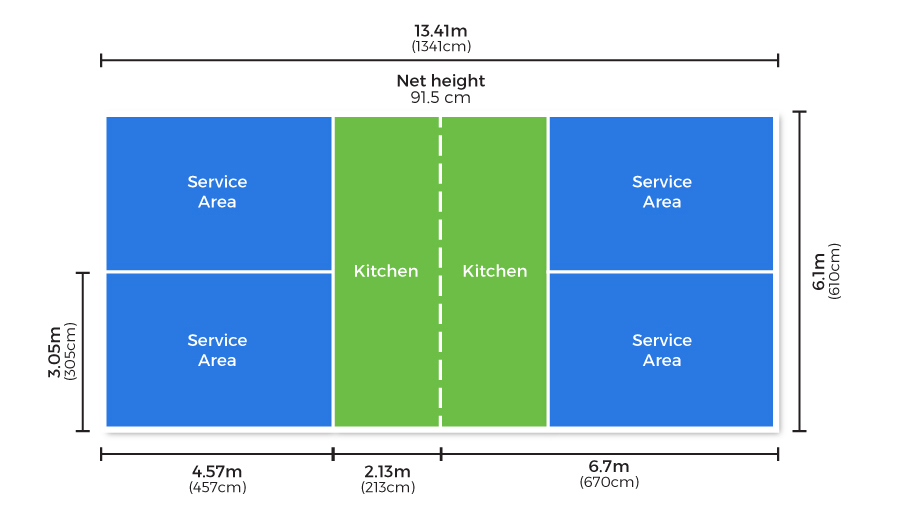
Common mistakes and pro tips
I see the same errors over and over. Most are easy to avoid.
- Not enough run-off. Players need room behind the baseline. Aim for the 34 by 64 preferred area.
- Wrong net height. Check before play. Heat and time can sag the net.
- Crooked lines. Use string lines and snap chalk first. Then tape and paint.
- Kitchen measured from the post. Always measure 7 feet from the net cord.
- Glare and shadows. Choose matte coats and plan court direction.
Pro tip from my crews. Double tape lines to guard against bleed. Pull tape at a low angle while paint is tacky. This gives clean lines that show off crisp pickleball court dimensions.
Adapting pickleball court dimensions to small spaces
You can practice in tighter spots and still build skills. Keep scale and safety in mind.
- Driveway or cul-de-sac. Try a 16 by 40 mini court with a 6-foot kitchen. Great for dinks and third shot drops.
- Short courts. Use 10 by 22 for dink games and footwork drills. A simple rope or chalk works as a net.
- Tennis court overlay. One tennis court can fit two to four pickleball courts. Use portable nets and tape lines.
Always mark edges with bright tape and warn neighbors. Even in small spaces, honor the idea of pickleball court dimensions. That helps your timing carry over to a full court.
Frequently Asked Questions of pickleball court dimensions
What are the official pickleball court dimensions?
The court is 20 feet wide by 44 feet long for singles and doubles. The kitchen is 7 feet deep on each side of the net.
How high is a pickleball net?
The net is 36 inches at the posts and 34 inches at the center. Check height with a tape or center strap.
How wide are the court lines, and do lines count as in?
Lines are 2 inches wide. All lines are in, including the kitchen line on a serve.
What space do I need around the court?
The minimum playing area is 30 feet by 60 feet. The preferred size is 34 feet by 64 feet for better safety.
Can I use a badminton court for pickleball?
Yes. Badminton courts share the 20 by 44 footprint. Lower the net to 34 inches at the center to meet pickleball court dimensions.
What is the size of each service box?
Each service box is 10 feet wide by 15 feet deep. The centerline splits the left and right boxes.
Can I play on a tennis court with temporary lines?
Yes. Use portable nets and tape to overlay accurate pickleball court dimensions. Check net height and kitchen depth.
Conclusion
Now you know the exact pickleball court dimensions, how to mark them, and how to avoid costly errors. With a tape, chalk, and care, you can build a court that plays great and looks sharp.
Pick one step today. Measure your space, set the net, or tape the kitchen. If this guide helped, share it with a partner, subscribe for more, or leave a question so I can help you fine-tune your setup.