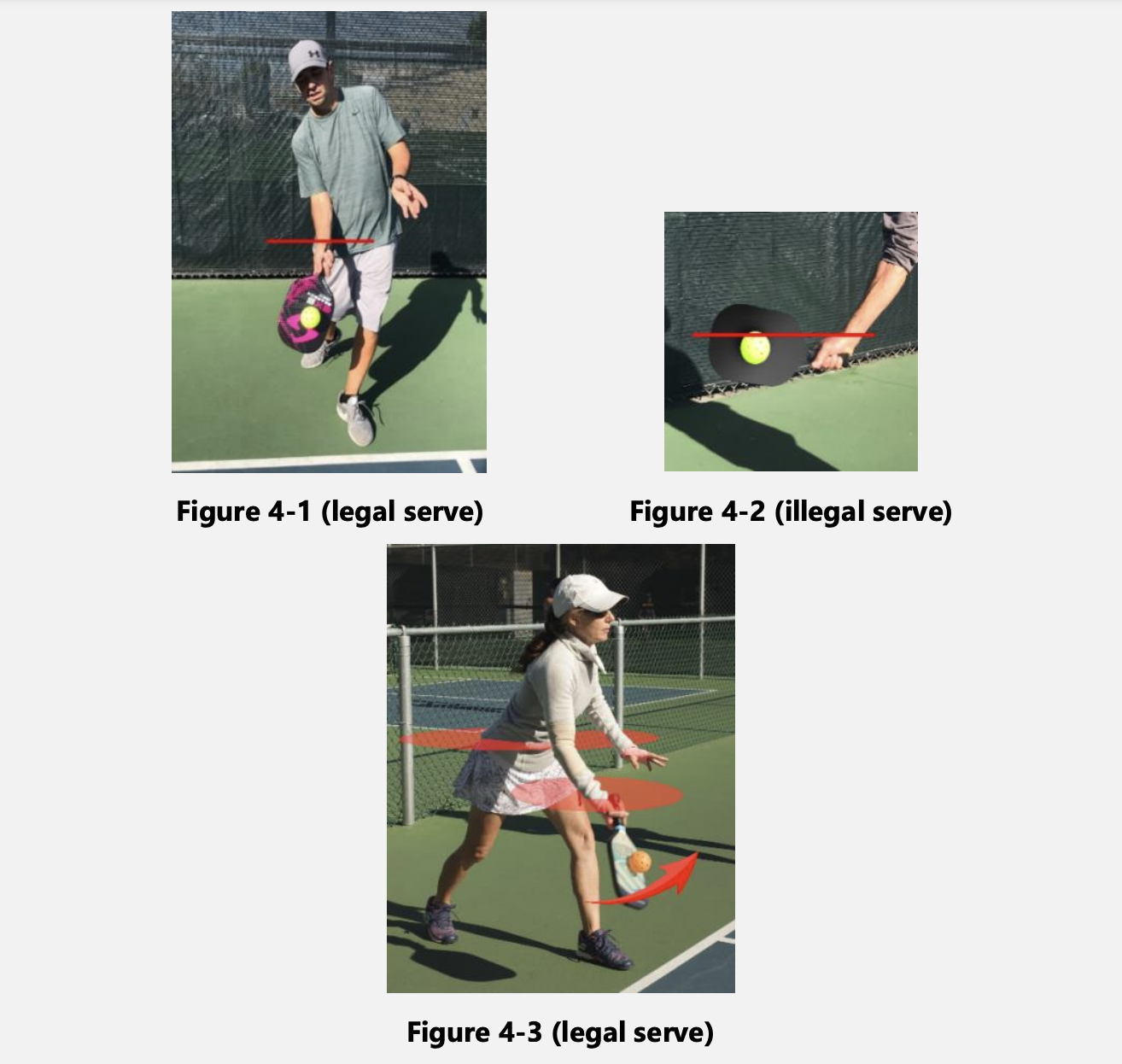
A legal pickle ball serve is underhand, below the waist, crosscourt, and deep.
If you want easy points and better control, master the pickle ball serve. I have coached new and advanced players on this skill for years. In this guide, I will show you how the pickle ball serve works, what the rules say, and how to serve with power and aim. You will learn drills, tactics, and fixes that make your pickle ball serve a real weapon.
The basics and rules of a legal pickle ball serve
A strong start begins with clear rules. The pickle ball serve must follow simple steps. Get these right first, and your serve will become steady fast.
Key rules for a legal pickle ball serve:
- Use an underhand motion. Your arm moves up at contact.
- Hit the ball below your waist. The navel is the line.
- The highest point of the paddle at contact is below your wrist joint.
- Feet stay behind the baseline at contact. No foot on the line.
- Serve to the diagonal court. The ball must land past the kitchen line.
- The kitchen line on the other side is out on the serve.
- No let serves. If the ball hits the net and lands in, play on.
- You get one serve try, unless there is a rare interference.
Volley serve vs drop serve:
- Volley serve: You release the ball from one hand and hit it in the air.
- Drop serve: You drop the ball. It bounces once. Then you hit it. You cannot throw it down.
Personal note: Many of my students feel calmer with the drop serve. It slows the move and cuts double faults. The volley serve can be faster, but it needs great timing. Use the one that makes your pickle ball serve more steady.
Grip, stance, and setup for a consistent pickle ball serve
Great serves start before the swing. Your setup is the base.
Grip:
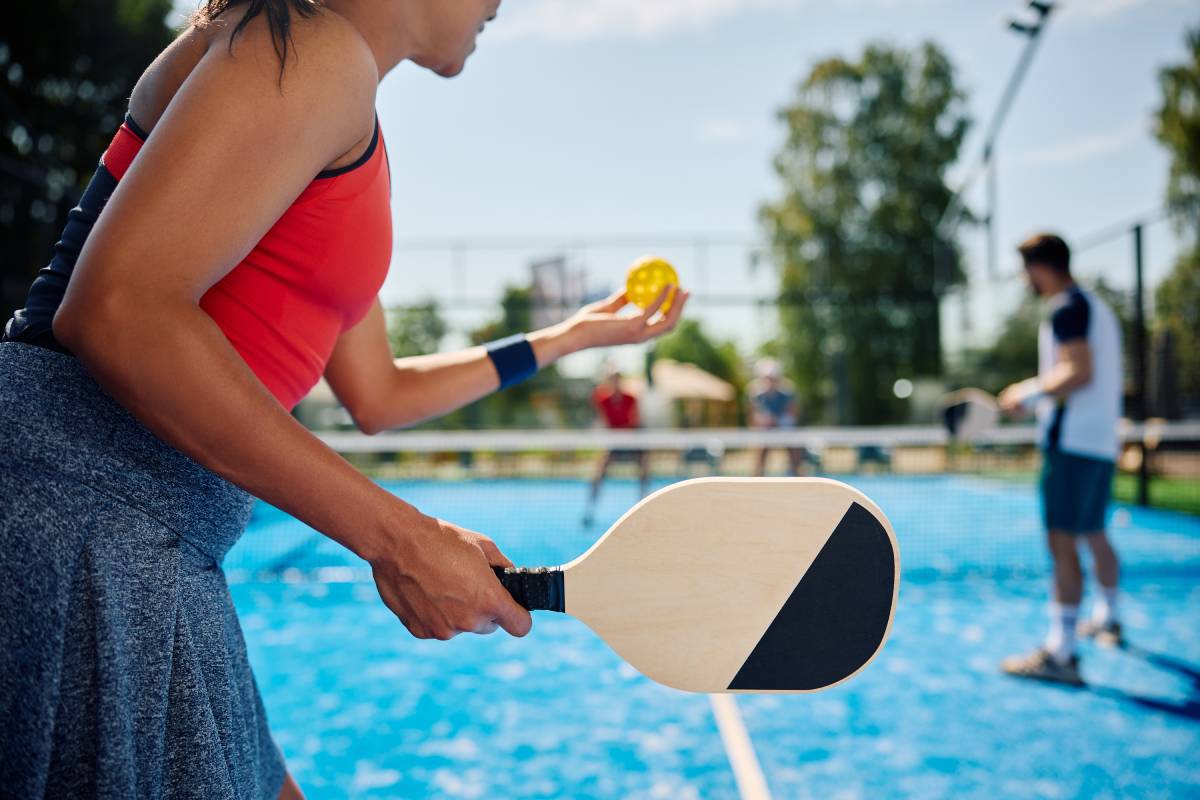
- Use a neutral grip. Think of shaking hands with the paddle.
- Hold it firm but not tight. Aim for a 4 out of 10 squeeze.
- Keep the face square at address for simple, straight serves.
Stance:
- Stand sideways to the net. Front foot points to the target.
- Keep feet shoulder width. Weight on the back foot to start.
- Place the ball out front and low. Relax your shoulders.
Routine that works:
- Deep breath. Bounce or drop the ball once. Pick your target line.
- Quiet head. Smooth start. No rush.
- Count a slow one-two as you swing.
Tip from experience: Your stance sets your aim. If you miss wide, check your toes. They often point where the ball goes. Fix the feet. The pickle ball serve will fix itself.
Mechanics: swing, contact, and follow-through
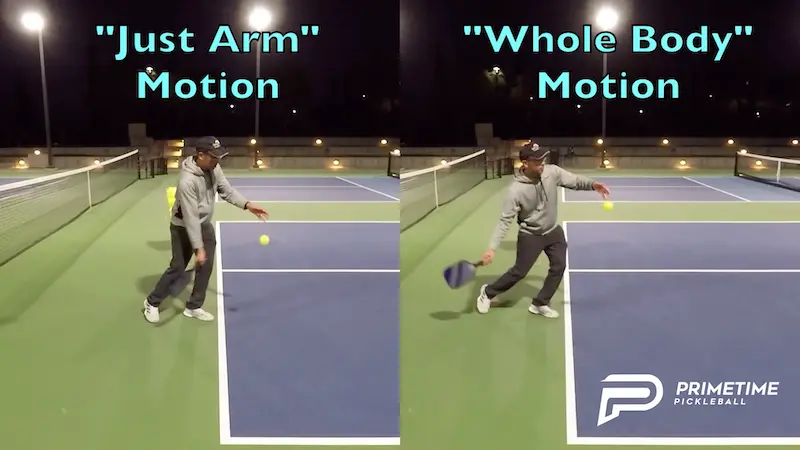
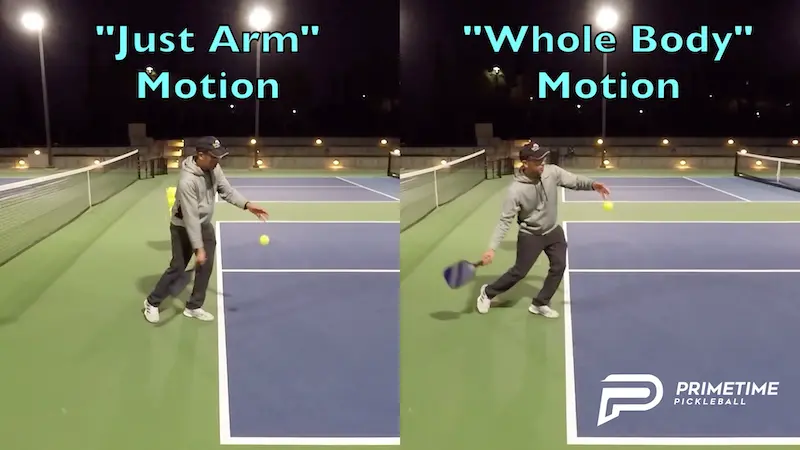
Simple moves win in pickleball. The pickle ball serve is like a smooth pendulum.
Backswing:
- Keep it short. Hands stay close to your body.
- Lead with the shoulder. The wrist stays quiet.
Contact:
- Meet the ball out front and low.
- Brush up for arc. Do not chop or stab.
- Eyes on the contact spot. Head still.
Follow-through:
- Finish toward your target. Chest faces the court.
- Hold the finish for one beat. Then step in.
Common form cues:
- Smooth to fast. Do not start too hard.
- Same swing speed. Let aim and height change depth.
- With a drop serve, hit the rise for more power.
Coach tip: Say glide-pop in your head. Glide through the backswing. Pop through contact. This keeps rhythm and adds free pace to your pickle ball serve.
Types of pickle ball serves and when to use them
You do not need fancy tricks. A few serve types cover most needs. Use them on purpose.
Core serves:
- Deep power serve: Flat, deep, to push the returner back. Best for first point pressure.
- Deep slice serve: Side spin that skids to the backhand. Great to force a weak chip.
- Topspin drop serve: Drop, brush up, and drive. Safe net clearance with a heavy kick.
- Body jam serve: Aim at the ribs or paddle hip. Causes late swings and floats.
- Short spot serve: Soft to the forehand side near the line. Pulls them forward and wide.
- High lob serve: Slow arc, very deep. Good mix-up. Best with wind at your back.
When to use:
- Versus strong hitters: Use slice to the backhand and body jams.
- On big points: Go deep to the safe middle seam.
- In wind: Hit lower and flatter into the breeze. Higher with wind behind you.
- If returns attack your feet: Serve deeper and faster to buy time.
Pro tip: Build a two-serve plan. Start with a deep power serve. Next time, show the same setup and hit a slice to the same side. This one-two keeps your pickle ball serve hard to read.

Targeting and strategy on the pickle ball serve
Aiming is half the battle. Targets help your pickle ball serve do work for you.
High-value targets:
- Backhand corner: Most players have a weaker backhand return.
- Body line: Hit the ribs or right hip for right-handers.
- Middle seam: Make partners call it. You win free errors.
- Deep to the feet: Land near the baseline to jam their split step.
Smart patterns:
- Early game: Test both corners to map their weak side.
- Versus poachers: Aim wide to pull the net player off.
- Against lobbers: Serve deeper to cut their time.
- If you miss long: Lower your net height a bit, not the swing speed.
Data-backed idea: Depth reduces return pace and angles. When your serve lands within two feet of the baseline, the third shot gets much easier. Train that depth window for a steadier pickle ball serve.

Common faults and how to fix them
Faults happen. Fix the root, not just the symptom.
Typical faults:
- Ball lands in the kitchen: Aim higher over the net. Start contact lower.
- Long by a foot: Keep the same swing. Close the face a hair or aim one foot shorter.
- Wide misses: Check stance. Square your chest and toes to the target.
- Foot fault: Draw a chalk line behind the baseline and practice to it.
- Wrist flicks: Tape a coin to your wristband. If it clicks, you used too much wrist.
- No arc on the volley serve: Picture a window two feet over the net. Swing through that window.
Two quick fixes that work:
- 10 slow-motion serves. Feel the low contact and high finish.
- Say bounce-hit out loud on the drop serve. It keeps tempo and cleans timing.
Use a phone video from the side. Most players spot the paddle too high at contact. Get that right and your pickle ball serve will pass checks every time.

Practice drills to level up your pickle ball serve
Reps build trust. Keep it simple and track your wins.
Accuracy ladder:
- Place four targets: wide, body, middle, and backhand corner.
- Hit five balls to each. Mark makes on a sheet.
- Goal: 15 of 20 in. Then raise pace by 10 percent.
Depth box game:
- Chalk a box two feet from the baseline.
- Try to land 7 of 10 serves in the box.
- When you hit 7, shrink the box to 18 inches.
Pressure sets:
- Score to seven. Each miss is minus one.
- After a miss, switch to your safest pickle ball serve.
- Add a breath reset before each ball.
Tempo drill:
- Drop serve only. Let the ball fall from waist height.
- Swing the same speed each time.
- Count the same rhythm. This sets a repeatable motor pattern.
Tracking tip from my log: Note target, serve type, and make rate. A small uptick week to week is real proof. That is how your pickle ball serve grows strong.

Gear and conditions that affect your pickle ball serve
Small tweaks change feel. Set your gear to fit your serve plan.
Paddle:
- Weight helps power. Light helps control. Try midweight for balance.
- A softer face adds dwell time for slice and topspin.
- Grip size should let your fingers just touch your palm.
Balls and courts:
- Outdoor balls are firmer and faster. Aim a bit higher for shape.
- Indoor balls are softer. Add pace to keep depth.
- On slick courts, shorten your step and widen stance.
Weather:
- Wind in face: Swing harder, aim lower.
- Wind at back: Lift higher, soften pace.
- Sun: Toss your gaze down and use the drop serve to keep eyes shaded.
Warm-up:
- 10 drop serves deep middle.
- 5 to each corner with your match serve.
- Finish with 5 body serves. Start your match with a clear plan.
Set your gear and routine once. Then your pickle ball serve feels the same on every court.

Rules corner: updates and edge cases for the pickle ball serve
Rules change at times. Know the current basics to avoid drama.
Key notes to remember:
- Let serves are not replayed. If it lands in, play it.
- On a drop serve, you must let the ball fall on its own. Do not push it down.
- The ball can bounce once only before contact on a drop serve.
- Keep both feet behind the baseline at contact. No touching the line.
- The serve must cross the net and land in the diagonal box. Kitchen line is out.
Event tip: Some events are strict about how you release the ball on the volley serve. Keep your release simple and clean. If your group uses local rules, ask before play. A quick check avoids a mid-match call on your pickle ball serve.
Frequently Asked Questions of pickle ball serve
What is the best grip for a pickle ball serve?
Use a neutral handshake grip. It keeps the paddle face square and makes aim simple.
Can I add spin to my pickle ball serve?
Yes, you can create slice or topspin with your swing path. Keep the motion underhand and meet the ball below your waist.
Is a let serve legal in pickleball?
Let serves are played. If your serve clips the net and lands in the correct box, the point is live.
Should I use the drop serve or the volley serve?
Use the one you repeat best. Many players find the drop serve steadier, while the volley serve can add pace.
Where should I aim my pickle ball serve?
Aim deep to the backhand corner or at the body. Mix in a middle target to cause partner confusion.
How fast should my pickle ball serve be?
Fast enough to push them back but still land in 8 of 10 tries. Consistency beats raw speed at most levels.
What is the biggest mistake on the pickle ball serve?
Hitting too high at contact. Keep the paddle below your wrist and your swing smooth and up.
Conclusion
Your serve sets the tone. Build a simple, legal move, pick smart targets, and practice with clear drills. Make depth and aim your first goals, and add pace only when your make rate is high.
Start today. Pick one main pickle ball serve and one backup. Track your makes, and test new targets each week. If this guide helped, share it with your group, subscribe for more tips, or leave a comment with your biggest serve win this month.