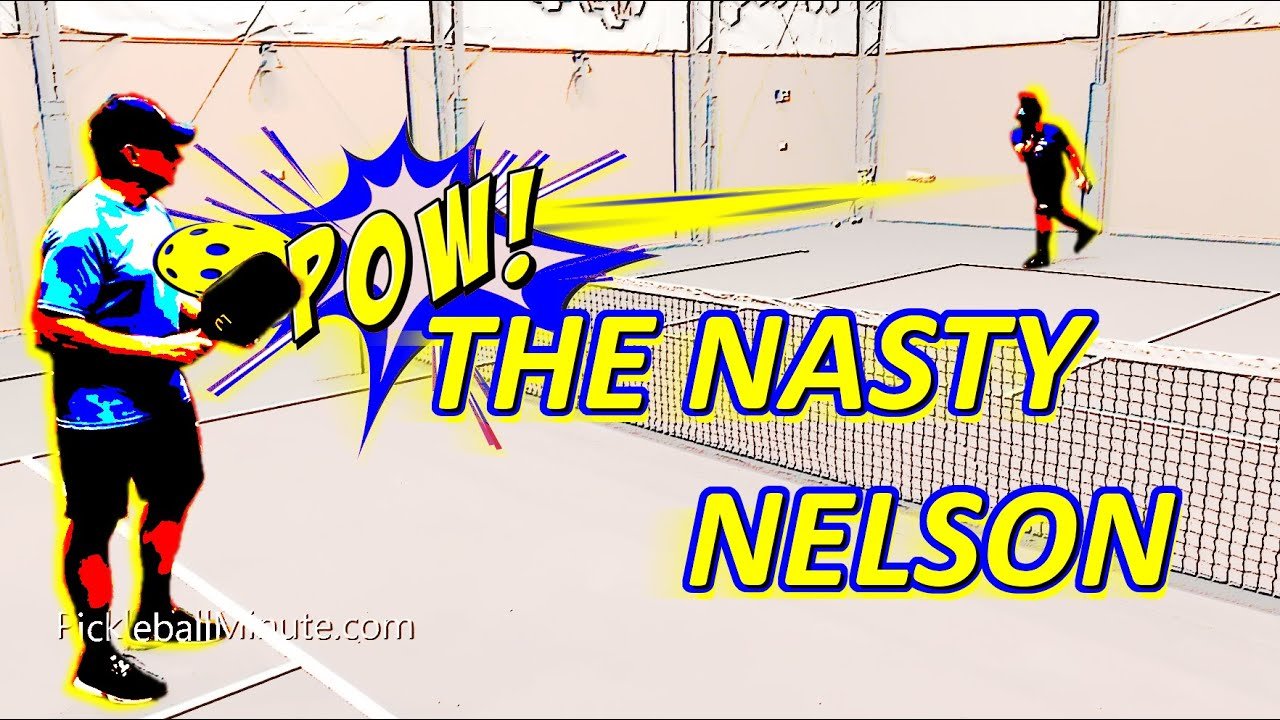
A Nasty Nelson is a legal pickleball serve that targets the non-receiver.
If you play doubles, you have seen it. The server fires fast and flat. The ball tags the player at the kitchen line. The point ends at once. That move is called the nasty nelson. I have taught and faced this shot for years. In this guide, I break down what it is, when to use it, how to pull it off, and how to defend it with calm and respect.

What Is a Nasty Nelson in Pickleball?
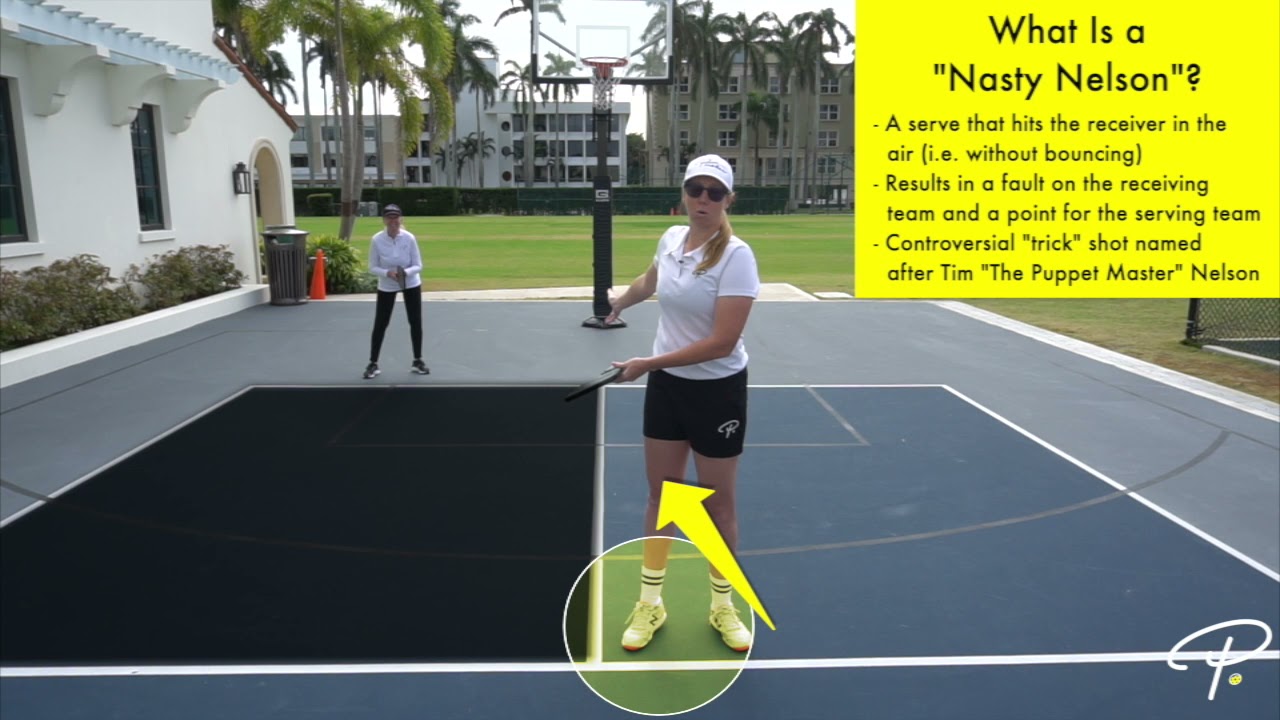
A nasty nelson is a serve that aims at the non-receiving player. That player is often set near the kitchen line. If the serve hits them before a bounce, the receiving team commits a fault. The serving team wins the point.
The name comes from a top doubles player known for this tactic. It is a shock play. It punishes poor setup and daydreams. It also keeps teams honest at the line.
The nasty nelson works because the non-receiver cannot touch the serve. The ball is live. Contact before the bounce ends the rally. You will see it at all levels now, from rec nights to big events.
Is the Nasty Nelson Legal? Rules and Ethics
By current rules, a serve that strikes the non-receiver before a bounce is legal. The fault is on the receiving team. The serve must still meet all service rules. It must be diagonal. It must land in the correct box if it does not hit a player first.
But there is an ethics layer. The nasty nelson can feel rude if overused. Use care with new players. Warn friends if you plan to practice it. In tourneys, it is fair play. In rec, read the room.
What I teach is simple: safety first. Aim low. Do not aim at a head or face. Talk with your group. The nasty nelson should build skill, not fear.

How to Execute a Nasty Nelson
Keep it simple and clean. Aim for the outside foot of the non-receiver. A flat, fast serve feels best.
Steps to try:
- Stand a touch wider on the baseline. This angle opens the lane to the non-receiver.
- Use a compact toss or drop. Keep the paddle face square at contact.
- Hit flat with a small top spin wrap. This keeps the ball low and true.
- Aim at the hip or thigh of the non-receiver. Never aim high.
- Sell a normal serve with your eyes. Do not stare at the target.
- Follow through toward the target line. Hold your finish to keep aim.
Pro tip from the court: do not slow down. A half swing will sail wide. Commit to a clean strike. The nasty nelson likes firm contact.

When to Use It
The nasty nelson is not for every point. Pick your spots.
Smart moments:
- The non-receiver crowds the kitchen line before the serve.
- The non-receiver leans in or reaches into the box.
- The non-receiver is not looking. They talk to a partner.
- The receiver stands very wide, leaving a clear lane.
- You need a momentum spark or a simple free point late in a game.
Risk moments:
- The lane is blocked. You may miss wide.
- The crew is new or shy. It may hurt trust.
- The ref has warned for delay or time. Keep it simple there.
Use the nasty nelson as a tool. Not a crutch. Once or twice a game is often enough.
How to Defend Against a Nasty Nelson
You can shut down the nasty nelson with small fixes. It starts before the serve.
Do this every point:
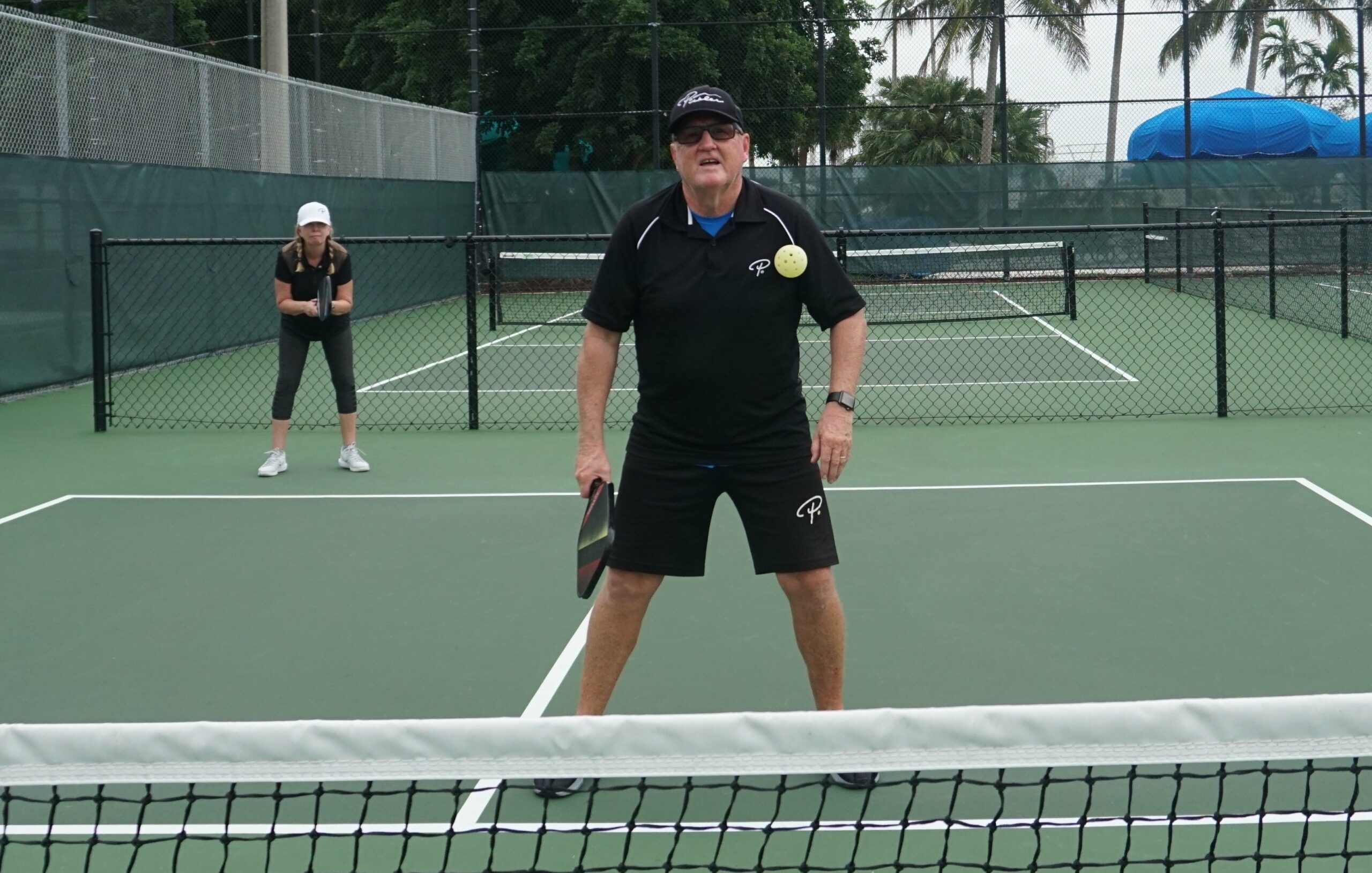
- The non-receiver should stand back. One or two steps behind the kitchen line helps.
- Keep your paddle up. Hold it like a shield in front of your chest.
- Reset your feet. Square to the server, not the net post.
- Watch the paddle at contact. Do not daydream.
If the serve comes at you, block or hop back. Let the ball land if you can. If it hits the ground first, you can play on. If it will hit you first, move your body out of the way.
Teach this cue to your partner: call eyes. One word at a time. It keeps both of you alert and ready for a nasty nelson.
Drills to Practice or Counter
You can train both sides with simple reps.
For execution:
- Cone lane drill: Place two cones near the sideline at the kitchen. Serve through that lane ten times each side.
- Target pad drill: Have a friend hold a foam pad at hip height. Aim for center of the pad. Keep it safe and slow at first.
- Shadow serve drill: Rehearse the stance and finish without a ball. Build a repeat swing.
For defense:
- Paddle shield drill: Partner soft tosses at your torso from the kitchen. Block with a still paddle face.
- Split-step read drill: Partner fake-aims wide, then fires at you. You react on the paddle cue.
- Back-step habit drill: After each point, step back two steps by default. Make space a habit to foil a nasty nelson.

Common Mistakes and How to Avoid Them
When using the nasty nelson:
- Telegraphing the aim: Do not stare at the target. Keep your eyes neutral.
- Aiming too high: Keep the ball low. Hip or thigh is your safe window.
- Slow swing: Decel makes the ball rise and miss. Swing through.
- Overuse: Mix it in. Save it for key points.
When defending the nasty nelson:
- Standing on the line: Give yourself a buffer. Two steps back helps.
- Paddle down: Hold the paddle up and out front.
- Drifting inward: Stay clear of the service box line. Do not lean in early.
- Freezing: Train a small hop step. Movement breaks the freeze.

Gear and Setup Tips
The right gear can help both sides of the play.
Helpful tweaks:
- Paddle: A midweight paddle with a firm face gives a clean, flat serve. It also blocks better on defense.
- Grip: Use a relaxed grip on defense. A softer hand absorbs pace on a nasty nelson.
- Ball: Indoor balls fly softer. Outdoor balls carry more and stay true. Adjust aim.
- Court habits: Between points, reset depth. Build a quick check list with your partner.
Small changes can make a big edge. The nasty nelson rewards details.
Real-World Stories and Lessons Learned
In a local league match, my partner kept creeping in. We gave up two free points to a nasty nelson in one game. We fixed it with one rule. After the score call, we both took two steps back. The cheap points stopped.
In a state event, I used a nasty nelson at 9-9. The non-receiver leaned in for a poach. I aimed at the outside knee. It clipped their paddle. We took the point and the serve. That night I wrote one note: do not use it to show off. Use it to solve a problem.
These stories share one theme. The nasty nelson is about focus. Awareness wins more points than power.
Frequently Asked Questions of nasty nelson
What is a nasty nelson in pickleball?
It is a serve that hits the non-receiver before a bounce. That contact is a fault on the receiving team, and the server wins the point.
Is a nasty nelson legal in all formats?
Yes, it is legal under standard rules when the serve is otherwise valid. It is used in both rec play and tournament play.
Is the nasty nelson considered poor sportsmanship?
It depends on context. In events, it is fair. In casual games, talk with your group and use good judgment.
How do I avoid getting hit by a nasty nelson?
Stand a step or two back from the kitchen line before the serve. Keep your paddle up and your eyes on the server’s paddle at contact.
What is the best target when trying a nasty nelson?
Aim for the outside hip or thigh of the non-receiver. Low and outside reduces risk and avoids the head or face.
Can I return the serve if it hits my partner first?
No. If it strikes your partner before a bounce, it is a fault on your team. The serving team gets the point.
Does the serve need to land in the service box on a nasty nelson?
If the ball hits the non-receiver first, landing does not matter. If it misses them, it must land in the correct box to be legal.
Conclusion
The nasty nelson is a sharp tool in your kit. It punishes poor setup. It wins fast points. It also demands respect, care, and smart use. Learn to execute it with control. Learn to defend it with space, vision, and a ready paddle.
Try one drill from this guide this week. Talk with your group about court safety. If this helped, share it with a friend, subscribe for more tips, or drop your own nasty nelson story in the comments.