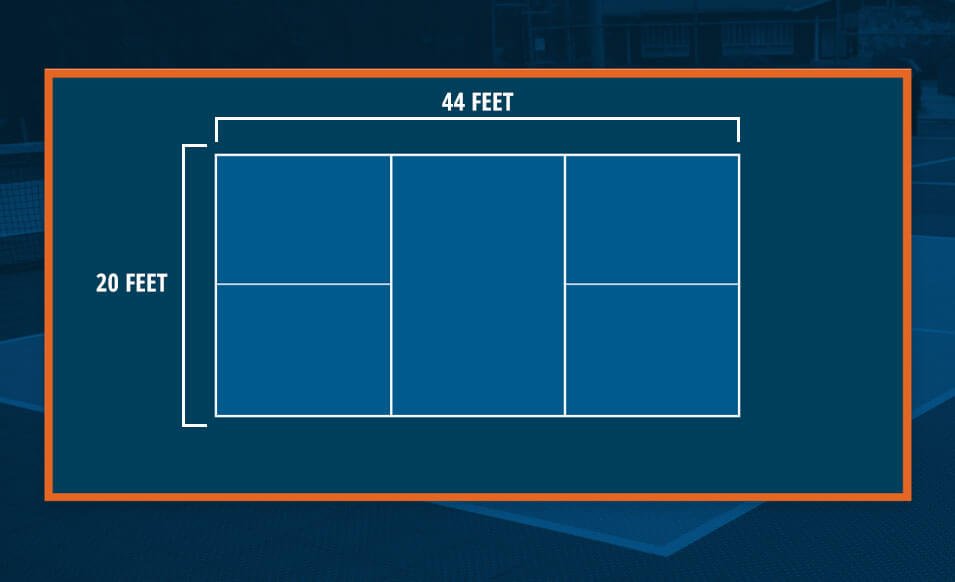
A standard pickleball court is 20 feet wide for both singles and doubles.
If you’ve ever wondered how wide is a pickleball court, you’re in the right place. I coach beginners and help facilities stripe courts, so I know the rules and the real-world details. In this guide, we’ll break down how wide is a pickleball court, why width matters, and how to measure it right—so you can play with confidence and set up smart at home or at the park.
Official court dimensions at a glance
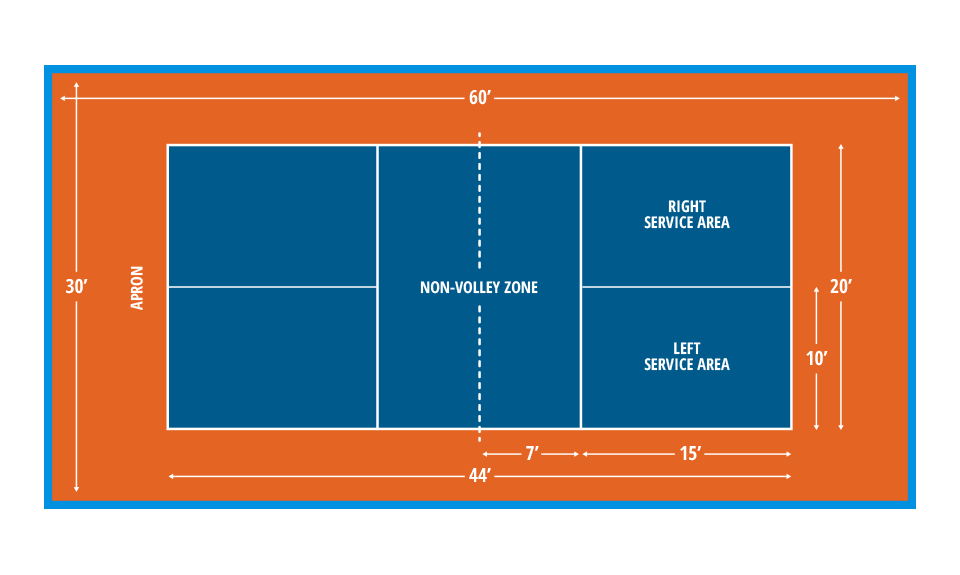
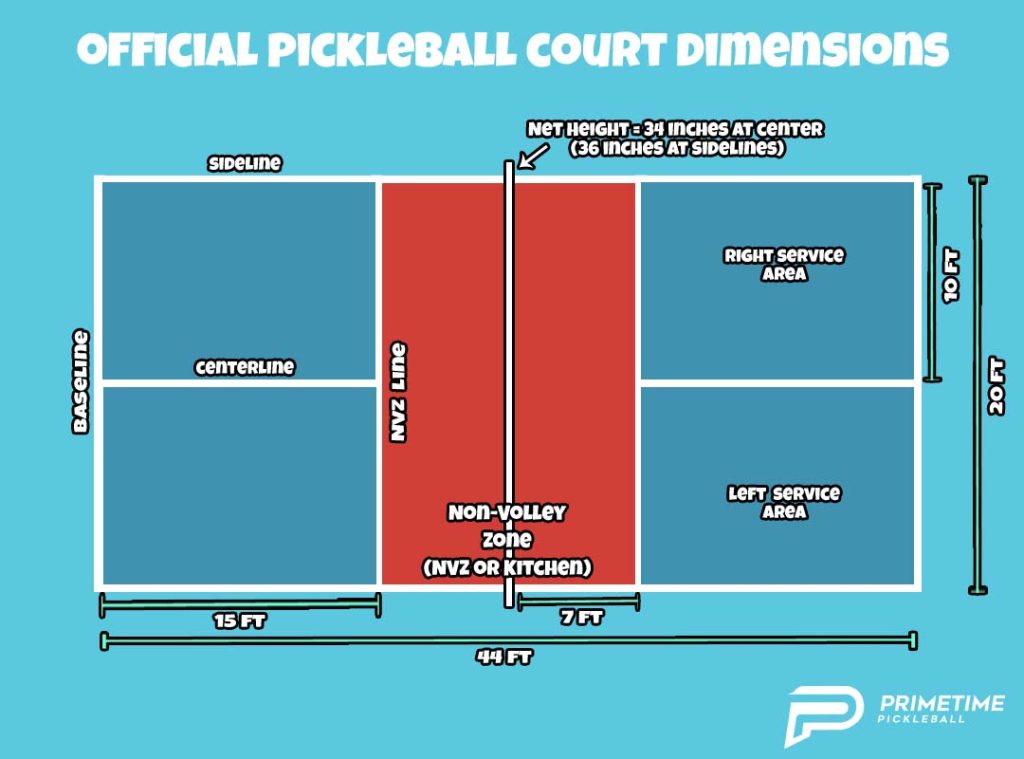
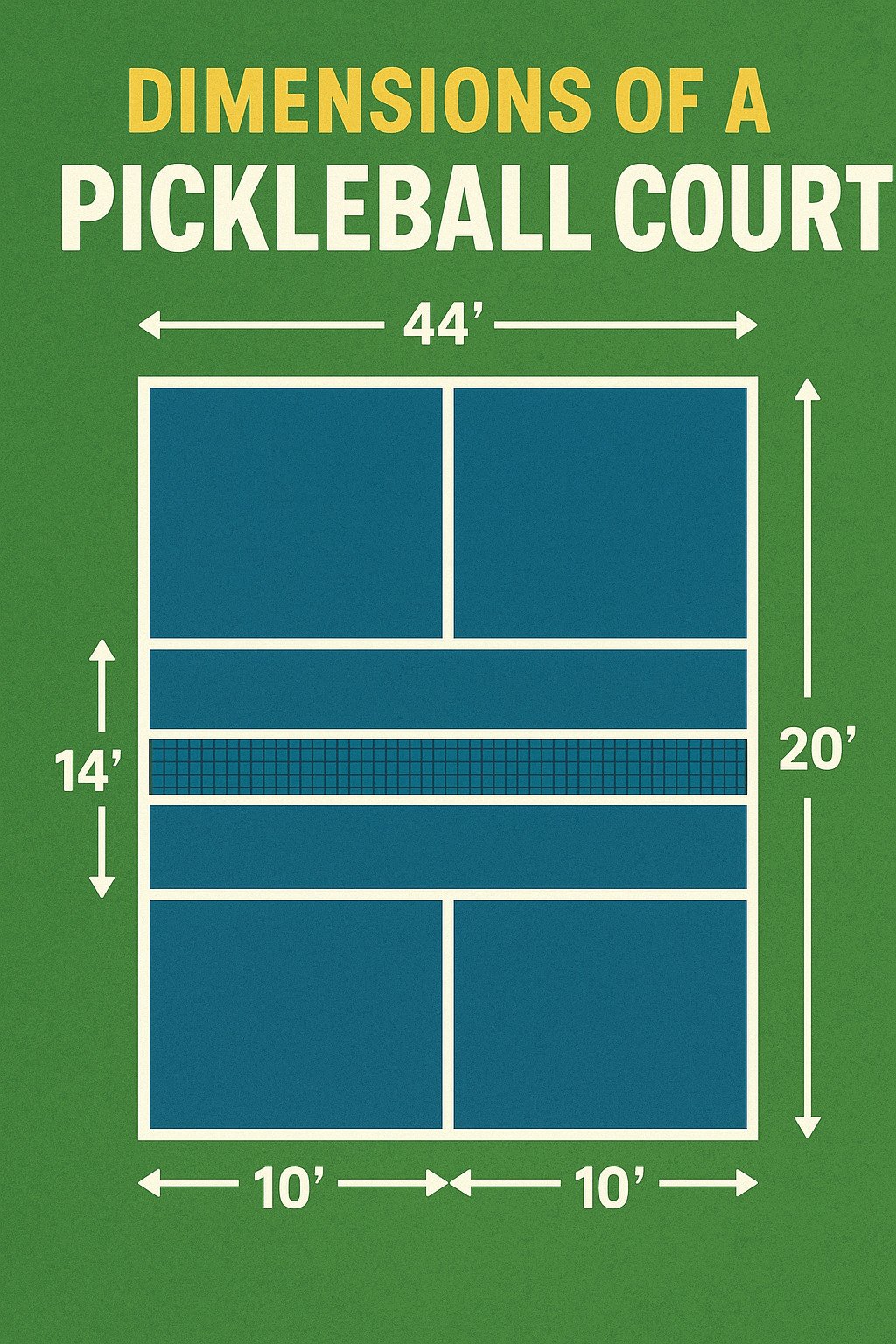
If you ask how wide is a pickleball court, the official answer is 20 feet. That width is the same for singles and doubles. The full court size is 20 feet wide by 44 feet long. The non-volley zone (the kitchen) is 7 feet deep on each side of the net. Lines are 2 inches wide and are part of the court. The net is 36 inches high at the posts and 34 inches at the center.
Key points to remember:
- Width: 20 feet for all play
- Length: 44 feet
- Net height: 36 inches at posts, 34 inches at center
- Line width: 2 inches
- Kitchen: 7 feet from the net on each side
These specs match the current official rulebook used in the United States and in most global events. If someone asks how wide is a pickleball court at your local club, this is the standard they mean.
Singles vs doubles: width and why it stays the same
People often ask how wide is a pickleball court in singles. The answer is still 20 feet. Unlike tennis or badminton, pickleball uses the same court for singles and doubles. The width does not change, which keeps the game simple and easy to set up anywhere.
Why no change? Pickleball rallies focus on placement, dinks, and quick hands at the kitchen. The shared width keeps matches fair and fast for all formats. So when a friend wonders how wide is a pickleball court for doubles, you already know it is the very same 20 feet.
Why width matters for play, safety, and strategy
Width shapes footwork, angles, and shot choices. On a 20-foot width, cross-court dinks land safer and deeper. Drives to the outside hip are easier to aim. And third shots need enough arc to land in bounds.
Safety also ties to width and the space beyond it. Players chase lobs near the sidelines. Clear room saves ankles and avoids falls. So when you plan a new court, ask not only how wide is a pickleball court, but also how much safe space you need around it.

Total playing area you need around the court
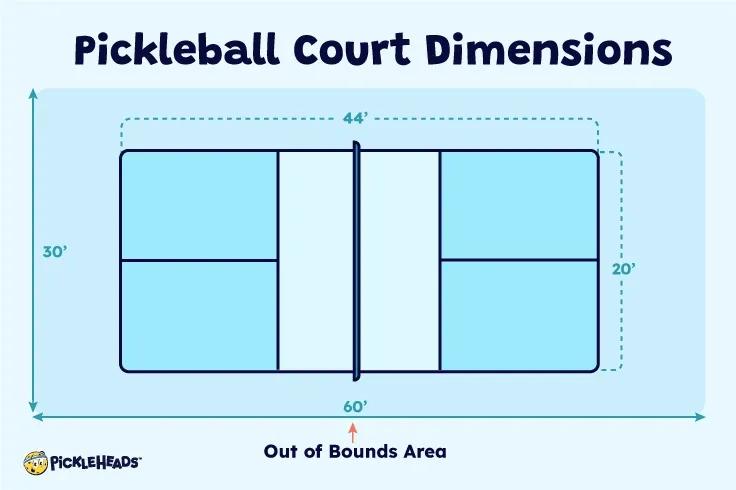
The court is 20 by 44 feet, but you need extra runout. The common minimum pad is 30 by 60 feet. For events or higher play, 34 by 64 feet feels better and safer. More space helps with lobs, returns, and doubles movement.
If a neighbor asks how wide is a pickleball court including space, explain that the court is still 20 feet wide. But the full play area adds 5 to 7 feet on each side for safe movement and clear swings.
Lines, kitchen, and service boxes explained
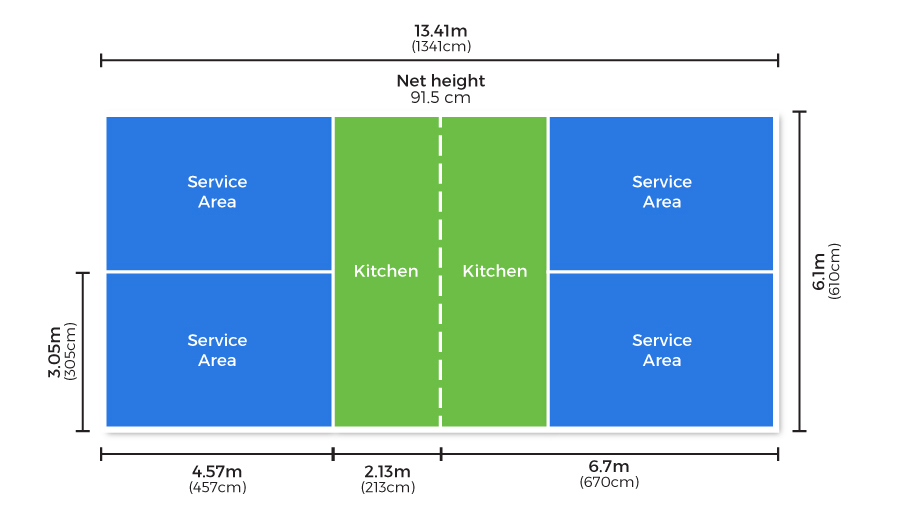
Knowing the court map helps your game. Here is the quick layout:
- Baselines: The back lines at each end
- Sidelines: The 44-foot lines that define the width
- Non-volley zone line: 7 feet from the net, part of the kitchen
- Centerline: Splits the service courts
- Service boxes: Each box is 10 by 15 feet
Players often ask how wide is a pickleball court when looking at the boxes. The total width is 20 feet. Each service box is half the width, or 10 feet across.

Measuring and marking a court step by step
If you are lining a driveway, gym, or new slab, measure with care. Here is a simple method I use:
- Mark a baseline of 20 feet. This answers how wide is a pickleball court at the back line.
- From each baseline corner, measure 44 feet for the sidelines.
- Check the diagonals. The diagonal of a 20 by 44 rectangle is about 48.33 feet. If both diagonals match, your court is square.
- Mark the kitchen line at 7 feet from the net on both sides.
- Add a 2-inch line width for all lines.
- Place the net at center and check the height: 36 inches at posts, 34 inches at the middle.
I like a chalk snap line for first marks and painter’s tape for crisp edges before paint. If someone stops by and asks how wide is a pickleball court as you tape, let them know the 20-foot baseline sets the width for the entire build.
Converting a driveway, gym, or tennis court
You can fit one pickleball court on many driveways if you have enough length. In gyms, roll-out tape or removable floor paint works well. On a tennis court, you can fit two pickleball courts on one half or four on a full court, with good spacing.
When converting, first decide how wide is a pickleball court in your plan. It must be 20 feet. Then place courts to allow safe runout. Add temporary nets if needed. Keep nets at the proper height for true play.

Common mistakes and how to avoid them
I see the same errors all the time:
- Using a width other than 20 feet. If someone asks how wide is a pickleball court and you guess, you risk the whole layout.
- Skipping the diagonal check. This causes skewed sidelines.
- Using lines thinner than 2 inches. Thin lines are hard to see and not regulation.
- Forgetting safe space. No room near fences leads to injuries.
- Setting the net too high or low. This changes the game feel.
Do a quick checklist before painting. Measure twice and tape once. A friend once asked me how wide is a pickleball court after we had already painted a 19-foot baseline. We fixed it with a new coat, but it cost time and paint.
Pro tips from the court: my experience
After marking dozens of courts, I keep these habits:
- Always start with the 20-foot baseline. It anchors everything.
- Use two tape measures at once when you can. It keeps lines straight.
- Re-check the 48.33-foot diagonal before paint cures.
- Bring shims for the center strap to lock the net at 34 inches.
- Snap photos of each step. It saves headaches if you need to adjust later.
Players will ask how wide is a pickleball court when they see a clean build. You can say 20 feet with pride, knowing you backed it with careful work.
How width affects your gear and setup
Court width guides how you pick nets, paddles, and even shoes. A full-width 20-foot court needs a regulation net that spans 22 feet post-to-post. That gives room for the 20-foot inner width and end posts. Paddles and balls do not change with width, but movement patterns do. Stable shoes with good lateral grip are key for those sideline sprints.
If a teammate wonders how wide is a pickleball court when buying a net, remind them to look for a 22-foot net system with a center strap. That ensures the right span and the proper dip at the middle.
Weather, surfaces, and line durability
Outdoor courts face sun, rain, and freeze-thaw cycles. Use outdoor paint and clean the surface before coating. On concrete, a primer can help lines last longer. On asphalt, make sure the surface is cured and free of oils.
If a park director asks how wide is a pickleball court while planning maintenance, confirm it is 20 feet. Then suggest UV-stable paint, anti-slip grit, and a clear schedule for re-striping every few seasons.
Accessibility and youth play considerations
Wheelchair pickleball uses the same 20-foot width. Some events allow a second bounce, but the lines do not change. For kids, keep the court at full width and adjust learning games, not the size. Use slower balls or lighter paddles to build control.
Coaches often ask how wide is a pickleball court for clinics. The answer stays 20 feet. You can run mini-drills within the court, but it helps to keep the real shape for better skill transfer.
Frequently Asked Questions of how wide is a pickleball court
How wide is a pickleball court in feet?
It is 20 feet wide. This is the same for both singles and doubles play.
How wide is a pickleball court compared to a tennis singles court?
A tennis singles court is 27 feet wide. A pickleball court is 20 feet wide, so it is narrower and easier to cover.
How wide is a pickleball court including lines?
The 20-foot width includes the 2-inch sidelines. Lines are part of the court, so a ball on the line is in.
How wide is a pickleball court for tournaments?
It is still 20 feet. Tournaments often add more space around the court, but the playing width does not change.
How wide is a pickleball court when converting a tennis court?
The court stays 20 feet wide. You may place two courts on one tennis half or four on a full tennis court with buffer space.
How wide is a pickleball court indoors vs outdoors?
Indoors and outdoors use the same 20-foot width. The surface and lighting change, but the dimensions stay standard.
How wide is a pickleball court when used for wheelchair play?
Still 20 feet wide. Rules may allow an extra bounce, but lines and width do not change.
Conclusion
You now know the full story behind how wide is a pickleball court. The magic number is 20 feet, locked in by official rules and proven by play. Build with care, leave safe space, and check your diagonals so your court plays true. Want to go further? Share this guide with your crew, ask your local park to adopt these standards, and subscribe for more hands-on court tips and drills.