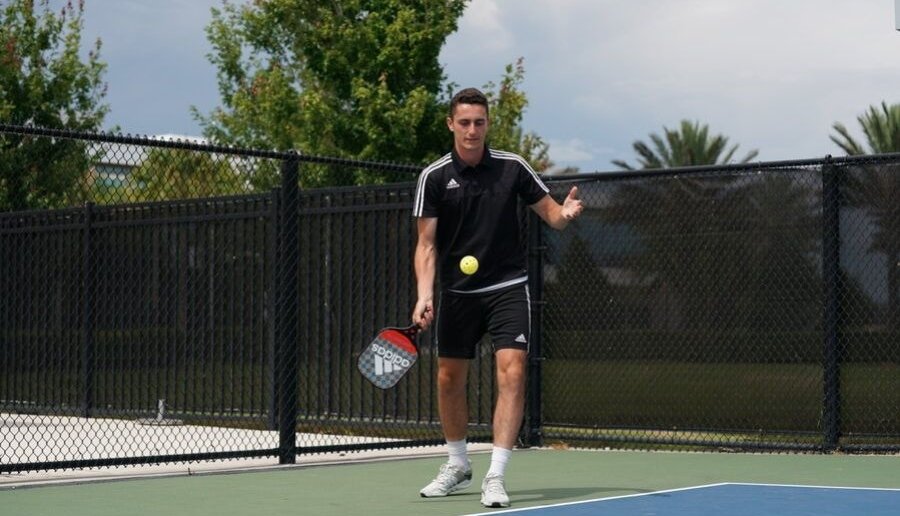
Keep paddle below waist, swing up, clear the kitchen, call the score.
If you want to learn how to serve in pickleball the right way, you are in the right place. I have coached new players and captained rec teams for years. I will show you how to serve in pickleball with simple steps, smart drills, and game-ready tips. Stick with me and you will build a legal, deep, and reliable serve that wins points.
The official pickleball serve rules made simple
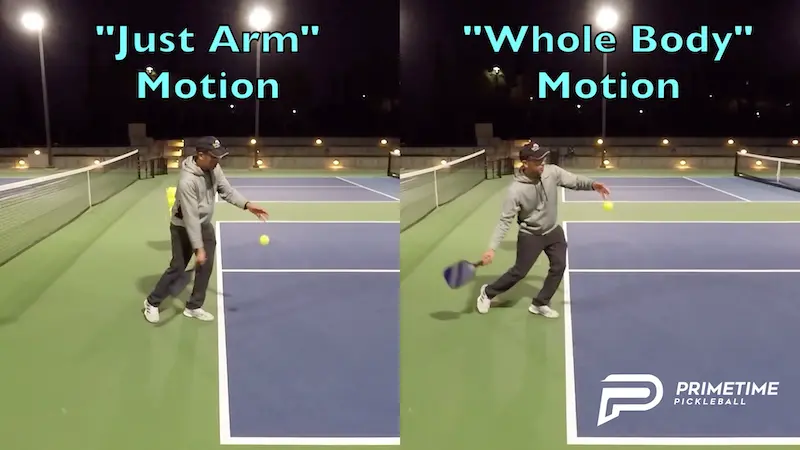
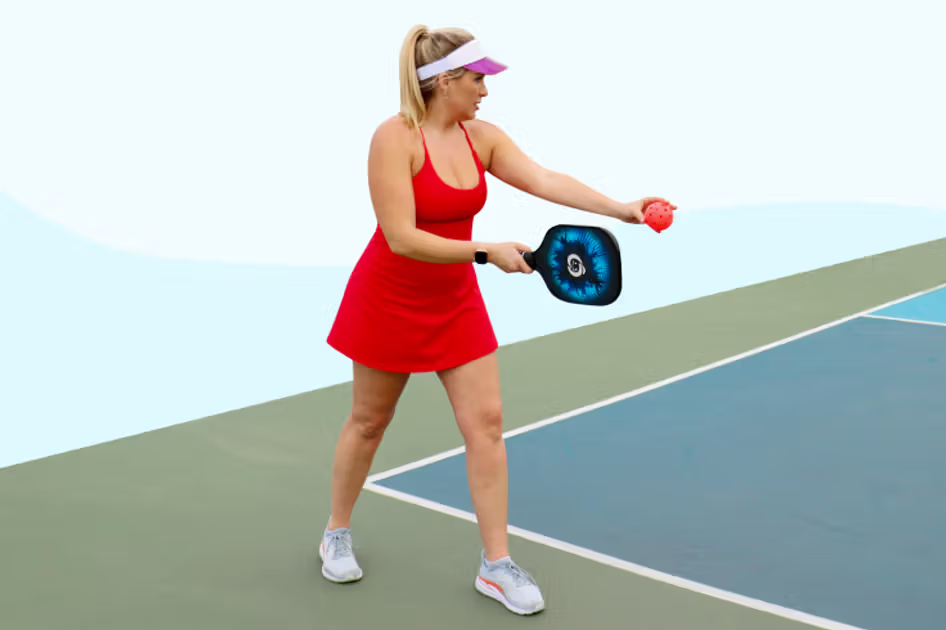
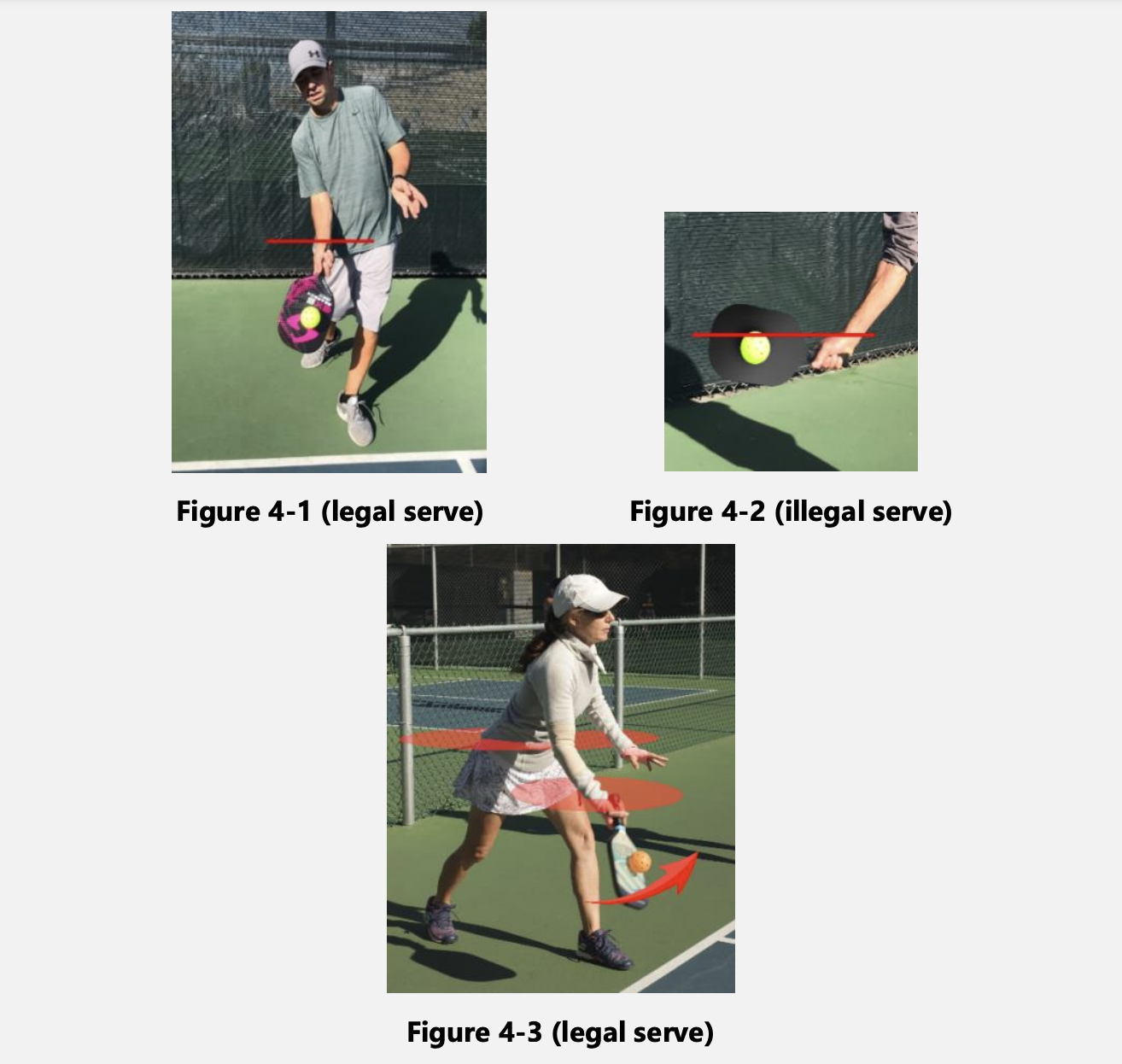
If you want a clean start on how to serve in pickleball, know the rules first. A legal serve is underhand, below your waist, and hit with an upward motion. It goes cross-court, past the kitchen line, after you call the score.
Key rules to remember:
- Call the full score before you swing.
- Stand behind the baseline and inside the sideline and centerline extensions.
- At contact, your paddle head must be below your wrist, and the ball must be below your navel.
- Use an upward arc. Think “low to high,” not level or down.
- Serve cross-court into the opposite service box.
- The ball must clear the non-volley zone. The kitchen line is out on the serve. Other lines are in.
- One serve attempt per point. Service lets are played live.
- You can volley serve out of the air, or use a drop serve. On a drop serve, you must release the ball with no added force.
This is the base. It keeps your serve legal, repeatable, and trusted in any game.

Setup that makes serving easy: grip, stance, and contact
Great results in how to serve in pickleball start before you swing. Set your grip, feet, and contact point so the ball flies deep and straight.
- Grip: Use a continental grip. It feels like a handshake. It works for flat, topspin, and slice serves.
- Stance: Place your feet shoulder-width apart. Front foot points to your target. Back foot is stable and light.
- Contact: Hit the ball out in front of your lead hip. Keep the swing path up and through.
Personal tip: I tell players to “aim the logo.” If your paddle logo faces your target at contact, your face angle is sound.
Step-by-step: a smooth, legal serve you can trust
Here is how to serve in pickleball in five simple steps. Keep it slow and smooth.
- Pick a target. Backhand corner is a safe start.
- Call the score. Take a breath.
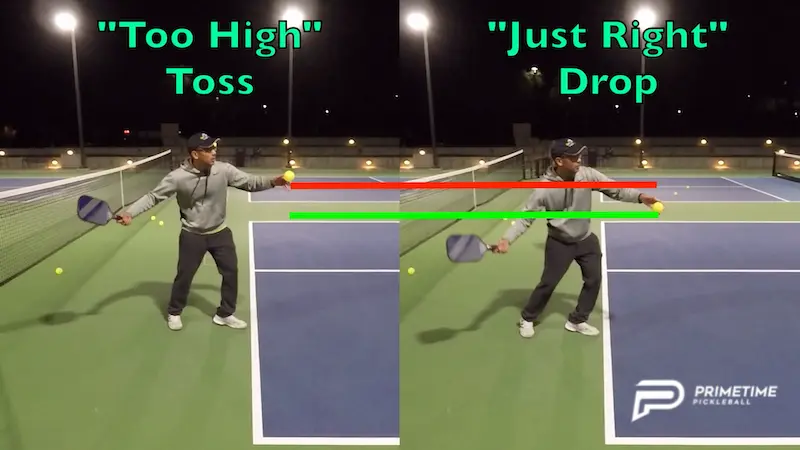
- Drop or toss gently. Keep the ball low and in front.
- Swing low to high. Brush through the ball, below your waist.
- Hold your finish. Watch the ball land deep.
Two checks:
- Did you clear the kitchen line?
- Did you land near the baseline? If yes, you are ready for the next one.
Serve types and when to use them
To master how to serve in pickleball, learn a few types. Use each one on purpose, not at random.
Deep flat serve
- What it does: Pushes the returner back.
- How to hit: Smooth, firm swing with a square paddle face.
- When to use: First serve of a game to set tone.
Topspin serve
- What it does: Dips late and jumps up after the bounce.
- How to hit: Brush up the back of the ball. Think “roll the ball up the net.”
- When to use: To force short or high returns.
Slice serve
- What it does: Skids and curves to a sideline.
- How to hit: Brush across the outside of the ball.
- When to use: To yank a player off the court.
Body serve
- What it does: Jams the opponent at the hips.
- How to hit: Aim at their chest or belt.
- When to use: Against big forehands.
Lob serve
- What it does: Arcs high and lands deep.
- How to hit: Soft, high arc. Aim beyond the kitchen.
- When to use: To change pace or use wind or sun.
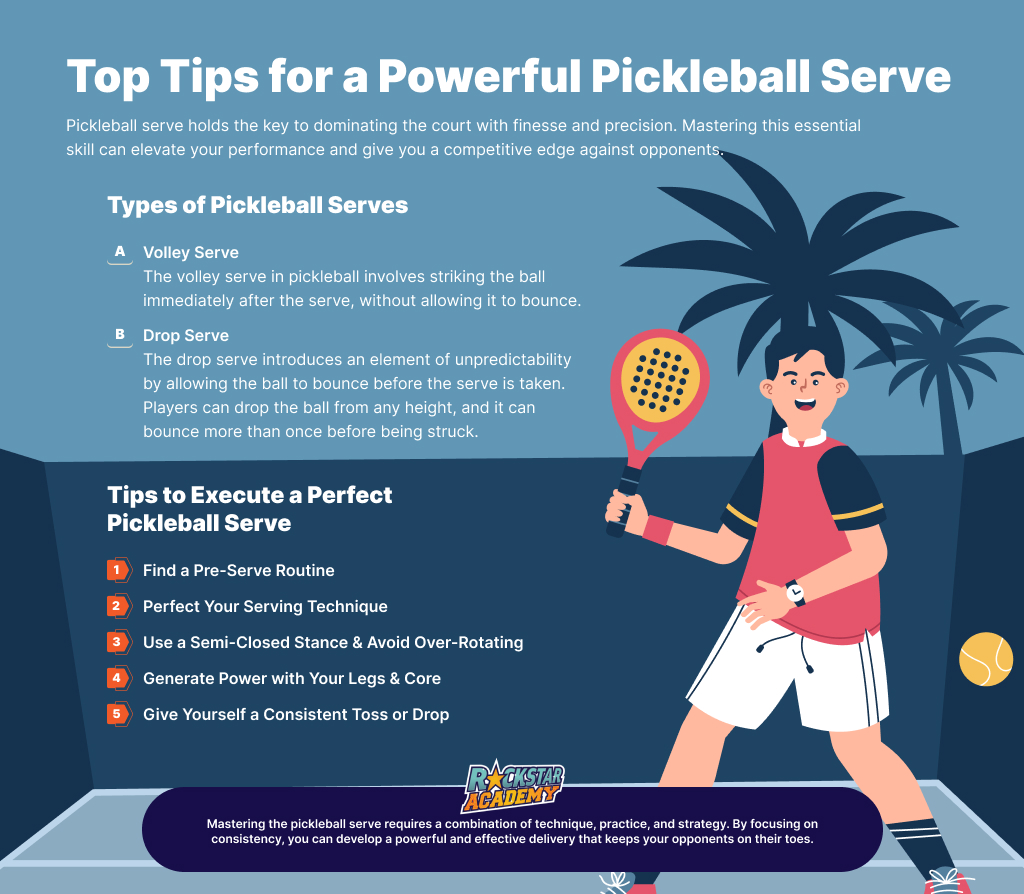
Drop serve vs. volley serve
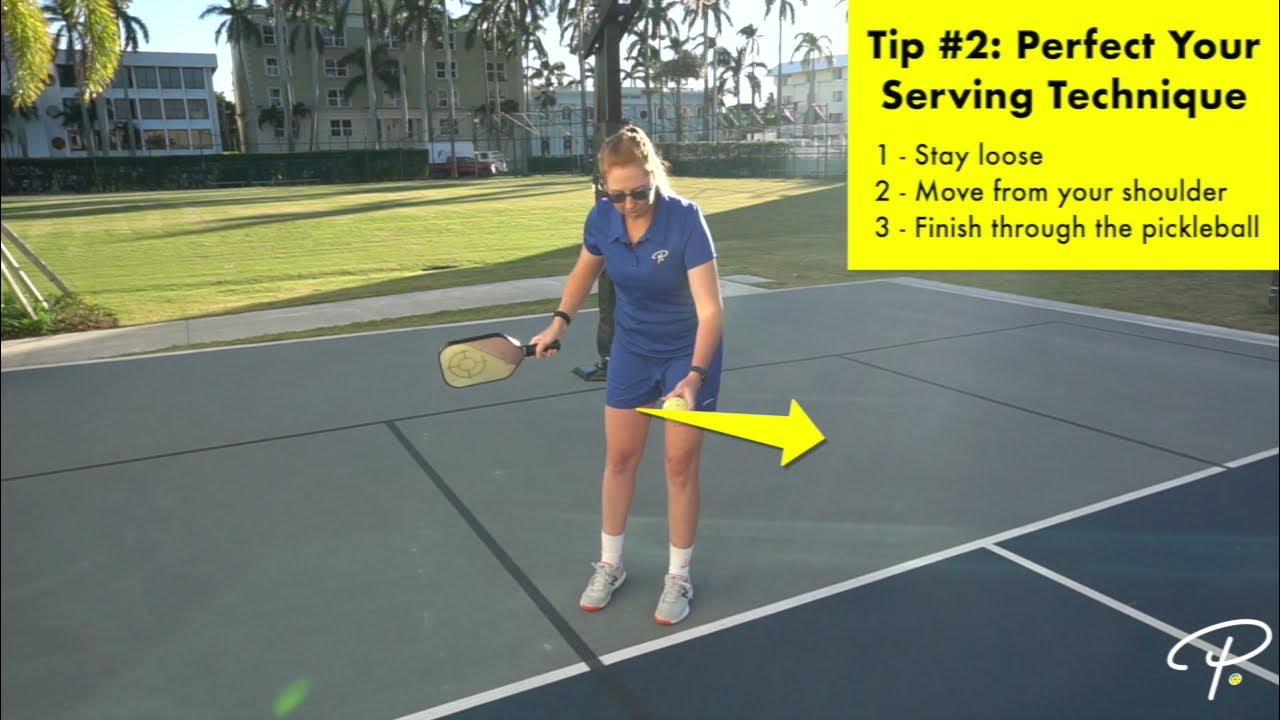
- Volley serve: Hit the ball out of the air. No spin added by your hand. Keep it simple.
- Drop serve: Let the ball fall from your hand with no force. Then hit it off the bounce. The bounce makes timing easier.
Placement and strategy that wins free points
Smart placement is the secret in how to serve in pickleball. You do not need aces. You need weak returns.
High-value targets:
- Deep middle: Causes doubt on who takes it.
- Backhand corner: Most players have a softer backhand.
- Body serve: Jams their swing.
- Corner to corner: Move them off the court.
Tactical tips:
- Mix speed and spin to break rhythm.
- Serve deep first. Accuracy beats power.
- Use the wind and sun. Serve into sun at key points.
My go-to pattern: Deep to backhand twice, then a body serve. It draws a pop-up more than you think.

Spin basics you can trust (and keep legal)
Part of how to serve in pickleball is learning safe spin. Use your paddle, not tricks with your hand.
- Keep contact below your waist. Brush up for topspin. Brush across for slice.
- Do not add spin with your tossing hand on a volley serve.
- On a drop serve, you may drop the ball with or without spin. Do not push it down or toss it up.
- Start small. Add just a little spin. Keep depth first.
Spin is seasoning, not the full meal. Depth still wins.

A 15-minute serve routine to level up fast
The fastest way to improve how to serve in pickleball is a short, focused plan. I use this with new players and see gains in one week.
Warm-up, 3 minutes:
- Ten relaxed shadow swings.
- Ten easy serves down the middle.
Accuracy, 6 minutes:
- Ten serves to deep backhand.
- Ten serves to deep middle.
- Ten serves to deep forehand.
- Track how many land within three feet of the baseline.
Spin and pace, 4 minutes:
- Ten light topspin serves.
- Ten light slice serves.
- Keep at least 70% in.
Pressure, 2 minutes:
- Call the score, pick a target, and serve as if at 9-9.
- If you miss, step back, breathe, and repeat the same target.
Bonus: Use cones near the corners and baseline. Hit them, not just the box.
Common mistakes and quick fixes
You will make errors as you learn how to serve in pickleball. Fix them fast with simple checks.
- Ball lands short: Aim higher. Stand a step back. Slow down and finish your swing.
- Long misses: Lower your net clearance. Soften your grip a bit.
- Into the net: Drop your contact point. Brush up more.
- Wild left or right: Shorten the backswing. Keep your head still.
- Nerves when calling the score: Breathe in as you speak. Exhale as you swing.
Coach’s note: When I get tight, I say “deep middle” out loud before I serve. It narrows my focus and calms my hands.
Gear and court factors that matter
Even gear affects how to serve in pickleball. The right setup adds control and feel.
- Paddle: A softer face helps depth control. A textured face adds spin.
- Grip size: If it is too big, you lose wrist snap. If too small, you spray. Aim for a snug, not tight, hold.
- Balls: Outdoor balls are firmer and fly fast. Indoor balls are softer and float more.
- Shoes: Stable shoes help a calm base. Slips cause mishits.
- Conditions: Serve with the wind to add free depth. Serve into sun to handcuff returns.
Make small changes, not big swaps, before a match.
Frequently Asked Questions of how to serve in pickleball
What is the easiest way to learn how to serve in pickleball?
Start with a deep flat serve to the backhand corner. Keep the motion slow, smooth, and under control.
Do I have to hit underhand when I serve?
Yes. Your swing must move up, your paddle head must be below your wrist, and contact must be below your waist. This keeps the serve legal.
Can the serve land on the kitchen line?
No. The non-volley zone line is out on the serve. All other lines are in.
Should I use a drop serve or a volley serve?
Pick the one that makes timing easy. Many new players like the drop serve because the bounce slows the ball.
How fast should I swing on my serve?
Swing at a pace you can repeat under pressure. Depth and placement beat raw speed in most games.
How often should I practice to improve how to serve in pickleball?
Ten minutes, three times a week, is enough to see gains. Track makes and misses to keep it real.
Where should I aim when I am nervous?
Aim deep middle. It is a large, safe target and keeps returns weak.
Can I add spin with my hand when I release the ball?
Not on a volley serve. On a drop serve, release the ball with no force and follow the rules for a legal drop.
Conclusion
You now know how to serve in pickleball with skill and calm. Keep it legal, aim deep, and mix pace and spin with purpose. Small daily reps build a serve that sets up every point.
Try the 15-minute plan this week. Track your depth and targets. If this helped, share it with a partner, subscribe for more drills, or drop your serve questions in the comments.