Serve underhand diagonally, keep feet behind baseline, aim deep with control.
If you want to learn how to serve in pickleball, you are in the right spot. I coach new and mid-level players and have tested every legal motion, spin, and target. This guide shows how to serve in pickleball with clear rules, step-by-step form, smart tactics, and easy drills so you can win more points fast.
The rules of the pickleball serve
Understanding the rules is the first step in how to serve in pickleball. A legal serve keeps you safe from easy faults and builds confidence.
Key rules to know:
- Serve cross-court and land in the opposite service box. The ball must clear the non-volley zone. If it hits the kitchen line, it is a fault.
- Feet must stay behind the baseline at contact. Do not touch the court, the baseline, or the imaginary extensions of the sideline or centerline.
- Call the score before you serve. Pause a moment so all players hear it.
- Only one serve attempt. There are no second serves.
- Net cords are live. If a serve clips the net and lands in the correct box, play on.
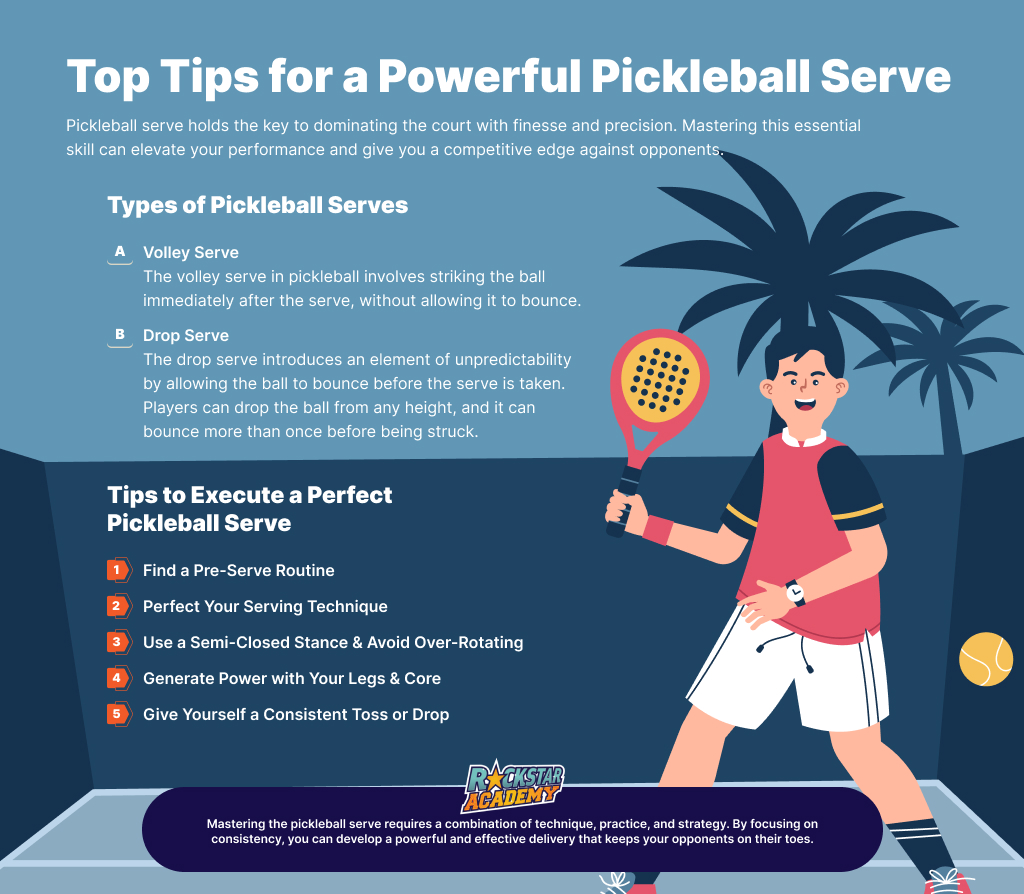
- Two legal styles exist. Volley serve is hit out of the air with an underhand motion. Drop serve is hit after a bounce with fewer motion limits.
Volley serve specifics:
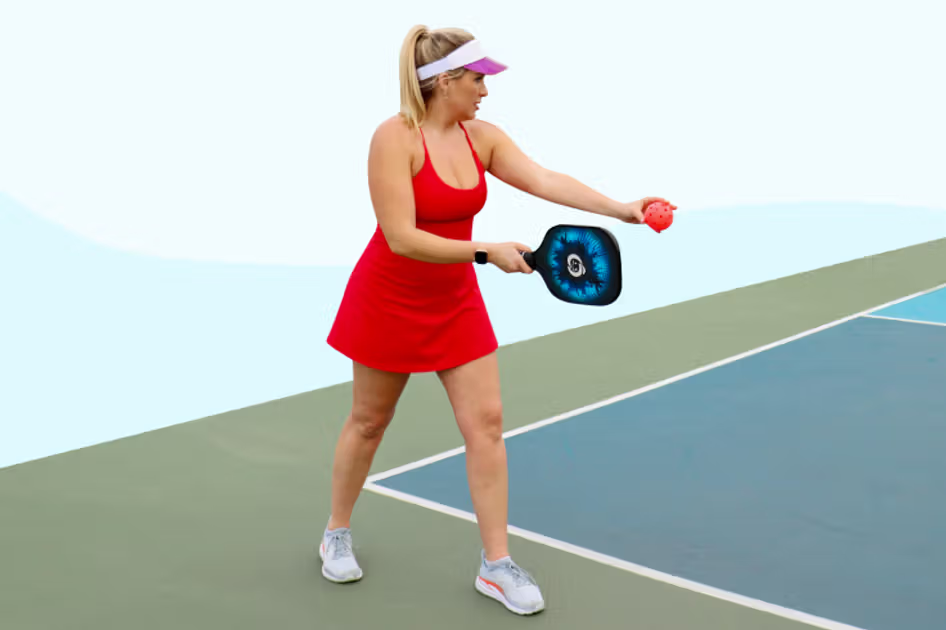
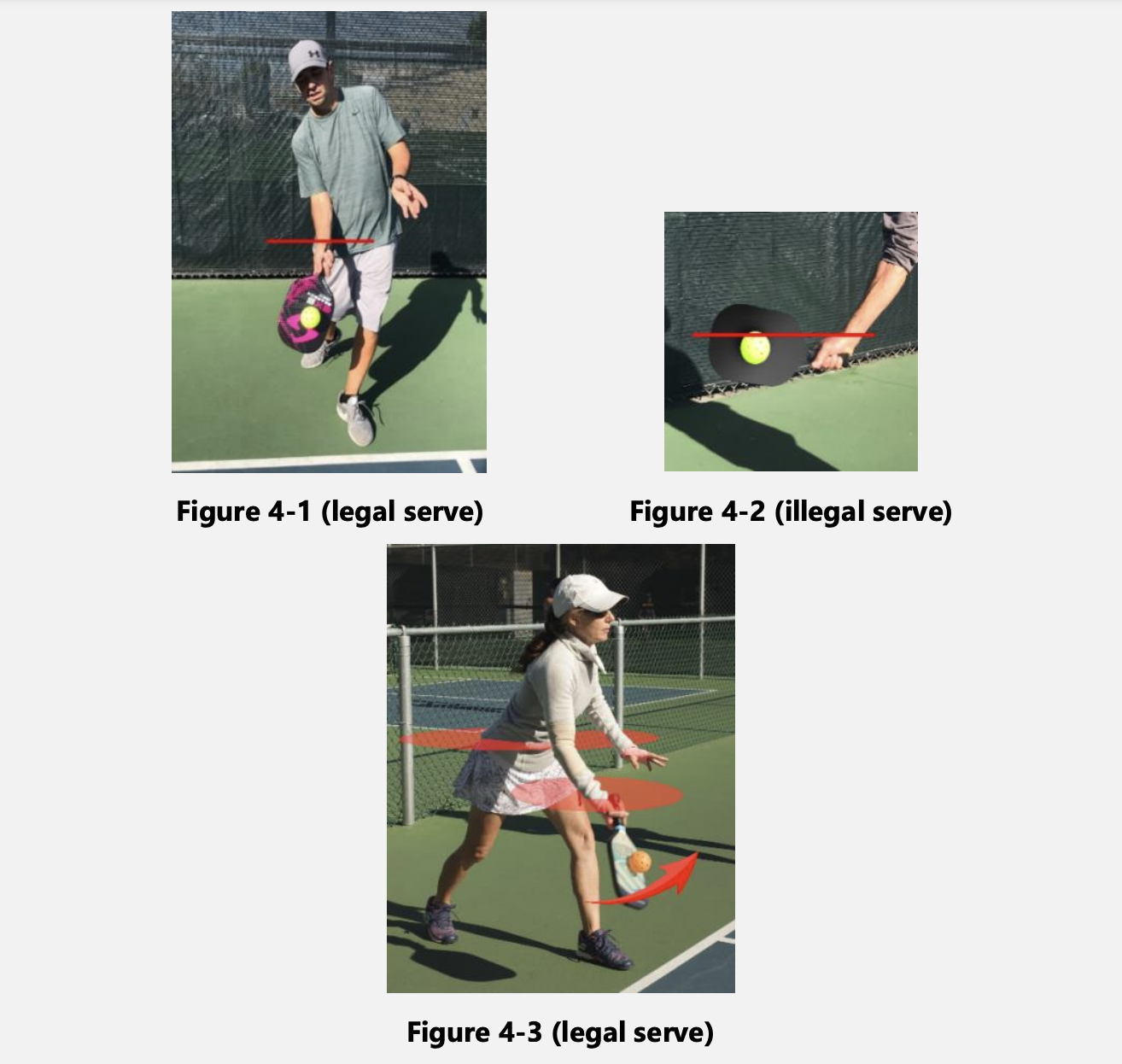
- Contact the ball below your waist.
- Paddle head is below the wrist at contact.
- The swing moves up, not down.
Drop serve specifics:
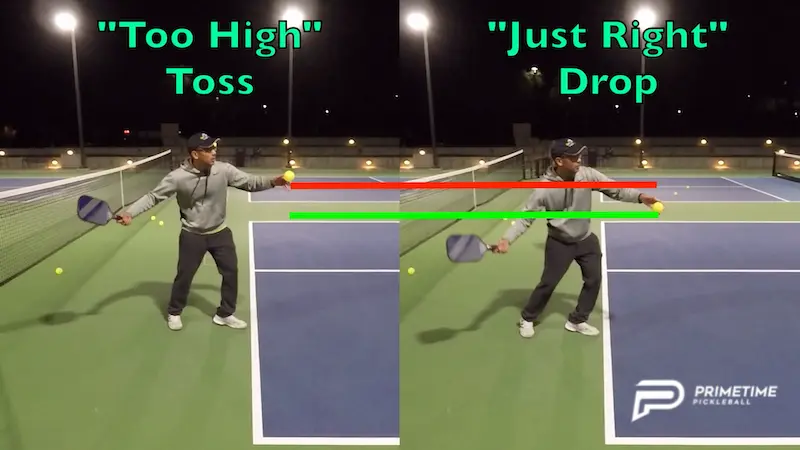
- Drop the ball and let it bounce once on the court. Do not toss or push it down.
- Hit after the bounce. The swing motion limits above do not apply on a drop serve.
When you know how to serve in pickleball under these rules, your miss rate drops at once.

Step-by-step technique: how to serve in pickleball
Use this simple form. I teach this when players ask how to serve in pickleball without overthinking.
Setup
- Stand one to two feet behind the baseline. Face the net post on your target side.
- Stagger your feet. Front foot points at the target. Back foot is about shoulder width apart.
- Hold a relaxed continental grip. Keep the wrist loose.
Ball prep
- For a volley serve, hold the ball at waist height with your off hand.
- For a drop serve, hold the ball at chest height, let it fall, and hit after the bounce.
Backswing
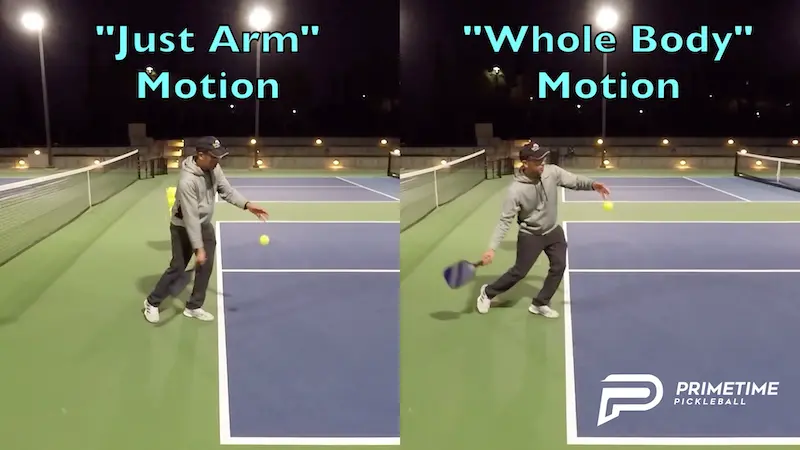
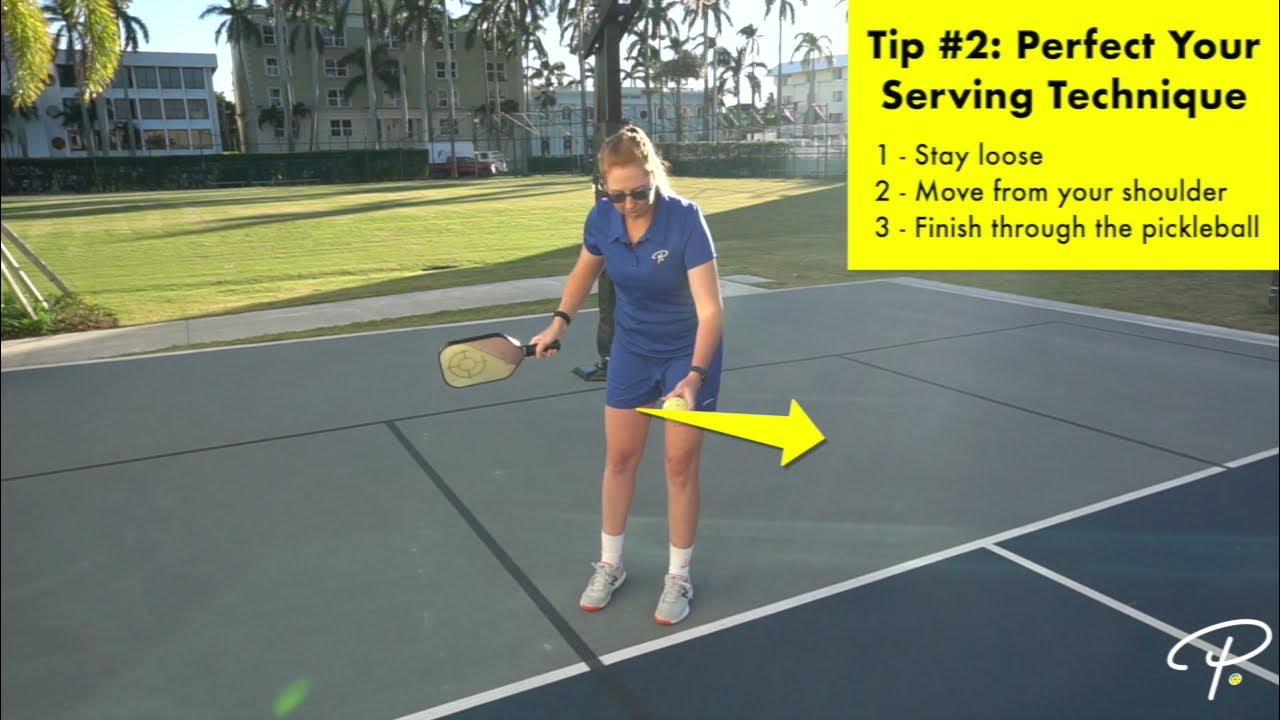
- Keep it short and smooth. Think “pendulum,” not a big tennis windup.
- Keep your head still. Eyes on the contact point.
Contact
- Meet the ball in front of your front hip.
- Aim to brush up slightly for lift. Hit through the ball for depth.
- Keep the paddle face square to your target.
Follow-through
- Finish toward your target. Chest rotates to the net.
- Step forward only after contact to avoid a foot fault.
Aiming
- Picture a window two feet over the net and five feet inside the baseline.
- Serve 80% power for depth and control. Save max power for rare surprise serves.
Simple cue list
- Breathe, bounce or set, swing up, hit out front, finish to target.
Personal tip: Early on, I rushed my toss. My fix was a two-count. I call the score, take one breath, and then start the motion. That alone cleaned up my timing and raised my first-serve in rate.
Serve types and when to use them
Knowing options helps you choose how to serve in pickleball based on the opponent.
- Deep baseline serve: Your bread-and-butter. Aim deep middle or deep backhand. Slows the returner’s attack.
- Topspin serve: Brush up the back of the ball. It jumps up on the returner. Best on drop serve for easier spin.
- Slice serve: Brush across the outside of the ball. It curves and stays low. Aim to the returner’s backhand side.
- Body serve: Hit at the returner’s chest or hip. Jams footwork. Great on big hitters.
- Short angle serve: Land in the front corner to pull the returner wide. Use sparingly to keep them honest.
- Power serve: Flat and fast, still landing deep. Mix in once in a while for a free point.
- Lob serve: High arc, deep. Good against short backswings. Be careful in wind.
Volley serve vs drop serve choice
- Volley serve offers a quick rhythm and masks targets well.
- Drop serve relaxes the motion limits, helps add spin, and calms nerves. It is my go-to when the wind swirls.
If you want a simple plan for how to serve in pickleball under pressure, use a deep slice to the backhand first, then a body serve, then a wide topspin to the sideline. Rotate those three.
Strategy and targeting on the serve
The goal is not an ace. The goal is a weak return you can attack on the third shot. This is the mindset behind how to serve in pickleball at any level.
Targets that work
- Deep backhand: Most returns are softer and shorter.
- Deep middle: Causes confusion in doubles. Who takes it?
- Body: Jams the swing and footwork.
- Wide angle: Pulls the player off the court and opens space for your next shot.
Scouting cues
- Big backswings hate slice that stays low.
- Two-handed backhands dislike high topspin kick.
- Slow footwork? Use short angles and then go deep.
Game plan
- First serve of each game: Deep and safe to the backhand.
- At 8 or 9 late: Serve deep middle. Force a higher percentage return.
- In wind: Serve lower over the net and with more spin for control.
Remember, how to serve in pickleball is also how to set up your third shot. Think two shots ahead.
Common mistakes and quick fixes
Foot faults
- Problem: Stepping on the baseline or into the court at contact.
- Fix: Place a strip of tape one foot behind the line in practice. Serve from behind it.
Illegal volley serve motion
- Problem: Hitting above the waist or with a downward chop.
- Fix: Keep the hand at the belly button at contact. Swing up like a pendulum.
Short serves
- Problem: The ball lands near the kitchen.
- Fix: Aim five feet inside the baseline. Add a bit more follow-through.
Wild toss or drop
- Problem: Toss too high or pushing the drop.
- Fix: Keep the ball at chest height, open fingers, and let gravity do the work.
One-speed serving
- Problem: Opponents time you.
- Fix: Mix speed, spin, and targets. Keep the same routine, change the ball flight.
This is the part of how to serve in pickleball that saves the most points. Remove free faults first.

Drills to master your serve
Target ladder
- Place four targets deep in both service boxes.
- Hit 10 serves per target. Do not move on until you score 7 of 10.
Depth-only reps
- Draw a chalk line three feet inside the baseline.
- Hit 50 serves. Count only those beyond the line as makes.
Spin builder
- Drop serve only. Do 20 topspin, 20 slice, 20 flat.
- Note where each lands and how it bounces.
Pressure reps
- Score your serve sets to 11. You must win by 2.
- If you miss two in a row, start over. Trains focus.
Weekly plan
- Three sessions per week. 15 minutes each.
- Track make rate, depth, and target success.
These drills make how to serve in pickleball feel automatic when the score gets tight.

Gear and setup that help your serve
Paddle
- Medium weight adds stability on contact.
- A tacky, fresh overgrip lowers tension and boosts spin.
Ball
- Outdoor balls are firmer and fly faster. Aim a bit higher over the net.
- Indoor balls are softer. Add more pace to keep them deep.
Shoes
- Use court shoes with good lateral support. Stable feet make stable serves.
Warm-up setup
- Ten easy serves to feel timing.
- Five topspin and five slice to feel edges.
- Two deep targets on each side.
Good gear will not replace sound form. But it will make how to serve in pickleball more consistent day to day.
Singles vs doubles: serving patterns and rotations
Singles
- Serve deep and to the corners. You defend the whole court, so keep the returner back.
- Follow your serve a step inside the baseline. Be ready for a deep reply.
Doubles
- Aim deep middle or deep backhand to set up your partner.
- After you serve, stay balanced behind the baseline. Prepare for your third shot drop or drive.
Rotation basics
- In doubles, both partners serve each turn after the first side-out of the game.
- The first serving team of the game uses only one server, then it is side-out. After that, each side gets two servers.
- Call the full three-number score so everyone tracks the server.
Use these patterns to sharpen how to serve in pickleball with a plan, not hope.
Frequently Asked Questions of how to serve in pickleball
Can I bounce the ball before serving in pickleball?
Yes. That is the drop serve. Let it fall without force, bounce once, then hit.
What makes an underhand serve legal?
On a volley serve, contact must be below the waist and the paddle head below the wrist. The swing should move up, not down.
Can a serve hit the net and still be good?
Yes. If the ball clips the net and lands in the correct diagonal box, it is in play. There are no let serves.
Where should I stand when serving?
Stand behind the baseline and avoid the line. Do not touch the court or the imaginary extensions of the centerline and sideline at contact.
How fast should I serve?
Use 70% to 85% power for control and depth. Save full speed for surprise serves once in a while.
What is the best target for most players?
Deep backhand is the highest percentage spot. Deep middle is next, as it can cause doubt about who should return.
How do I add spin to my serve?
Brush the ball with a low-to-high path for topspin or with a side-to-side path for slice. A drop serve makes spin easier to learn.
How do I avoid foot faults?
Set your front foot one shoe length behind the line and freeze it until contact. Film a few reps to check.
Is there a second serve in pickleball?
No. You get one serve attempt, so pick a smart, high-percentage target.
How high should I toss the ball?
Do not toss on a drop serve. On a volley serve, hold it steady at waist height and swing, no high toss needed.
Conclusion
A strong serve is simple: follow the rules, hit deep with control, and plan your next shot. Practice a small menu of serves, track your make rate, and mix targets to keep opponents off balance. That is how to serve in pickleball with confidence on any court.
Take one drill from this guide and do it today for 10 minutes. Then share your results or questions, and subscribe for more weekly tips that turn small changes into big wins.