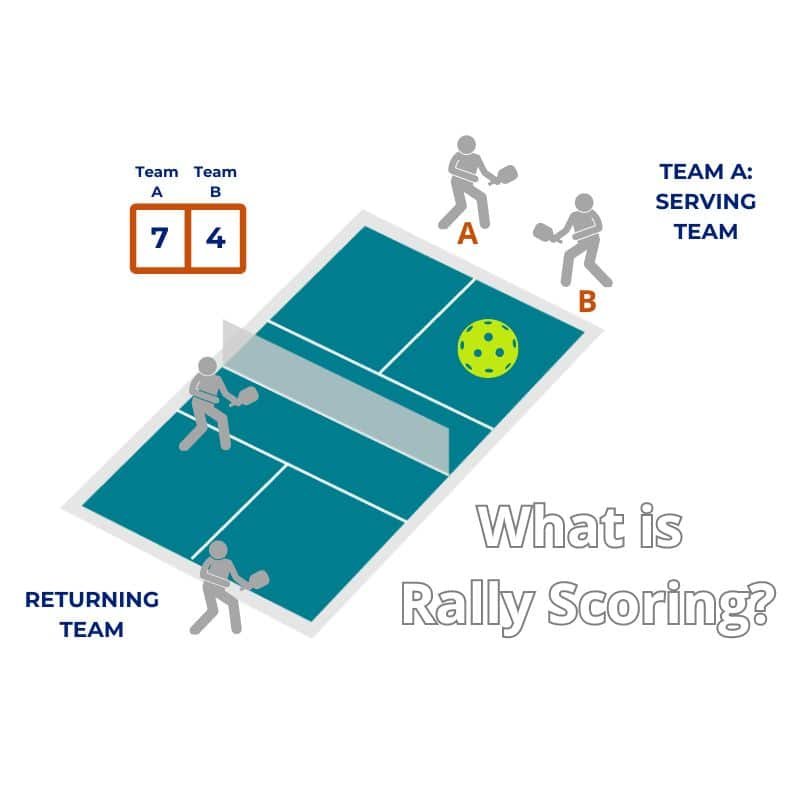
You score in pickleball only while serving; games go to 11 and you must win by 2.
If you want a clean, no-confusion guide on how to score in pickleball, you’re in the right place. I’ve taught new and advanced players for years, and I’ve made every scoring mistake in the book. In this friendly, expert-backed guide, I’ll show you how to score in pickleball with clear steps, real examples, and pro tips you can use today. Stick with me, and scoring will feel as natural as your favorite third-shot drop.

The basics: how to score in pickleball
If you are learning how to score in pickleball, start here. Only the serving team can score. A standard game is played to 11 points, and you must win by 2. In tournaments, games can go to 15 or 21 with the same win-by-2 rule.
Each rally ends in a point or a side-out. A point goes to the serving team if the receiving team faults. A side-out means the serving team loses the serve to the other side. In doubles, both partners on a team get to serve during their team’s service turn, except at the start of the game.
According to the official rulebook, a legal serve is underhand. You must strike the ball below your waist and from behind the baseline. The serve must land in the diagonal service court and clear the non-volley zone (kitchen). The service court lines are good; the kitchen line on the serve is not.

Serving, rotation, and calling the score
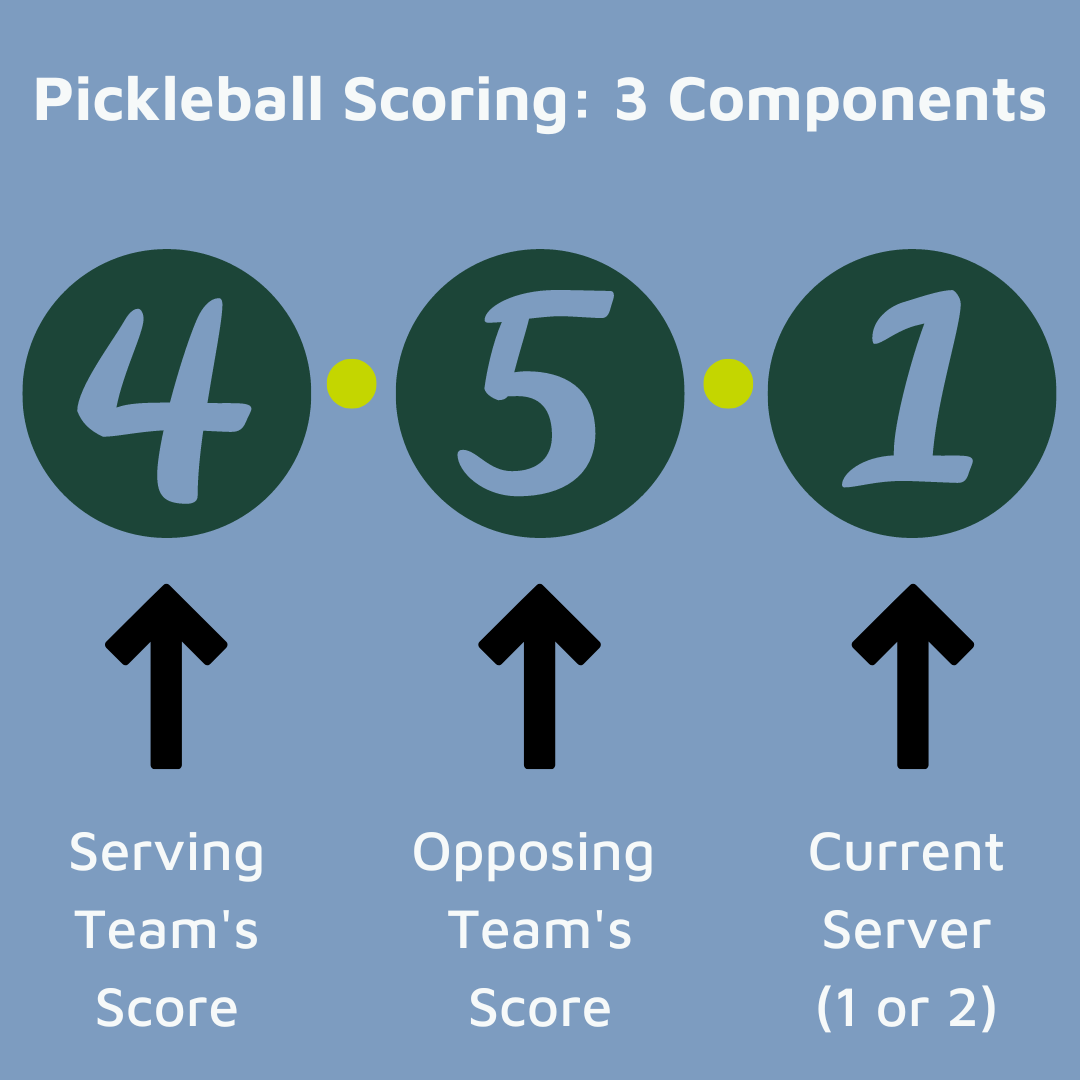
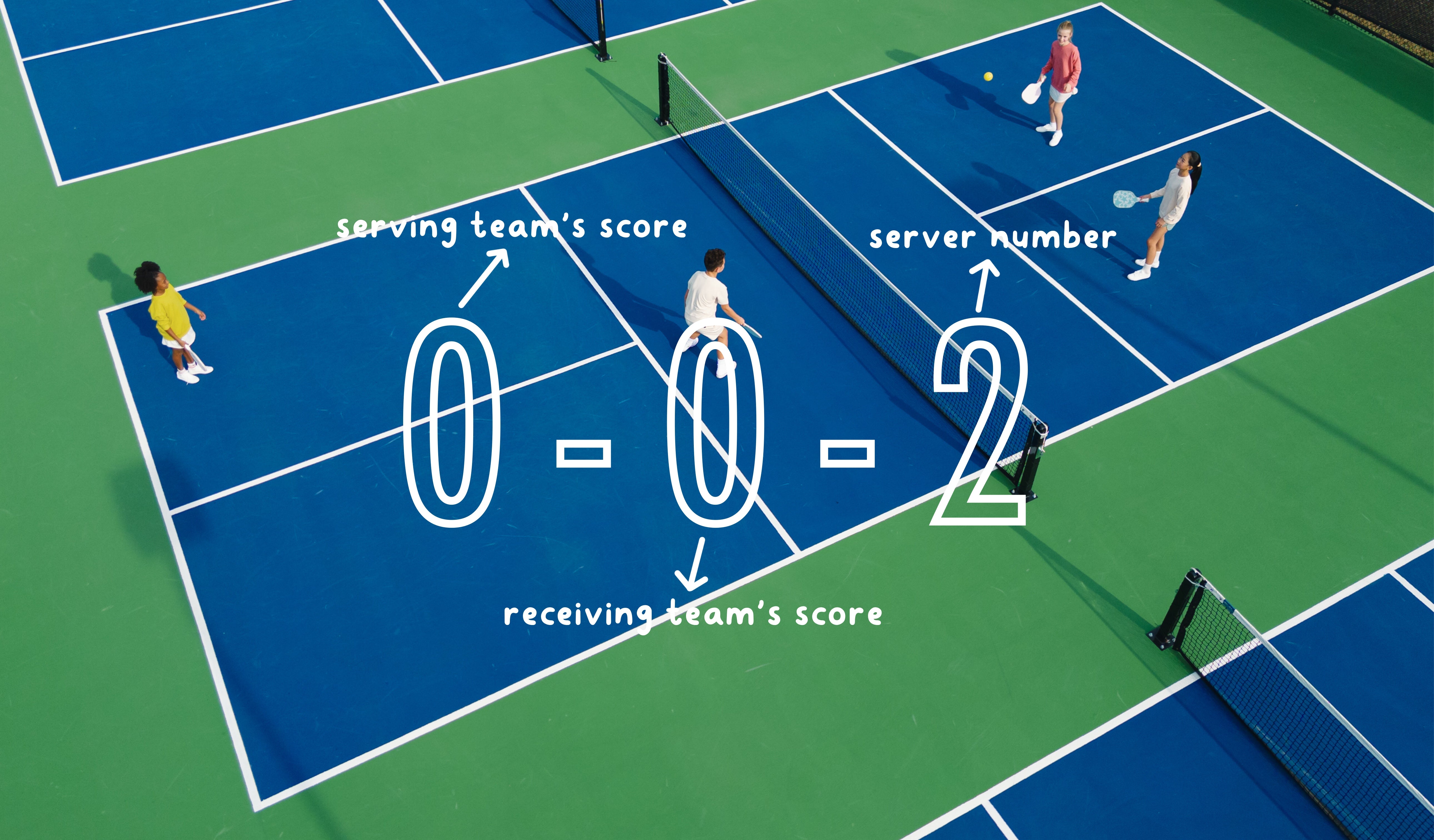
This is the heart of how to score in pickleball. The score is always called in this order: server score, receiver score, and server number (1 or 2). At the very start of the game, the serving team begins at 0-0-2 so only one player serves to start.
Even-odd rule:
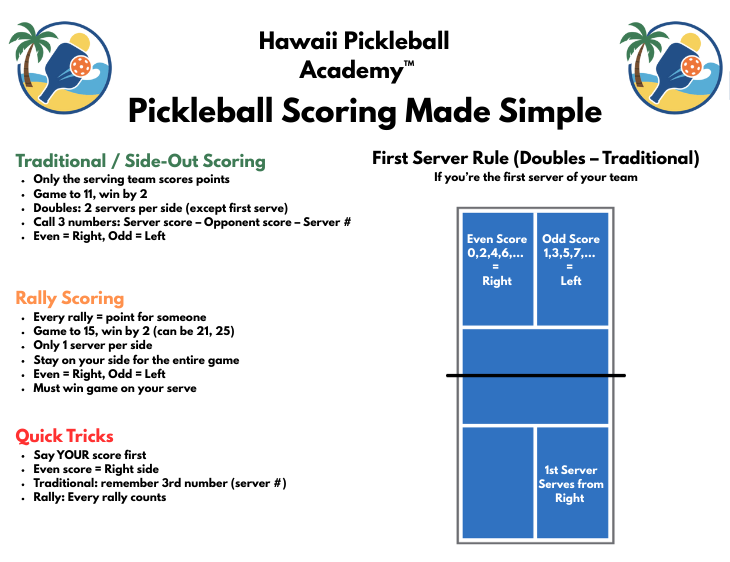
- When your team’s score is even, the correct server stands on the right.
- When your team’s score is odd, the correct server stands on the left.
Server numbers:
- Server 1 starts a team’s regular service turn.
- If Server 1 loses the rally, Server 2 serves next.
- If Server 2 loses the rally, it’s a side-out. The other team gets the serve, starting with their Server 1.
How to call it on court:
- Say your score first. Then the opponent’s score. Then 1 or 2.
- Example: 5-3-1 means your team has 5, they have 3, and you are Server 1.

Singles vs doubles: how to score in pickleball
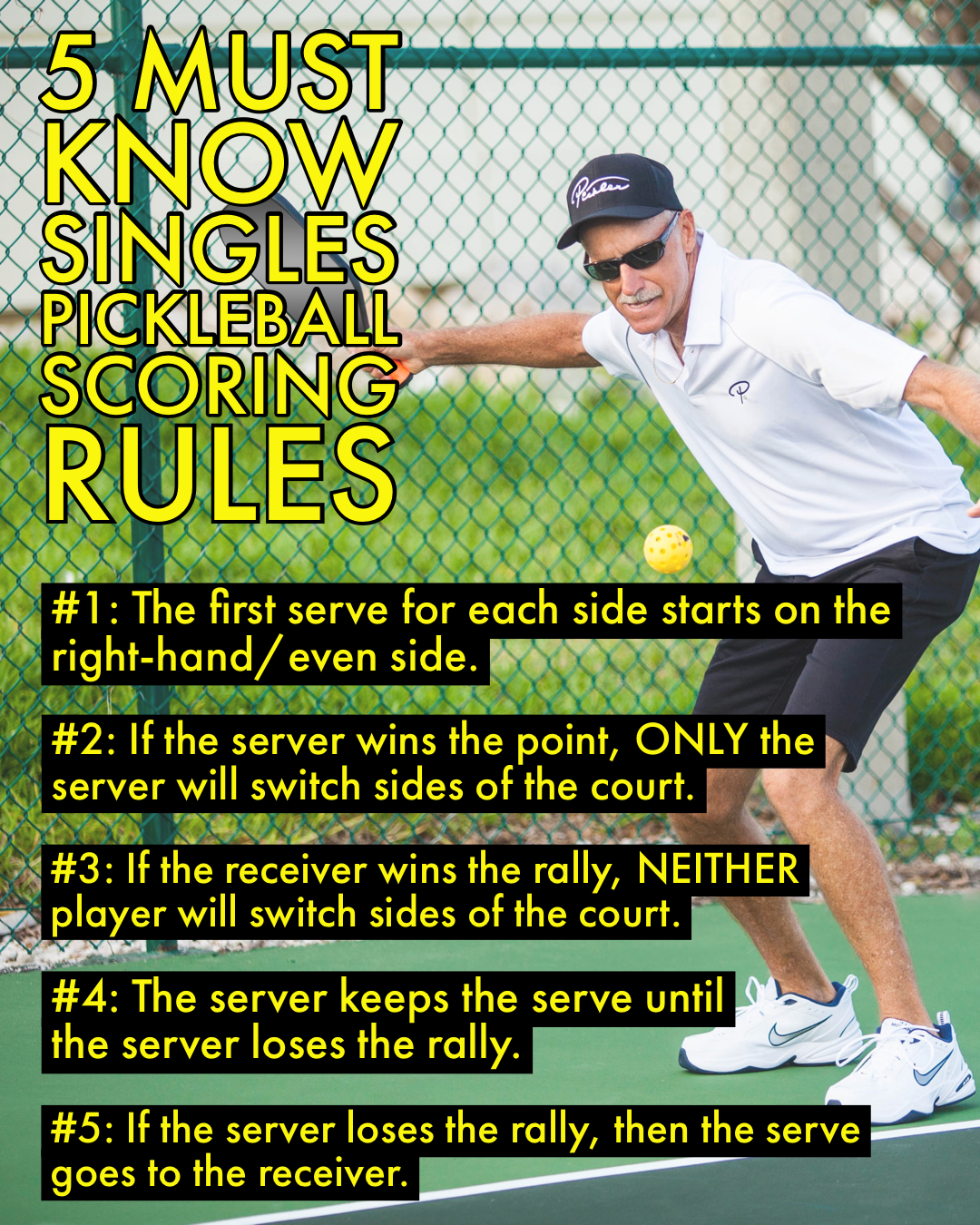
Doubles is where most players learn how to score in pickleball. But singles is simpler.
Doubles:
- Say three numbers: server score, receiver score, server number.
- Both partners serve during their team’s turn, except the first team to serve in the game.
Singles:
- Say two numbers: server score and receiver score.
- There is no server number in singles.
- The even-odd rule still applies: even score serves from the right, odd from the left.
What earns a point and what causes a fault
To master how to score in pickleball, know what ends a rally. The serving team earns a point when the receiving team faults. A fault ends the rally.
Common faults:
- The ball lands out.
- The ball hits the net and does not clear.
- A player volleys in the kitchen, or steps on the kitchen line during a volley.
- The serve lands short or in the kitchen.
- The ball bounces twice.
- The wrong player returns serve in doubles.
Special notes:
- There are no let serves. If the serve clips the net and lands in the correct service court beyond the kitchen line, play on.
- If a struck ball hits you or your partner before bouncing and it would have landed in, it’s your fault. If it hits an opponent before bouncing and would have landed in, it’s their fault.
Step-by-step scoring examples you can copy
If you want to feel how to score in pickleball during play, walk through these quick rounds.
Example 1: Opening serve
- Start of game: 0-0-2. Only one starting server.
- The serve lands in. Receiver returns deep. Serving team misses.
- Side-out. Score stays 0-0. Opponents now serve at 0-0-1.
Example 2: A scoring run
- Score: 2-1-1. You serve from the right (even score).
- You win the rally. Now 3-1-1, serve from the left (odd score).
- You win again. 4-1-1, serve moves back to right (even score).
- You lose the next rally. Now your partner serves at 4-1-2.
Example 3: Wrong receiver returns
- Score: 6-4-1. The serve goes to the left receiver.
- The right receiver returns it by mistake.
- Fault on receivers. Serving team scores: 7-4-1.
Strategy to earn points and manage the scoreboard
A big part of how to score in pickleball is winning the serve and keeping it. Play with a plan.
Serve and first two shots:
- Aim deep, to backhands, or to the weaker mover.
- Mix speeds and locations to draw short returns.
- Third shot drop to neutralize, or drive to force pop-ups.
At the kitchen:
- Get to the non-volley line fast after the return or third shot.
- Dink crosscourt to gain angles and time.
- Attack high balls at the body or feet.
Score-aware tactics:
- At game point, play high percentage. Serve to the safer corner.
- When behind, target the opponent who struggles at the line.
- Use time-outs in events to slow momentum and reset.
Personal tip:
- When I coach, I teach players to say the score with intent. It locks focus. That calm cue alone can flip a tight game.

Common mistakes to avoid
When you learn how to score in pickleball, avoid these traps. They cost free points.
Position errors:
- Serving or receiving from the wrong side.
- Forgetting even-right, odd-left.
Score-calling errors:
- Skipping the server number in doubles.
- Calling the wrong score and rushing the serve.
Rule slips:
- Volleying in the kitchen.
- Returning serve before the bounce.
- Thinking you can score as a receiver in traditional play. You can’t.
Fixes that work:
- Before each serve, do a quick even/odd check.
- Point to your correct box with your paddle.
- If there’s confusion, stop and confirm the score with all players.
Practice drills to master how to score in pickleball
These quick drills make how to score in pickleball automatic.
Score call rhythm:
- Shadow-serve without a ball.
- Call server score, receiver score, server number.
- Switch sides based on even/odd. Repeat 20 times.
Serve-and-freeze:
- Serve crosscourt. Partner returns. You let it bounce, then freeze.
- Call where each player should be and what the score is.
- Build to live play.
Scenario cards:
- Write common scores on index cards.
- Draw a card. Set feet in the correct spots.
- Say where the serve should go and why.

Lines, zones, and equipment rules that affect scoring
Clean lines help you win points the right way. This helps you learn how to score in pickleball with fewer arguments.
Lines:
- Baselines, sidelines, and centerlines are in on all shots, including serves.
- The kitchen line is in the kitchen. On the serve, hitting it is a fault.
Kitchen play:
- You may enter the kitchen anytime except when volleying.
- After a volley, both feet must be out of the kitchen and not on the line.
Serve legality:
- Underhand motion. Contact below the waist. Paddle head below the wrist at contact.
- Feet behind the baseline at contact.
- The ball must land in the diagonal box beyond the kitchen line.
Gear and balls:
- Use approved paddles and balls for events.
- Damaged balls can lead to odd bounces. Replace them to avoid cheap faults.
Frequently Asked Questions of how to score in pickleball
What is the correct way to call the score in doubles?
Say server score, receiver score, then server number (1 or 2). Example: 7-5-2.
Can the receiving team score in standard pickleball?
No. In traditional scoring, only the serving team scores. The receiving team wins the right to serve on a side-out.
Why does a game start at 0-0-2?
It reduces the starting team’s edge. Only one player serves to open, then normal two-servers-per-team turns begin.
How many points do you play to?
Most games go to 11, win by 2. Some events use 15 or 21, win by 2.
What is the double-bounce rule?
The serve must bounce once before the returner hits it. The return must also bounce once on the serving side before volleys are allowed.
Do let serves exist in pickleball?
No. If a serve clips the net and lands in the correct service box beyond the kitchen line, it is live. If it lands short or in the kitchen, it is a fault.
How do I know who should be serving?
Use the even/odd rule. If your team’s score is even, the correct server is on the right; odd score, on the left.
What happens if I serve from the wrong side?
Once discovered, it’s a fault and play is corrected. Points or positions may be adjusted per the rulebook and the timing of the discovery.
Is rally scoring used in pickleball?
Some formats and leagues use rally scoring. Standard recreational and many tournament matches use traditional side-out scoring.
Does the ball being “in” include the lines?
Yes, lines are in, except the kitchen line on a serve. If the serve touches the kitchen line, it is short and a fault.
Conclusion
You now know how to score in pickleball with confidence: only score on your serve, win by 2, call three numbers in doubles, and use even/odd to stand in the right box. Keep your serves deep, your thirds smart, and your mind calm at the line. Small habits, like clear score calls and checking positions, turn tight games into wins.
Take this guide to the court today. Practice the drills, fix one mistake at a time, and track your progress. Want more tips like this? Subscribe, share your toughest scoring question in the comments, or explore my next guide on smart third-shot choices.