Use a paddle, a wall, and targets to drill footwork, strokes, serves, and control.
If you want to master how to practice pickleball by yourself, you can. Solo training works when you use smart drills, simple gear, and a plan. I have coached and trained this way for years. In this guide, I will show you how to practice pickleball by yourself with clear steps, friendly advice, and proven tips.

Set up your solo practice space
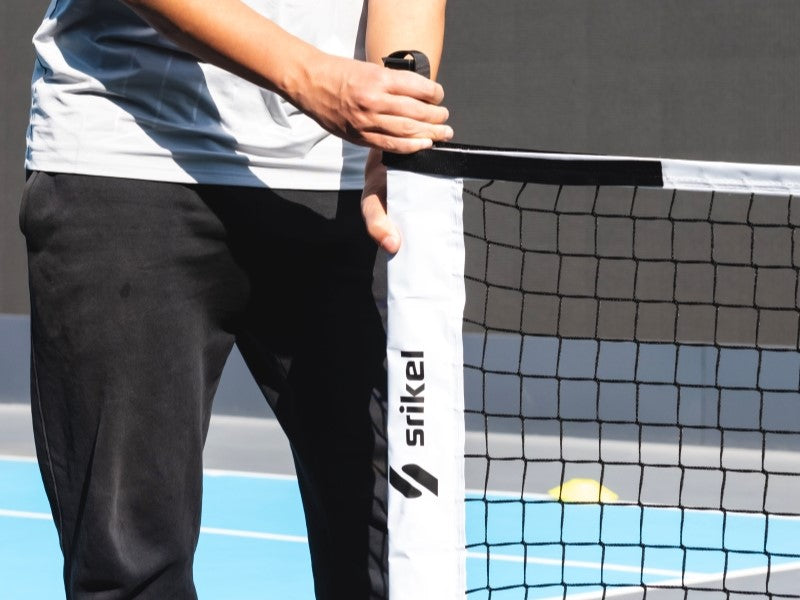
You do not need a full court to start. A driveway, a garage, or a flat wall can work. Tape a net line on a wall at 34 inches. Chalk a kitchen line and service boxes on the ground if you have space. Bring a few balls, a paddle you trust, and a water bottle.
Key setup tips:
- Use painter’s tape or chalk to mark lines and targets.
- If indoors, choose a soft indoor ball to cut noise and bounce.
- Place a small bucket or bag on the court to hold balls for quick resets.
- Set your phone on a tripod to record form from the side and behind.
Why this matters: clear lines and targets boost focus. Research in motor learning shows that feedback plus targets improves skill faster. This is the base of how to practice pickleball by yourself.

Warm up fast and smart
A quick warm up cuts injury risk and makes swings smooth. Keep it simple and short. Aim for five to eight minutes.
Try this flow:
- March in place for 60 seconds. Add arm swings.
- Do 10 bodyweight squats, 10 hip hinges, 10 calf raises.
- Do 10 arm circles each way and 10 band pull-aparts if you have a band.
- Finish with 20 seconds of side shuffles and two easy shadow swings for each stroke.
I learned the hard way that cold serves lead to sore shoulders. Warm up first. It is a small step that pays off when you practice how to practice pickleball by yourself.

Footwork and movement patterns
Great feet make great shots. You can train footwork with no partner. Use cones, chalk, or water bottles as marks.
Do these drills for 60 seconds each, rest 30 seconds, and repeat twice:
- Split step and go: Start at center, split on a clap or timer beep, then move to forehand mark, back to center, then backhand mark.
- Kitchen dance: Start at the baseline, sprint to the kitchen, stop with control, step back, repeat.
- Cross-step recoveries: Slide to a side mark, cross-step to recover, plant, repeat the other way.
- Mini ladder: Draw a four-box ladder and do quick in-in-out-out steps.
Keep your paddle up and your hips low. Keep steps short and light. When you plan how to practice pickleball by yourself, make footwork daily. It sets the stage for every shot.

Wall drills for groundstrokes and volleys
A wall is your best solo partner. It never gets tired. Stand 12 to 16 feet away for groundstrokes. Stand 6 to 8 feet for volleys. Draw a net line at 34 inches and a few small targets.
Progression plan:
- Block practice: 50 forehands to the same spot, then 50 backhands. Focus on clean contact and a stable wrist.
- Random practice: Mix forehands and backhands with no pattern. Aim for a rally of 20 in a row.
- Depth game: Bounce the ball so it lands past your chalked baseline before the wall. It trains length.
- Volley control: Move closer. Do 50 forehand volleys, then 50 backhand volleys. Keep the paddle out front and elbows away from the body.
- Transition drill: Start close for five volleys, step back two steps for five drives, step in again. Repeat.
Coaching cue: hit through the ball, not at the wall. Relax your grip to a 3 or 4 out of 10. Film 20 swings. This is a simple way to check form when you practice how to practice pickleball by yourself.
Serving alone with purpose
Serving is the one shot you control. Make it a skill edge. You can train it anywhere a line and space exist.
Try this:
- Set three targets near the deep corners and one down the T. Aim for height above the net, not just speed.
- Do 30 serves to each target. Track makes in a simple notebook.
- Add a pressure round: 10 serves where a miss costs one point. Try to reach eight points.
- Work on a topspin serve: Brush up on the ball and finish high. Start at 50% speed.
After two shoulder injuries, I learned to serve more with legs and core. Bend the knees and rotate. If you need a test of progress for how to practice pickleball by yourself, your serve make rate is it.
Returns and third-shot drops without a partner
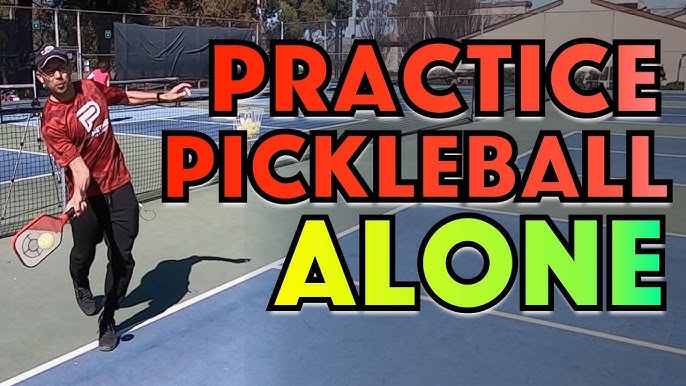
You can simulate returns and third shots with a bounce feed or a wall feed.
Return practice:
- Stand at the baseline. Drop feed the ball high, let it bounce, split step, and swing a smooth return deep to your target zone.
- Use a metronome at 60 to 70 BPM. Split on the beep, swing on the next. It builds rhythm under calm pressure.
Third-shot drop practice:
- From the baseline, drop feed, hit a soft arc that lands in the kitchen. Aim for a low peak over the net line on the wall.
- Use three levels: very soft drops, medium drops, and drive-to-drop mixes. Do 10 reps each.
- Target ladder: Place three flat markers in the kitchen. Land five drops on each before moving on.
These two shots are the heart of how to practice pickleball by yourself. Control beats power when you are solo.

Dinks and soft game at home
You can improve your dink touch in a small space. A dining room or patio works.
Drills:
- Net substitute: Stretch a rope or tape between two chairs at about 34 inches. Dink over it with a foam ball or low-bounce indoor ball.
- Box dinks: Tape a 12-inch square on each side. Land five in a row in the box before moving on.
- Cross-court arc: Aim to clear the net by the height of a water bottle laid sideways. It forces soft spin and shape.
- Toe tag: Stand close and try to land the ball at your own toes after the net. It teaches short, soft touch.
My favorite hack is to hold my follow-through for one second. It slows me down and kills errors. This habit makes a big jump in how to practice pickleball by yourself.

Accuracy games and targets
Make practice a game. Targets boost fun and focus.
Ideas:
- Bullseye points: Place a small plate in the deep corner. Three points for a hit, one for within a paddle width.
- Corridor drill: Lay two ropes to form a lane. Keep five shots in the lane in a row.
- High-low ladder: Hit one high deep ball, then one low short ball to the kitchen. Repeat for 10 rounds.
- Color calls: Tape colored paper targets. Call a color before you swing.
Set a goal each week. For how to practice pickleball by yourself, a clear goal beats longer hours.
Fitness, mobility, and injury care
Strong, mobile bodies last longer on court. You can add short, safe work at home.
Two to three times a week:
- Strength: 2 sets of 10 goblet squats, 2 sets of 10 split squats each side, 2 sets of 10 single-leg RDLs each side, 2 sets of 12 band rows, 2 sets of 10 overhead presses with light dumbbells.
- Core: 30-second front plank, 30-second side planks each side, 10 dead bugs each side.
- Mobility: 60 seconds each of calf stretch, hip flexor stretch, thoracic open books, and shoulder external rotation with a band.
Research suggests strong legs and rotator cuff work cut injury risk. I add band external rotations before every serve session. It is a small win for anyone learning how to practice pickleball by yourself.
Build a weekly solo plan
Consistency turns drills into wins. Keep it short and often.
Sample week:
- Day 1: Warm up, wall groundstrokes 20 minutes, serves 15 minutes, cool down.
- Day 2: Footwork 10 minutes, dinks 15 minutes, third-shot drops 15 minutes.
- Day 3: Rest or mobility 15 minutes.
- Day 4: Wall volleys 15 minutes, transition drill 10 minutes, accuracy games 15 minutes.
- Day 5: Serve plus first ball: 20 minutes. Record form.
- Weekend: Open play or match play if you can. If not, mix your favorite drills for 30 minutes.
Track three numbers: serve make rate, longest wall rally, drop success into the kitchen. This simple tracker is the engine of how to practice pickleball by yourself.
Common mistakes to avoid
I have made these mistakes. You can skip them.
Watch out for:
- Only blasting the ball at the wall. Focus on form and a set target.
- Skipping warm ups. Your shoulder will complain.
- No plan. Pick three drills and nail them.
- Forgetting footwork. Good feet fix many swing flaws.
- Never filming. Video shows what you feel is wrong or right.
Be kind to yourself. Progress is not a straight line. This mindset keeps you steady while you work on how to practice pickleball by yourself.
Pro tips and small hacks
Little tweaks make a big gain.
Try these:
- Use a soft grip for touch, firm up only at impact.
- Count out loud or use a metronome to build rhythm.
- Rotate three balls to keep tempo steady.
- Wear a watch or set a timer for blocks of five minutes.
- Write one cue per drill, like paddle out front or stay low.
Over time, these habits stack. They shape how to practice pickleball by yourself into a fun routine you want to keep.
Sample 30-minute solo workout
Short on time? Use this quick plan.
Do this:
- Warm up: 5 minutes.
- Wall groundstrokes: 7 minutes block, 3 minutes random.
- Volleys and transition: 5 minutes close, 2 minutes step back.
- Third-shot drops: 5 minutes to kitchen targets.
- Serves: 5 minutes to two targets.
Note one win and one fix in your journal. That simple note helps you grow at how to practice pickleball by yourself.
Frequently Asked Questions of how to practice pickleball by yourself
How often should I practice alone to see progress?
Three to four short sessions per week works well. Aim for 30 minutes per session with one clear goal.
Can wall drills replace playing with others?
They build form, timing, and control fast. You still need games to learn tactics and read other players.
What is the best distance from the wall?
Stand 12 to 16 feet for groundstrokes and 6 to 8 feet for volleys. Adjust to keep a calm rally tempo.
How do I track progress when training solo?
Use a notebook to log serve makes, rally counts, and drop success. Record one short video each week.
What if I do not have a wall?
Use a portable rebounder or set up targets on a court. You can still serve, dink, and practice footwork.
Conclusion
Solo practice can be simple, sharp, and fun. With a wall, targets, and a plan, you can build clean strokes, strong feet, and a steady serve. Keep sessions short, track wins, and film often.
Pick one drill today and start. Every rep is a step toward a calmer, smarter game. If this guide helped, share it with a partner, subscribe for more tips, or drop a comment with your best solo drill.