Most paddles last 6–12 months with heavy play, and 2–5 years for casual use.
If you play often, you will ask how long does a pickleball paddle last. I coach, test gear, and break paddles so you do not have to. In this guide, I break down how long does a pickleball paddle last by play time, materials, care, and signs of wear. You will learn real tips, clear tests, and when to repair or replace. Read on to get more life and better play from your paddle.
What really decides how long a pickleball paddle lasts
A paddle’s life is a mix of build, use, and care. Think of it like car tires. The rubber, the road, and how you drive all matter. The same is true here.
Key factors that drive lifespan:
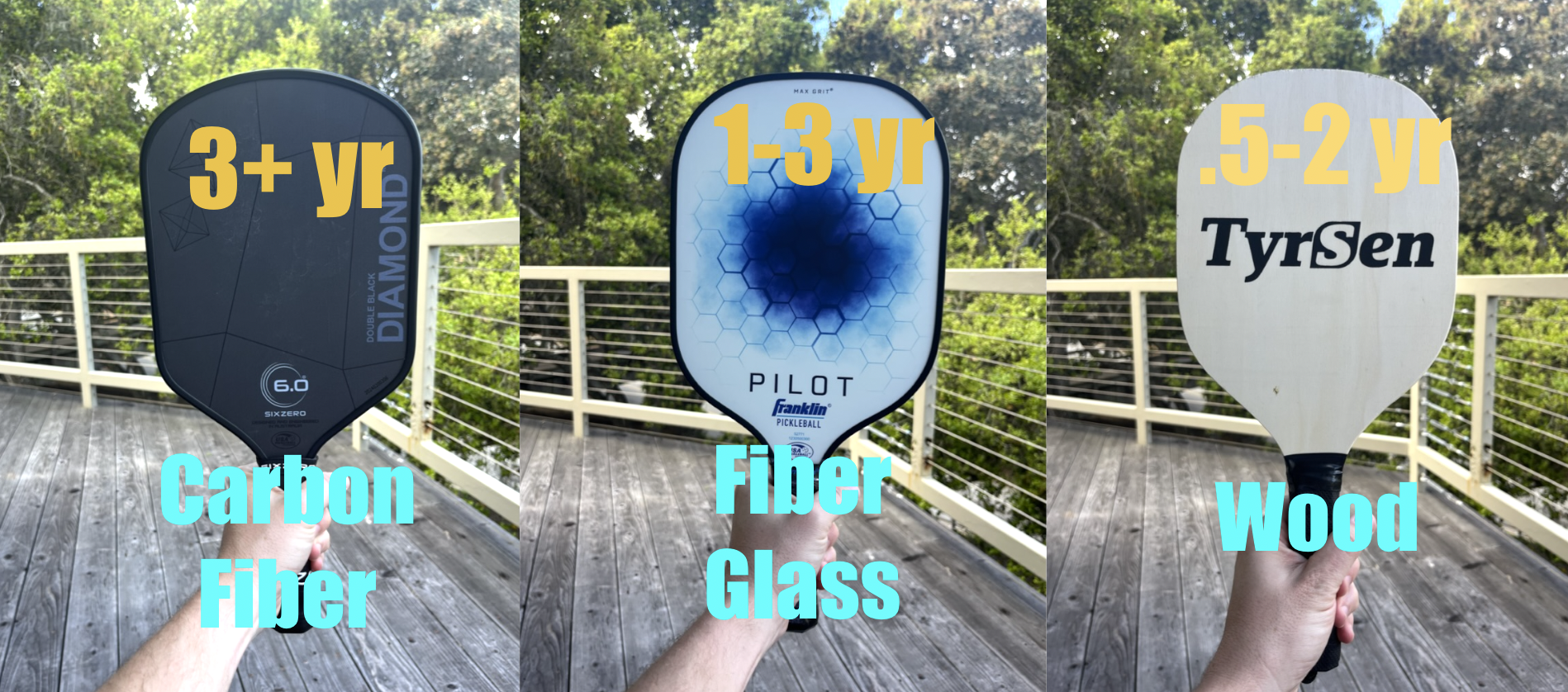
- Face material. Raw carbon fiber keeps pop and shape longer. Fiberglass hits big but can chip or crack sooner.
- Core type. Polymer honeycomb is the norm. It can crush or soften with hours and heat.
- Construction. Thermoformed or unibody frames can be strong. Poor bonds can lead to delam. Good edge foam helps.
- Grit and spin tech. Raw carbon grips well but smooths with use. Sprayed grit often wears faster.
- Hours and style. Hard hitters wear spots. Dink heavy players wear slower. Indoor play is softer on gear than rough outdoor courts.
- Weather. Heat, cold, and sun all speed wear. Trunk heat can cook glue and core.
- Collisions. Paddle clashes, ground hits, and fence taps shorten life fast.
This helps answer how long does a pickleball paddle last for your setup, not just a guess.
How long does a pickleball paddle last by player type and build
I use this as a real world guide when players ask how long does a pickleball paddle last.
By play volume:
- Casual, once a week. Expect 2–5 years with light dinks and care.
- League or club, 3–5 days a week. Expect 9–18 months.
- High level or pro, daily with hard hits. Expect 3–6 months.
By face and core:
- Raw carbon fiber with a solid polymer core. Often lasts longer for pop and shape, 12–24 months for club play.
- Fiberglass or hybrid faces. Great power, may show chips or soft spots sooner, 6–12 months for club play.
- Cheap builds with thin cores or weak glue. May last only a season with regular use.
By environment:
- Outdoor on rough courts. Faster grit wear and more edge scuffs.
- Hot or cold storage. Shortens life due to glue and core stress.
These ranges match what I see across testing, warranty claims, and brand data. Your swing, mishits, and care still matter. So how long does a pickleball paddle last for you will land inside these bands.
Clear signs your paddle is wearing out
When players ask how long does a pickleball paddle last, I point them to signs, not just months. Look and listen for change.
Watch for:
- Dead spots. The ball drops off the face with no bounce or a flat thud.
- New noises. A hollow buzz, rattle, or harsh ping points to bond issues.
- Spin fade. The face feels slick. Your topspin dinks or serves do not bite.
- Face damage. Cracks, chips near the edge, or soft bubbles on the face.
- Edge guard lift. Gaps or loose tape let dirt in and stress the bond.
- Weight shift. The paddle feels head heavy or light after a clash.
If two or more show, your paddle is near the end of its best play life.
Simple tests to check paddle health at home
You can test in minutes. This helps you judge how long does a pickleball paddle last for your setup.
Do these:
- Bounce test. Drop a ball from the same height on five face spots. Note bounce height and sound. A low or dull spot marks damage.
- Tap test. Tap the face with a coin in small steps. A sudden change in tone marks a void or delam.
- Spin test. Serve or roll topspin five times. If the ball slips with the same swing, grit is worn.
- Weight check. Use a kitchen scale. A drift of more than 0.3 oz can point to a crack, water, or loose parts.
- Edge check. Press the edge guard all around. If it lifts, clean and glue. If it keeps lifting, the bond is weak.
Log results once a month if you play a lot.
Care tips to make your paddle last longer
Smart care stretches the timeline when you ask how long does a pickleball paddle last.
Do this:
- Clean the face. Use water and a soft cloth after play. For raw carbon, a damp microfiber works well. Avoid harsh pads that strip texture.
- Keep it cool and dry. Do not store in a hot car. Use a cover in the bag.
- Avoid clashes. Call yours and your partner’s shots. Most cracks come from paddle to paddle hits.
- Rotate paddles. If you play five days a week, use two and swap each day.
- Edge tape with care. Tape can protect but can also trap grit. Remove, clean, and reapply as needed.
- Regrip often. A fresh grip lowers slips and drops. Less ground contact means a longer life.
Small habits make a big change over months.
Repair, warranty, or replace
At some point you must decide. This is where how long does a pickleball paddle last meets cost and play feel.
Good to repair:
- Edge guard lift. Clean, use a light glue, clamp with bands, let cure.
- Grip or butt cap. Replace or wrap. Cheap and quick.
- Small chips. Sand sharp edges, then use light epoxy if needed.
Use warranty or replace when:
- Delamination. A buzz or loss of pop in the sweet spot is a common fail mode.
- Large face cracks. Spreading cracks mean the layup is done.
- Core crush. Big dead zones will not come back.
Most brands cover defects for 6–12 months. Heavy wear is not a defect. Mods like drilling or heavy sanding can void a claim.

Cost per hour and value over time
It helps to view how long does a pickleball paddle last as cost per hour.
Simple math:
- A 200 dollar paddle that lasts 12 months at 10 hours a week is about 0.38 dollars per hour.
- The same paddle for a casual player at 2 hours a week for 3 years is about 0.64 dollars per hour.
- A 120 dollar paddle that lasts 6 months at 8 hours a week is about 0.58 dollars per hour.
If you want max value, pick a build that fits your swing and routine, not just peak power on day one.
Weather, storage, and travel best practices
Heat and cold can cut months off the answer to how long does a pickleball paddle last.
Follow these:
- Heat. Car trunks can pass 140°F. Glue softens. Core crush speeds up. Keep paddles with you or in shade.
- Cold. Below 40°F, faces get stiff and brittle. Warm up the ball and paddle before hard hits.
- Sun and water. UV can fade resins. Do not soak the edge guard. If wet, dry the paddle face up.
- Travel. Use a hard case. Pack the paddle flat, not under weight that can bend the face.
These steps are easy and save money over time.
Frequently Asked Questions of how long does a pickleball paddle last
How long does a pickleball paddle last for most club players?
Most club players see 9–18 months of strong play. This depends on hours, clashes, and weather.
Does a carbon fiber paddle last longer than fiberglass?
Often yes, for shape and pop over time. Fiberglass can chip and soften earlier, though it feels lively when new.
How do I know if my paddle has a dead spot?
Do a bounce test on different zones. A dull sound and lower bounce mean the core is crushed there.
Can I restore grit to get more spin and life?
You can clean the face to lift grip. Avoid harsh pads or sprays that can strip texture or break rules.
Will lead tape shorten paddle life?
No, lead tape does not harm the face or core. Apply on clean edges and seal the ends so dirt does not creep in.
Does storing my paddle in a hot car ruin it?
Heat speeds glue failure and core crush. Keep it cool to protect bonds and extend life.
How long does a pickleball paddle last if I play indoors only?
Indoor play is softer on gear. Many see 12–24 months of solid play with good care.
Conclusion
Now you have a clear view of how long does a pickleball paddle last and what drives it. Use the tests, watch the signs, and treat your paddle with simple care. You will keep pop, spin, and feel far longer.
Set a reminder to clean your face, log your hours, and rotate paddles if you play a lot. If your tests show dead zones or delam, use your warranty or replace with confidence. Ready to level up your setup? Subscribe for more gear tips, or drop your paddle story and questions in the comments.