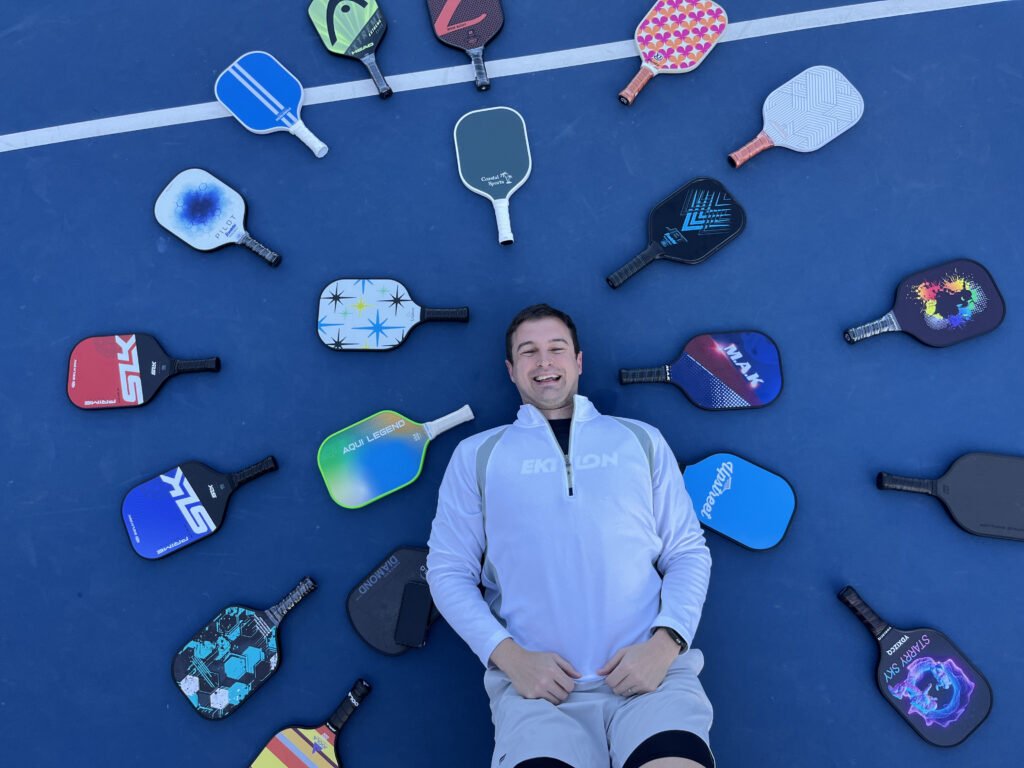
Most pickleball paddles last 6 to 24 months with regular play.
If you want the real answer to how long can a pickleball paddle last, you need more than a number. I have tested dozens of paddles across brands, cores, and faces. I have seen paddles last weeks and others last years. In this guide, I break down what actually drives lifespan, how to spot a dead paddle, how to stretch its life, and when to replace it with confidence.
What affects how long can a pickleball paddle last
A paddle is a small sandwich of core, face, edge, and glue. Each layer ages at its own pace. That is why how long can a pickleball paddle last can vary a lot between players.
Play volume matters most. Daily play shortens life. Casual weekend play extends it. Power hitters compress the core faster. Soft game players tend to get more months.
Material is next. Carbon fiber faces keep shape longer but can chip at the edges. Fiberglass has great pop at first but often loses it faster. New thermoformed builds are very strong, yet some runs can show early issues if the bond is weak.
Heat and cold push materials to their limits. Hot cars soften glue. Freezing temps make faces brittle. UV light wears clear coats and grit.
Grit and texture wear down over time. That changes spin and feel. It may still be legal, but it will not feel fresh. Edge guards protect the sandwich but can loosen. Water and dirt can sneak in and add weight.
Strings are not in play here, but your ball choice does matter. Hard indoor balls are gentle. Cold, hard outdoor balls hit like rocks.
For most players, how long can a pickleball paddle last comes down to a mix of play time, swing style, face material, and care.
Typical lifespan by paddle type and player profile
It helps to set a baseline. These ranges reflect real play and common brand warranties. Many paddles go longer. Some fail sooner.
By player type:
- New or casual player: 12 to 24 months with weekly play.
- Intermediate player: 6 to 18 months with two to four sessions a week.
- Tournament or club grinder: 3 to 9 months with heavy play and drills.
- Power hitter with drives and overheads: often on the lower end of any range.
By face material:
- Carbon fiber face: 6 to 18 months of strong play. Texture wears slow. Edges can chip.
- Fiberglass face: 4 to 12 months. Great pop at first. Pop may fade faster.
- Raw carbon fiber face: 6 to 18 months. Strong spin at first. Grit wears with use.
By build:
- Thermoformed carbon builds: strong shells and pop. Can last 6 to 18 months if bonds hold.
- Traditional foam edge or standard edge guard builds: solid feel. 6 to 12 months for heavy use.
By core density:
- Polymer honeycomb with mid density: the most common and balanced. Good life.
- Very soft cores: more dwell, faster breakdown.
- Very stiff cores: resist flex but may chip at face edges.
If you play five days a week, how long can a pickleball paddle last will sit near the short end of the range. If you play once a week and store it well, you often reach the top end.
Clear signs your paddle is past its prime
You do not need lab tests to know. Your hands and ears will tell you. When in doubt, do a quick bounce test on the sweet spot and near the edges.
Watch for these signs:
- Dead spots where the ball falls off the face with a dull sound.
- A sharp change in pitch when you tap in a small circle near the center.
- Edge guard gaps, loose tape, or a rattle inside the frame.
- Visible face bubbles, soft spots, or a wavy texture that was not there before.
- Spin drop even with clean contact and good technique.
- Weight jump after wet play, which suggests water in the core.
When two or more signs show up, ask again: how long can a pickleball paddle last for your level and load. Often, it is time to replace.

How to make your pickleball paddle last longer
Simple habits buy you months. Think of your paddle like a nice pair of shoes. Use it right. Store it right. Clean it right.
Do this often:
- Wipe the face with a damp cloth after each session. Let it air dry.
- Use a cover in your bag to protect the face and edges.
- Keep it out of a hot car and out of the trunk in winter.
- Do not leave it on wet courts or grass.
- Rotate paddles if you play many days in a row.
- Use lead tape sparingly. Place it smooth and remove it with care.
- Replace edge guard tape when it peels to keep dirt out.
What to avoid:
- Do not strike the ground or fence with the paddle.
- Do not use harsh cleaners or high grit sandpaper on the face.
- Do not clamp the face in a vise for DIY mods.
- Do not store with heavy items on top of it.
With these steps, how long can a pickleball paddle last can move from months to a full year for many players.
Maintenance, storage, and simple tests
A few light tests help you catch issues early. They take two minutes. I do them on Sunday nights after league play.
Quick tests:
- Bounce test: Drop a ball from chest height on four spots. Listen for a dull thud.
- Sound circle: Tap with a pen cap in a small ring around the sweet spot. Listen for a pitch drop.
- Flex check: Press the face lightly with your thumb. It should feel firm and even.
- Weight check: If it feels heavy, weigh it. A fast jump can mean water inside.
- Surface check: Run a dry towel over the face. If threads snag, the top coat may be failing.
Storage tips:
- Store indoors at room temp, away from sun.
- Set it flat in a padded case or vertically in a bag pocket.
- Keep silica gel packs in your bag if you play in humid areas.
These quick steps raise trust in the gear you bring to court. They also answer how long can a pickleball paddle last for your exact set up, not just a brand claim.
Warranties, return policies, and cost of ownership
Most brands offer a limited warranty that runs 6 to 12 months from buy date. It covers defects, not normal wear. Grit loss and small chips are usually not covered. Edge guard dents from court hits are also not covered.
Save your receipt and register the paddle. Take photos if you see early issues. Do not alter the face with sandpaper or solvents. That can void a claim.
Think in cost per month:
- A 180 dollar paddle that lasts nine months costs 20 dollars per month.
- A 120 dollar paddle that lasts four months costs 30 dollars per month.
If you play often, the better build can cost less over time. That is why how long can a pickleball paddle last should be part of your buy choice, not just price or hype.
My real-world notes from the court
I coach a rec group twice a week and play league on weekends. I also test new paddles for feel and spin. Here is what I have seen.
One raw carbon model kept strong spin for ten months with three days a week of play. It had small edge chips by month eight. Still, the core and sweet spot held true. A fiberglass face from a top brand felt great for six weeks, then lost pop fast. The bounce test showed a clear dull ring at the center by month three.
I had one thermoformed carbon paddle that felt hot for five months, then formed a bubble near the top third. The brand replaced it fast. The next unit lasted eight months with no issues. That was a lesson. Even good runs may vary. How long can a pickleball paddle last will always have some spread, even within the same model.
What helped the most was clean storage and a backup in the bag. Rotating paddles every other day cut core fatigue, at least in my hands.
Sustainability: recycling and end-of-life options
Paddles are mixed materials, so full recycling is hard. But you can still keep waste down.
Smart steps:
- Donate old but playable paddles to clubs or schools.
- Keep one as a rain or loaner paddle.
- Contact the brand. Some run take back pilots for testing or parts.
- Upcycle at home. Turn it into wall art or a garage hook.
If you ask how long can a pickleball paddle last in a green sense, the best answer is to buy what you will use, care for it well, and share or donate when you move on.
Frequently Asked Questions of how long can a pickleball paddle last
How long can a pickleball paddle last for a beginner?
A beginner who plays once a week can expect 12 to 24 months. Good storage and a cover often push it to the high end.
How long can a pickleball paddle last if I play daily?
Daily play speeds up core fatigue and grit wear. Plan on 3 to 9 months, based on your swing and the build.
Does carbon fiber last longer than fiberglass?
Carbon fiber faces tend to hold shape and stiffness longer. Fiberglass starts hot but can lose pop faster with heavy use.
How do I know if my paddle is dead?
Listen for a dull thud in the center and watch for spin loss. Soft spots, bubbles, or a big pitch drop are clear signs.
Will a hot car ruin my paddle?
Heat can weaken glue and warp the face. Do not leave your paddle in a hot car or trunk.
Can I restore spin by sanding the face?
Do not sand. It can damage the face and void a warranty. Clean with a damp cloth or a mild pad made for paddle care.
Do edge guards affect how long can a pickleball paddle last?
Yes. A tight edge guard keeps debris out and protects the face. Replace tape if it peels to avoid water in the core.
Conclusion
Now you know the real forces behind paddle life. Play load, face material, build quality, and care all add up. With smart storage and simple tests, you can squeeze months of good play from your gear and know exactly when to switch.
Take one step today. Do a quick bounce test, wipe the face, and store it right. If this helped, share it with a teammate, subscribe for more gear guides, or drop a question so we can go deeper on your setup.