A pickleball court is 20 by 44 feet; net 36 at posts, 34 at center.
If you want a fast and clear guide to how big is a pickleball court, you’re in the right spot. I’ve built and lined courts for clubs and parks, and I’ll walk you through the exact sizes, the setup, and the small details that matter. Keep reading to learn how big is a pickleball court, how much space you need around it, and how to get it right the first time.
Court dimensions at a glance
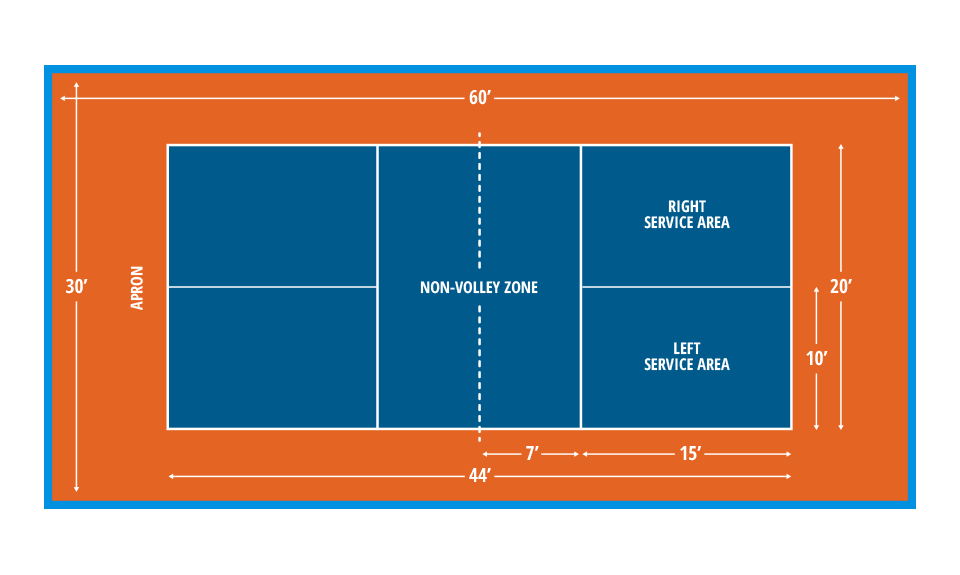
Here are the key numbers most people need on day one. The standard court size is 20 feet wide by 44 feet long. This size is the same for singles and doubles. The non-volley zone, also called the kitchen, is 7 feet deep on each side of the net.
Net height is 36 inches at the sidelines and 34 inches at the center. Lines are 2 inches wide and are part of the court. The non-volley zone line counts as part of the kitchen. The minimum recommended play area is 30 by 60 feet. The preferred play area is 34 by 64 feet for safer run-off.
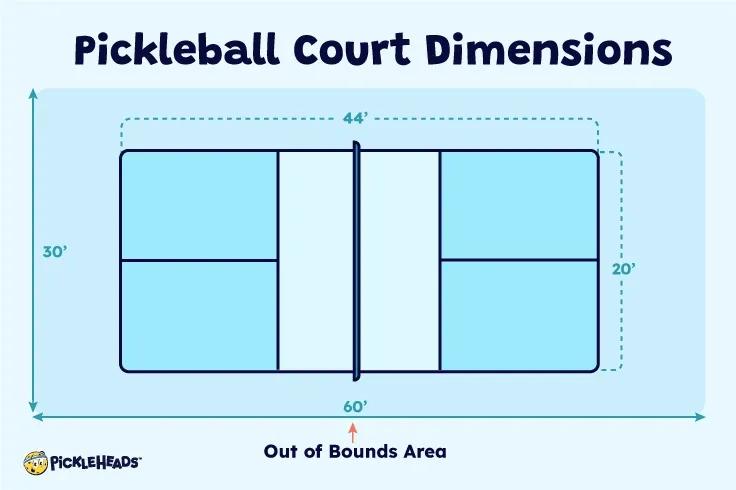
If you ask how big is a pickleball court in total space, plan for at least 30 by 60 feet. If you can go bigger, games feel safer and more fun.
Key parts of the court explained
Let’s break the court into zones you can see and feel on day one.
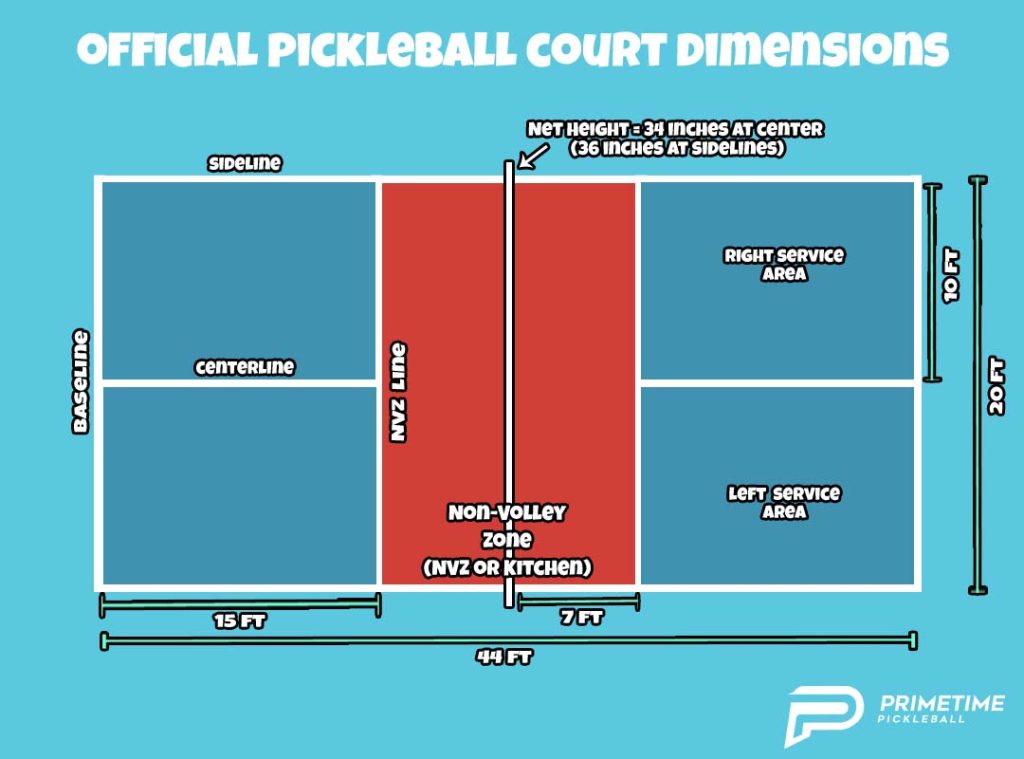
- Baselines run along the back of the court. You serve from behind them.
- Sidelines run the length of the court. They frame the width at 20 feet.
- The centerline splits each side into two service boxes. Each service box is 10 by 15 feet.
- The non-volley zone is the 7-foot area on both sides of the net. You cannot volley while standing in it.
- The net spans 22 feet across and sits outside the 20-foot court width. That gives tension room.
When people ask how big is a pickleball court, they often mean the playable box. But the lines, net height, and kitchen rules shape how it plays. That is why the exact layout matters.

Space you need indoors vs outdoors
Court size is fixed, but the extra space varies by site. Outdoors, aim for at least 10 feet clear behind each baseline and 5 feet on each side. That is how you get to the 34 by 64 preferred area. Indoors, keep at least 18 feet of clear ceiling height. More is better for lobs.
Lights should be even and bright. A good target is 30 to 50 foot-candles on the court. North–south court layout outdoors helps cut glare from the sun. If you wonder how big is a pickleball court in a gym, measure pillars, wall pads, and door swings too.
Building or lining a court: materials and tips
Asphalt and post-tension concrete are the most common bases. Both can take acrylic sport coatings for grip and color. Modular sport tiles work well for gyms or temporary builds. They drain well and feel kind to knees.
Use 2-inch-wide textured line paint in a bright, high-contrast color. For temporary lines, I use bright vinyl marking tape that holds but peels clean. On slick floors, chalk can smear. Tape is safer. Bring two 50-foot tapes and a friend for straight pulls. If you plan for events, ask early about run-off space. It matters more than most think.
I often get asked how big is a pickleball court when built on a driveway or gym floor. The answer is the same 20 by 44 feet, but check slope, shine, and space before you paint.
Pickleball vs tennis vs badminton sizes
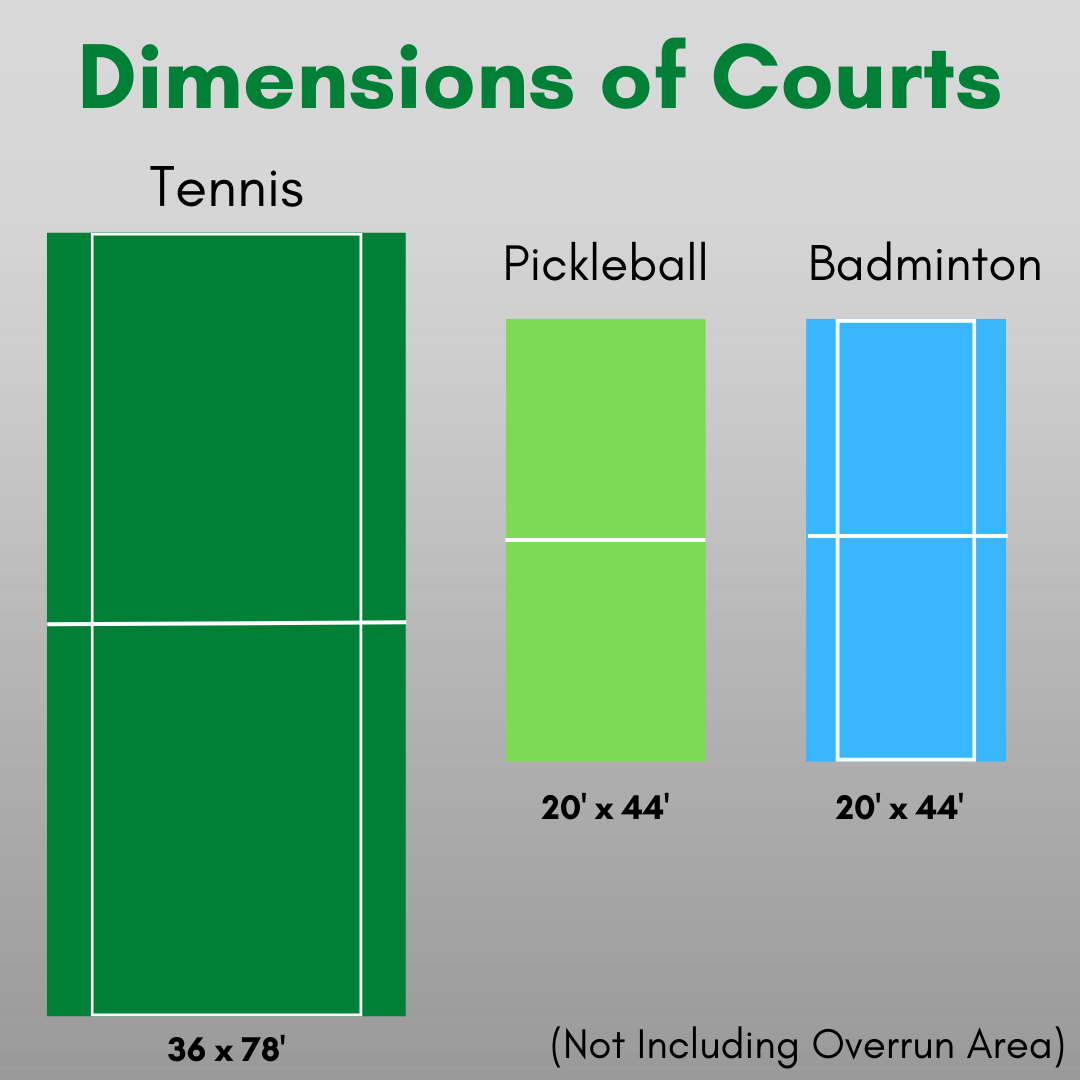
Tennis courts are much larger. A standard tennis court is 36 by 78 feet for doubles. The total play area is often 60 by 120 feet. That is why four pickleball courts can fit on one tennis court.
Badminton doubles courts are 20 by 44 feet, which matches pickleball. But the net is higher, and there is no kitchen. So while the footprint looks the same, the lines and play feel very different. If someone asks how big is a pickleball court compared to tennis, the short answer is: far smaller and easier to fit.

Multi-court layouts and safety spacing
If you stripe multiple courts, leave room between them. I like 8 to 10 feet between sidelines for safe movement and benches. Leave 10 to 12 feet between back baselines for back-to-back layouts. Mark buffer alleys with a different color or a dotted line.
On a single tennis court, four standard pickleball courts can fit with shared alleys. Some parks go with three courts to keep wider buffers. If a planner asks how big is a pickleball court for a complex, I share both the 30 by 60 minimum and the 34 by 64 preferred shell.
Measurement guide: step-by-step
Use two 50-foot tapes, chalk, stakes, and a good level net system.
- Pick a flat spot and snap a baseline of 20 feet.
- Mark 44 feet perpendicular from each corner to set the far baseline.
- Check squareness with corner-to-corner diagonals. Both should be about 48 feet 4 inches.
- Snap sidelines and the far baseline. Paint or tape 2-inch lines.
- From the net line, measure 7 feet on each side to mark the kitchen line.
- Mark the centerline from the kitchen line to the baseline.
- Set net posts so the net spans 22 feet. Set height to 36 inches at posts and 34 at center.
Take your time with squaring. A small twist can make the court feel tight on one side. When people ask how big is a pickleball court to measure on a driveway, I remind them to square first, paint second.

Common mistakes and pro tips
Avoid these common slip-ups.
- Lines too thin. Regulation width is 2 inches, and lines are “in.”
- Net too high. Many leave it at 36 inches in the middle. It must be 34.
- Kitchen too short. It is 7 feet from the net, not 6.5.
- No buffer space. Small run-off leads to trips and sore wrists.
- Glare issues. Avoid glossy coatings near baselines.
Here are tips from the field.
- Use a center strap to set 34 inches at mid-net.
- Confirm squareness with the diagonal check. It is fast and simple.
- For outdoor sites, aim for north–south layout to cut sun in the eyes.
- Test bounce and grip with a few rally balls before paint dries.
- If you must ask how big is a pickleball court for a shared space, tape it first. Live with it for a week. Then commit to paint.
Frequently Asked Questions of how big is a pickleball court
How big is a pickleball court in feet?
A standard court is 20 feet wide by 44 feet long. This size is the same for singles and doubles.
What is the non-volley zone size?
The non-volley zone, or kitchen, is 7 feet deep on each side. The kitchen line counts as part of the non-volley zone.
How tall is the pickleball net?
The net is 36 inches high at the sidelines and 34 inches at the center. Use a center strap to set it right.
How much space do I need around the court?
The minimum play area is 30 by 60 feet. The preferred play area is 34 by 64 feet for safer movement.
Can four pickleball courts fit on one tennis court?
Yes, four courts can fit with shared alleys. Some sites choose three courts to allow more buffer space.
Is how big is a pickleball court the same indoors and outdoors?
Yes, the court size is always 20 by 44 feet. The extra run-off and ceiling height vary by site.
What are the line widths for a pickleball court?
All court lines should be 2 inches wide. Lines are considered in-bounds for play.
Conclusion
You now know how big is a pickleball court and what space it needs to play well. The court is always 20 by 44 feet, with a 7-foot kitchen and a net at 36/34 inches. The real magic is in the buffers, light, and careful layout.
If you are setting up at home, start with tape and test. If you run a club, plan for the larger 34 by 64 shell. Grab a tape, mark your spots, and make your first rally happen. Want more help? Ask a question, subscribe for updates, or share your court plans with the community.