friday pickleball paddles blend fun design with modern tech for control, spin, and power.
If you are searching for friday pickleball paddles that feel great, play fast, and look fresh, you are in the right place. I test paddles each week with players from 3.0 to 5.0. In this guide, I break down what matters most about friday pickleball paddles, how to pick the right one, and how to make it last. You will learn from court-proven tips and simple data you can trust.
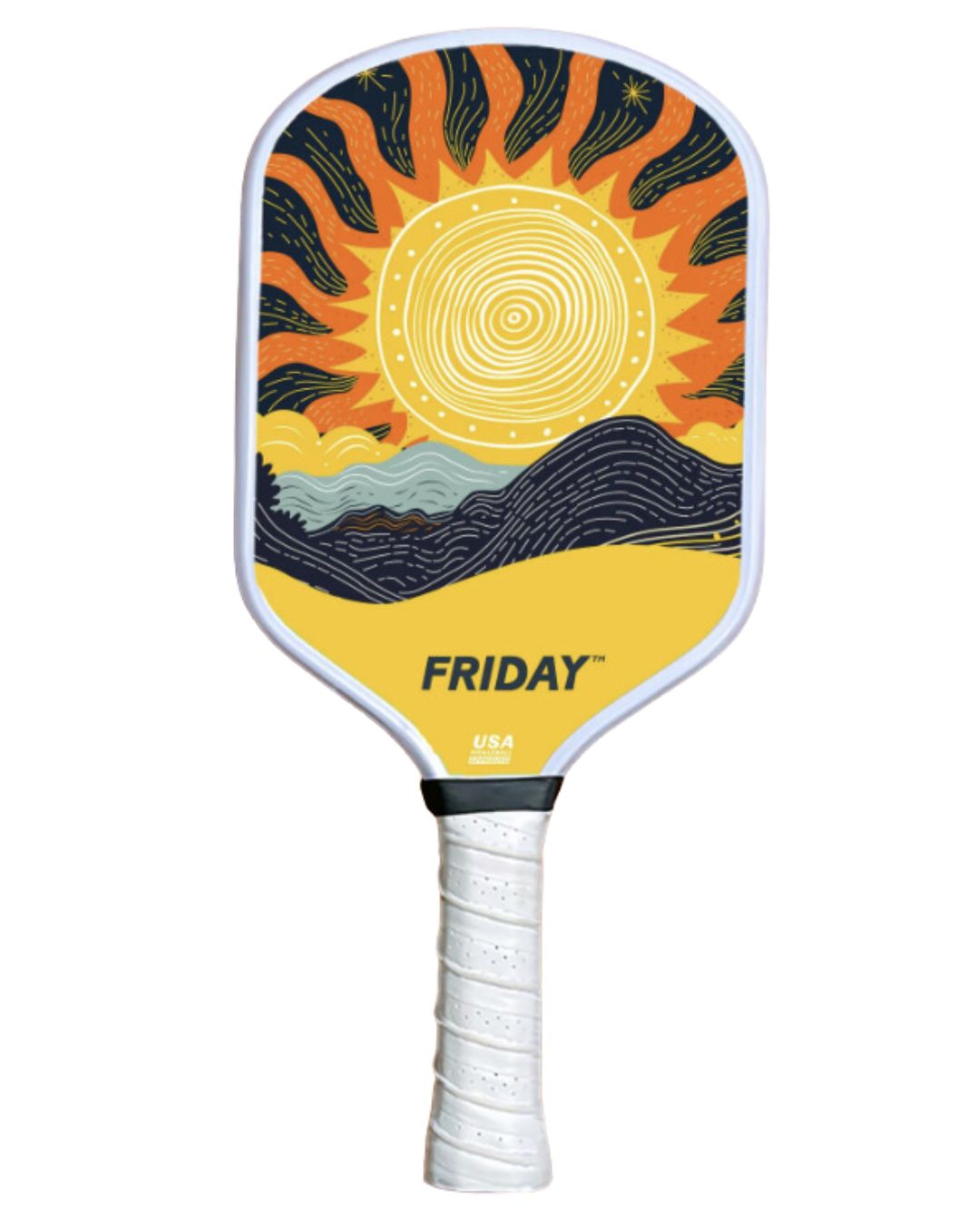
What makes friday pickleball paddles stand out
friday pickleball paddles are part of a new wave. They mix clean looks with pro-level build. The goal is easy power with stable control. Many models use carbon faces, polymer cores, and shaped edges to boost feel.
I judge paddles by three things. Can you reset a hard ball at the kitchen. Can you shape spin on serves and thirds. Can you block speed-ups without wobble. friday pickleball paddles often hit those marks due to modern layups and solid swing balance.
You will also see talk about raw carbon, thermoforming, and edge foam. These terms hint at better dwell time and a larger sweet spot. The result is a paddle that rewards good footwork and clean strokes.

Key specs to compare when buying friday pickleball paddles
Before you buy, learn the core specs that change how a paddle plays. Use them to match your style.
- Weight. Light is 7.6–7.9 oz. Mid is 8.0–8.4 oz. Heavy is 8.5+ oz. Light swings faster. Heavy adds plow and less shock.
- Swing weight. This is how heavy the paddle feels in motion. A higher number gives more stability but slower hands.
- Core. Poly honeycomb is the norm. It is soft, quiet, and USA Pickleball friendly.
- Face. Raw carbon grabs the ball for spin and control. Fiberglass adds pop. Blends aim for both.
- Shape. Elongated shapes add reach and power. Widebody shapes add forgiveness and a big sweet spot.
- Grip. Choose a grip size that fills your hand without strain. Replace grips when slick.
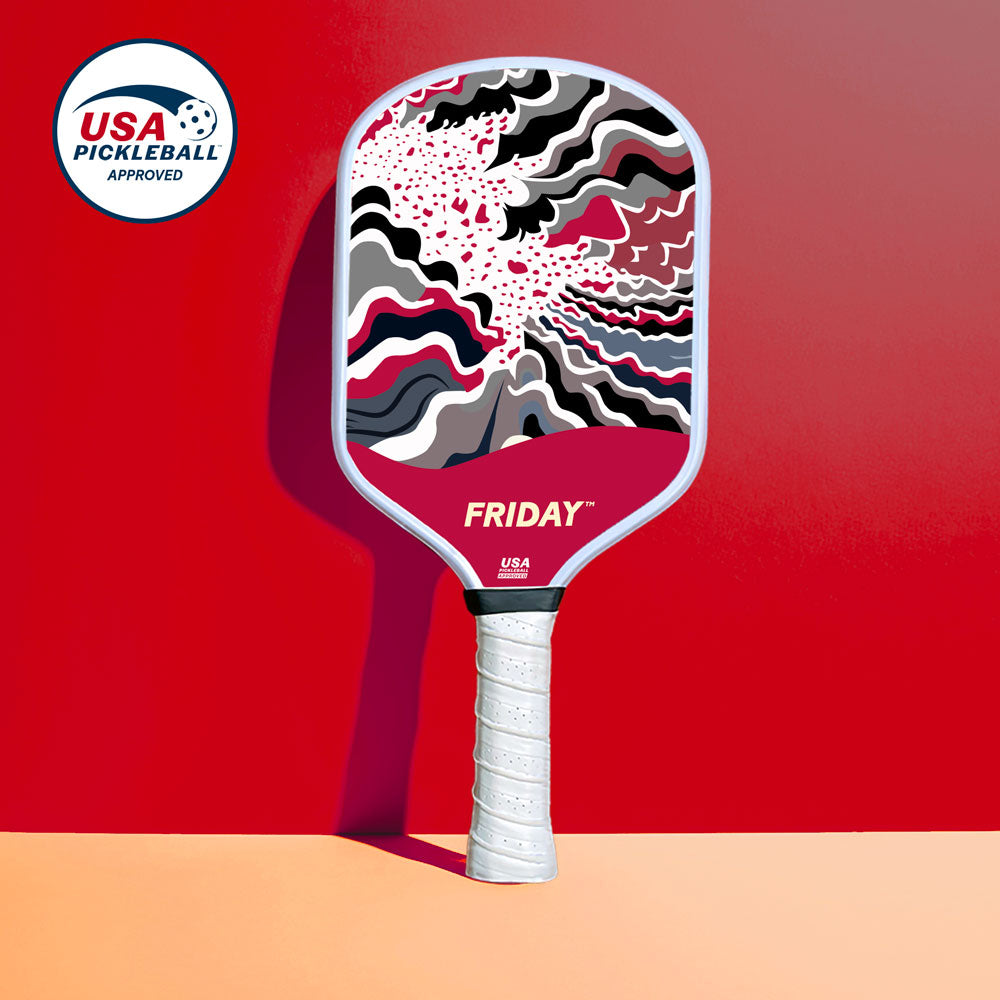
- Approval. If you play events, confirm USA Pickleball approval for friday pickleball paddles.
Skill-based quick picks for friday pickleball paddles
- New players. Go midweight, widebody, carbon face, 4.25 in grip. It is stable and kind.
- Control players. Raw carbon, midweight, higher swing weight. Great for resets and drops.
- Power players. Elongated, thermoformed build, 8.3–8.6 oz. Adds depth and serve pace.

Materials and tech behind the feel
The feel of friday pickleball paddles comes from the stack of materials. Here is what matters most.
- Polymer honeycomb core. It dulls harsh shock and helps with reset touch.
- Raw carbon fiber face. It has a textured weave that adds spin and control. It raises dwell time.
- Thermoformed unibody. Heat and pressure fuse parts. This can raise power and durability.
- Foam-injected edges. Foam along the rim adds stability and a bigger sweet spot.
- Peel-ply texture. The surface grip helps shape the ball. It must stay within roughness rules.
From my testing, raw carbon builds often help dinks and rolls. Fiberglass feels springy and great for drives. Hybrids can split the difference. The best friday pickleball paddles blend a soft core with a firm face. That gives touch in the kitchen and punch at the baseline.

Best friday pickleball paddles for different players
You do not need a wall of gear. Match your pick to your game plan. Here are clear profiles that work.
Control-first build
- Raw carbon face with a soft polymer core.
- Midweight with a neutral balance.
- Great for thirds, resets, and blocks.
- Ideal for players who live at the kitchen.
Power-first build
- Thermoformed, elongated shape, firmer core.
- Slightly head heavy for deep serves and drives.
- Good for counterpunchers and tennis converts.
Hybrid all-court build
- Carbon face with tuned core and edge foam.
- Midweight with medium swing weight.
- Handles dinks, rolls, and speed-ups well.
Budget-friendly build
- Composite or hybrid face with simple core.
- Lighter weight to reduce arm stress.
- A smart entry to friday pickleball paddles for new players.
Pro tip. If you are between sizes, add overgrip for comfort and sweat control. A fresh overgrip can make friday pickleball paddles feel brand new without a big spend.

Testing insights from the court
I test paddles weekly with a radar, a spin board, and slow-motion video. Here is what I have learned with friday pickleball paddles.
- Spin. Raw carbon faces help topspin rolls hold the line. This keeps drives lower and harder to counter.
- Stability. Foam edges and higher swing weight calm the face. Your blocks stop sailing long on pace.
- Power. Thermoformed builds add depth on serves and drives. You get free pace if your feet are set.
Common mistakes to avoid with friday pickleball paddles
- Chasing only power. Many players lose soft-game feel. Pick control first if you win at the kitchen.
- Ignoring swing weight. A heavy head can slow hands in hands-battles.
- Over-tight grips. This kills touch. Keep a light hold, then firm up at contact.
Care, maintenance, and longevity
Good care can double the life of friday pickleball paddles. It also keeps play feel consistent.
- Clean the face with a damp cloth or alcohol wipe. Remove dust and ball smudge to restore spin.
- Check edges for dings or gaps. Edge tape helps protect the rim and adds grip for rolls.
- Replace grips often. Fresh tack reduces elbow strain and slips.
- Watch for sound changes. A sudden buzz or rattle can mean loose material. Stop play and inspect.
- Store in a padded bag. Avoid a hot car. Heat can weaken glue and foam.
I swap grips every 20–30 hours. I also log any odd vibration. Prevent issues early to keep friday pickleball paddles match ready.

Price, value, and where to buy
Price ranges for friday pickleball paddles vary by build and brand.
- Entry level. About $40–$80. Great for learning and casual play.
- Mid tier. About $100–$160. Better cores, textured faces, and nicer grips.
- Premium. About $170–$250. Thermoformed builds, raw carbon, and advanced shapes.
How to get value from friday pickleball paddles
- Look for demo days. Try two or three builds back-to-back.
- Read return policies and warranty terms. Check for dead-spot coverage.
- Buy from trusted shops or the brand site. Counterfeit risk is real in fast-growing sports.
I suggest a mid-tier buy for most players. It gives strong performance and fair price. Upgrade when your game demands a new trait, not just a new color.

Simple drills to unlock your new paddle
A good paddle shines when you train smart. Use these quick drills with friday pickleball paddles.
- 100-dink ladder. Start cross-court, knee bend low, light grip. Count clean hits in a row.
- Third-shot drop zone. Place cones three feet in from the kitchen line. Land ten in a row.
- Block and counter. Partner drives at you from mid-court. Block three, counter the fourth.
- Serve and shape. Aim deep corners with topspin. Track bounce height for depth control.
These drills tune touch, timing, and spin. They also show how friday pickleball paddles help in real points.

Frequently Asked Questions of friday pickleball paddles
Are friday pickleball paddles good for beginners?
Yes, many models are easy to use. Look for midweight, widebody shapes with a soft core for control.
Do I need a raw carbon face to get spin?
Raw carbon helps with spin and control. But good mechanics and clean balls also raise spin rates.
What weight should I choose?
Most players like 8.0–8.4 oz for balance. Go lighter for quick hands, heavier for stability and depth.
Are friday pickleball paddles tournament legal?
Check for USA Pickleball approval on the paddle or site. Most mainstream models have it, but always confirm.
How long do these paddles last?
Many paddles play well for 6–12 months with regular use. Cleaning and grip care can extend that window.
Can I fix a dead spot?
A true dead spot means internal damage. It is safer to replace or use a warranty if covered.
How often should I replace the grip?
Replace when slick or after 20–30 hours of play. A fresh overgrip is cheap and helps control.
Conclusion
friday pickleball paddles can boost your game when you match the build to your style. Focus on core specs, swing weight, and face tech. Train with simple drills to make control and power feel natural.
Try a demo, track what you feel, and pick with a plan. If you found this helpful, subscribe for more gear guides and court-tested tips, or leave a comment with your paddle questions.