DUPR is a dynamic rating that scores your pickleball skill based on who you play and the exact score.
If you want a fair, fast, and universal way to measure progress, the dupr pickleball rating system delivers. I’ve used DUPR to seed club ladders, fix sandbagging headaches, and help players set smart goals. In this guide, I break down how it works, the algorithm basics, how to get rated, and how to use your DUPR to play better and enter the right events.

What is the dupr pickleball rating system?
DUPR stands for Dynamic Universal Pickleball Rating. It is a single, universal method to rate player skill across singles, doubles, and mixed. The scale runs from beginner to pro level and updates as you play.
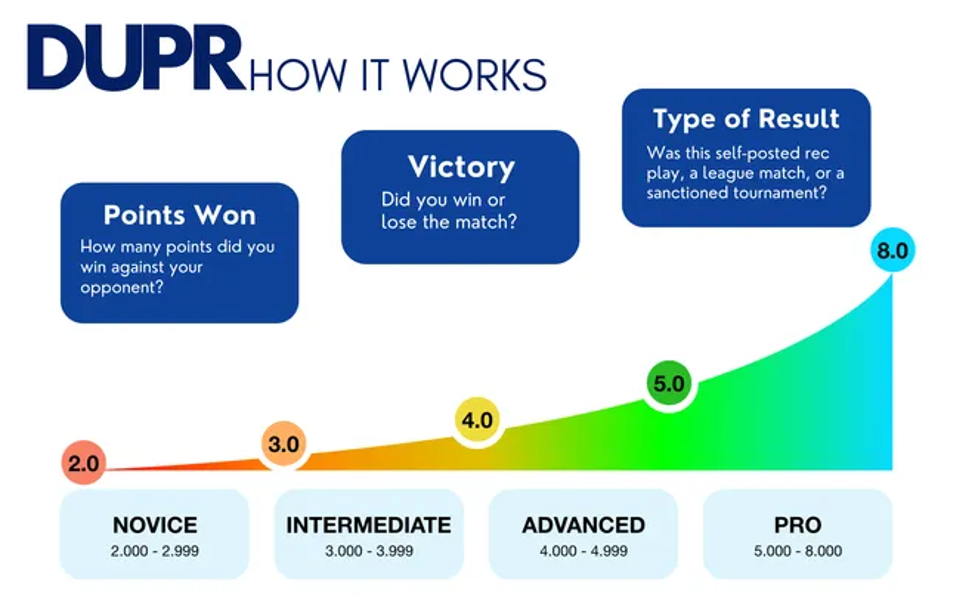
The dupr pickleball rating system looks at match outcomes, opponent strength, partner strength, the score, and when the match happened. It uses a modern, Elo-style model with a few key tweaks. Your rating moves more when you beat higher-rated players or win by a larger margin.
Clubs, leagues, and major events use DUPR to seed brackets, set divisions, and reduce sandbagging. Players use it to track progress, find fair matches, and set goals that stick.

How the algorithm works in plain English
DUPR predicts what should happen based on all players’ current ratings. After each match, it compares the prediction to what actually happened. If you outperform the prediction, your rating goes up. If you underperform, it goes down.
What the model considers
- Opponents and partners The stronger they are, the more a good result helps.
- Exact score Margin matters. An 11 to 2 win is not the same as 11 to 9.
- Match type Singles and doubles update the parts of your profile that relate to those formats.
- Recency Recent results count more than old ones.
- Verification weight Verified matches tend to influence ratings more than self-reported ones.
A simple example
- You and a partner rated 4.00 face a pair at 4.25.
- DUPR expects you to lose a close match.
- You win 11 to 6, 11 to 7.
- You beat the prediction with a clear margin, so you gain solid points. Your partner does too.
The dupr pickleball rating system also tracks confidence in your number. Fewer matches mean more volatility. As you log more verified results, your rating steadies.
How to get your DUPR rating step by step
You can get rated in a day if you have match data. Here is a simple path.
- Create your profile Search for your name if you have past results. If not, set up a new account.
- Join a club or event that posts results Ask your organizer if they push scores to DUPR.
- Record matches You can self-post rec matches and have opponents confirm. League and tournament results usually import as verified.
- Play at least five to ten matches This builds a base so your rating is not wildly volatile.
- Keep playing weekly Recent play is the fastest way to make your rating accurate.
Tips I share with new club players
- Post every match, not just wins. Missing losses can skew the model and slow trust.
- Include exact scores. Margin of victory drives more precise changes.
- Mix opponents. A blend of higher, equal, and slightly lower-rated players creates a healthy rating curve.
The dupr pickleball rating system rewards honest, steady logging. That is how you get a number you can trust.
Reading your profile and rating confidence
Your profile will show your current rating, recent matches, and a confidence or reliability indicator. Think of it like a signal strength bar. More verified matches and recent play mean a stronger signal.
Why your rating moves
- Big upsets If you beat a stronger team by a clear margin, expect a notable jump.
- Tight wins over lower-rated players You may move little or even drop if you underperform the prediction.
- Old matches fading Older results count less, so recent hot streaks matter more.
In my club ladder, new players often jump a lot in the first 10 to 15 matches. After about 20 to 30 verified games, the number settles and moves in smaller steps. That is normal with the dupr pickleball rating system.

Using the dupr pickleball rating system to improve
Use your rating as a training compass, not a trophy. Here is a plan that works.
- Set a micro goal Try to move 0.05 within a month. Small bumps stack up.
- Build match reps Aim for two to three real matches per week with exact scores.
- Track one skill per week Example third shot drops or returns deep and crosscourt.
- Seek stretch matches Play a set with a pair 0.2 to 0.3 above you. Learn from the pressure.
- Review losses Post them and take notes. Losses teach the model and your game.
Practical drills that move the needle
- Serve plus first ball Drill serve targets, then a third shot under pressure.
- Return depth Play to the back five feet. Deep returns lower opponent hold rate.
- Dink to attack Alternate five safe dinks and one speed-up. Control the trigger.
The dupr pickleball rating system responds to better choices as much as better shots. Win the patterns, and the rating follows.
Common mistakes and myths
I see these all the time in clubs and leagues. Avoid them to keep your rating honest and useful.
- Only posting wins The model assumes missing data and can penalize later. Post everything.
- Gaming partners Always pairing with someone much stronger can stall your growth and raise suspicion.
- Chasing blowouts Running up the score is not the point. Smart, clean play wins over time.
- Fear of mixed doubles Mixed results still teach useful skill signals for doubles play.
- Ignoring recency Old hot streaks fade. Keep playing if you want the number to reflect today.
The dupr pickleball rating system is designed to resist cherry-picking. Over time, the network of matches tells the truth.

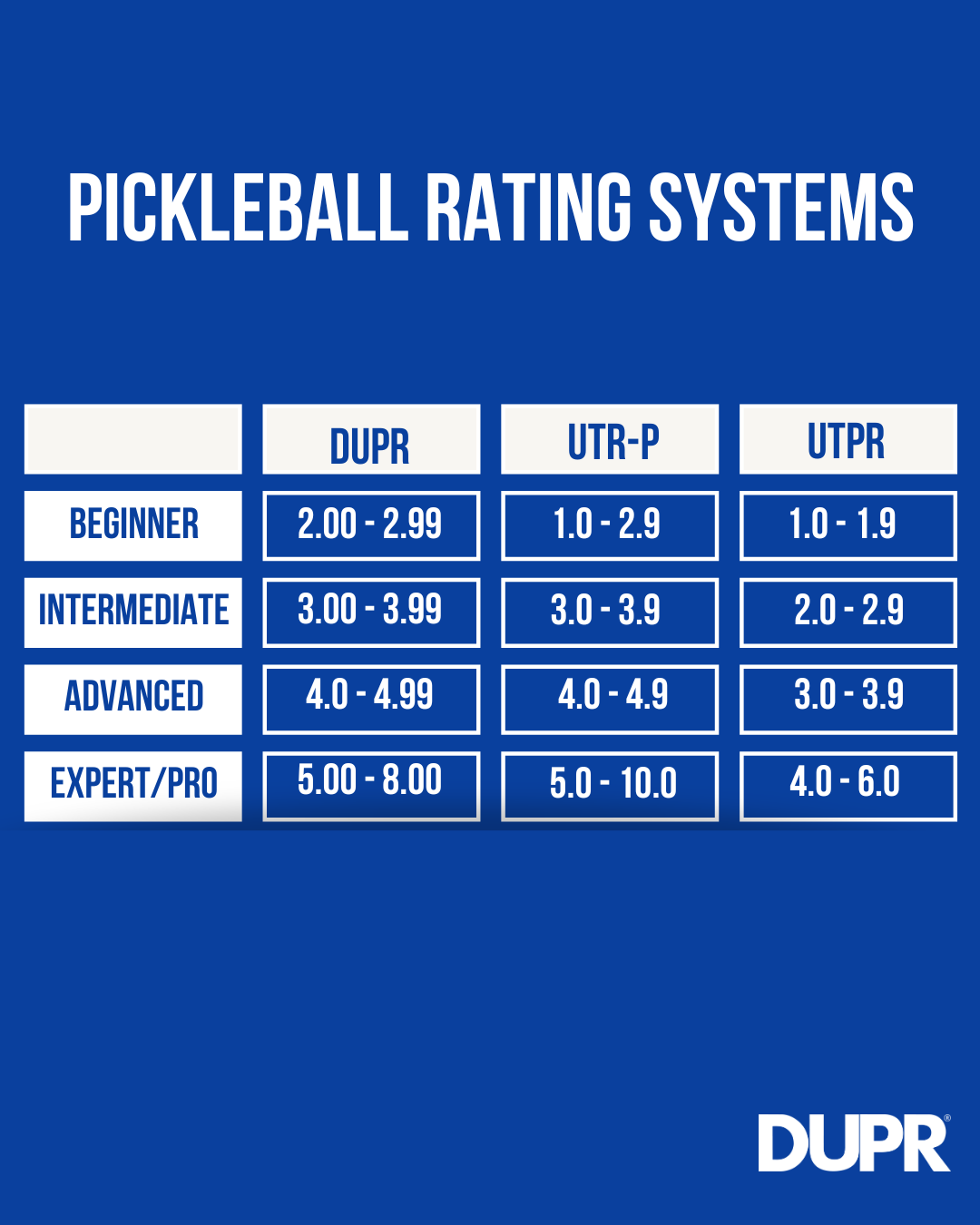
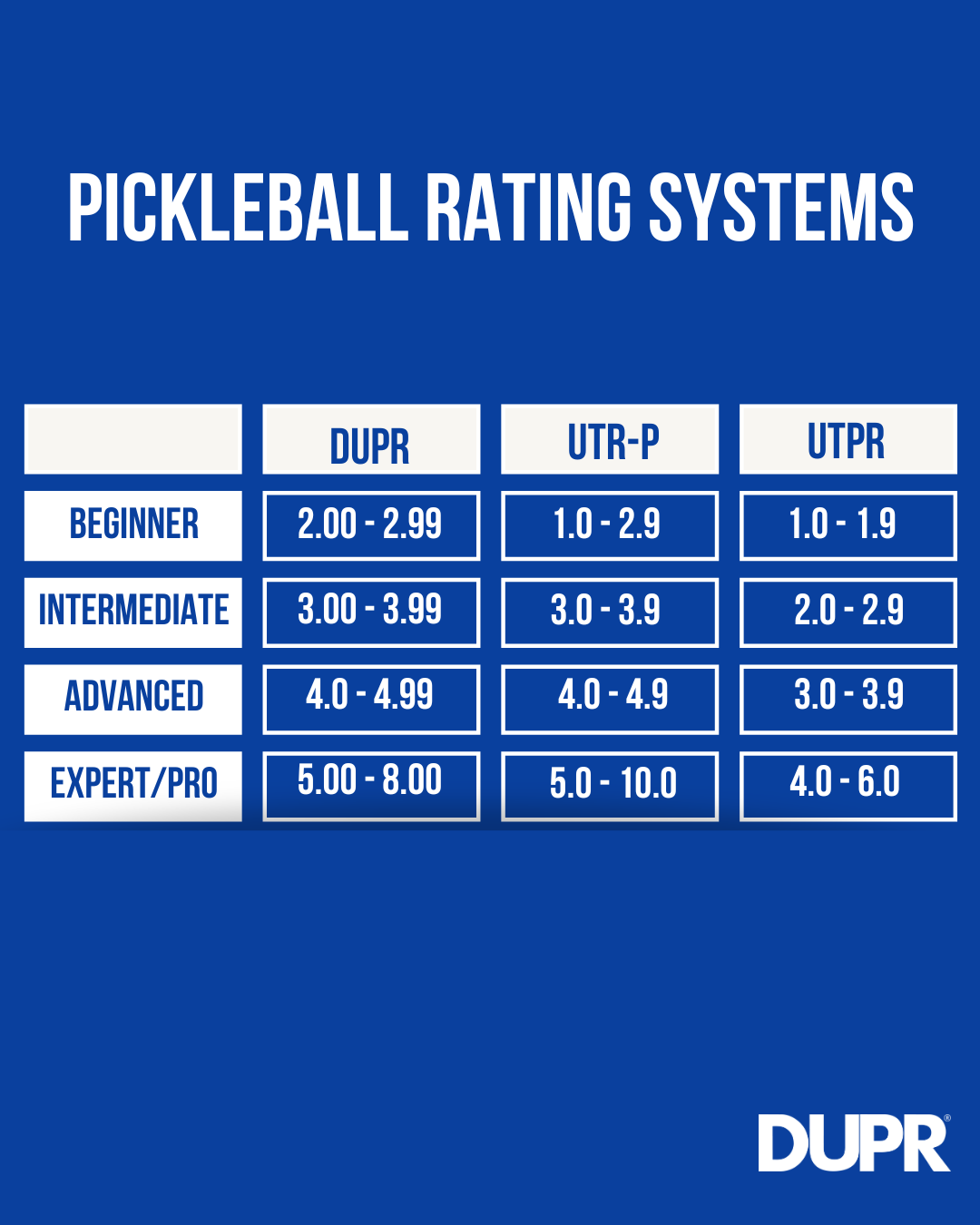
DUPR vs UTPR and other rating systems
Players often ask how DUPR differs from other systems.
- Scope DUPR aims to be universal across clubs, leagues, and tours. Some systems live only in one body.
- Data DUPR ingests self-posted and verified scores and weights them differently. Many systems use only sanctioned results.
- Math DUPR uses an Elo-style core with margin of victory, partner effects, and recency. Some systems use division-based gates or simpler win-loss models.
- Speed DUPR updates quickly with each new match, so it is great for current form.
If your goal is fair league seeding and real-time progress, the dupr pickleball rating system tends to serve better day to day. For strict national rankings, sanctioned-only systems still have a place.

For tournament directors, clubs, and coaches
DUPR makes it easier to run clean events and place players in the right spots.
Best practices I use when seeding
- Use recent DUPR first, then adjust for local context if needed.
- Look at rating confidence. Low confidence means more volatility.
- Check head-to-head trends when ratings are tight.
League and ladder tips
- Require exact scores and timely entry.
- Encourage a mix of matchups to reduce rating bubbles.
- Post clear division bands, for example 3.0 to 3.49, 3.5 to 3.99.
Coaches can use the dupr pickleball rating system to group lessons, measure progress, and prove program impact with before and after data.
Privacy, data accuracy, and fairness
Trust is key. Here is how to keep your data clean.
- Verification Use club or tournament pipelines when possible. They carry more weight.
- Score checks Opponents confirm self-posted scores. That reduces errors.
- Corrections If a score is wrong, request a fix quickly with proof.
- Incomplete matches Forfeits and retirements often do not count. When in doubt, ask your organizer.
No rating is perfect. But the dupr pickleball rating system improves as the network grows and as more verified data flows in. Be transparent and record everything.
Advanced insights for curious players
Want to squeeze a little more value from your number? Keep these in mind.
- Decay Older matches matter less. A strong last 30 to 60 days can move you.
- Partner effect Your partner’s rating shapes the expected result. Beating the odds with an even team gives a bigger push.
- Score sensitivity A narrow win over a much lower team may barely move you, or even dip if you underperform expectations.
- Network health The more connected your local scene is, the faster ratings stabilize.
Example pattern
- Week 1 You beat a team 0.20 above you in tight sets. Small bump.
- Week 2 You repeat and win by larger margins. Bigger bump as the model gains confidence.
- Week 4 You face a new pool of players and hold your edge. Your rating locks in and moves in smaller steps.
These ideas show why the dupr pickleball rating system rewards steady, honest testing against a range of opponents.
Frequently Asked Questions of dupr pickleball rating system
What does DUPR stand for?
It stands for Dynamic Universal Pickleball Rating. It is a real-time system that updates as you play.
What is a typical DUPR range?
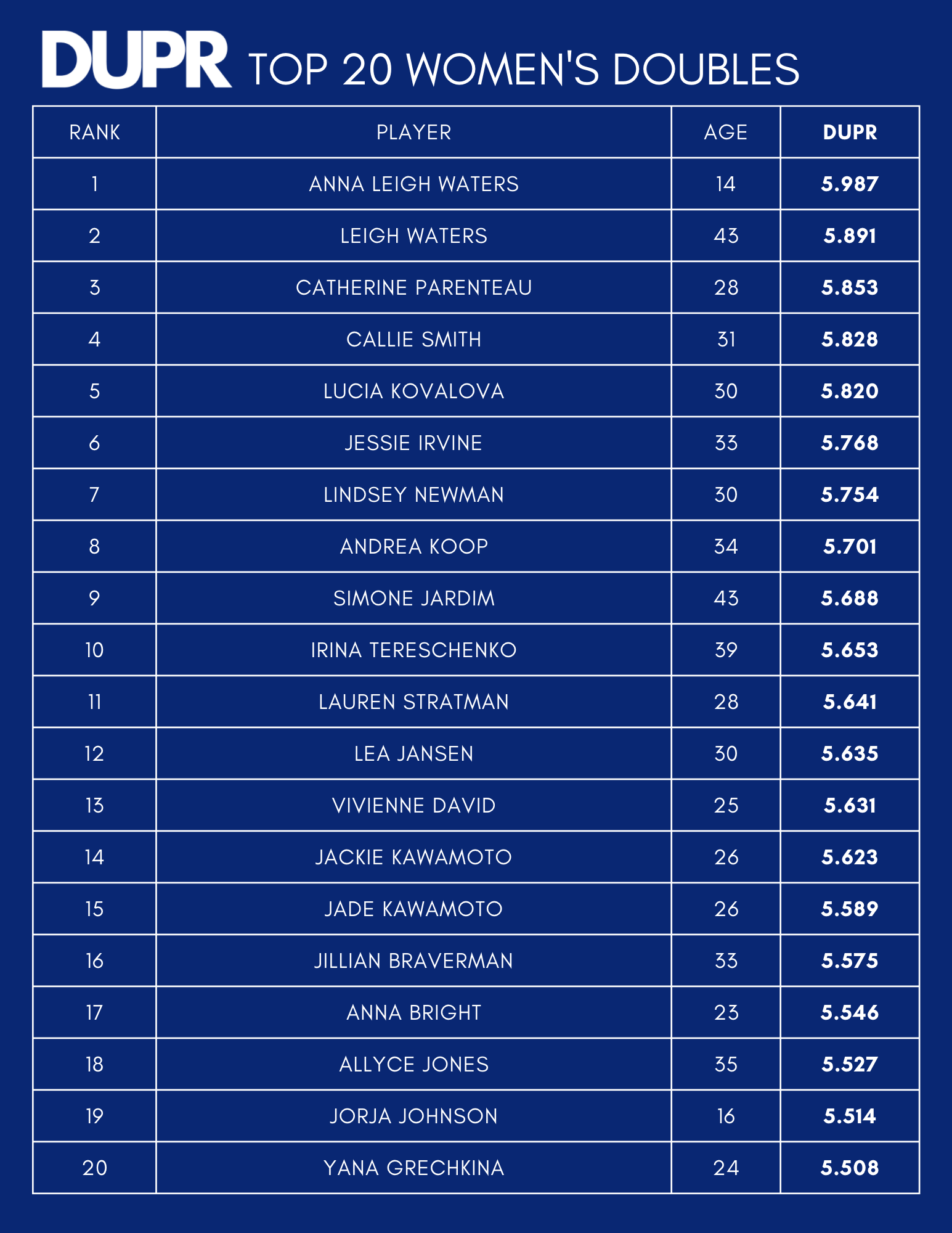
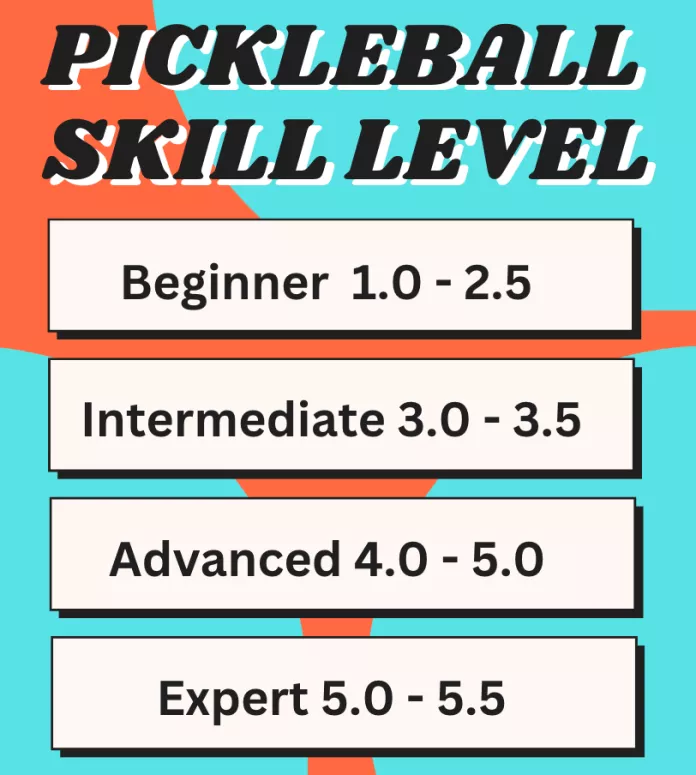
Most adult rec players land between 3.0 and 4.5. High-level amateurs and pros sit higher.
Do singles and doubles have separate ratings?
Your profile can show singles and doubles performance, and both feed your overall view. Play each format to keep both sides current.
Do verified matches count more than self-posted ones?
Yes, verified results carry stronger weight. They help build rating confidence faster.
How many matches do I need for a reliable rating?
Plan on five to ten to settle early swings. Twenty or more verified matches often produce a stable, trusted number.
Does point differential matter?
Yes, the exact score affects rating change. Bigger margins over tough opponents lead to bigger gains.
Can I lose rating after a win?
It is rare but possible with a very weak opponent and a poor margin. The model compares your result to what it expected.
Conclusion
DUPR gives you a fair, fast, and simple way to measure real pickleball skill. It looks at who you play, the score, and how recent the match is, then updates your number in a way that rewards steady progress.
Use the dupr pickleball rating system to set goals, find even matches, and track results without guessing. Play consistently, post every score, and seek smart stretch games. Ready to level up with data that works for you? Create your profile, log your next match today, and share your questions or wins in the comments.