
Paddle and pickleball differ in court, equipment, scoring systems, balls, strokes, and pace.
If you have ever mixed up these fast-growing racquet sports, you are not alone. In this guide, I’ll unpack the difference between paddle and pickleball with clear facts, real court insights, and friendly tips. I’ve played and coached both for years, and I’ll help you choose the right game for your goals and style.

What does “paddle” actually mean?
Many people use paddle to mean different things. Globally, paddle often means padel, the glass-walled court sport popular in Europe and Latin America. In parts of the US, paddle can also mean platform tennis, a winter-friendly game on a raised court with screens.
For search clarity, I’ll focus on padel vs pickleball first, then note how platform tennis compares. This clears up the core difference between paddle and pickleball for most readers.
Key terms:
- Padel: Enclosed court with glass and mesh walls. Solid racket (no strings). Pressurization-adjusted tennis ball.
- Pickleball: Open court with a kitchen (non-volley zone). Solid paddle. Perforated plastic ball (wiffle ball style).
- Platform tennis: Raised court with wire screens. Spongy ball. Used more in cold climates.
Understanding which paddle you mean is step one in the difference between paddle and pickleball.
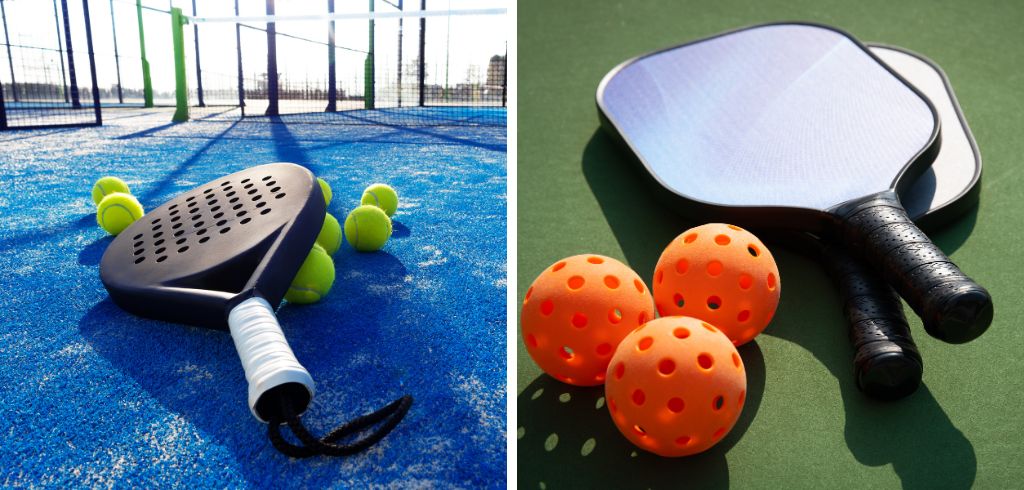
Core differences at a glance
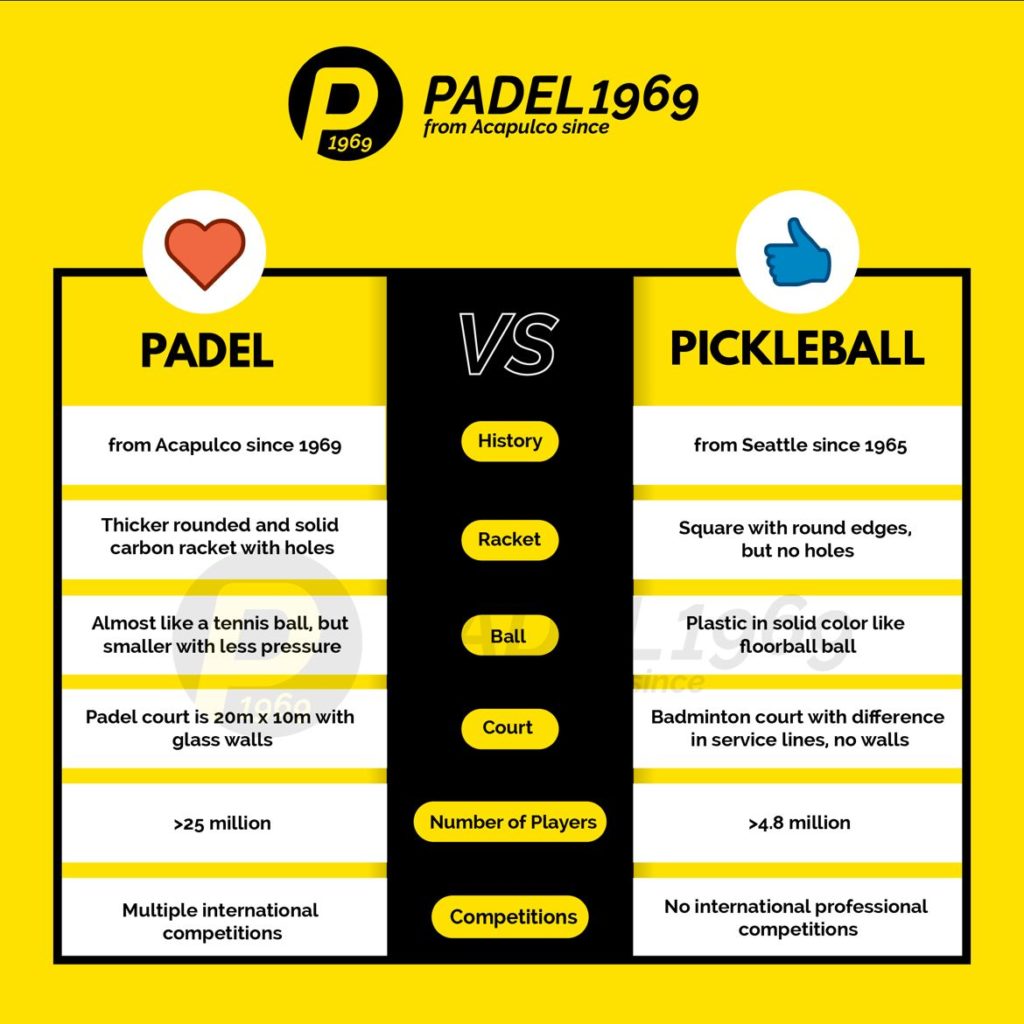
Think of padel as wall-ball tennis and pickleball as compact, quick-fire badminton-meets-tennis.
- Court use
- Padel: Use walls for play. Doubles by default.
- Pickleball: No walls. Singles and doubles both common.
- Serve
- Padel: Underhand off a bounce. Like tennis scoring.
- Pickleball: Underhand, no bounce before contact, rally starts on serve.
- Ball
- Padel: Felt ball with lower pressure. Higher bounce than pickleball, softer than tennis pace.
- Pickleball: Hard plastic ball with holes. Lower bounce. More sensitive to wind.
- Paddles/Rackets
- Padel: Solid, perforated racket with face textures and balance points.
- Pickleball: Flat-faced paddle with honeycomb core. Lighter swing weight.
- Tactics
- Padel: Use walls, angles, and teamwork. Many lobs. Longer rallies.
- Pickleball: Dinks in the kitchen, quick hands, third-shot drops. Fast net battles.
These points sum up the difference between paddle and pickleball for how they feel on court.
Equipment and feel in the hand
In padel, the racket is thick, solid, and drilled with holes. Shapes vary: round for control, teardrop for balance, diamond for power. Surface grit adds spin. Typical weights run 350–390 grams. Impact feels plush because the ball is soft and the walls keep points alive.
In pickleball, paddles use a polymer or Nomex honeycomb core and a composite or graphite face. Most weigh 7–9 ounces. The feel is crisp. Control comes from paddle face tech and edge thickness. The ball is hard, so mishits fly fast.
From my bag tests, the jump in swing weight is the first thing you notice moving from pickleball to padel. That weight changes timing. It is a core, hands-on difference between paddle and pickleball for new players.

Courts and nets
Court design drives style.
- Padel court: 20 meters by 10 meters, enclosed with glass and mesh walls. Net height sits near tennis height at center. Lighting and turf matter.
- Pickleball court: 44 by 20 feet. No walls. A 7-foot kitchen sits on each side of the net. Net is 34 inches at center.
Walls mean you can defend late in padel, then reset. No walls in pickleball means every angle is final. This shifts spacing, footwork, and shot choice. It is a big difference between paddle and pickleball you feel right away.

Rules and scoring
Both padel and pickleball aim for easy entry, but the rule sets split.
- Padel rules
- Underhand serve off a bounce, into cross-court box.
- Ball can use walls after the ground bounce.
- Scoring mirrors tennis: games, sets, tiebreaks.
- Pickleball rules
- Underhand serve, contact below waist, no bounce before contact.
- Two-bounce rule starts the rally: serve must bounce, return must bounce.
- Only the serving team scores. Games often to 11, win by 2.
When friends ask the difference between paddle and pickleball, I start with the two-bounce rule and the walls. That clears up 80% of confusion in minutes.
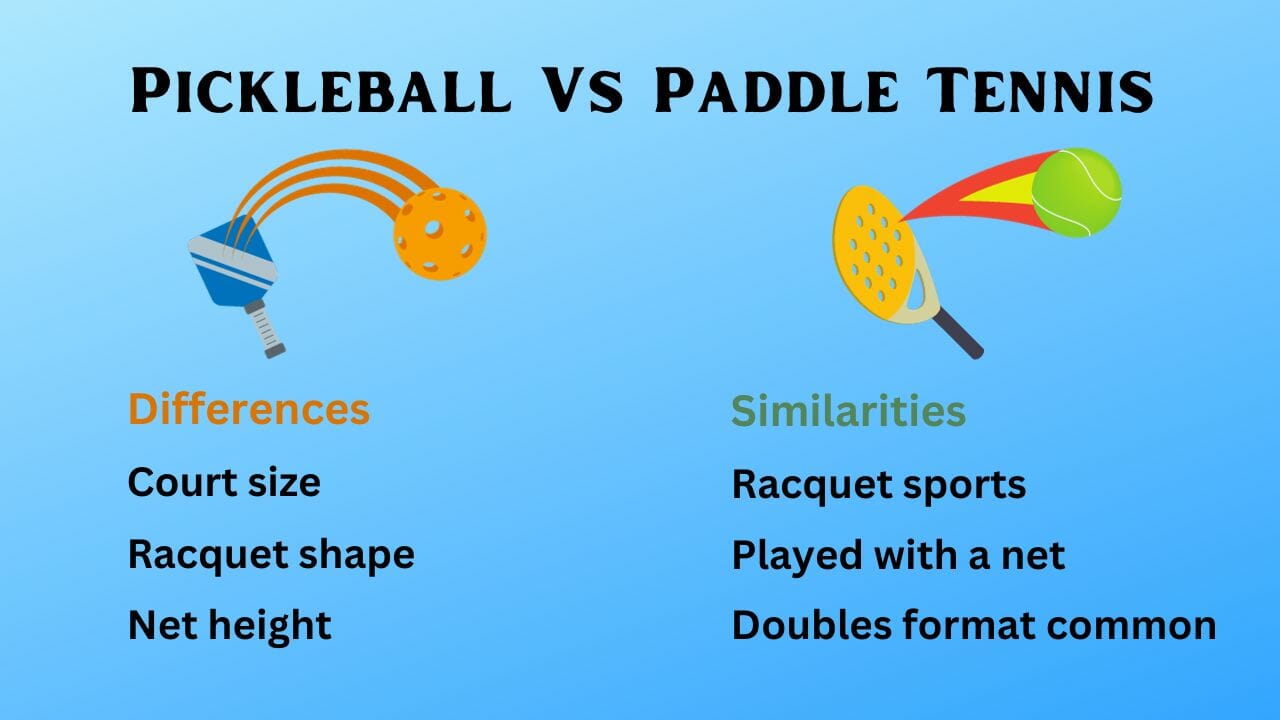
Style of play and strategy
Padel is a chess match with walls. You build points with lobs, screens, and team shape. You can defend from deep and counter off glass. Spin and angle win.
Pickleball is a hands battle. You earn the kitchen. You slow the ball with drops and dinks, then speed it up with counters and flicks. Reading paddle face angles matters a lot.
From coaching, I see the difference between paddle and pickleball in how players “finish” points. Padel uses overheads off lobs and wall setups. Pickleball uses speed-ups at the kitchen and roll volleys.

Learning curve and who each suits
New players can start both sports in one session. But skill ramp differs.
- Padel
- Easiest for former tennis or squash players.
- Wall reads take time. Footwork is compact.
- Doubles teamwork is central.
- Pickleball
- Easiest for all ages, even with no racquet background.
- Kitchen play is a new skill but clicks fast.
- Singles is a cardio test; doubles is about touch.
The difference between paddle and pickleball becomes clear in week two. In padel, you learn wall defense. In pickleball, you learn the third-shot drop and dink patience.

Fitness, injuries, and pace
Padel runs longer, smoother rallies with more resets. You load the legs and core. Rotator cuff and elbow care helps with overheads.
Pickleball has shorter sprints and many quick stops. Wrist, elbow, and calf strains are common for newcomers. A good warm-up and softer hands at the kitchen help.
Wear court shoes with lateral support for both. The difference between paddle and pickleball in body load is simple: padel spreads stress across the body; pickleball concentrates stress at the net and lower legs.
Cost, access, and growth
Pickleball courts are cheap to paint. A paddle and a few balls keep costs low. That is why parks and gyms keep adding courts fast.
Padel courts cost more to build, due to glass and turf. Access depends on a club or facility. Hourly rentals can be higher. Yet growth is strong worldwide, and more US cities now have public padel courts.
If budget and distance matter most, the difference between paddle and pickleball often favors pickleball in the short term.
How to choose the right sport for you
Use your goals as a filter.
- Choose padel if
- You love walls, teamwork, and longer rallies.
- You have a tennis or squash past.
- You want a club vibe and structured doubles play.
- Choose pickleball if
- You want fast entry, open play at parks, big communities.
- You like quick hands, dinks, and compact courts.
- You want easy travel with a paddle in your backpack.
Try both. The best way to feel the difference between paddle and pickleball is to play two sessions each. I often run a split clinic. Most players know their pick after one week.
What about platform tennis?
If by paddle you meant platform tennis, here is the short take.
- Court: Smaller than tennis, raised platform, with wire screens. Screens are in play like walls.
- Equipment: Thick, perforated paddles. Spongy ball built for cold weather.
- Play: Doubles focused. Scoring like tennis. Lots of screens and teamwork.
The difference between paddle and pickleball here is similar to padel vs pickleball. Platform tennis uses screens for resets. Pickleball has no walls and depends on kitchen skills. Both are fun and social, but they feel very different on day one.
Frequently Asked Questions of difference between paddle and pickleball
Is paddle the same as padel?
Paddle often refers to padel worldwide, but in the US it can mean platform tennis. Check your local club’s wording before you sign up.
Which is easier to learn for a beginner?
Pickleball is often easier on day one because there are no walls. Padel is still beginner-friendly, but reading the glass takes a bit more time.
Can I use a pickleball paddle for padel?
No. Padel rackets and pickleball paddles have different specs and rules. Use the right gear to protect your arm and play the sport as intended.
Which sport gives a better workout?
Both can be a great workout. Padel tends to have longer rallies and full-body movement, while pickleball has quick bursts and fast hand battles near the net.
What is the main rule difference between paddle and pickleball?
Padel allows wall play and uses tennis-style scoring. Pickleball has the kitchen, a two-bounce start to each rally, and only the serving team scores.
Is singles common in both?
Padel is almost always doubles. Pickleball supports both singles and doubles, but most social play is doubles.
Are injuries more common in one sport?
Injuries happen in both. Pickleball sees more calf and elbow issues from quick stops and hard balls, while padel sees more shoulder and elbow stress from overheads.
Conclusion
Now you can spot the difference between paddle and pickleball at a glance: walls and tennis-style scoring shape padel and platform tennis, while the kitchen and a plastic ball define pickleball. Pick a sport that matches your goals, your local courts, and your fun meter. Book a beginner clinic this week, try both, and let your first rallies decide. If you enjoyed this guide, subscribe for more side-by-side sport breakdowns, or drop a comment with your questions.