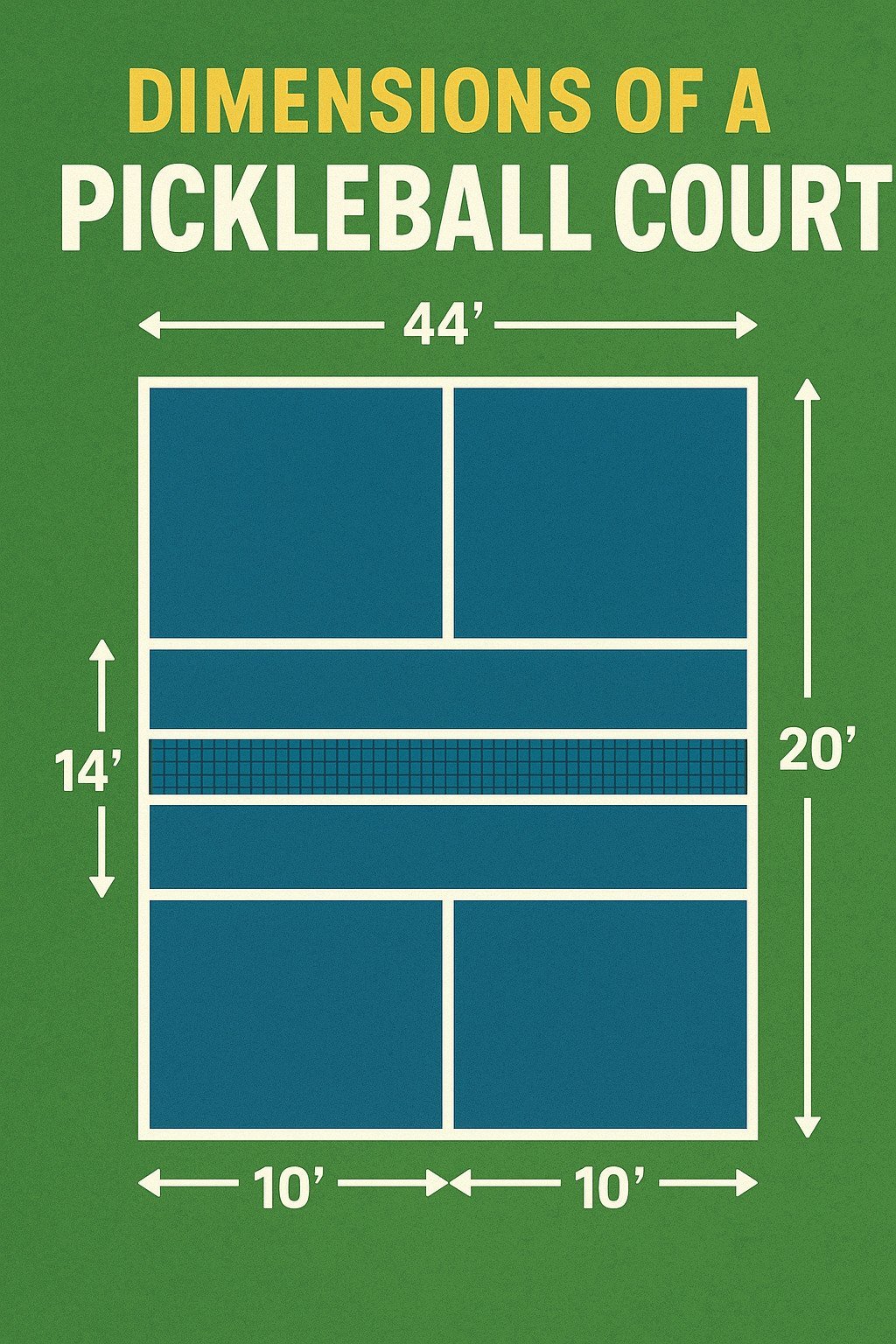
A pickleball court measures 20 by 44 feet with 7-foot non-volley zones.
Pickleball court size shapes how you play, how safe it feels, and how fair matches are. I’ve laid out courts for city rec programs and converted tennis courts for clubs. In this guide, I’ll give you clear numbers, why they matter, and how to get pickleball court size right the first time.
Official pickleball court size and dimensions
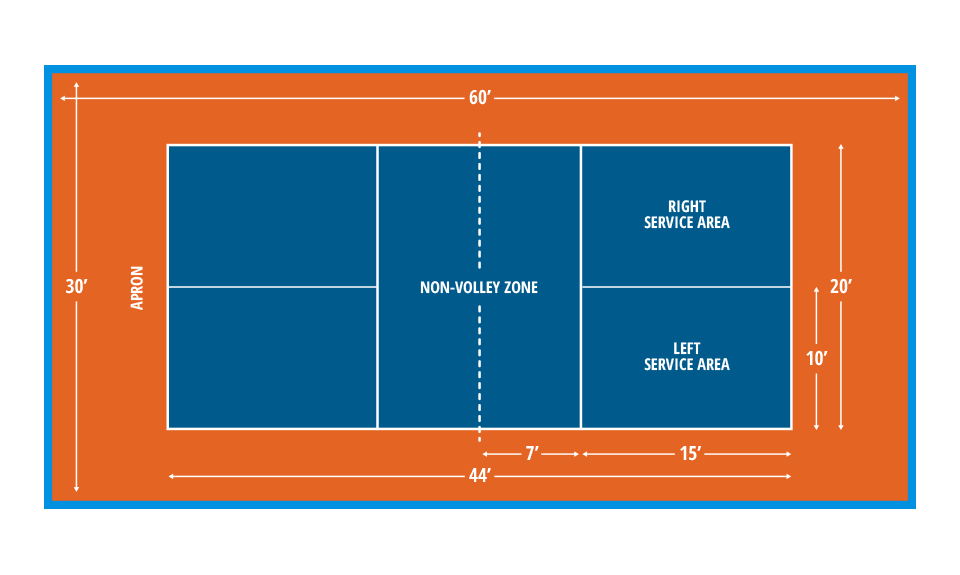
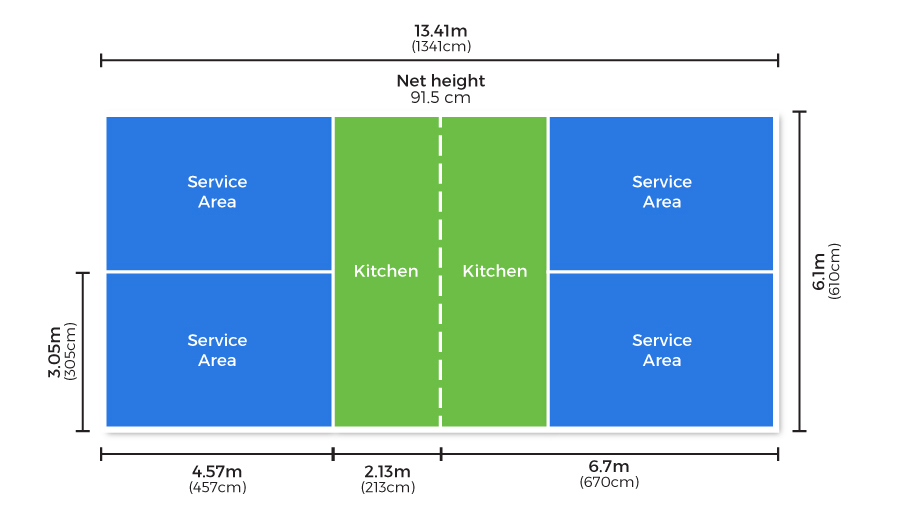
The official pickleball court size is 20 feet wide by 44 feet long (6.10 m by 13.41 m). Singles and doubles use the same size. The non-volley zone, also called the kitchen, extends 7 feet (2.13 m) from the net on both sides.
Key measurements at a glance:
- Overall court: 20 ft x 44 ft
- Non-volley zone: 7 ft from the net on both sides
- Service courts: each is 10 ft x 15 ft
- Net height: 36 in at posts, 34 in at center
- Line width: 2 in; lines are in
- Post-to-post distance: 22 ft
These numbers come from the official rules used for sanctioned play. If you stick to them, your lines will match what players expect at leagues and tournaments. In my experience, precision here avoids arguments later.
Total playing area and clearances
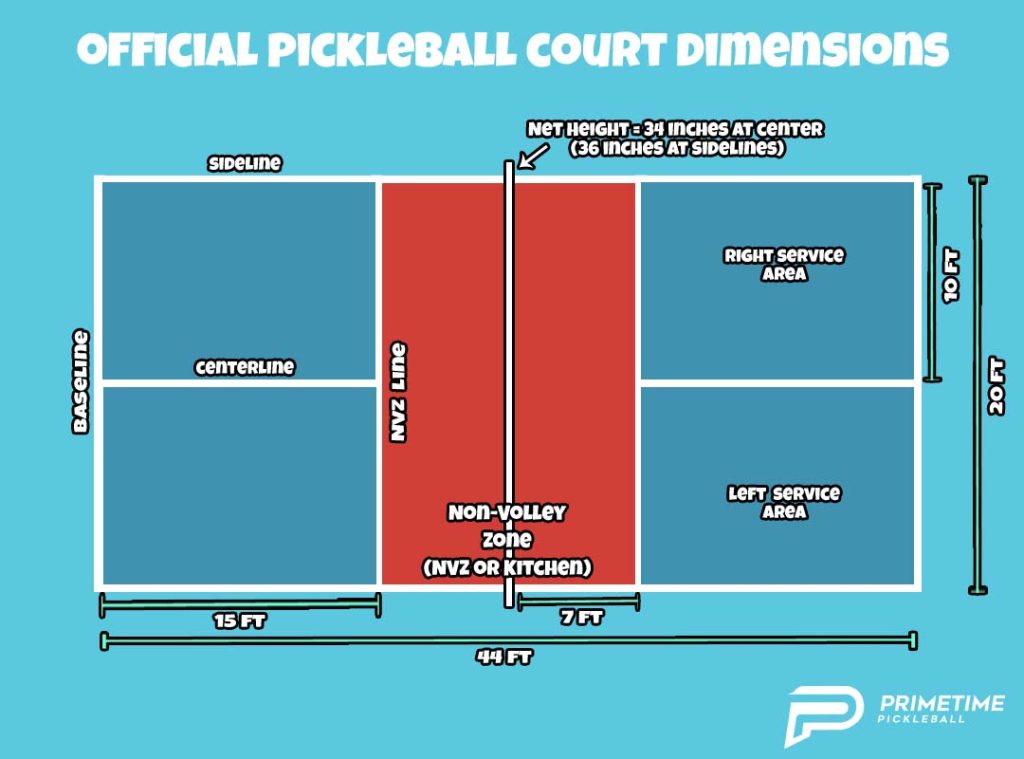
Pickleball court size refers to the lined area, but you also need free space around it. The minimum recommended playing area is 30 feet by 60 feet. For events or a premium feel, aim for 34 feet by 64 feet. That extra buffer makes chasing lobs safer.
Plan for headroom indoors. A minimum ceiling height of 18 feet works; 20 feet or more feels better, especially for lobs. Good lighting at 30–50 foot-candles with even coverage helps players see the ball without glare.

Lines, zones, and what they mean
Each line supports a rule. Knowing them helps you mark a court that plays right and looks right.
- Baselines: run along the back, parallel to the net. Serves must land beyond the non-volley line.
- Sidelines: mark the width of 20 feet. Shots landing on lines are good.
- Non-volley line: 7 feet from the net. You cannot volley while touching the kitchen or its line.
- Centerline: splits the service area into left and right boxes.
- Service boxes: each side has two boxes, 10 by 15 feet. You serve cross-court into the opposite box.
Personal tip from many tape jobs: measure your non-volley line from the net plane, not from a fence or a wall. I’ve seen brand-new courts off by an inch because someone measured from the wrong feature. That small miss changes real plays at the kitchen line.
Indoor vs outdoor: same size, different details
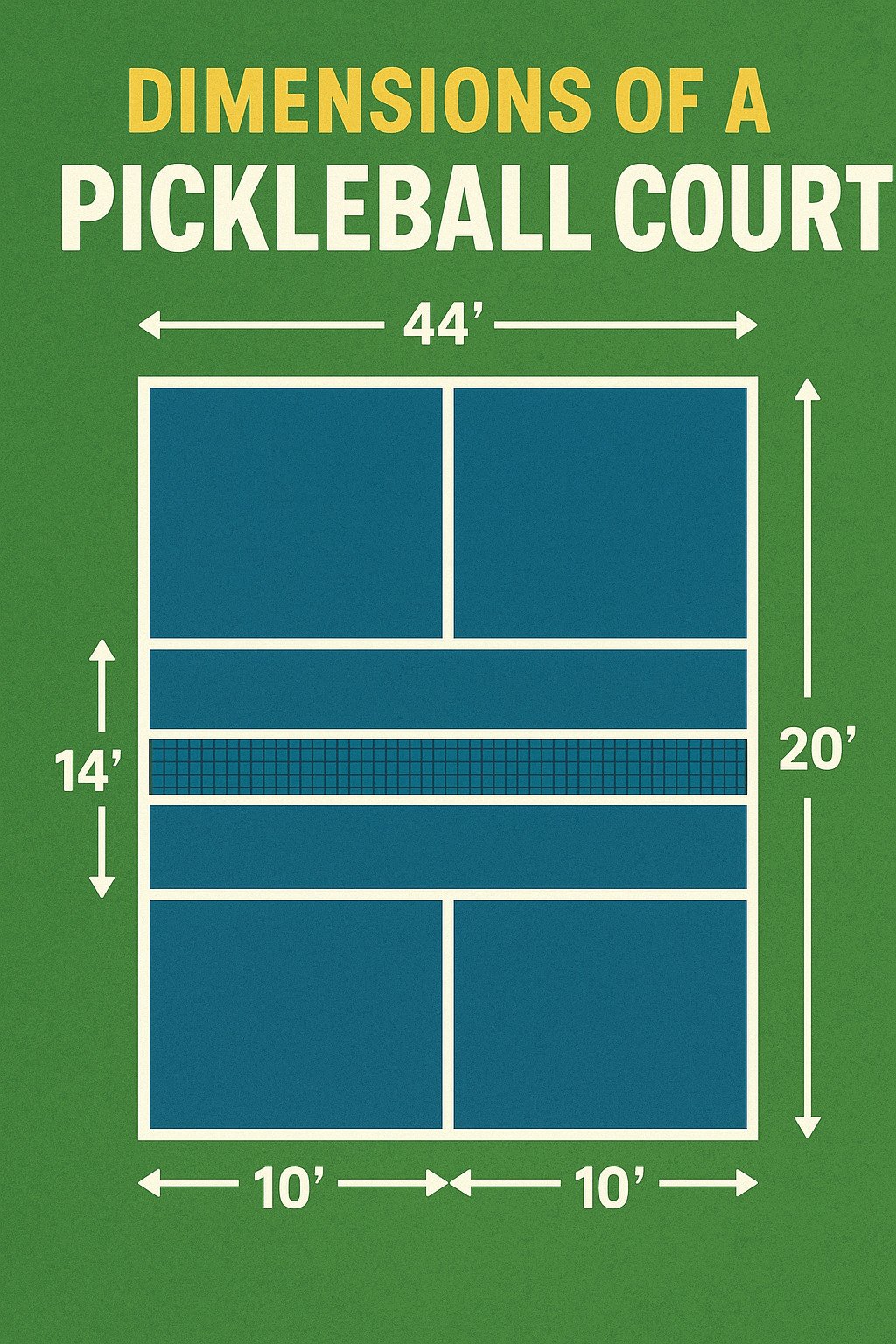
Pickleball court size is identical indoors and outdoors, but setup details vary.
Outdoors:
- Orientation: run courts north–south to reduce sun in players’ eyes.
- Surface: acrylic over asphalt or post-tension concrete is common. A light texture adds grip without burning knees.
- Slope: a gentle 1% cross-slope helps drainage while keeping bounce true.
- Wind and sound: windscreens cut wind; acoustic panels and softer paddles help with noise near homes.
Indoors:
- Surface: wood or sport tile with a moderate friction level reduces slips.
- Lighting: avoid hot spots; matte finishes help control glare.
- Ball choice: indoor balls are softer with larger holes; they play a bit slower.
When converting a tennis court, you can fit up to four pickleball courts in one tennis rectangle with smart spacing. The pickleball court size stays the same; you only optimize layout, nets, and lines.

Step-by-step layout: measure, mark, and set the net
Getting pickleball court size right is a process. Here is a simple method that works for temporary tape jobs or permanent paint.
- Find your centerline
- Snap a chalk line for the net plane.
- Mark 10 feet left and right for the half-width, then extend to 20 feet total width.
- Mark the non-volley line
- Measure 7 feet on both sides from the net plane and snap a line parallel to the net.
- Mark baselines and sidelines
- From the non-volley line, measure 15 feet back to the baselines.
- Connect sidelines to complete the 20 by 44 rectangle.
- Add the centerlines and service boxes
- Split each side into two 10-foot service boxes with a centerline from non-volley line to baseline.
- Set the net
- Posts should be 22 feet apart.
- Net height is 36 inches at posts, 34 inches at center. Use a center strap or check with a tape measure.
Pro tip: check diagonals corner to corner. If both diagonal measurements match, your court is square. It is a quick way to confirm your pickleball court size before you lay paint.
Common mistakes with pickleball court size (and easy fixes)
Even small errors can affect play. Here are issues I see most and how to fix them.
- Short or long kitchen: If the non-volley line is not 7 feet from the net, re-snap the line from the net plane. Do not rely on old markings.
- Narrow service boxes: If your court width is off, fix sidelines first, then redraw centerlines.
- Low center net: If the center droops below 34 inches, add a center strap or increase tension at the crank.
- Crooked layout on conversions: Always square to your net line, not to uneven fences or walls.
- Lines too thin: Lines must be 2 inches. Thin lines are harder to see and can cause disputes.
I once walked onto a new community court where the post spacing was only 21 feet. The net sagged no matter what. We moved the posts to the correct 22 feet and the bounce felt right again.

Budgeting your build: costs by court size
Pickleball court size affects budget because more space means more surfacing, fencing, and lights.
Typical cost ranges:
- Temporary court: outdoor tape, chalk, and a portable net can run $200–$400.
- Permanent single court on existing slab: paint, posts, net, and minor crack repair can run a few thousand dollars.
- Full build with post-tension concrete, acrylic surfacing, fencing, and lights: often five figures and up, depending on site work, drainage, and local labor.
Save money by phasing. Start with a high-quality portable net and paint later. The pickleball court size will not change, so your early measuring work carries forward.

Accessibility and multi-use planning
Pickleball is for everyone. Make it easy to reach and safe to move around.
- Access: smooth paths at least 36 inches wide from parking to gate.
- Gates and benches: allow room for wheelchairs to pass and park.
- Spectator zones: keep chairs outside the playing rectangle and clear the baselines.
- Multi-use stripes: use contrasting colors and keep the pickleball lines crisp. Avoid visual clutter that hides the non-volley line.
Wheelchair pickleball uses the same pickleball court size. Some events add extra buffer beyond 30 by 60 feet to support wider turns and safe momentum.
Frequently Asked Questions of pickleball court size
What is the official pickleball court size?
The official pickleball court size is 20 feet by 44 feet. Singles and doubles use the same dimensions.
How big should the total playing area be around the court?
A minimum of 30 feet by 60 feet is recommended. For events or extra safety, 34 feet by 64 feet is preferred.
What is the height of the net?
The net is 36 inches high at the posts and 34 inches at the center. Keep a strap or tape on hand to confirm height before play.
Is the non-volley zone really 7 feet?
Yes, the kitchen is 7 feet from the net on both sides. The non-volley line itself counts as part of the kitchen.
Can I fit a pickleball court in my driveway?
If your clear space is at least 20 by 44 feet, you can mark a court. For safer play, try to get closer to the 30 by 60-foot playing area.
How many pickleball courts fit on one tennis court?
You can usually fit four pickleball courts on a single tennis court with careful spacing. Use portable nets and clear line colors to reduce confusion.
Conclusion
Getting pickleball court size right makes games fair, fun, and safe. Use the 20 by 44-foot standard, give yourself clean buffers, and double-check net height and line width. Small details like a true 7-foot kitchen and a square layout go a long way.
Ready to build or mark your court? Start with a tape measure and this guide, and take it one step at a time. If you want more tips, subscribe for updates, ask a question in the comments, or share your own layout wins.