
Serve underhand, let returns bounce, avoid volleys in the kitchen, play to 11.
If you want to learn how to play pickle ball the right way, you are in the perfect spot. I coach beginners and league players, and I’ve logged thousands of games. This guide explains how to play pickle ball from court lines to winning shots, with simple steps, smart drills, and real tips you can use today.

What Makes Pickleball Click
Pickleball blends the best of tennis, ping-pong, and badminton. The court is small, rallies are fast, and the rules are simple. You get a workout without feeling overwhelmed.
If you are wondering how to play pickle ball without stress, think compact court, soft ball, and clear rules. You can play singles or doubles. Most people start with doubles because it is easier on the legs and more social.
Court, Lines, and Gear Essentials
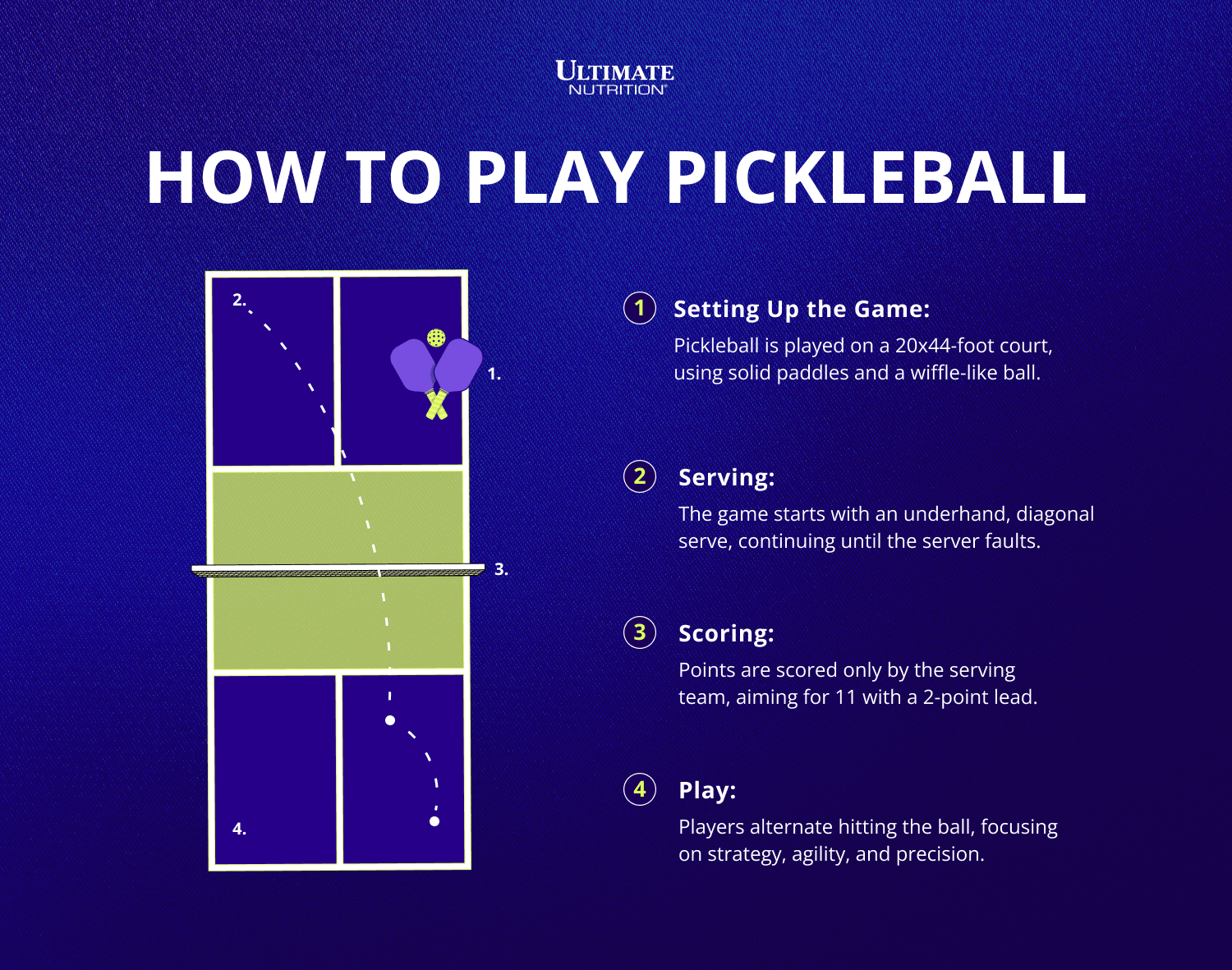
A pickleball court is 20 feet wide and 44 feet long. The non-volley zone, called the kitchen, is 7 feet from the net on both sides. You cannot volley while in the kitchen or if your momentum carries you into it.
Use a composite paddle and an outdoor ball with heavier weight and smaller holes. Wear court shoes for grip and ankle support. If you want to master how to play pickle ball, start with safe shoes and a light paddle.
Personal tip: I switched to a lighter paddle early on. My control shot up, and my elbow felt better.

Core Rules and Scoring Made Simple
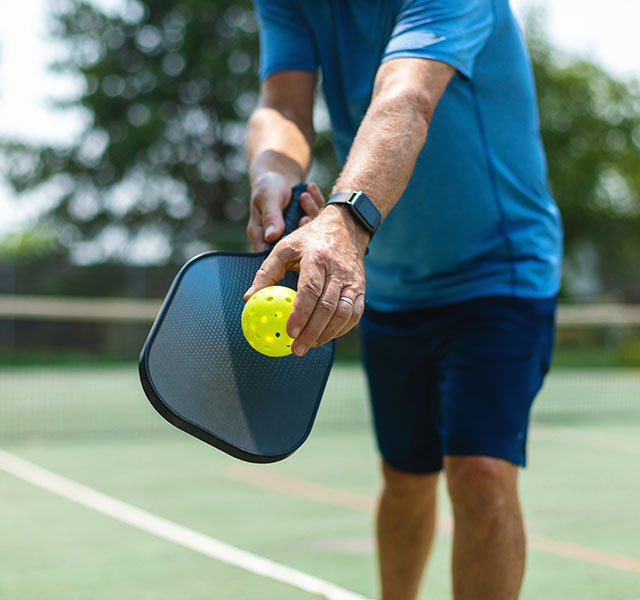
The serve is underhand. Hit it diagonally into the opposite service court. Contact must be below the waist if you volley serve, or you can use a drop serve where the ball falls and then you hit it.
The two-bounce rule matters. The return must bounce. The third shot must also bounce before you volley. Rallies end on faults like hitting out, into the net, or volleying in the kitchen.
Games are usually to 11, win by 2, with side-out scoring. That means only the serving team can score. Doubles serving uses a first and second server per side. If you are learning how to play pickle ball, keep a small score card at first. It helps a lot.

Step-by-Step: Your First Game
Follow these steps the first time you play.
- Choose sides and confirm scoring to 11, win by 2.
- Server stands behind the baseline on the right. Call the score.
- Serve underhand to the diagonal box. Aim deep and to the backhand.
- The receiver lets it bounce, then returns deep down the middle.
- The serving team lets it bounce. Hit a soft third shot or a controlled drive.
- Everyone moves toward the kitchen line. Stay balanced. Keep the ball low.
- Rally with dinks or blocks until someone makes a mistake.
- Only the serving team scores. Switch service courts on your team after each point.
If you want a simple plan for how to play pickle ball on day one, do this script for three games. It builds the right habits fast.

Serving Fundamentals and Variations
Great serves set up easier points. Aim deep, center your target, and keep it legal.
Try this checklist.
- Stance: Feet shoulder-width. Toes at a slight angle.
- Toss or drop: Keep it simple. Many adults like the drop serve.
- Contact: Paddle moves up and forward. Hit below your waist.
- Target: Deep and at the backhand. Mix pace and height.
- Reset: Recover behind the baseline and watch the return.
Useful serves:
- Deep flat serve for pressure.
- Heavy arc serve for height and safety.
- Occasional lob serve to change timing.
Rules can change each year. Chain-saw spin serves are not allowed. The drop serve is legal. Check the current rulebook if you play tournaments. If you are exploring how to play pickle ball in leagues, ask the director to confirm any updates.
Return of Serve and the Third Shot
Good returns buy time. Hit deep down the middle to force confusion. Move forward right after contact so you can take the kitchen line.
On the third shot, you have two main options.
- Third shot drop: A soft ball that lands in the kitchen. This helps you reach the net.
- Third shot drive: A firm ball at the body or feet. This can set up a fifth-shot drop.
When I teach beginners how to play pickle ball, I start with the drop. It slows the game and builds control.

The Non-Volley Zone (Kitchen) Explained
The kitchen is the 7-foot zone by the net. You cannot volley from there. If your momentum carries you into the kitchen after a volley, it is a fault. Your paddle, hat, or anything you wear also counts.
You may step in to play a ball that bounces. Dinks are short shots that land in the kitchen. These shots force patience, touch, and smart targets.
Common kitchen faults:
- Volleying with a toe on the line.
- Hitting a volley and stumbling forward into the zone.
- Touching the kitchen with your paddle during a volley.
If you aim to master how to play pickle ball under pressure, learn kitchen control.
Doubles Positioning and Team Strategy
Play as a wall. Stay shoulder-to-shoulder near the kitchen line. Close gaps and aim for the middle of the court.
Team tactics:
- Serve and return deep to push foes back.
- Communicate on every ball. Say “Mine” or “Yours” early.
- Target the weaker backhand. Hit at feet to force pop-ups.
- Use stacking if one player has a stronger forehand in the middle.
I tell new teams learning how to play pickle ball to win the net first. Once you own the kitchen line, points get easier.
Singles Strategy That Works
In singles, your serve is a weapon. Aim deep and to the corners. After you serve, recover to the middle behind the baseline.
Key tips:
- Return deep and follow it in.
- Use approach shots to take the net.
- Pass with crosscourt drives when the foe crowds the line.
- Mix drops to move them forward, then lob over.
If your aim is how to play pickle ball in singles, remember fitness and footwork matter more. Covering the court is the real test.
Shot Toolkit: Dinks, Drops, Drives, Volleys, Lobs
Build a simple toolkit and add spin later.
- Dink: Soft shot that lands in the kitchen. Use a loose grip and quiet hands.
- Drop: A gentle arc from mid-court or baseline. Aim to land near the kitchen line.
- Drive: Firm, waist-high shot. Aim at the body or feet for errors.
- Block volley: Short punch with little swing. Absorb pace and keep it low.
- Punch volley: Short, crisp swing to attack a pop-up.
- Lob: High ball over an aggressive net player. Use it to reset pressure.
- Overhead: Compact swing. Contact high. Aim deep to the middle.
When I first learned how to play pickle ball, I swung too big on volleys. Short swings made my control jump right away.
Footwork, Balance, and Movement
Your feet win points. Stay low, split step as your opponent hits, and shuffle sideways to hold balance. Do not run backward on lobs. Turn and side-shuffle or drop-step.
Movement tips:
- Start wide and light on your toes.
- Keep your paddle up near chest height.
- Land soft after the split step and push toward the ball.
- Stop before contact when you can. Stable feet mean cleaner shots.
If you care about how to play pickle ball without injury, avoid backpedaling and wear court shoes.
Practice Plan: A 30-Day Roadmap
Practice is the fast lane to fun.
Week 1:
- Serves: 50 deep serves to both boxes.
- Returns: 50 deep returns down the middle.
- Dinks: 10 minutes crosscourt.
Week 2:
- Third shot drops: 50 from baseline.
- Volleys: 10 minutes of soft blocks.
- Footwork: 5 minutes of split steps and shuffles.
Week 3:
- Patterns: Serve, return, drop, then dink rally.
- Targets: Cones near kitchen line. Land 30 shots.
- Games to 7. Focus on depth and low errors.
Week 4:
- Live play 3 times.
- Two focused drills before each game.
- After each match, write one note to fix.
If your goal is how to play pickle ball with real skill, this plan will get you there fast.
Common Mistakes and How to Fix Them
Mistake: Stepping into the kitchen after a volley. Fix: Say “stop” out loud as you hit. Hold your ground.
Mistake: Popping up dinks. Fix: Soften your grip. Aim higher over the net with a gentle arc.
Mistake: Short serves and returns. Fix: Aim two feet inside the baseline. Think depth first.
Mistake: Swinging big at the net. Fix: Short swings and quiet hands. Let the ball come to you.
Mistake: Poor spacing with your partner. Fix: Move like you are tied with a rope. Stay even.
These small tweaks are the heart of how to play pickle ball at any level.
Etiquette, Safety, and Finding Games
Good manners make games better. Call the score loud. Call your own close balls out on yourself. High-five after rallies. Thank your partners and opponents.
Stay safe. Warm up 5 minutes. Drink water. Use sunscreen. Stop if your elbow or Achilles aches. An extra rest day beats a long layoff.
To find games, check local parks and recreation groups, community centers, club boards, or social apps. Ask for a “beginner-friendly” timeslot. If you are learning how to play pickle ball, start at off-peak hours. You will get more court time and helpful partners.
Frequently Asked Questions of how to play pickle ball
What is the fastest way to learn how to play pickle ball?
Start with serves, returns, and dinks. Play short games to 7 and focus on keeping the ball low and deep.
Are there different balls for indoor and outdoor play?
Yes. Outdoor balls are heavier with smaller holes. Indoor balls are lighter with larger holes and play slower.
What is the most common fault for beginners?
Kitchen violations and short returns. Keep your return deep and avoid volleying with a toe on the line.
Can I spin the ball on the serve?
You can impart spin with your paddle, but some spin methods using the non-paddle hand are not allowed. Keep the motion underhand and check the current rulebook.
How do I keep score in doubles?
Only the serving team scores. The call is server score, receiver score, then server number 1 or 2.
Is singles very different from doubles?
Yes. Singles needs more movement and fitness. Doubles is more about teamwork, kitchen control, and touch.
What gear do I need to start?
A paddle, a few balls, and court shoes. A light paddle helps with control and comfort.
Conclusion
You now know how to play pickle ball with clear steps, smart drills, and proven tactics. Keep the ball low, win the kitchen, and master depth on serves and returns. Small daily reps create big jumps in skill and fun.
Grab a paddle this week. Try the 30-day plan. If this helped, share it with a friend, subscribe for more guides, and leave a comment with your biggest win or question from your next game.