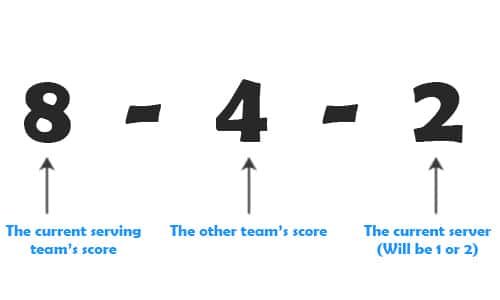
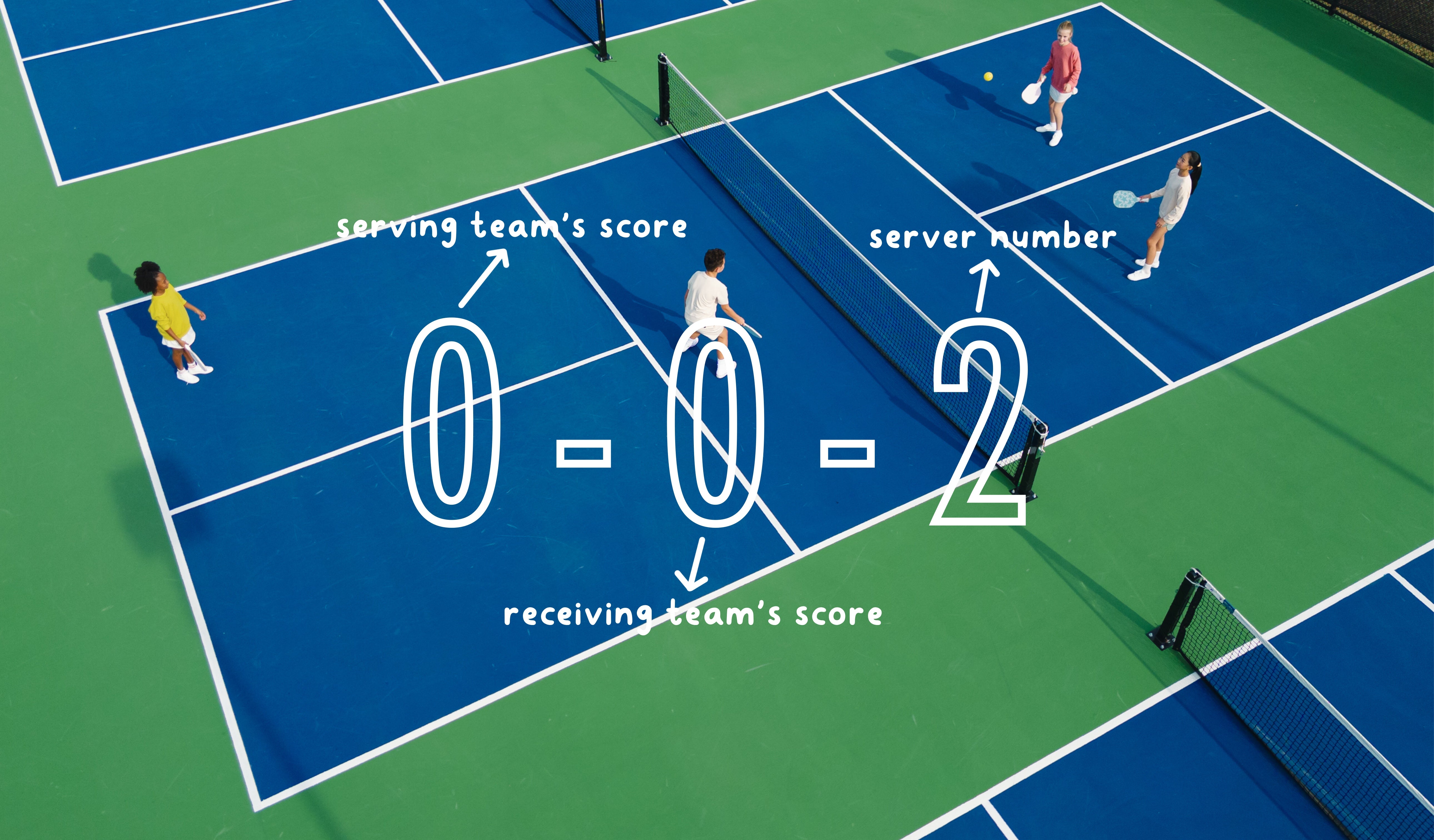
Only the serving team scores; call server score, receiver score, then server number.
Scoring is the heartbeat of pickleball, and once it clicks, the whole game opens up. I’ve coached new players and tournament teams for years, and I know the small details that make a big difference. In this guide, I’ll show you how to score in pickleball with zero confusion, step-by-step examples, and smart tips. If you want a clear way to learn how to score in pickleball and start winning more points, you’re in the right place.

Scoring Basics at a Glance
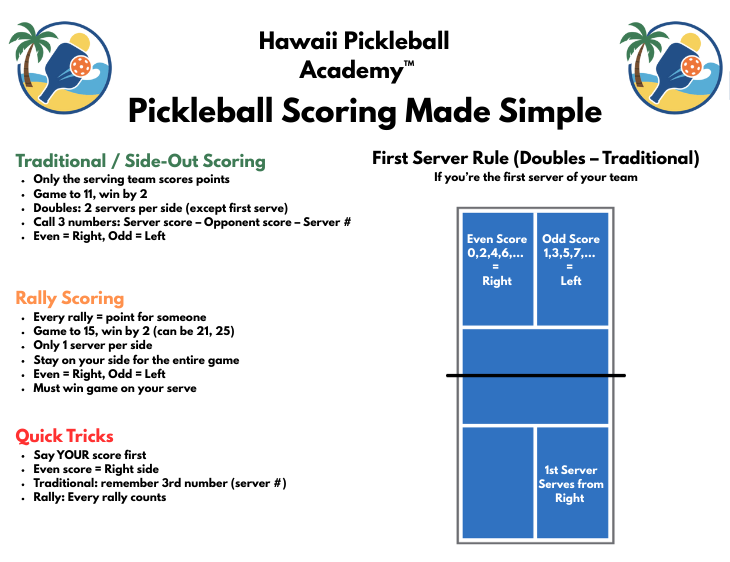
If you want to learn how to score in pickleball fast, start with the core rules. In standard games, only the serving team can win a point. Games are usually to 11, and you must win by 2. Doubles and singles share the same basics, but doubles adds a server number.
Key points you must know:
- Only the serving team can score a point in traditional scoring.
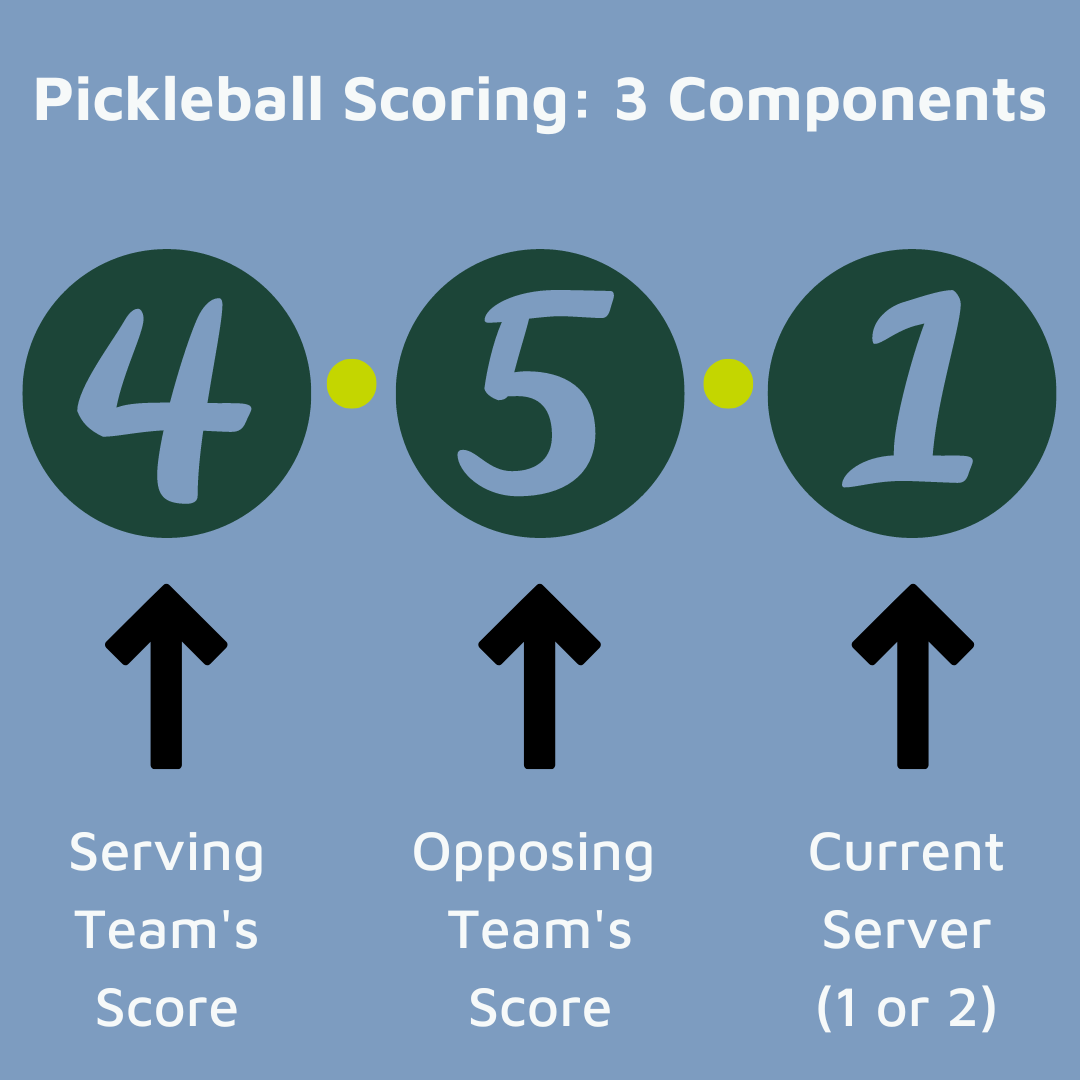
- You call the score in this order: server score, receiver score, then server number (1 or 2) in doubles.
- In singles, you call only server score then receiver score, since there is no server number.
- Games are often to 11, win by 2. Tournaments may play to 15 or 21.
- There are no let serves. If the serve clips the net and lands in, the ball is live.
If you are brand new and want a simple map for how to score in pickleball, remember this: serve, rally, and only the serving team can bank the point. If the serving team loses the rally, you switch server or side out. That’s the engine of the game.

The Score Call: What to Say and Why It Matters
Clear score calls keep play fair. They also keep your brain locked into rotation. If you are working on how to score in pickleball under pressure, get this habit down first.
How to call the score in doubles:
- Say server score first.
- Say receiver score second.
- Say the server number last, either 1 or 2.
Examples:
- 3-2-1 means the serving team has 3, the receivers have 2, and server number 1 is serving.
- 7-9-2 means the serving team has 7, receivers have 9, and server number 2 is serving.
Best practices:
- Call the score before every serve. Speak loud and clear.
- If you are unsure, ask, then confirm together. Reset now, not later.
- If you call wrong and swing anyway, you risk playing from the wrong spot.
In singles, how to score in pickleball is simpler. Call server score then receiver score. You serve from the right when your score is even, and from the left when odd.

Doubles Scoring Step by Step
Doubles has one extra piece: the second server. Many players stumble here, so let’s keep it simple.
Start of a game:
- The score starts 0-0-2. This means your team begins with only one server. It balances the first-serve edge.
- After that first side out, both teams get two servers, numbered 1 and 2.
During a turn of serve:
- Server 1 serves. If that rally is won, you get a point, and Server 1 serves again from the other side.
- If Server 1 loses a rally, then Server 2 serves.
- If Server 2 loses a rally, it’s a side out. The other team serves.
Court positions:
- At even scores for your team, the player who started on the right should be on the right when serving.
- At odd scores for your team, that same player should be on the left when serving.
- If you forget who started right, mark paddles before the game or use a wristband on the right-side starter.
A quick example:
- Score is 5-3-1. Your team serves. You win the rally. Score becomes 6-3-1. The server switches sides and serves again.
- You lose the next rally. Server 2 steps up. Score call is 6-3-2.
- If you lose that rally, side out. The other team calls 3-6-1.
This flow is the foundation for how to score in pickleball in doubles. Keep your eye on even and odd. It never lies.
Singles Scoring Simplified
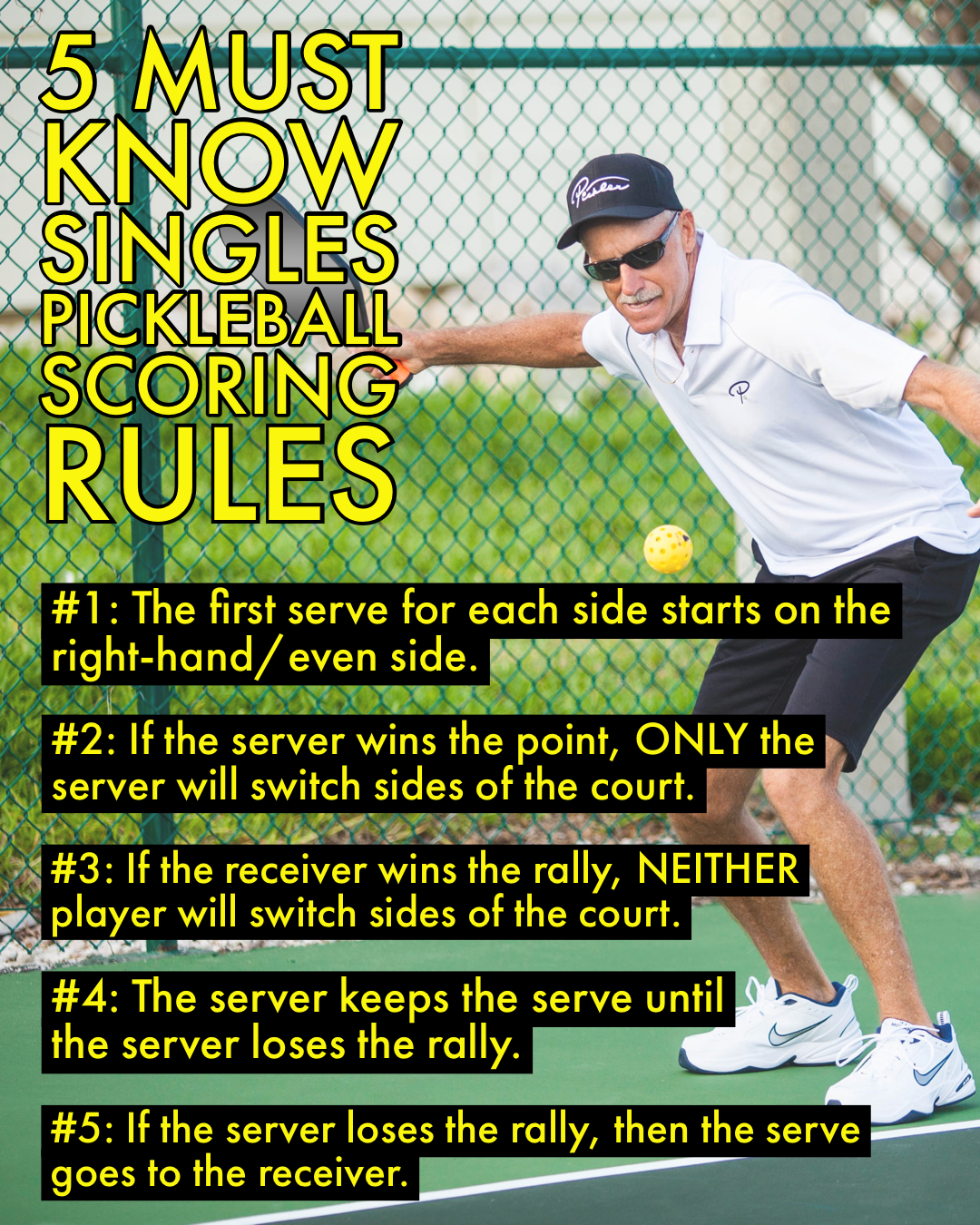
Singles is clean and fast. If you are learning how to score in pickleball alone, this is your section.
Core rules:
- Only the server scores a point.
- Call server score, then receiver score.
- Serve from the right when your score is even. Serve from the left when your score is odd.
A quick run:
- At 4-2, you serve from the right. You win, it is 5-2. You serve from the left next.
- You lose at 5-2. Side out. Your opponent now serves at 2-5 from the right, since their score is even.
Tip from coaching:
- Say the even side is “right, bright, light.” Short, simple cues help new players remember how to score in pickleball without overthinking.
How Points Are Won or Lost: Faults That Affect Scoring
To control how to score in pickleball, you must know what stops a rally. A fault ends the rally. If the serving team commits the fault, no point is awarded, and the serve moves to the next server or side out. If the receiving team commits the fault, the serving team scores a point.
Common faults:
- Ball lands out or hits the net and does not go over.
- Volleying in the non-volley zone, also called the kitchen.
- Touching the kitchen line during a volley follow-through.
- Double bounce rule break: the serve must bounce, and the return must bounce.
- Foot faults on the serve: at contact, your feet must not cross the baseline or leave the court plane on wrong sides.
- Hitting the ball before it crosses the plane back to your side.
Knowing these faults helps you apply how to score in pickleball in real time. You will track points with more confidence and fewer do-overs.
Scoring Examples You Can Copy on Court
Let’s run a real doubles series. I use this when I teach new groups who want to master how to score in pickleball without stress.
Start: 0-0-2
- You serve at 0-0-2. You win. Score is 1-0-2. You switch sides and serve again.
- You win again. Score is 2-0-2. Switch and serve again.
- You lose this rally. Side out. Opponents now serve at 0-2-1.
Opponents’ turn:
- They win first rally. Score 1-2-1.
- They lose next rally. It is now 1-2-2.
- They win next rally. Score 2-2-2.
- They lose next rally. Side out. You get the ball at 2-2-1.
Your turn:
- You win two rallies. Score 4-2-1, then 5-2-1.
- You lose one rally. Switch to 5-2-2.
- You win another. Score 6-2-2.
- You lose next rally. Side out. Opponents serve at 2-6-1.
Walk a few of these on paper at home. This is the fastest way to learn how to score in pickleball and to track servers without second-guessing yourself.

Strategy: How to Score More Points in Pickleball
You came to learn how to score in pickleball. Now let’s help you score more, not just track it.
Serve to set up the third shot:
- Serve deep to the backhand if possible.
- Aim for 80% pace and 100% in. Consistent serves beat risky aces.
- Mix center serves to cut angles and force weak returns.
Return to neutralize:
- Return deep and to the middle. Depth buys time.
- Hit to the weaker player in doubles. Make them move.
- Keep returns high percentage. No hero shots on returns.
Build smart third shots:
- Use a calm third shot drop to the kitchen when you face strong returners.
- If your opponent floats a short return, drive it at the body or feet.
- Change speeds. A soft-soft-soft-then-hard pattern wins many free points.
Pressure the middle:
- In doubles, the net is lower in the center. Aim there.
- Two paddles reach for one ball. Chaos gives you errors and easy points.
Stack with purpose:
- If you have a strong left-side player, stack to keep them there.
- Plan signals. One tap means drive. Two taps means drop. Keep it simple.
Control tempo:
- Breathe between points. Call the score clear and slow.
- Use timeouts to break runs. Regroup and reset targets.
These habits shift your mindset from “how to score in pickleball” to “how to score in pickleball a lot.” Small edges add up fast.
Practice Drills to Master Scoring and Rotation
If you drill your score calls, rotations, and rallies, you will not freeze during matches. I use these with rec players and league teams.
Call-and-go warmup:
- Play mini points to 5 on half court.
- Before every serve, pause and have the server and partner both say the score out loud.
- Switch servers every rally to reinforce 1 and 2 roles.
Even-odd shuffle:
- Start at 0-0-2. After each rally, call your score and move to the correct side.
- Use a wristband for the right-side starter.
- If someone ends on a wrong side, stop and fix it before the next serve.
Fault finder:
- Play points where one team focuses on deep returns only.
- The other team works safe thirds and no kitchen faults.
- Track how many points are won on simple errors. This builds court discipline.
Target to middle:
- Serve and return only to the middle stripe for five minutes.
- Count how many errors vanish. Then blend this target into live play.
Solo shadow scoring:
- Stand on a court alone. Walk through server 1 and server 2 rotations.
- Call 0-0-2 and advance the score. Say it out loud. It works.
These drills lock in how to score in pickleball so it becomes second nature, even in tight games.

Common Mistakes and How to Fix Them
You will make mistakes. Pros do too. The goal is to spot and fix them fast.
Wrong server or receiver:
- If something feels off, stop before the serve. Ask, then confirm.
- Use a band or coin to mark the starting right-side player.
Skipping the score call:
- Build a routine. Bounce, breathe, call, serve.
- If you forget, do not rush. Reset and call.
Standing on the wrong side:
- Remember even is right for the team’s score.
- If the score is odd, you should be on the left if you started on the right.
Kitchen volleys:
- Keep toes behind the line on volleys.
- If you step in, let the ball bounce first.
Arguing after the rally:
- Resolve score and position issues before the point starts.
- Once the rally begins, play it out unless a clear rule stop applies.
When you clean up these errors, how to score in pickleball becomes calm and clear.
Variations and Tournament Notes
Most local games use traditional side-out scoring to 11, win by 2. Yet leagues and pro events may use variations. Knowing them helps you adapt.
Common variations:
- Games to 15 or 21, win by 2. Teams may switch ends at 8 in 15-point games and 11 in 21-point games.
- In many events to 11, teams switch ends at 6 to balance sun and wind.
- Some team formats use rally scoring, where every rally counts as a point for someone.
- Timeouts are limited. Use them to stop runs or reset your plan.
If you play a new format, ask for a short pre-match rules check. This way, how to score in pickleball stays crystal clear before the first serve.
Frequently Asked Questions of how to score in pickleball
What is the basic way to call the score in doubles?
Say server score, receiver score, then server number. For example, 4-2-1 means your team has 4, theirs has 2, and server 1 is serving.
Why does the game start at 0-0-2 in doubles?
The first serving team gets only one server to start. It balances the early advantage of serving first.
Can I score points when receiving?
Not in traditional scoring. Only the serving team can score in standard play, which is the most common way to learn how to score in pickleball.
How do I know if I should serve from the right or left?
Use your team’s score. Even score means serve from the right. Odd score means serve from the left.
Are let serves allowed?
No. If your serve hits the net and lands in the correct service box, the ball is live. Play continues.
What happens if we realize we were in the wrong positions?
Stop, discuss, and fix the positions before the next serve. If the rally already started, follow local rules on correction, but aim to prevent it with good score calls.
Does singles use server numbers?
No. Singles uses only server score and receiver score. There is no 1 or 2 server call.
Conclusion
Scoring in pickleball is simple once you lock down the order, the rotations, and the even-odd rule. Call the score with confidence, serve from the correct side, and watch for faults that swing points. With a few drills and clear habits, how to score in pickleball will feel automatic, even on big points.
Take this to your next game. Call every score out loud. Track even and odd. Aim deep on serves and returns. Want more tips on how to score in pickleball and win smarter? Subscribe, share your questions, or drop a comment with the trickiest score you’ve faced.