An Ernie in pickleball is a sideline volley past the kitchen to attack.
If you’ve ever wondered what is an ernie in pickleball and why everyone is buzzing about it, you’re in the right place. I’ve taught this move to hundreds of players, tested it in tournament play, and broken it down into simple steps. Keep reading to learn what is an ernie in pickleball, how it works, when to use it, and how to train it with confidence.

What Is an Ernie in Pickleball?
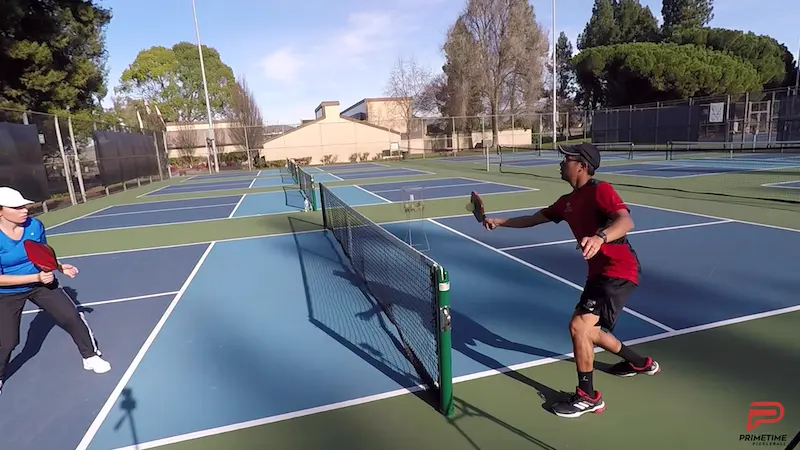
An Ernie is an aggressive volley taken near the sideline by jumping or running past the outside edge of the kitchen. You avoid stepping in the kitchen, strike the ball early, and angle it away fast. It is a clean way to shut down slow crosscourt dinks.
You may also see it written as Erne. The move is named after a player who popularized it. Most players say Ernie, and many search for what is an ernie in pickleball when they first see it. No matter the spelling, the idea is the same.
Here is the heart of it. You leave the kitchen line by moving around the outside post. You get to the ball before your rival expects it. Then you drive a volley while you stay clear of the kitchen line. That is what is an ernie in pickleball at its core.

Why Use the Ernie? Benefits and Risks
The Ernie works because it steals time. You take space. You cut off angles. You force weak replies or win the point.
Key benefits:
- Early contact. You rush the hitter and freeze their eyes.
- Sharp angles. You can hit to the open middle or deep corner.
- Pressure tool. It makes rivals stop dinking to the sideline.
Real risks:
- Foot fault in the kitchen. One toe on the line is a fault.
- Over-commit. If they see it, they lob or roll behind you.
- Timing errors. Jump too soon and you gift an easy pass.
When a student asks what is an ernie in pickleball good for, I say this: it flips defense to offense in one step. But you must pick your moment.
The Rules That Make It Legal
You can do an Ernie if you follow these basics from standard rules:
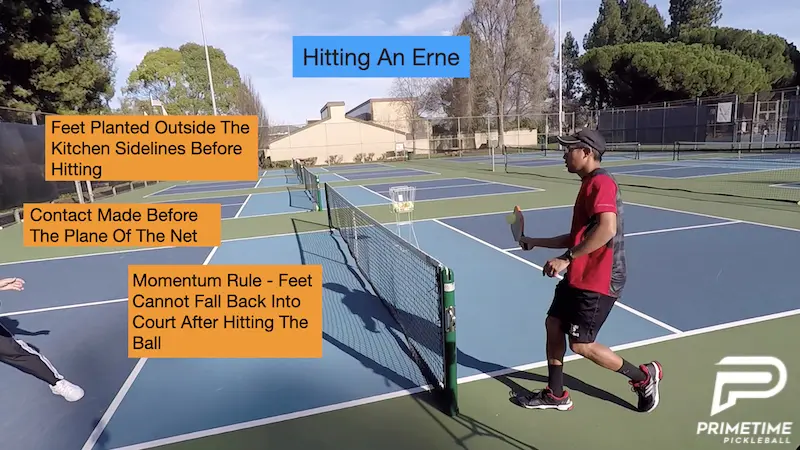
- No kitchen contact on a volley. Do not touch the kitchen or its line when you volley.
- Outside the sideline is fair ground. You can stand or land outside the court.
- Do not cross the net before contact. Your paddle can cross the plane only after you hit the ball, and you cannot touch the net.
- Momentum matters. If your momentum from a volley carries you into the kitchen, it is a fault even after the ball lands.
If a friend asks what is an ernie in pickleball in rule terms, think of it this way. You are allowed to volley from outside the sideline as long as you avoid the kitchen and the net until after the shot is done.

How to Execute an Ernie: Step-by-Step
- Read the pattern. Watch for repeat crosscourt dinks that drift near or past the sideline.
- Load your feet. Stagger your stance. Be light on your toes.
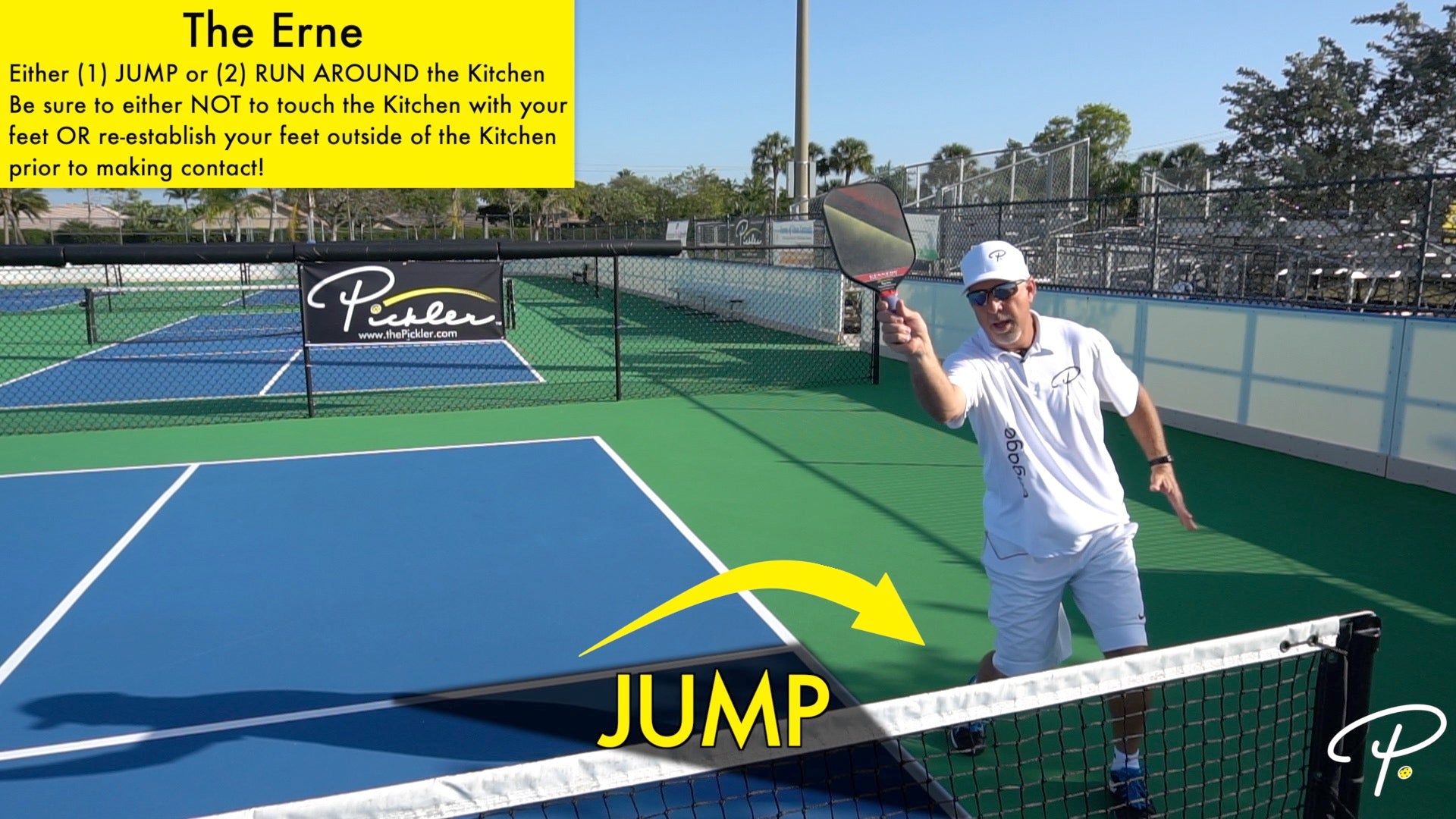
- Go around the post. Step outside the sideline at the kitchen corner.
- Take the ball early. Keep the paddle in front. Short swing. Punch the volley.
- Aim to space. Hit down the middle seam, at the body, or sharp crosscourt.
- Recover. Land outside the court if needed. Re-enter ready for the next ball.
For years I taught players who asked what is an ernie in pickleball and how to start. My best cue is this: as soon as you see a floaty, wide dink, go. Do not wait for perfect. Go with balance, not with fear.
When to Use It and When to Skip It
Use it when:
- Rival dinks wide and slow.
- Your team has stable kitchen control.
- You read a repeat pattern on the third or fifth shot.
Skip it when:
- The ball is low and dipping. You will dump it in the net.
- Your partner is out of position.
- The server loves to lob when under pressure.
If you still wonder what is an ernie in pickleball in match flow, think of it as a trap. Set it with patient dinks. Spring it when the ball drifts past the sideline.
Drills to Learn the Ernie
Solo wall drill:
- Stand two paddle lengths from a wall.
- Shuffle right and left. Punch short volleys.
- Focus on compact swings and early contact.
Two-player feed:
- Feeder sends soft crosscourt dinks near the sideline.
- Attacker moves outside, volleys sharp and low.
- Switch roles every 10 balls.
Live pattern drill:
- Play crosscourt dink rallies to the sideline.
- On a float, attacker attempts the Ernie.
- Keep score to build pressure.
I tell new players asking what is an ernie in pickleball to drill footwork first. The shot is easy. The steps are the hard part.

Common Mistakes and Quick Fixes
- Foot on the kitchen line. Fix: Place a bright line marker. Practice stopping before it.
- Wild swing. Fix: Use a punch volley with a firm wrist. Aim chest-high.
- Late move. Fix: Decide on ball flight, not on bounce. Go as soon as it floats.
- Watching your winner. Fix: Land, reset stance, and cover the next ball.
This is where what is an ernie in pickleball becomes real. It is not a trick shot. It is a footwork play with a safe, short volley.
Strategy for Doubles and Singles
Doubles:
- Tell your partner you plan the move. A quick “Ernie” call helps.
- Partner shifts to cover the middle.
- Attack the body or open seam for fewer errors.
Singles:
- Use it on soft wide third-shot drops.
- Recover fast to center after contact.
- Mix in a deep drive to the backhand corner.
In doubles or singles, what is an ernie in pickleball strategy? It is a time steal. You push the pace for one ball and then play smart.

Safety, Footwork, and Court Awareness
- Keep knees soft. Land on the balls of your feet.
- Watch the net post and fence when you leap wide.
- Do not force jump versions at first. Start with a step-around.
- Stay vocal with your partner to avoid collisions.
If you ask what is an ernie in pickleball from a safety view, it is a wide move with a short jump or step. Balance beats bravado.
Gear and Setup Tips
- Paddle face control. A softer core helps with touch on punch volleys.
- Grip pressure. Keep it light, about 3 out of 10, for feel.
- Shoes with edge grip. You need traction for that wide plant.
- Overgrip refresh. Dry hands help you stick the landing and the swing.
Court setup tip:
- Use tape or cones to mark the kitchen corner.
- Build a visual lane for your move path.
These small tweaks make what is an ernie in pickleball far easier to learn and repeat.
Pro Examples and Variations
Common versions:
- Step-around Ernie. No jump. Safer. Great for beginners.
- Jump Ernie. A light hop over the corner for extra reach.
- Backhand Ernie. Useful when the ball sits higher and to your non-dominant side.
Watch high-level play. You will see players bait the wide dink on purpose. Then they pounce. That is the art behind what is an ernie in pickleball at the pro level.
Frequently Asked Questions of what is an ernie in pickleball
What is an Ernie in simple terms?
It’s a volley taken outside the sideline by moving past the kitchen corner. You hit early and angle the ball away.
Is stepping in the kitchen allowed during an Ernie?
Not on a volley. If your momentum from the volley takes you into the kitchen, it is a fault.
Do I have to jump for an Ernie?
No. Many players use a simple step-around. Jumping adds reach but also adds risk.
Can my paddle cross the net on an Ernie?
After contact, yes, as long as you do not touch the net or the opponent’s court. You cannot cross the plane before you hit the ball.
When is the best time to try an Ernie?
When a crosscourt dink floats wide and slow near the sideline. Call it early and make sure your partner covers the middle.
How do I avoid telegraphing the move?
Stay neutral at the line, then go on a clear cue. Keep your first step quick and compact.
What if my opponent lobs when I Ernie?
Expect it. Have your partner drop back or be ready to turn and run. Mix your attack to keep them honest.
Conclusion
You now know what is an ernie in pickleball, why it works, and how to train it step by step. It is a footwork move first and a punch volley second. Pick your moment, keep your feet clean around the kitchen, and aim to space.
Start with the step-around version this week. Add the jump only when your timing is solid. Want more tips like this? Subscribe, share this guide with your play group, and drop a comment with your next question.