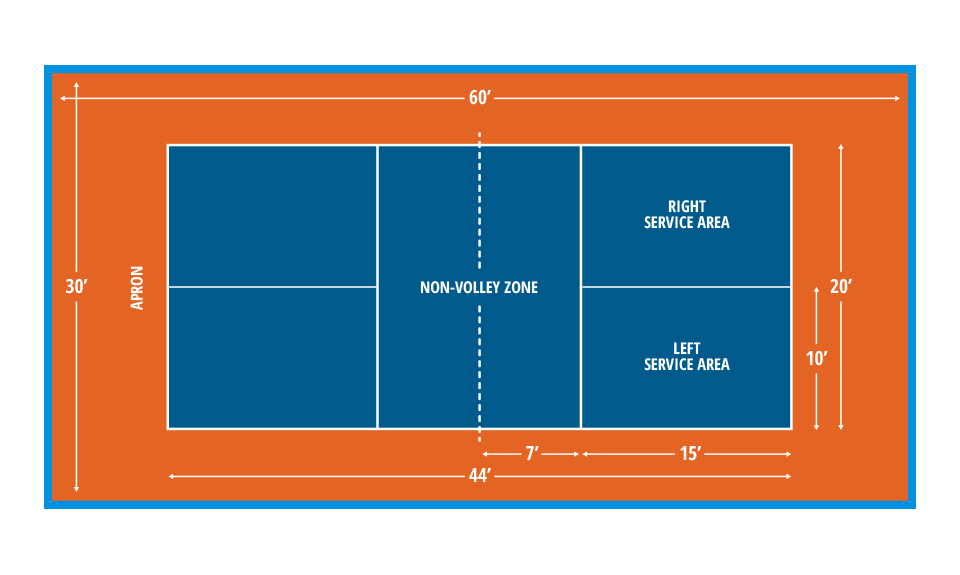
A pickleball court is 20 by 44 feet with 7-foot non-volley zones.
If you want to play better, build better. In this guide, I break down pickleball court dimensions with clear steps, pro tips, and field-tested advice. You will learn how each line works, how much space you really need, and how to mark a court that meets official rules. Whether it is a driveway, gym, or club, you will walk away ready to set up a perfect court.
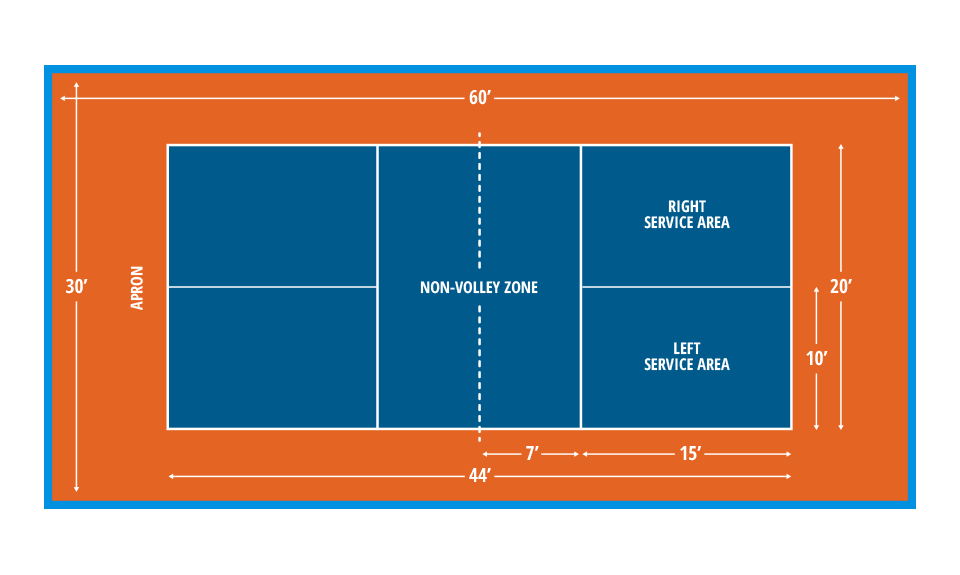
Official pickleball court dimensions at a glance
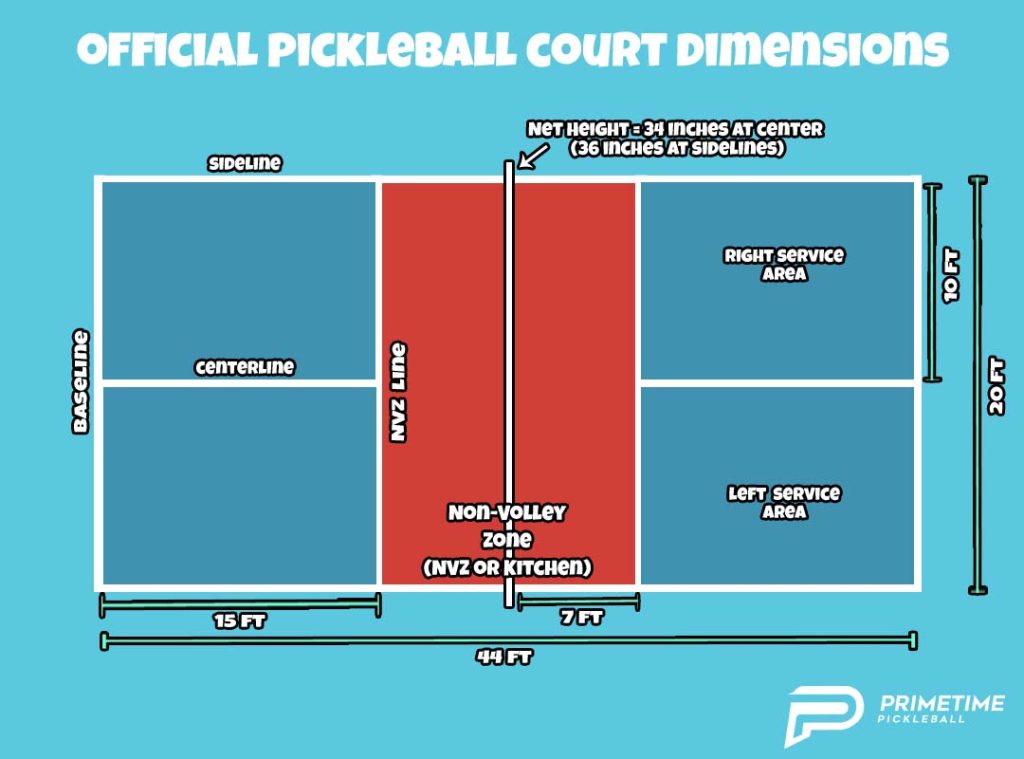
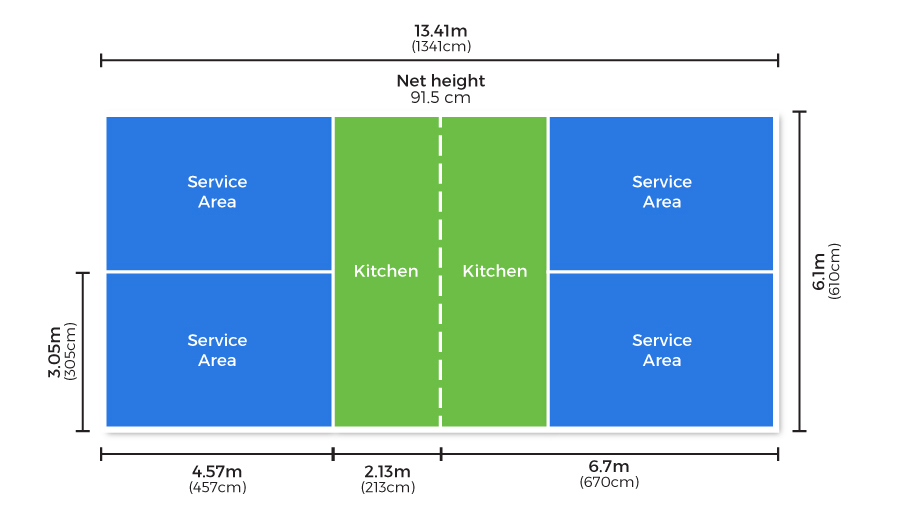
If you remember only one set of numbers, make it these. Regulation pickleball court dimensions are 20 feet wide by 44 feet long for both singles and doubles. The non-volley zone, often called the kitchen, is 7 feet deep on each side of the net. Lines are 2 inches wide and count as in.
The net is 36 inches high at the sidelines and 34 inches at the center. Net posts are set so the net spans 22 feet. The court’s playing surface is split into right and left service courts.
For a safe run-off area, plan for a minimum playing area of 30 by 60 feet. For tournaments or a premium build, 34 by 64 feet is preferred. These sizes give room behind baselines and along sidelines, so players do not run into fences or walls.
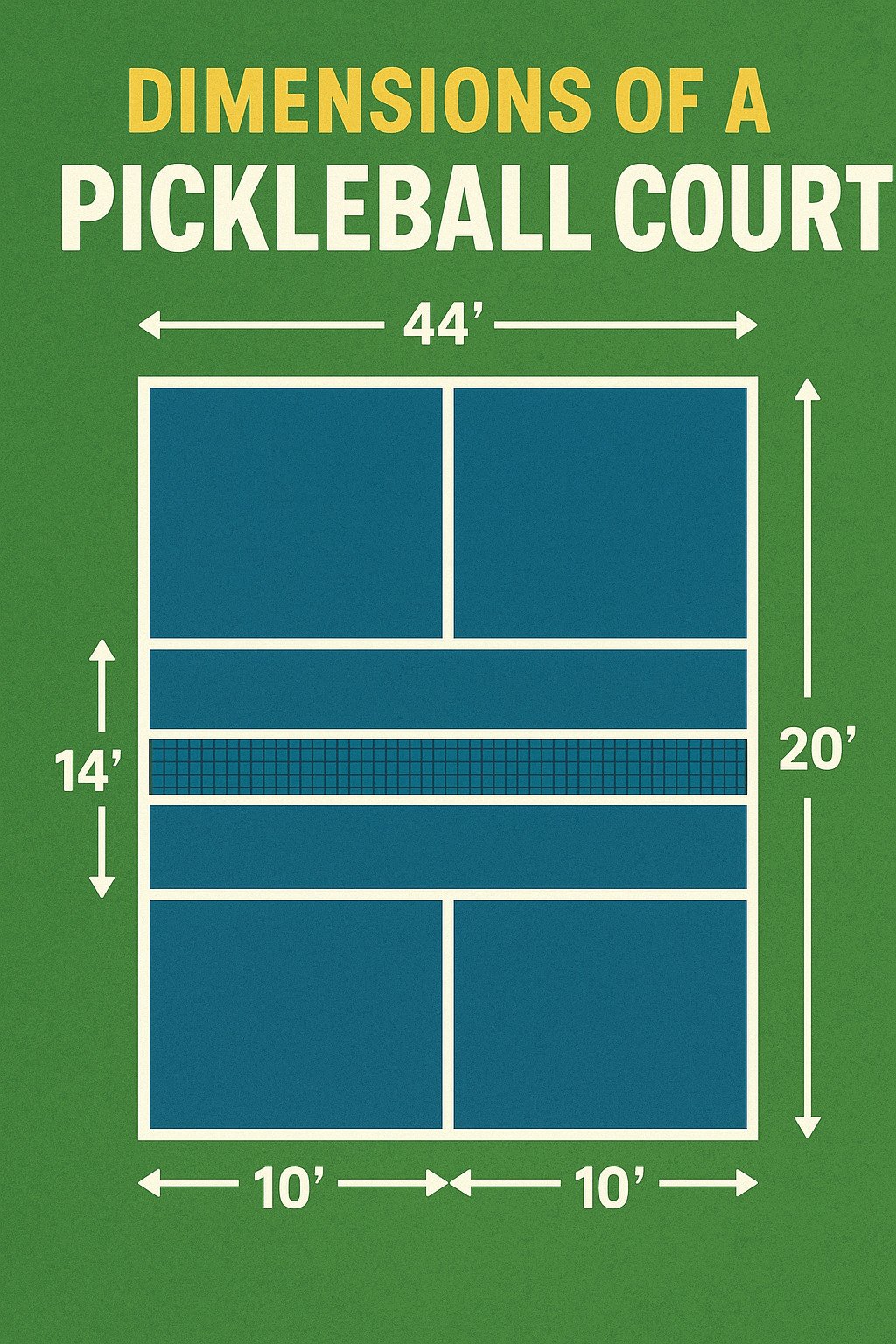
I have built and striped many courts. The most common error I see is a court that is 44 by 22. That is tennis doubles, not pickleball. Keep the pickleball court dimensions at 20 by 44. It matters.

Breaking down each court zone
Understanding each zone will help you place lines right the first time.
Non-volley zone
- Depth: 7 feet from the net to the NVZ line on each side.
- Rule tip: The line is part of the NVZ. If you step on it during a volley, it is a fault.
Service courts
- Each service box is 10 feet wide by 15 feet deep.
- The centerline splits the right and left service courts.
- Serves must land in the opposite diagonal service box, beyond the NVZ line.
Sidelines and baselines
- Court width is 20 feet. Length is 44 feet.
- Lines are 2 inches wide and are in play.
Centerline and NVZ line
- The centerline runs from each baseline to the NVZ line.
- The NVZ line is 7 feet from the net. Mark it bold and straight.
Pro tip from the field: Snap chalk lines over a thin coat of tape primer. Then paint a crisp 2-inch band. Your lines will pop and last longer.
Net specifications and setup
A correct net makes rallies feel right. Small height errors change shots a lot.
Key net specs
- Height at sidelines: 36 inches.
- Height at center: 34 inches, held by a center strap if fixed.
- Post spacing: Net length is 22 feet. Posts sit about 12 inches outside each sideline.
Portable nets
- Use a center strap or check the middle with a tape every session.
- Keep even tension. If the net bows more than an inch at center, tighten it.
Quick check I use on-site
- Measure 34 inches at center with a stick mark.
- Measure 36 inches at each sideline.
- Confirm the bottom tape clears the surface. Drag causes weird bounces.
Recommended playing area and layout planning
Pickleball court dimensions fit many spaces, but the buffer area is what makes play safe.
Minimum space
- 30 by 60 feet total. That gives about 5 feet on each side and 8 feet behind each baseline.
Preferred space
- 34 by 64 feet total. That gives about 7 feet on each side and 10 feet behind each baseline.
Multi-court spacing
- Side-by-side courts: Aim for 10 feet between sidelines.
- End-to-end courts: Aim for 8 to 10 feet between baselines.
- Indoor ceilings: Many venues target 18 to 20 feet of clear height.
Orientation
- Face courts north–south when outdoors. This reduces sun glare during most of the day.

Space planning for backyards, driveways, and gyms
You can play great pickleball without a full complex. Just plan well.
Backyards
- Measure your fence lines first. Leave room for gates to swing.
- Think about neighbors. Sound from paddles carries. Windscreens help both sight and sound.
Driveways
- Do a single temporary court across the wide part of the drive.
- Use removable court tape. Paint on sealed concrete can chip under car tires.
Gyms
- Use existing basketball baselines as reference. Most gyms can fit 2 to 4 courts.
- Protect wood floors with low-tack tape and felt pads on net feet.
Real-world note: I once squeezed a court into a 28 by 56 foot space. It worked, but the short run-off made players timid. If you can, stick to the minimum 30 by 60 feet around your pickleball court dimensions.

Surface, lines, and materials
Good surfaces protect joints and boost fun.
Surface choices
- Post-tensioned concrete: Best long-term, fewer cracks.
- Asphalt: Common and cost-effective. Seal and resurface as needed.
- Indoor wood or sport tile: Great for multi-use gyms.
Texture and coatings
- Use acrylic color coats with light texture. You want grip without skin burn on falls.
- Choose high-contrast line color against the surface.
Lines and tape
- Line width: 2 inches wide.
- Temporary lines: Removable vinyl tape of 2 inches works well.
- Chalk: Fast to set up, but it wears off fast.
Drainage and slope
- Outdoor courts need a slight slope for drainage. Many builders use about 1 percent.
- Always direct water away from play and neighboring properties.
- Check local codes before you grade.
How to mark a temporary pickleball court step-by-step
I have used this setup in driveways, parking lots, and gyms. It is fast and accurate.
Tools
- Two 50-foot tape measures
- Chalk line or 2-inch removable tape
- Carpenter’s square
- Net and a center-height stick
Steps
- Mark the baseline: Snap a 20-foot line for the back baseline.
- Square the first corner: Use a carpenter’s square or measure the diagonal.
- Mark court corners: A regulation rectangle is 20 by 44 feet. The diagonal corner-to-corner is about 48 feet 4 inches. Use that to check squareness.
- Add sidelines and the far baseline: Tape or chalk all four outer lines at 2 inches wide.
- Place the net: Set posts so the net spans 22 feet. Adjust height to 34 inches at center, 36 at sidelines.
- Mark the NVZ line: Measure 7 feet from the net on each side. Snap a straight line.
- Add centerlines: From each baseline, run a line to the NVZ line, splitting the court into two 10-foot service boxes.
- Verify all measurements: Recheck the 20 by 44 rectangle and your 7-foot NVZ.
Speed tip: Work with two tape measures. One person holds the corner; the other checks the diagonal. You get square lines fast and clean pickleball court dimensions.
Common mistakes to avoid
Avoid these slip-ups. They are more common than you think.
Mistakes and fixes
- Wrong size court: People build 22 by 44. It must be 20 by 44.
- Shallow kitchen: The NVZ must be a full 7 feet from the net, line included.
- Net too high or low: Check 34 inches at center every time you set up.
- Thin lines: Lines must be 2 inches. Thin tape changes calls.
- No buffer space: Skimping on run-off areas leads to trips and injuries.
Measurement cheat sheet and conversions
If you like quick numbers, this section is for you.
Core pickleball court dimensions
- Court: 20 feet by 44 feet
- NVZ: 7 feet each side of the net
- Net height: 36 inches at sidelines, 34 inches at center
- Lines: 2 inches wide
- Diagonal of court: About 48 feet 4 inches
- Minimum total area: 30 feet by 60 feet
- Preferred total area: 34 feet by 64 feet
Metric conversions
- Court: 6.10 meters by 13.41 meters
- NVZ: 2.13 meters
- Net height: 0.914 meters at sidelines, 0.864 meters at center
- Line width: 5 centimeters
Why pickleball court dimensions affect play quality
Small changes in size change the game. I have seen players miss dinks all day on shallow kitchens. A low net center turns easy lobs into winners. A narrow court pushes balls out more often.
When your court is exact, rallies last longer. Serves land where they should. Players trust the lines. That trust makes play smooth and fair. If you are building or taping, stick to official pickleball court dimensions and you will feel the difference.
Budget and timeline planning for your build
Planning saves money and stress.
Typical order of work
- Site check and layout
- Base prep and drainage
- Surface install and cure time
- Color coatings and lines
- Nets, fencing, and accessories
Time and cost notes
- A single outdoor court often takes several weeks from base to lines.
- Weather can slow coatings. Humidity and cold add days.
- Budget for windscreens, seating, and storage. They improve the player experience a lot.
Maintenance tips that protect your investment
Keep your court in top shape with simple habits.
Simple care plan
- Sweep or blow leaves and sand each week.
- Wash the surface with mild soap a few times a year.
- Check net height and tension before play.
- Touch up worn lines as soon as they fade.
What I learned: Small, regular care beats big fixes later. It also keeps ball bounce and traction consistent, which preserves the feel set by correct pickleball court dimensions.
Frequently Asked Questions of pickleball court dimensions
What are the official pickleball court dimensions?
The official court is 20 feet wide by 44 feet long for singles and doubles. The non-volley zone is 7 feet deep on both sides of the net.
How high is a pickleball net?
The net is 36 inches high at each sideline and 34 inches at the center. Use a center strap or check with a tape before play.
What is the minimum space needed around the court?
Aim for at least 30 by 60 feet for the whole area. That allows safe run-off behind baselines and along sidelines.
Are lines part of the court in pickleball?
Yes, all 2-inch lines count as in, including the NVZ line. Serves must clear the NVZ line to be valid.
How big is each service court?
Each service box is 10 feet wide by 15 feet deep. A centerline splits the right and left boxes on each side.
Do singles and doubles use the same court size?
Yes, singles and doubles share the same 20 by 44 foot court. Only player positions and tactics change, not the layout.
How far apart should net posts be?
Posts are placed to hold a 22-foot net, set just outside the 20-foot sidelines. This keeps the 36-inch height at the posts.
Conclusion
Pickleball feels best on a court that is built to the right size. Use the 20 by 44 foot layout, a 7-foot kitchen, and the correct net heights. Plan enough buffer space so players move with confidence. Then mark lines clean and keep them that way.
If you are setting up your first court, start with a temporary layout this weekend. When it feels right, make it permanent. Want more tips on gear, surfaces, and multi-court planning? Subscribe and drop your questions so I can help you build smarter.