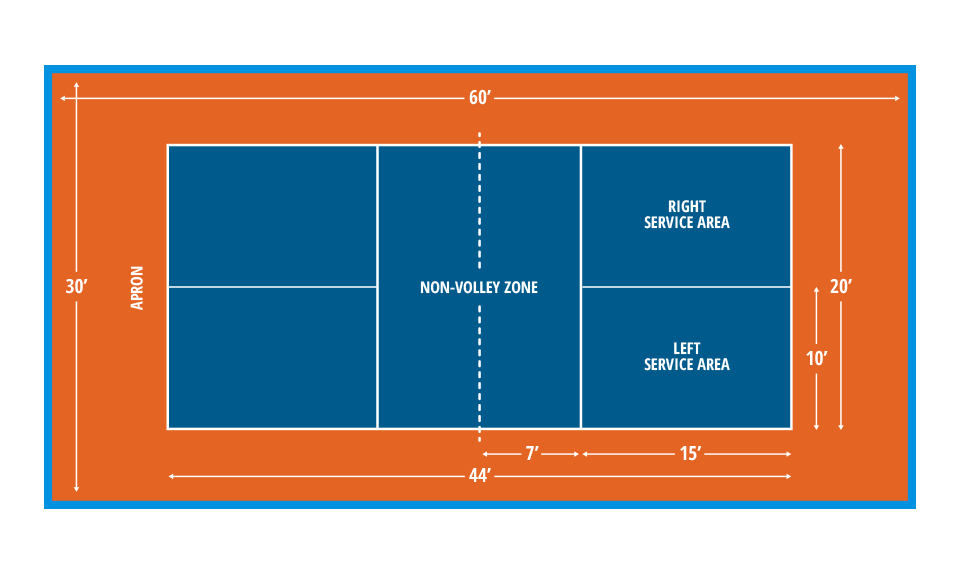
A pickleball court is 20×44 feet with a 7-foot non-volley zone each side.
If you want clear, trusted guidance on pickleball court dimensions, you’re in the right place. I’ve laid out courts for parks, clubs, and backyards, and I’ll walk you through every measure that matters. You’ll learn the numbers, the why behind them, and how to apply them without stress. By the end, you can plan, mark, or check a court with total confidence.
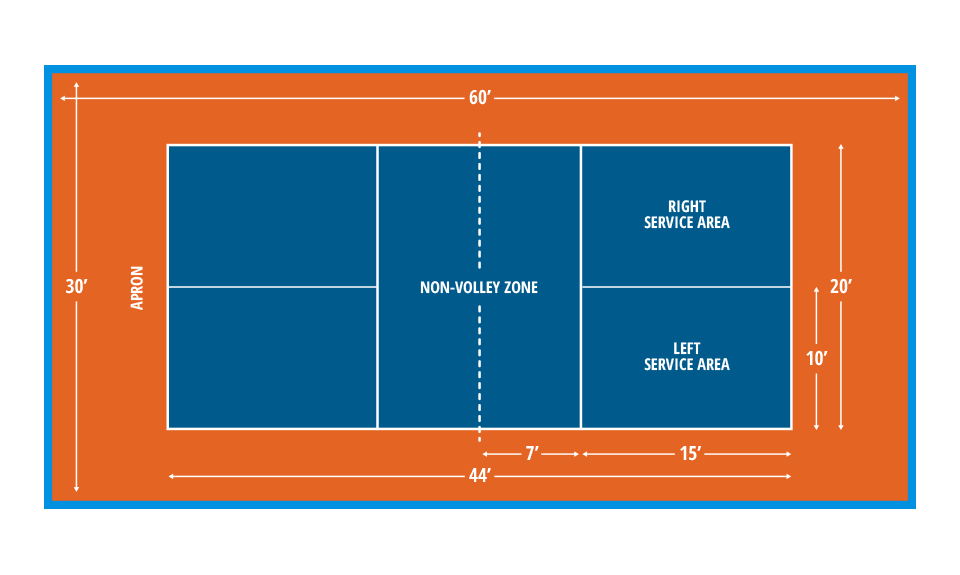
Official pickleball court dimensions and specs
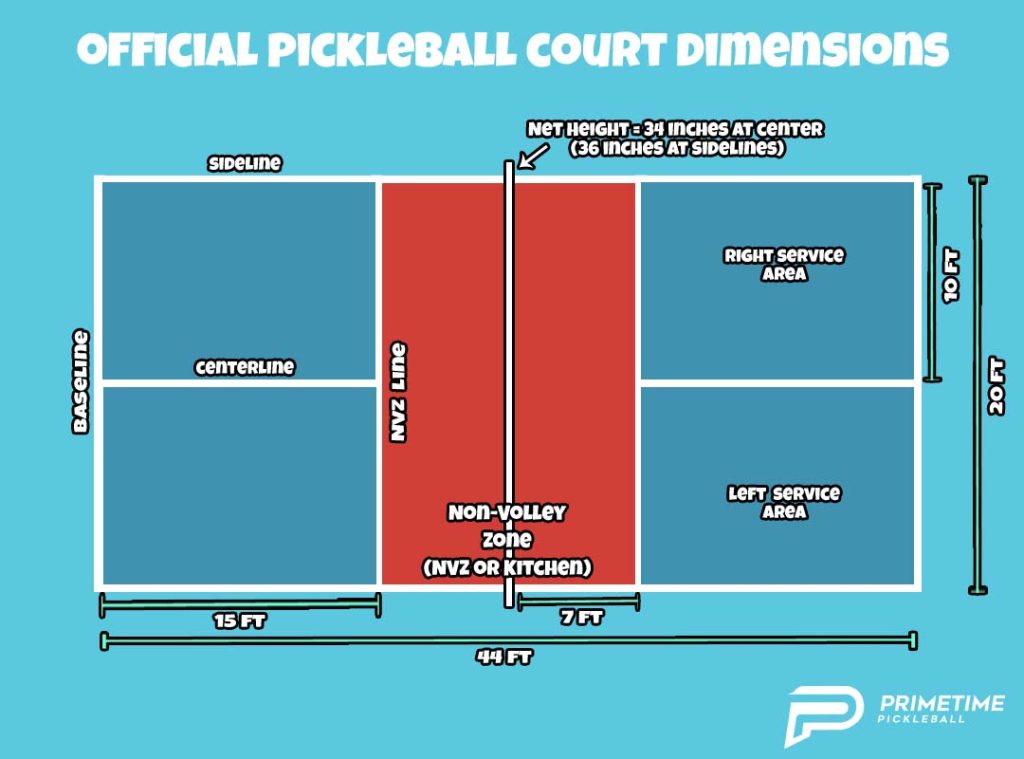
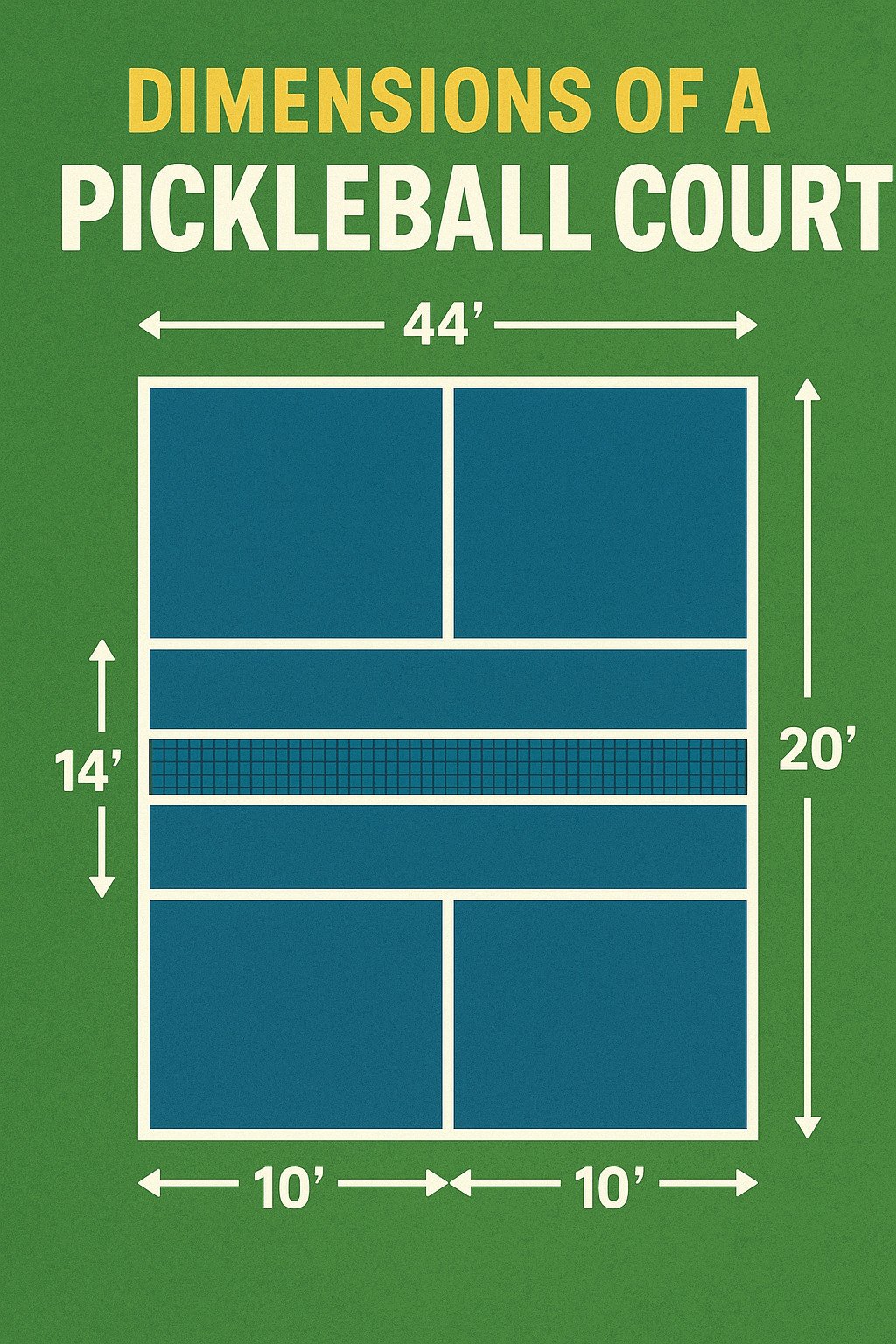
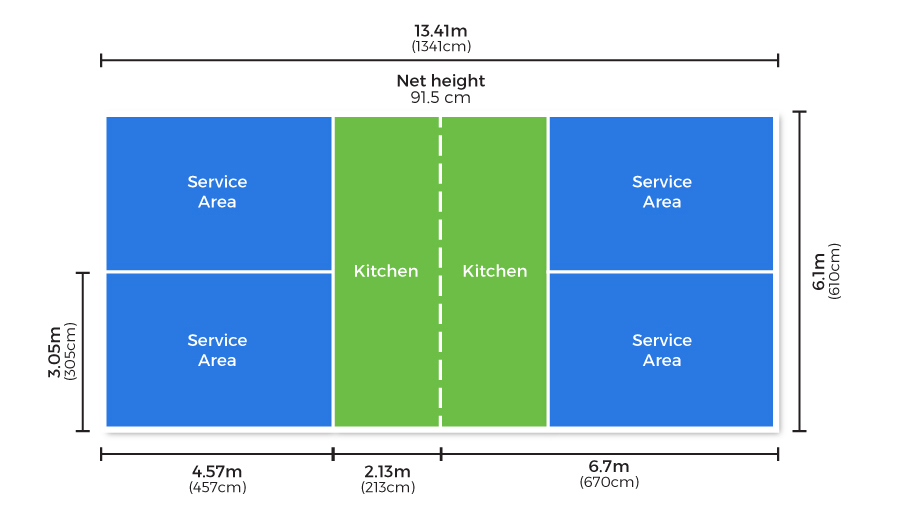
A regulation pickleball court is 20 feet wide by 44 feet long. Singles and doubles use the same size. The non-volley zone, often called the kitchen, is 7 feet deep on both sides of the net. That leaves 15 feet from the kitchen line to each baseline.
The net height is 36 inches at the sidelines and 34 inches at the center. The center strap brings the middle down to 34 inches. Posts sit just outside the sidelines.
Lines are 2 inches wide. All lines are in. The non-volley zone line counts as part of the kitchen. The centerline runs from the kitchen line to the baseline, splitting each service court.
If you need quick numbers in meters, the court is about 6.10 by 13.41 meters. The kitchen is about 2.13 meters. Net height is about 0.91 meters at the sides and 0.86 at center.
I urge players, coaches, and builders to learn these facts cold. It will help you spot errors on new builds and make fast fixes on game day. Clear, accurate pickleball court dimensions keep play fair and safe.

Court lines and zones explained
Think of the court as two mirror halves. Each side has three main zones. The kitchen sits near the net. Behind it are the left and right service courts. The baseline marks the back edge.
Key lines and what they do:
- Baseline marks the back boundary. Serves must land past the kitchen line.
- Sidelines mark the side boundaries. Balls touching them are in.
- Non-volley zone line marks the kitchen edge. It is part of the kitchen.
- Centerline splits the left and right service courts. It guides the serve target.
Service courts measure 10 by 15 feet each. Serves cross the net to the diagonal box. They must clear the kitchen line. The ball can land on any line of the target box and still be good.
When I teach new players, I start with chalk and cones on a driveway. We walk each area and say its job out loud. This simple tour makes pickleball court dimensions easy to remember.
Net height, posts, and center strap
Correct net height shapes the game. Too high and dinks die. Too low and drives rule. The rule is simple. It is 36 inches at the sidelines and 34 inches in the center.
Tips to get it right:
- Use a center strap to fine-tune to 34 inches.
- Check height at both sidelines with a stick or tape.
- Re-check after play or when temperature shifts.
Portable nets can sag over time. I set a reminder to measure at breaks. A fast check saves arguments later. This small habit keeps your pickleball court dimensions dialed in.
Playing area and recommended run-off space
The painted court is 20 by 44 feet, but you need extra space around it. The minimum playing area is 30 by 60 feet. That gives 5 feet clear on each side and 8 feet behind each baseline. The preferred size is 34 by 64 feet. That gives 7 feet at the sides and 10 feet at the ends.
More run-off space helps with lobs, serves, and safety. If you plan events, go for the preferred size. If you build at home, aim for it if you can.
I once set a backyard court at 30 by 60 due to a tree. It worked, but deep returns felt tight. When we later trimmed and moved a fence, the extra two feet each end felt huge. Space changes play more than you think.

Indoor vs. outdoor court considerations
Indoor and outdoor courts share the same pickleball court dimensions. But the site needs differ.
What to plan for outdoors:
- Gentle slope for drainage, about 0.83 to 1 percent.
- UV stable surface coatings and line paint.
- North–south court orientation to reduce sun glare.
- Wind screens if the site is breezy.
What to plan for indoors:
- Clear ceiling height for lobs.
- Light color contrast between floor and lines.
- Ball selection that suits the surface and light.
Outdoor surfaces can get slick with dust or dew. Sweep and check traction before play. Indoor floors may need matting at doors to keep grit out.

How to lay out a court step by step
You can mark accurate pickleball court dimensions with simple tools. I use a 100-foot tape, chalk line, string, and a carpenter square.
Steps that work in most spaces:
- Snap a straight baseline reference.
- Measure 44 feet for length and 20 feet for width. Create a rectangle.
- Use the 3-4-5 method or a large square to keep corners at 90 degrees.
- Mark the net line at the center of the 44-foot length.
- From the net line, measure 7 feet back on both sides for the kitchen line.
- From the kitchen line, measure 15 feet to set the baselines.
- Split the court width in half to draw the centerlines.
Paint lines last. Do a dry run with tape first. I always measure twice and snap lines once. Saving paint is nice. Saving time is better.
Tennis court conversions and multi-court layouts
Many clubs convert one tennis court into multiple pickleball courts. The standard tennis pad is about 60 by 120 feet. You can place four pickleball courts in a two-by-two grid. Leave walkways between courts for safety.
Guidelines that help:
- Keep at least 10 feet between baselines back-to-back.
- Use bold colors for pickleball lines to avoid confusion.
- Offset neighboring courts to reduce ball and player overlap.
If noise is a concern, add acoustic screens or schedule play blocks. Smart layout and scheduling matter as much as the pickleball court dimensions you paint.
Surfaces, coatings, and color choices
Most outdoor courts use asphalt or post-tension concrete with an acrylic system. Indoors, you might see wood, vinyl, or sport tiles. The goal is safe grip and a consistent bounce.
Simple tips for better play:
- Choose a mid-tone court color with white lines for contrast.
- Avoid glossy coatings that glare in sun.
- Fix cracks and low spots before coating.
A light-to-mid blue with a green surround works well. It is easy on the eyes and helps track the ball. Color choice does not change pickleball court dimensions, but it does change how the court feels to play.
Lighting, fencing, and site orientation
Good lights and fences make courts usable longer and safer. For night play, aim for even light and clear shadows. Many sites target 30 to 50 foot-candles on the court. Poles around 18 to 20 feet help spread light.
Fencing around 8 to 10 feet helps keep balls in. Add doors that open away from the court. Place courts north–south when outdoors. It reduces sun in the eyes at key times.
I learned to walk a site at sunrise and late day before we paint lines. The sun test costs nothing and pays off for years.
Common mistakes and pro tips
Avoid these frequent errors when setting pickleball court dimensions:
- Net at 36 inches in the center, not at the sidelines.
- Kitchen measured at 6 or 8 feet instead of 7.
- Lines thinner than 2 inches, which are hard to see.
- Not enough run-off space, causing trips and foot faults.
- Misaligned rectangle due to weak corner checks.
Pro tips that make life easy:
- Mark the center of each line before painting edges.
- Use a center strap even on portable nets.
- Repaint lines every few seasons to keep them crisp.
- Keep a laminated spec sheet courtside for fast checks.
These small habits protect the integrity of your pickleball court dimensions. They also prevent arguments and injuries.
Frequently Asked Questions of pickleball court dimensions
What are the official pickleball court dimensions?
A regulation court is 20 feet wide and 44 feet long. Singles and doubles use the same size.
How big is the non-volley zone, or kitchen?
It is 7 feet deep on both sides of the net. The kitchen line is part of the kitchen.
What is the correct net height for pickleball?
It is 36 inches at the sidelines and 34 inches at the center. A center strap ensures the middle is at 34 inches.
How much space do I need around the court?
Minimum playing area is 30 by 60 feet. Preferred is 34 by 64 feet for better safety and play.
Are line widths part of pickleball court dimensions?
Yes. Lines are 2 inches wide and count as in. The kitchen line counts as part of the kitchen.
Can I fit four pickleball courts on one tennis court?
Yes, on a 60 by 120 foot pad you can fit four courts. Leave safe walkways between them.
Do indoor and outdoor pickleball court dimensions differ?
No, the dimensions are the same. Only surface, lighting, and site needs differ.
Conclusion
You now have the full picture on pickleball court dimensions, from the 20 by 44 foot layout to the 7 foot kitchen and the right net height. You also know how much space you need around the court and how to lay it out step by step. These details protect fair play and keep players safe.
Pick one tip to act on today. Measure your net. Re-check your kitchen line. Or plan your run-off space before you paint. If this guide helped, subscribe for more practical court setup tips or leave a comment with your build questions.