Call server score first, then receiver, win by two; only serving team scores.
If you want to master how to score pickleball, you’re in the right place. I teach new players every week, and I know the pain of tangled score calls. This guide breaks it down with clear steps, real examples, and smart tips, so you feel calm and confident every time you call the score.

Pickleball scoring basics: the foundation you need
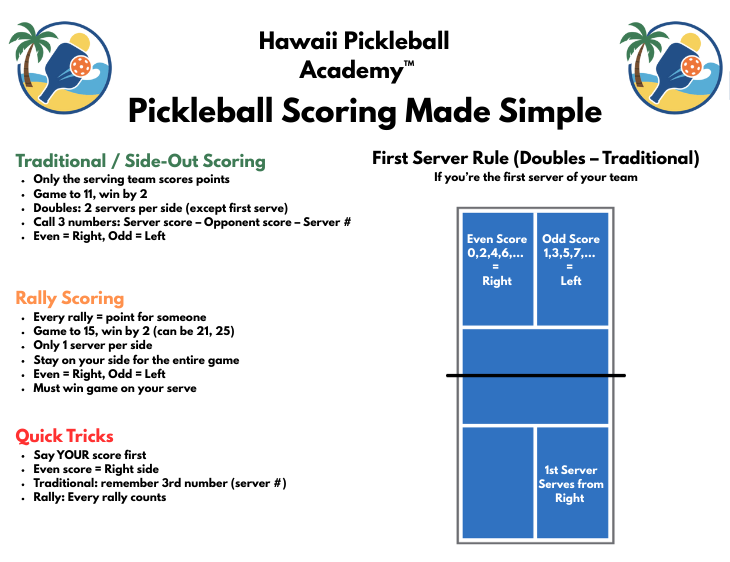
Most games go to 11, win by 2. Only the serving team can score. That is the core of how to score pickleball.
Use side-out scoring. If the serving team loses the rally, the serve moves to the partner. After both partners serve and lose, it is a side-out. The other team now serves.
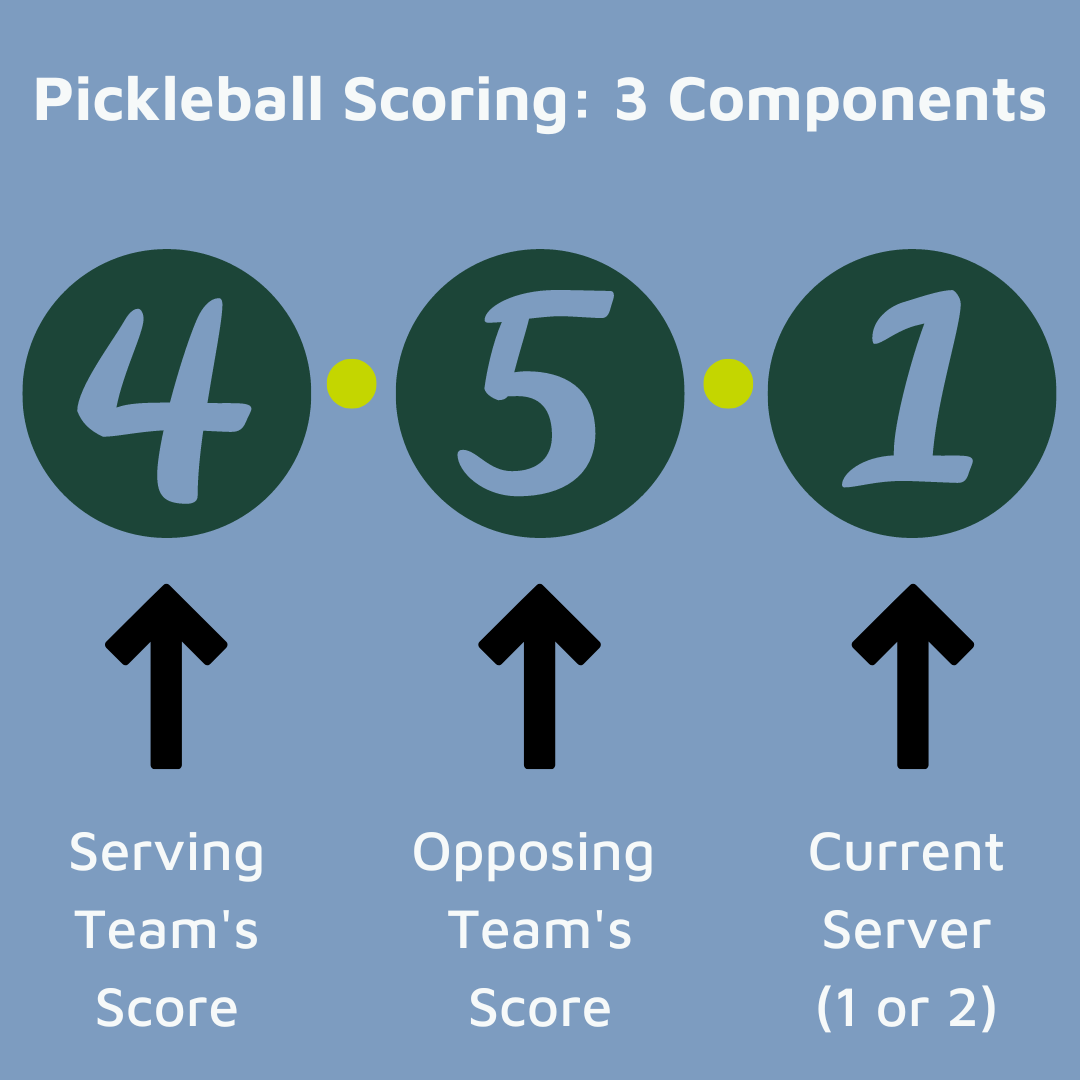
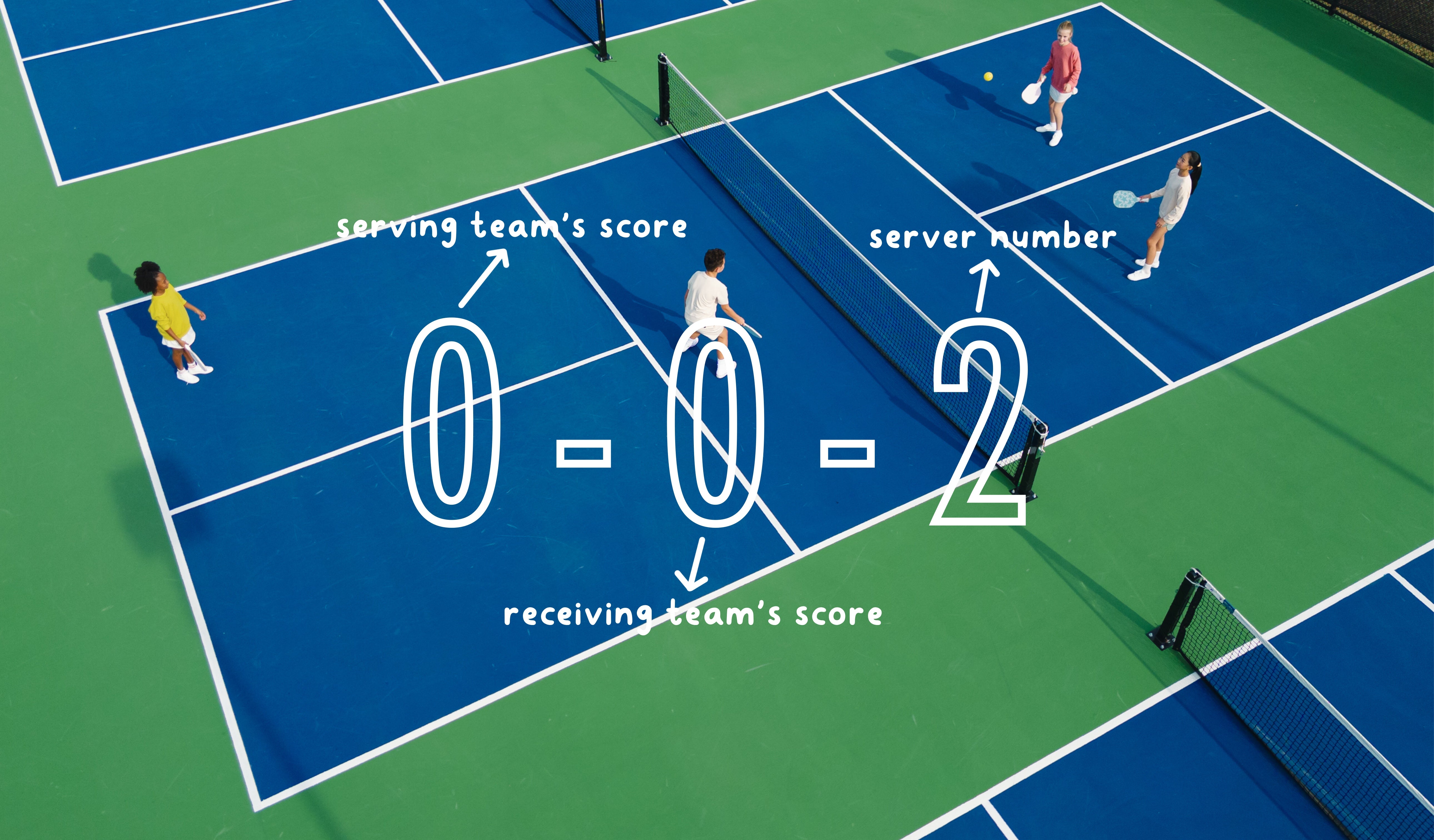
In doubles, you call three numbers. Server’s score. Receiver’s score. Server number. The starting call is 0-0-2. In singles, you call two numbers. Server’s score first, then receiver’s score.
There is one serve attempt. Service lets are not replayed under current rules. If the ball clips the net and lands in, keep playing.
How to score pickleball in doubles
Doubles creates most confusion, so let’s slow it down. You always call three numbers.
Here is the basic flow:
- First serve of the game is 0-0-2. That keeps the first side from getting two serves to start.
- The serving team’s right-side player serves when their score is even. The left-side player serves when their score is odd.
- If Server 1 wins points, that server keeps serving and switches sides each time.
- When Server 1 faults, Server 2 serves from their current side.
- When Server 2 faults, it is a side-out. The other team serves at 0-0-2 if it is their first serve of the game, or at their current score with the correct server number after that.
Example sequence:
- Call 0-0-2. Serve from the right. You win the rally. Call 1-0-2. Switch sides and serve.
- You fault. Now your partner serves. Call 1-0-1. Serve from the right if your team score is even.
- Your partner faults. Side-out. Other team serves at 0-1-2.
This is the best way to grasp how to score pickleball in real time. Track the even and odd sides. Track Server 1 and Server 2.

How to score pickleball in singles
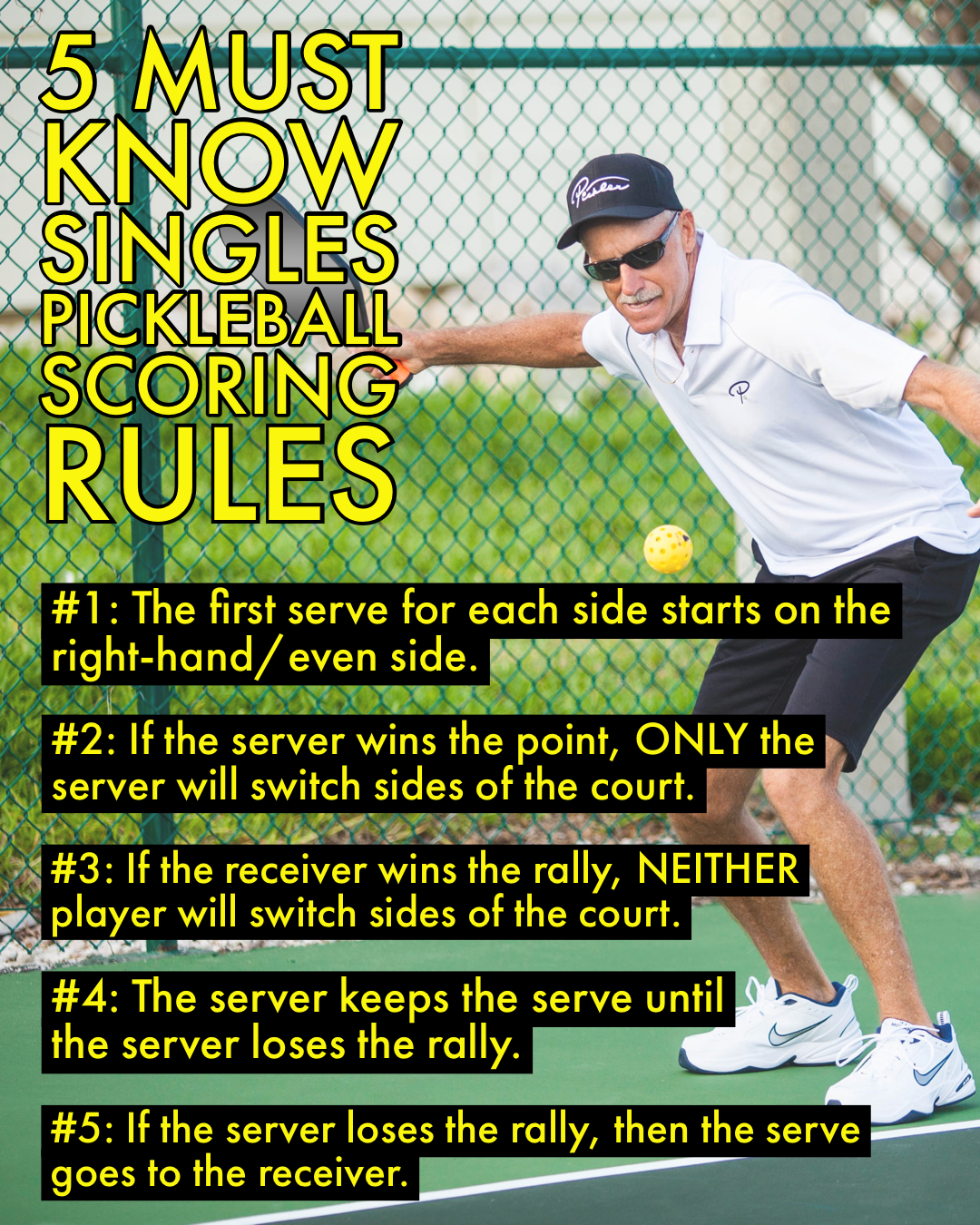
Singles is simple. You call two numbers. Server’s score, then receiver’s score. No server number.
Serve from the right when your score is even. Serve from the left when your score is odd.
Quick example:
- Score is 4-3. You serve from the right. Call 4-3.
- You win the rally. Score is 5-3. Switch to the left. Call 5-3.
- You lose the rally. Side-out. Opponent serves. They call 3-5 from their right, since their score is even.
If you want a fast win with how to score pickleball, lock in the even-right, odd-left rule.
How to call the score out loud without stress
Call the score before you start your serve motion. Use a clear voice. Face the receiver if you can.
In doubles, the format is server’s score, receiver’s score, server number. Example calls:
- 6-4-1
- 10-10-2
In singles, it is server’s score, then receiver’s score:
- 6-4
- 10-10
Pro tip from my league nights: pause a beat after the call. That brief pause reduces disputes. It also gives new players a second to confirm where they should stand. This habit improves how to score pickleball at any level.

Common mistakes to avoid when learning how to score pickleball
New players mix up server numbers. They also forget to switch sides after a point. Here is how to fix that fast.
Use these tips:
- Mark Server 1 with a wristband or a hat. Swap it at every side-out.
- Say your server number aloud as you walk to the baseline. It trains your brain.
- If the score is even, confirm you are on the right side. If odd, confirm you are on the left.
- If anyone is unsure, stop and replay the last rally out loud. Do it before the next serve.
I made all these errors in my first season. These simple checks changed my games. They also helped teammates learn how to score pickleball with ease.
Faults, lets, and tricky situations
Faults end the rally. On the serve, a foot fault is a fault. The ball must land in the correct diagonal box and clear the non-volley zone. The serve must be legal.
There are no service lets in the current official rules. If the ball touches the net and lands in the correct service box, play on. Some social games still replay lets. Decide before you start.
If the wrong player serves or receives, stop play as soon as you notice. Correct the positions. Replay if needed. Clear calls and calm heads protect fairness. It also keeps how to score pickleball clean and simple.

Strategy tips to track score like a pro
Strong teams blend habits with simple tools. That reduces errors and saves points.
Try this:
- Use a serve token. A coin or band goes to Server 1. Transfer it at every side-out.
- Call the full score with confidence. It sets the rhythm and pace.
- Repeat the score if noise or wind makes it hard to hear.
- Keep a small scoreboard clip on the net post in rec play.
In tournaments, referees handle score calls. In rec games, own the job together. It is the fastest way to master how to score pickleball under pressure.
Practice drills to lock in how to score pickleball
You can practice scoring like you practice dinks. Make it part of your warm-up.
Use these quick drills:
- Shadow calls. Stand on court without a ball. Walk through three rallies. Call the score each time.
- Partner quiz. One player describes a rally result. The other calls the new score. Switch roles.
- Live mini-games. Play to 5. Focus on perfect score calls. Reset if you miss a call.
I use these with new club members. In one session, their confidence jumps. It is a low-stress way to learn how to score pickleball.

Rally scoring vs side-out scoring
Standard play uses side-out scoring. Only the serving team scores. Most rec and league games go to 11, win by 2.
Some events use rally scoring. Every rally scores a point, no matter who serves. This is faster and can help balance time in round robins.
Check your format before you play. For most learners, stick with side-out until you feel solid. It is the core of how to score pickleball in everyday games.
Frequently Asked Questions of how to score pickleball
What is the correct order when calling the score in doubles?
Say server’s score first, then receiver’s score, then server number. For example, 7-5-1 or 7-5-2.
Why does the first serve start at 0-0-2?
It prevents the first team from getting two serves to start. It keeps the opening fair and balanced.
How do I know where to stand when serving?
If your team score is even, serve from the right. If odd, serve from the left. Stick to this, and you will stand in the right spot.
Can I score points when I am not serving?
Not in side-out scoring. Only the serving team scores. In rally scoring formats, both sides can score.
What if we forget the score mid-rally?
Stop play as soon as possible and discuss the last known point. Reconstruct the sequence. Replay if needed.
Are let serves still a thing?
No, not under current official rules. If the serve hits the net and lands in, the ball is live.
How do server numbers work in doubles?
Each side has Server 1 and Server 2 for that service turn. After both fault, it is a side-out. Then the other team’s Server 1 begins.
Conclusion
You now know how to score pickleball with calm and clarity. Call server score first, then receiver, and track the server number in doubles. Use even-right and odd-left to set your feet. Keep your voice clear and your habits simple.
Try one new habit in your next game. Use a wristband for Server 1 or run shadow calls for five minutes. Small steps remove doubt fast. Want more tips and drills? Subscribe for weekly guides, or drop a question in the comments so we can help you level up.