The best drills sharpen footwork, dinks, drops, volleys, and decision-making.
If you want to win more rallies fast, you need smart, targeted work. I coach players who moved from mid-level to medal rounds with a simple plan: master the key shots, repeat under pressure, and track progress. This guide shares the most effective pickleball drills for intermediate players I use in practice and league prep. Stick with me, and you’ll leave with a full plan of pickleball drills for intermediate players you can run this week.
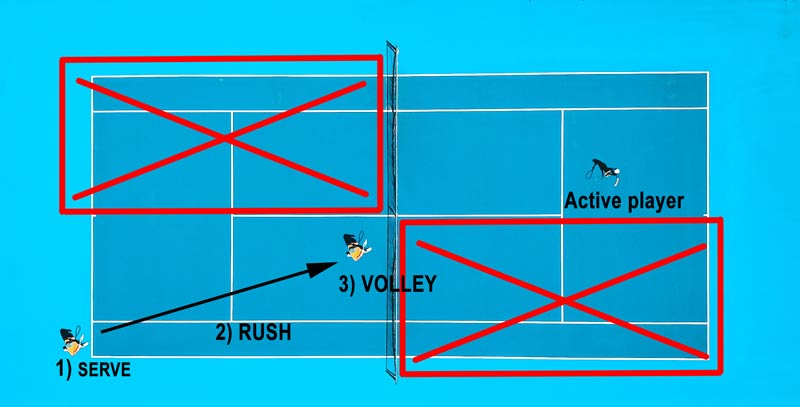
What “Intermediate” Really Means On Court
Intermediate players can rally well, place serves, and hold the kitchen line. But they still give away points with loose footwork or poor shot choice under heat. You can fix that with focused reps on movement, the third shot, resets, and volley control.
In my sessions, I measure success by fewer unforced errors, better depth, and smarter patterns, not just winners. That mindset makes pickleball drills for intermediate players pay off on game day.
Warm-Up To Win Points, Not Just Sweat
Start your practice with purpose. Get the body ready and the eyes sharp.
Quick five-minute warm-up
- Jog the court edges, then side-shuffles and skips.
- Dynamic moves: leg swings, arm circles, hip openers.
- Eyes and hands: toss a ball up, track it with your eyes, catch with soft hands.
- Shadow swings: forehand drop, backhand reset, split step into set position.
Purposeful ball warm-up
- Mini dinks crosscourt, then straight ahead.
- Cooperative drops from baseline to kitchen.
- 10 deep serves to targets before any play.
This short block sets clean contact and calm tempo. It’s a simple start to the most effective pickleball drills for intermediate players.

Footwork And Split-Step Precision
Clean footwork makes every shot easier. The split step is your anchor.
Footwork drills
- Box shuffle: place four cones in a square. Shuffle around the box, always facing the net. Split step at each cone.
- Figure-8 kitchen dance: weave around two cones near the NVZ, staying low, paddle up. Add a coach feed once ready.
- Rhythm beeps: use a metronome at 60–80 bpm. Split on each beep while doing small steps forward and back.
Split step timing drill
- Partner stands at the baseline and does a clear hand raise before each feed.
- You split as the hand rises, then move to the ball.
- Aim for three sets of 30 seconds. Smooth, not rushed.
Cue to remember: see the ball, split, then move. That simple sequence cuts late contacts fast.
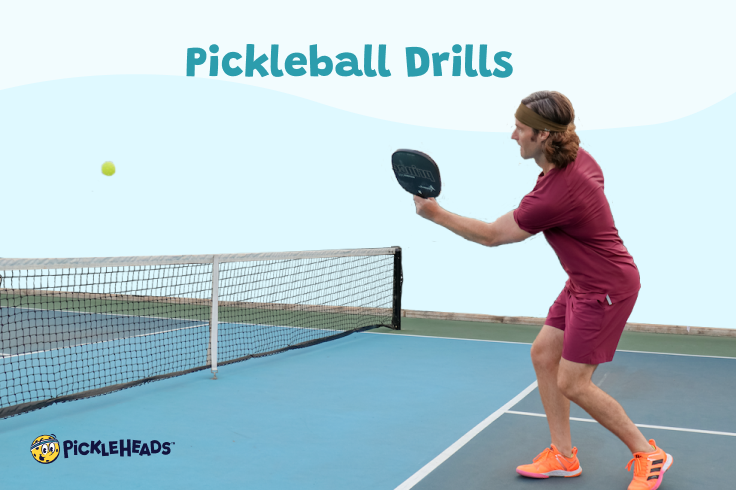
Dinking Consistency And Pressure Drills
Dinks win neutral battles. Train touch first, then add pressure.
Crosscourt dink ladder
- Start with 10 in a row crosscourt without net or out errors.
- After each success, aim one foot closer to the line.
- Add a target like a small cone near the sideline.
Tag-the-toe game
- Goal: bounce dinks near the opponent’s front foot.
- No speed-ups allowed for two minutes.
- Rotate sides to train both diagonals.
Pressure rounds
- Two minutes at normal pace.
- One minute at fast feet: both players step in and out of the kitchen on each shot.
- One minute with random height feeds to train low contact stability.
These are core pickleball drills for intermediate players because they link control with court movement.

Third Shot Drop Mastery
Drops are your bridge from baseline to the kitchen.
Cone arc drill
- Place two cones three feet inside the NVZ line.
- From baseline, drop so the ball arcs 6–8 feet over the net and lands between cones.
- Count clean landings out of 20. Goal: 14 or more.
Two-ball progression
- Player A drops, Player B catches with the paddle and sets the ball on the paddle face.
- Player B gently feeds a shoulder-height drive next.
- Player A must reset the drive into the kitchen, then approach.
Live approach drill
- A serves, B returns deep.
- A must hit a drop, then both play out the point.
- Score only if A reaches the kitchen within three shots.
Focus on quiet hands, early prep, and a low base. This is a must-have in pickleball drills for intermediate players.

Transition Zone And Reset Drills
The transition zone is where rallies are lost. Learn to absorb pace.
Drive-drive-reset
- Feeder hits two firm drives at your torso.
- You block the first into the kitchen, then reset the second short and soft.
- Step forward only after you land both.
Chaos catches
- Feeder mixes drives, rollers, and topspin dippers.
- You must label each ball out loud as you move: drive, drop, or reset.
- This boosts recognition speed under stress.
Reset ladder
- Start at baseline. Hit a soft reset. If it lands in the kitchen, step forward one yard and repeat.
- If you miss, step back a yard. Finish at the NVZ.
If you add only one new habit, make it this one. These resets change matches and are prime pickleball drills for intermediate players.

Volley Control, Blocks, And Punches
Win the hand fight by owning the first volley.
Block wall routine
- Stand 8–10 feet from a wall.
- Tap the ball to the wall softly, block it back with minimal swing.
- Keep the ball below net tape height on the rebound.
Triangle volley drill
- Partner feeds. You volley to three targets: crosscourt deep, middle body, and straight deep.
- Call the target before contact to commit your paddle angle.
Punch and freeze
- Short backswing, solid contact, short hold.
- Take one step in on every clean volley to close space.
- Three sets of 15 balls to each side.
These rep patterns keep your paddle stable even when rallies get fast.

Serve, Return, And First-Four Patterns
Points are shaped by the first four shots. Make them count.
Serve targets
- Place four targets: deep corners and two seams.
- Hit five serves per target. Track how many land within three feet.
Deep return and charge
- Return crosscourt deep, aim at back third of the box.
- Follow to the kitchen with two big steps, then a split.
- Partner hits a neutral ball; you dink it short and soft.
Pattern practice
- Serve wide, partner returns middle, you drop to the backhand kitchen corner.
- Reset, repeat to the other side.
- Keep the sequence for five reps before playing live.
These patterns are core pickleball drills for intermediate players because they set the tone early.

Offense: Speed-Ups, Roll Volleys, And Putaways
Attack the right ball, not every ball.
Speed-up selection drill
- Only attack balls above your net height at the contact point.
- Target the opponent’s paddle hip or backhand shoulder.
- If the counter comes back, block middle.
Roll volley reps
- From the NVZ, partner feeds a medium ball.
- Brush up the back of the ball with a short roll to the feet.
- Finish with a neutral stance, paddle up.
Putaway ladder
- Start with a mid-height ball. Drive it to a deep corner.
- Next feed is higher; angle it off the court.
- Third feed is a sitter; finish middle to split defenders.
Aim for calm body, fast hand. Let the paddle do the work.
Lobs, Overheads, And Defending Lobs
Use lobs to move teams and punish weak positioning.
Offensive lob from dink
- Mix in one lob every six dinks.
- Lob over the backhand player with a high, deep arc.
- Hold the same look as your dink to hide it.
Drop-step overheads
- Coach tosses behind your hitting shoulder.
- Drop step, turn sideways, scissor the legs, and snap down the line or crosscourt gap.
- Two sets of 12, each side.
Lob defense
- Split step as the lob rises, turn and run facing sideline.
- If deep, reset with a high, safe lob or a deep drop back.
- Communicate early: yours or mine.
Add wind and sun checks. Train at different times of day.
Singles And Skinny Singles For Doubles Skills
Skinny singles sharpens accuracy with half-court targets.
Skinny setup
- Play only on the right half or left half.
- Serve crosscourt and rally within that lane.
- Focus on deep returns, third shot drops, and dinks to corners.
Progressions
- One-ball to the feet only.
- Must drop the third to score.
- First to 7, switch sides, repeat.
This is a simple, high-value format you can run anytime.
Solo And Wall Work When Partners Are Busy
No partner, no problem.
Wall menu
- 50 soft blocks.
- 30 roll volleys.
- 30 punch volleys to alternating imaginary corners.
- 20 backhand-only resets.
Serve and footwork
- 40 serves to each corner, track depth with chalk marks.
- After each serve, sprint to the kitchen, split step, shadow a dink.
These sessions keep your hands and feet live, and they still count as pickleball drills for intermediate players.
Match-Play Drills And Decision Training
Learn to choose the right ball at the right time.
Constraint games
- Only score if you drop the third.
- Only score if you reset at least once in each rally.
- Speed-up allowed only on balls above net height.
Random practice
- Mix serve, return, drop, and volley patterns in random order.
- Call the shot out loud before hitting to commit early.
Keep score to add pressure. Sports science shows random, game-like reps boost transfer to real matches.
Conditioning, Mobility, And Injury Prevention
Strong bodies play longer and safer.
Court intervals
- 15 seconds fast shuffle to cones, 45 seconds easy walk.
- Repeat 10 rounds. Two sets total.
Ankles and calves
- Single-leg calf raises, 2 sets of 12 each side.
- Lateral band walks, 2 sets of 15 steps each way.
Shoulders and hips
- External rotations with a band, 2 sets of 15.
- Hip airplanes or simple balance holds, 2 sets of 5 each side.
Keep sessions short and frequent. Your late-game footwork will thank you. These add staying power to pickleball drills for intermediate players.
Tracking Progress And A Sample Weekly Plan
What gets measured gets better.
Simple tracking sheet
- Serve depth: 40 attempts, how many land deep third.
- Dink streaks: best run crosscourt and straight.
- Drop success: 20 balls, count clean kitchen landings.
- Volley targets: hits to three zones.
Weekly plan example
- Day 1: Warm-up, dinks, third shot drops, 20 minutes skinny singles.
- Day 2: Footwork, resets, volley control, short live play to 9.
- Day 3: Rest or mobility session.
- Day 4: Serve and return patterns, speed-ups, overheads.
- Day 5: Match-play constraints, random practice, cool down.
- Weekend: Open play and video one game for review.
I love adding one focus theme per week. That steady focus makes pickleball drills for intermediate players stick.
Common Mistakes To Avoid
Skip these traps and you’ll improve faster.
- Drilling without targets. Always aim at a cone, line, or zone.
- Only doing easy, cooperative rallies. Add pressure and randomness.
- Swinging big at the kitchen. Use small swings, soft hands.
- Late split step. Split as the opponent starts their swing.
- Ignoring recovery. Fatigue turns good shots into errors.
These fixes raise your ceiling and protect your body.
Gear Setup And Court Aids
You do not need fancy tools, just smart ones.
- Durable outdoor balls that match your local play.
- Painter’s tape and cones for targets.
- A small tripod to film from the back fence.
- A jump rope and a light resistance band for warm-ups.
- A notebook or phone app to log reps and wins.
Keep it simple and consistent. Your tools should support your plan, not distract from it.
Frequently Asked Questions of pickleball drills for intermediate players
How often should I practice pickleball drills for intermediate players?
Aim for three to five short sessions per week. Keep drills focused, 45–60 minutes, and mix in live play.
What are the fastest gains from pickleball drills for intermediate players?
Work on third shot drops, resets, and volley blocks. These cut errors and help you hold the kitchen.
Do I need a coach for pickleball drills for intermediate players?
A coach helps with feedback and structure. But you can make strong gains with a wall, targets, and video.
How do I add pressure to pickleball drills for intermediate players?
Use a timer, keep score, or add consequences for misses. Random feeds also add game-like stress.
What metrics should I track with pickleball drills for intermediate players?
Track serve depth, dink streaks, drop success, and volley target hits. Re-test every two weeks.
Can I do pickleball drills for intermediate players alone?
Yes. Wall work, serve targets, footwork, and shadow reps all work solo. Filming helps spot habits.
Conclusion
You now have a full practice plan to sharpen the shots that win: clean footwork, steady dinks, trusted drops, calm resets, and confident volleys. Pick two or three drills per day, add simple targets, and track results so you see the climb.
Start today with one section that fits your needs. Then build your week around it. If this helped, subscribe for new drill sets, share with a partner, or drop a comment with your favorite drill and your next goal.