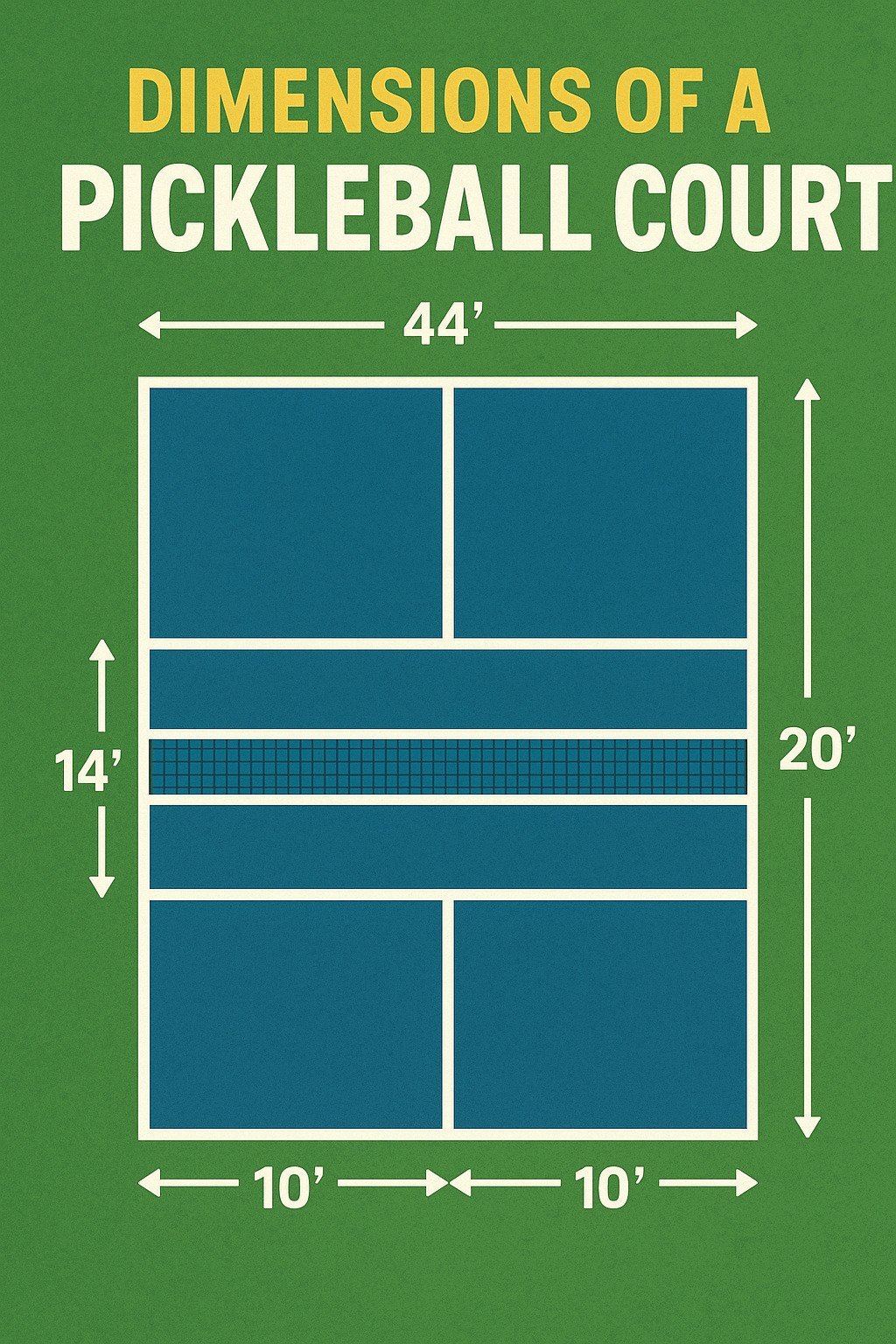
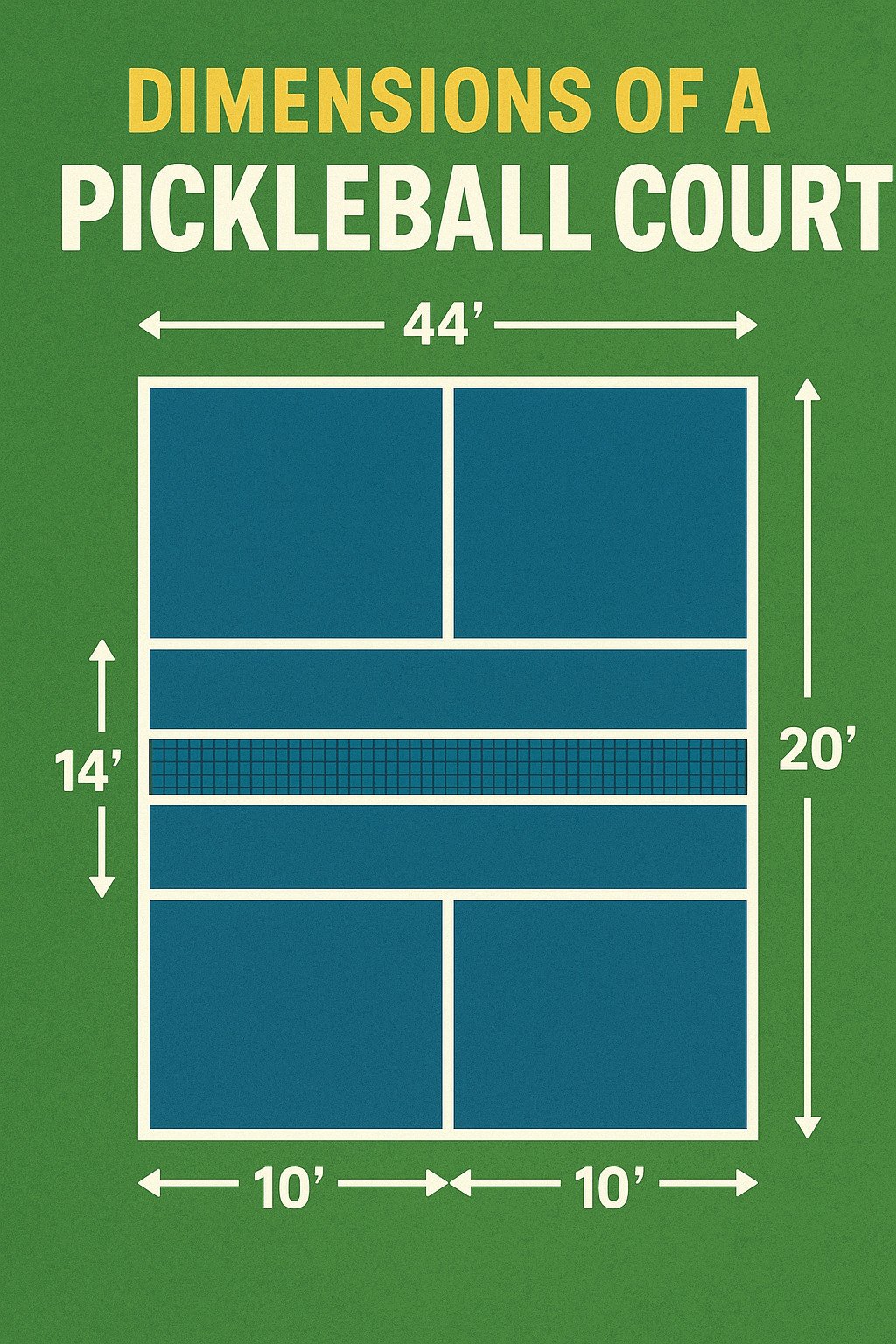
A regulation pickleball court measures 20 feet wide by 44 feet long.
If you have asked what size is a pickle ball court, you are in the right place. I build, mark, and play on these courts often, so I know the little details that matter. In this guide, I break down sizes, safety space, layout tips, and common mistakes. By the end, you will know exactly what size is a pickle ball court and how to set one up right.
What size is a pickle ball court? Dimensions that never change
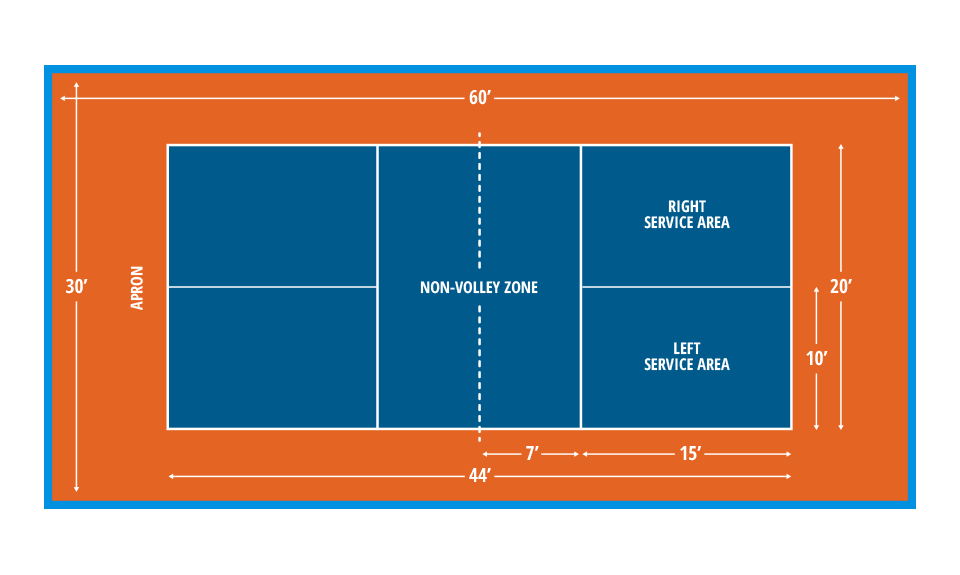
A regulation playing area is 20 feet by 44 feet. That size is the same for singles and doubles. The non-volley zone, often called the kitchen, is 7 feet deep on each side of the net.
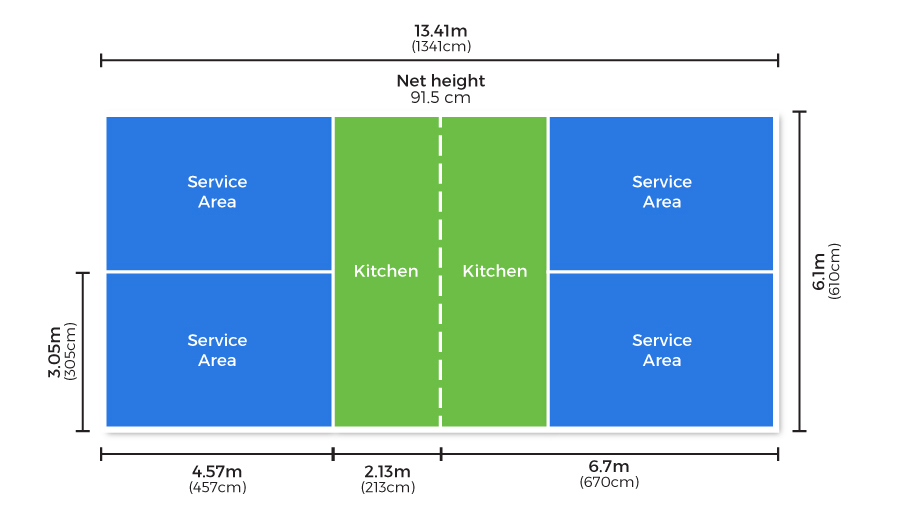
The net is 36 inches high at the sidelines and 34 inches high at the center. Court lines are 2 inches wide and are part of the court. If you are wondering what size is a pickle ball court in meters, it is 6.10 meters by 13.41 meters.
If you search what size is a pickle ball court, this 20 by 44 rule is the key. It matches the playing dimensions of a badminton doubles court. That is why many gyms convert badminton courts for pickleball with ease.
The court lines and zones explained
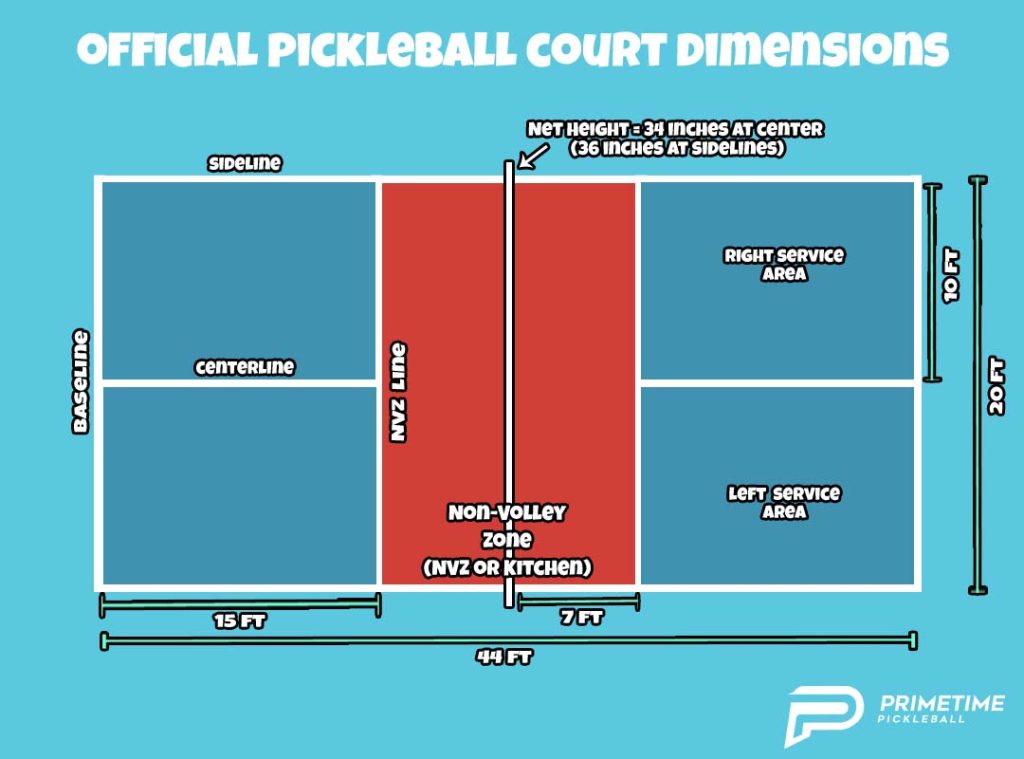
Here is how the 20 by 44 area breaks down in simple terms:
- Baselines are the lines at the back of each side of the court. They are 20 feet wide.
- Sidelines run the length of the court. They are 44 feet long.
- The non-volley zone line is 7 feet from the net on each side. You cannot volley while touching this zone.
- The centerline splits each side into right and left service boxes. Each service box is 10 feet wide by 15 feet long.
- The service area runs from the non-volley zone line to the baseline. That distance is 15 feet.
When people ask what size is a pickle ball court, they often mean the playable space inside the lines. But these zones shape how the game flows. Clean lines and correct spacing keep serves fair and rallies fun.

Space beyond the lines: total play area and safe clearances
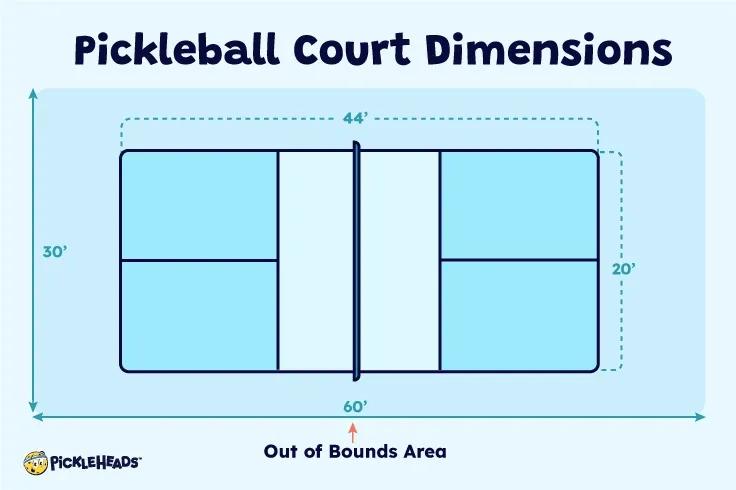
The 20 by 44 area is only the start. You need space around it so players can move. Here is the trusted guidance I use on builds:
- Minimum total play area: 30 feet by 60 feet
- Preferred total play area: 34 feet by 64 feet for events or busy clubs
- Back run-off: 8 to 10 feet behind each baseline
- Side run-off: 6 to 8 feet beyond each sideline
If you are mapping your yard and asking what size is a pickle ball court, plan for the total area, not just the lines. The extra space reduces collisions, keeps swings free, and protects ankles.
You can fit two to four courts on one tennis court. Four courts can fit in a two-by-two grid. It is tight but common in parks. For clubs, I like small shared aisles to boost safety.
Building or marking your own court
You now know what size is a pickle ball court. Here is a simple plan to mark one fast:
- Measure and mark the 20 by 44 rectangle with chalk or painter’s tape.
- Snap string lines for straight edges and a square layout. Use the 3-4-5 triangle trick to set right angles.
- Mark the net line at center. Install a portable net at 34 inches in the middle and 36 inches at the posts.
- From the net, measure 7 feet on both sides. Tape the non-volley zone lines.
- From the non-volley zone line to the baseline is 15 feet. Mark that. Add the centerline to split service boxes.
- Make lines 2 inches wide. Use tape for a temp setup or paint for a long-term court.
My tip from many driveway builds: tape first and play a few games. This reveals any crooked lines or tight spaces. Adjust, then paint. If a friend asks what size is a pickle ball court, show them your taped mock-up before you commit.
Orientation, surfaces, and materials that make a court play great
Court sizes are fixed, but surface and layout shape how it feels:
- Orientation: North–south reduces sun glare at most times of day.
- Surfaces: Asphalt and concrete are common. Cushioned acrylic coatings lower joint stress and add grip.
- Color: Light lines on darker courts help with visibility. Standard is white lines on green or blue.
- Nets and posts: Choose a portable net system rated for regulation height and tension.
- Drainage: A slight slope helps water run off. Puddles cause slick spots and ankle rolls.
When clients ask what size is a pickle ball court, I also ask where water flows and where the sun sits. Great sizing plus smart orientation creates fair play in all light.

Common sizing mistakes and pro tips
Even when people know what size is a pickle ball court, they slip on details. Avoid these common mistakes:
- Forgetting run-off space. The court fits, but swings feel cramped. Plan the 30 by 60 minimum.
- Wrong net height. Measure 34 inches at center, not at the posts.
- Skipping the 7-foot non-volley zone. A short kitchen breaks the game.
- Thin or uneven lines. Keep lines at 2 inches and edges straight.
- Poor footing. Smooth the surface and remove bumps before painting.
Pro tips from the field:
- Use two tape colors. One for layout, one for final lines. It speeds corrections.
- Double-check diagonal distances. Corner-to-corner should match on both diagonals if the court is square.
- If wind is strong, place the court so prevailing wind blows along the net, not across it.
- For shared spaces, roll-up nets and removable corner anchors keep areas multi-use.
You can answer what size is a pickle ball court in one line. But the best courts feel bigger because they are safe, bright, and square.
Frequently Asked Questions of what size is a pickle ball court
Is a pickleball court the same size as a badminton doubles court?
Yes. Both measure 20 feet by 44 feet. Many gyms reuse badminton courts for pickleball lines.
How much space do I need in my backyard for one court?
Aim for at least 30 feet by 60 feet. The extra space around the 20 by 44 area keeps play safe.
Can I fit four pickleball courts on one tennis court?
Yes. A tennis court is about 60 by 120 feet, so four 30 by 60 footprints can fit. Allow small aisles if possible for safety.
What is the height of a pickleball net?
It is 36 inches at the sidelines and 34 inches at the center. Use a center strap or a quick measurement each session.
Does the court size change for singles and doubles?
No. The court stays 20 by 44 for both. Only your court coverage and strategy change.
What are the dimensions of the non-volley zone?
It is 7 feet from the net on each side. You cannot volley while touching that zone or its line.
What are the line widths on a regulation court?
All lines are 2 inches wide. Lines count as in during play.
Conclusion
You now have the full picture of what size is a pickle ball court and how to build one that plays right. The core size is simple at 20 by 44 feet, but the magic comes from safe run-off, clean lines, and a true net height.
If you are planning a home court, start with chalk and a tape measure. Play a test game, tweak the lines, then set them for good. Ready for more tips like this? Subscribe for updates, ask a question in the comments, or share how your first layout went.