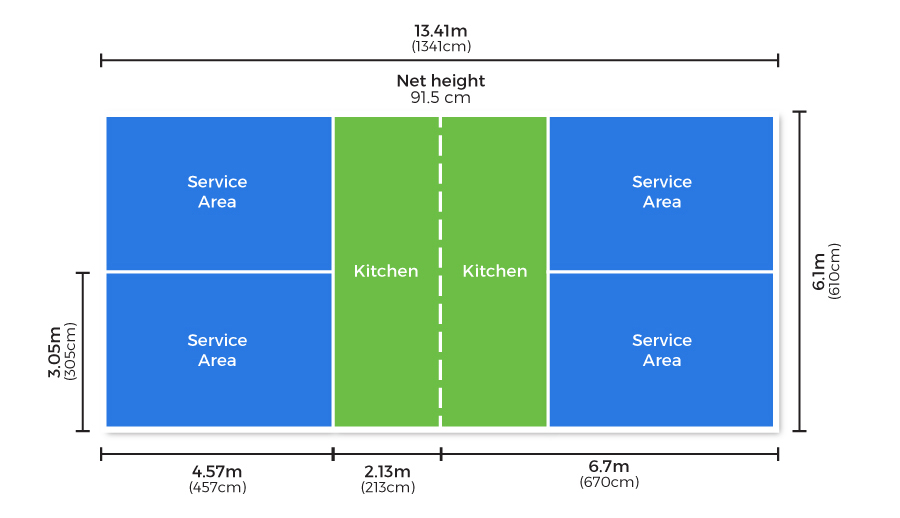
A standard pickleball court is 20 feet wide by 44 feet long.
If you want crisp rallies and fewer foot faults, you need the right pickleball court size. I work with players, builders, and parks teams to lay out courts that feel fair and safe. This guide breaks down the exact dimensions, why they matter, and how to get them right at home or at a club.
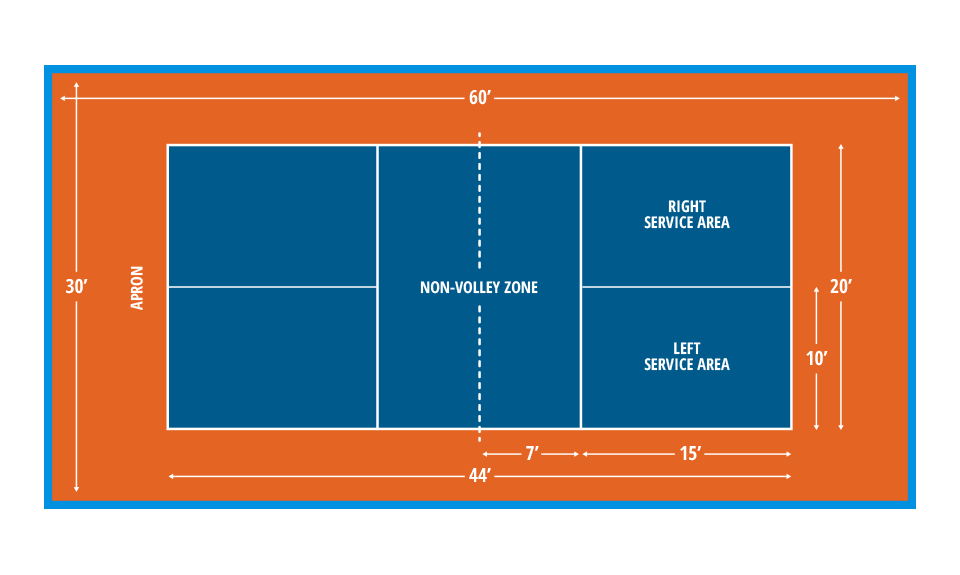
Official pickleball court size and lines
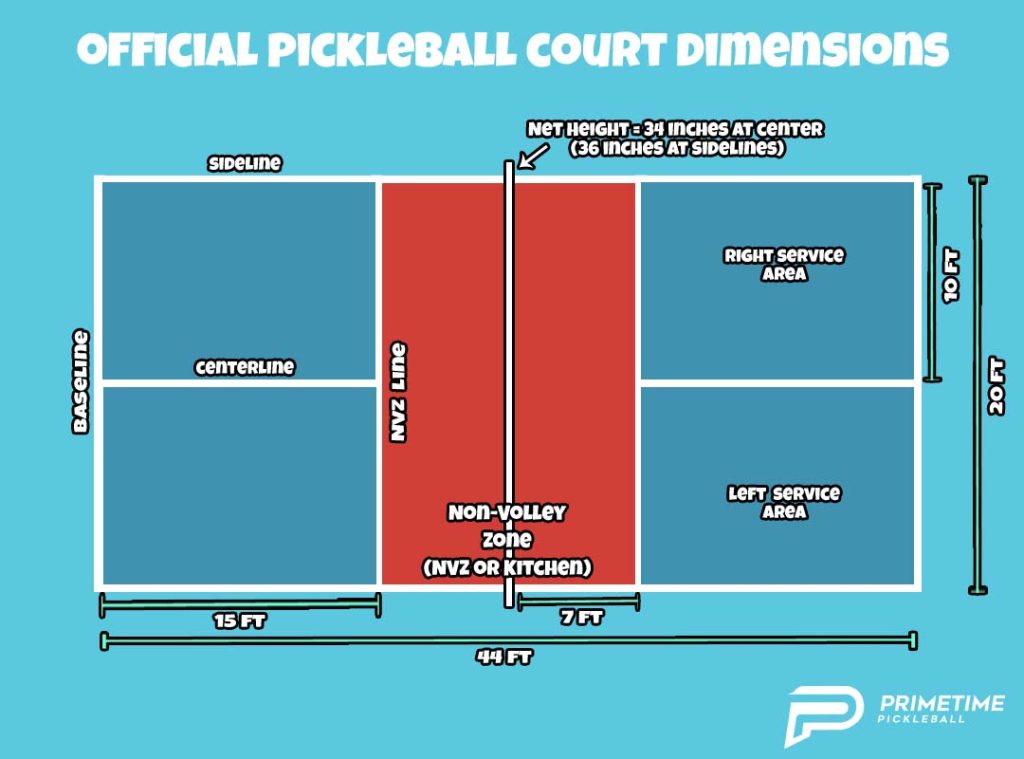
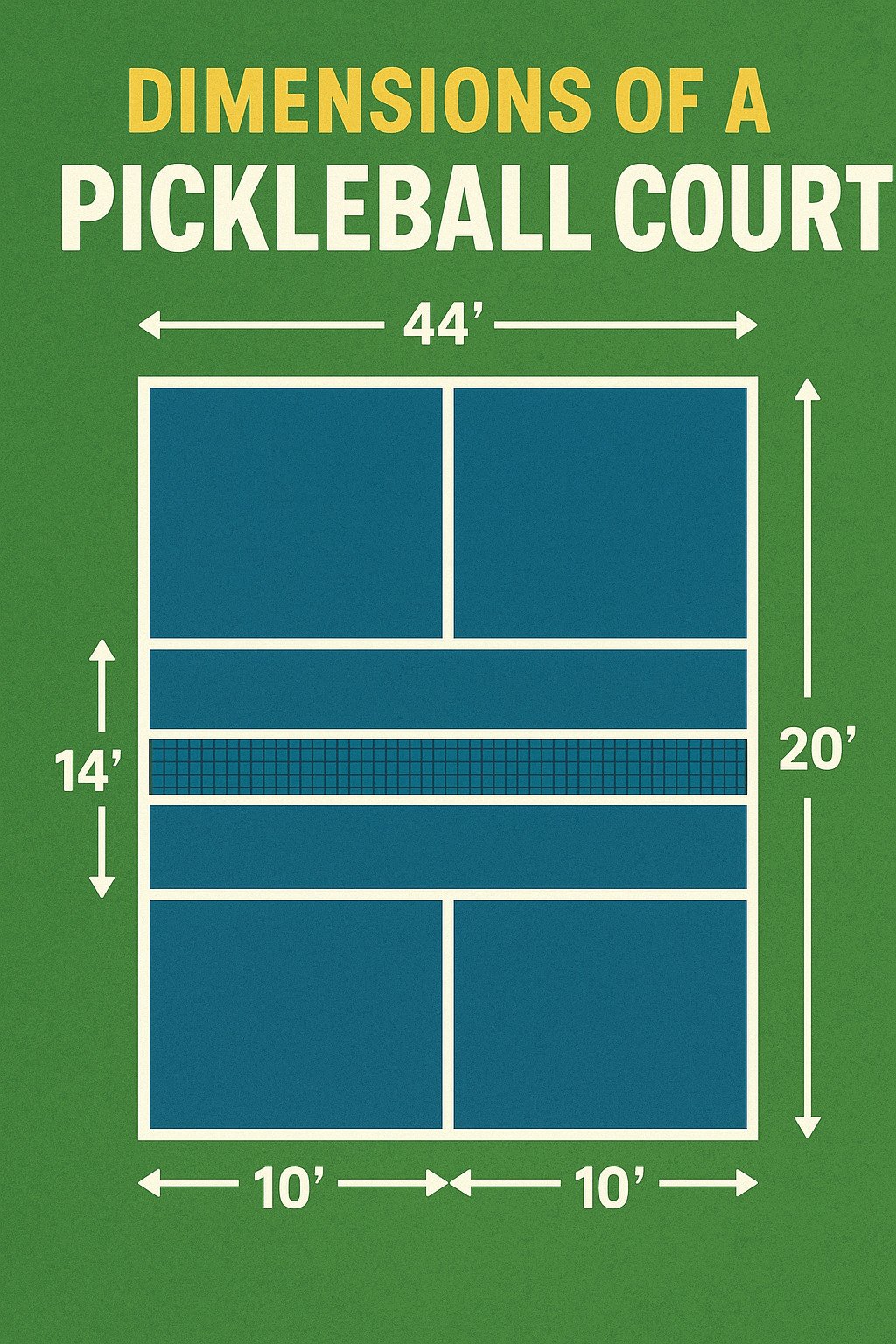
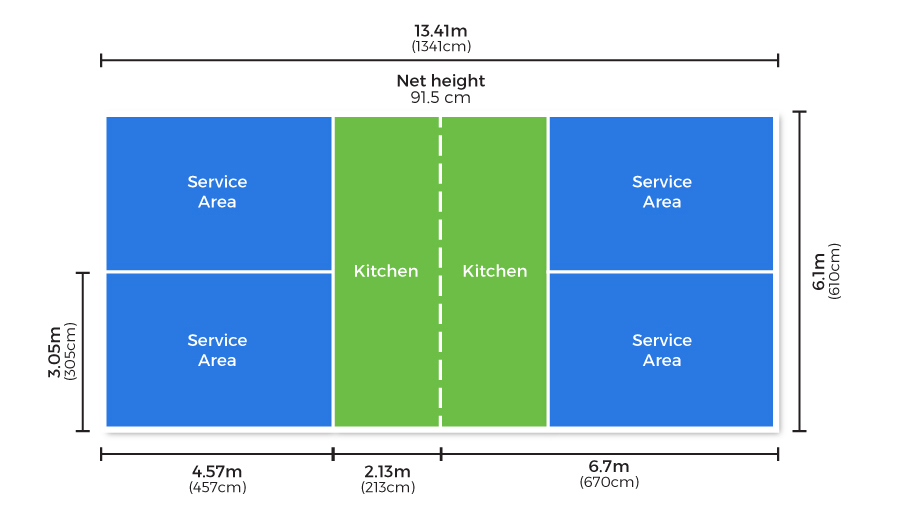
The official pickleball court size is 20 feet by 44 feet for singles and doubles. All lines are 2 inches wide and count as in. The court is split into two equal halves, each 20 by 22 feet.
The non-volley zone runs 7 feet from the net on both sides. That leaves a 15-foot service area on each side, split into left and right service courts. The centerline divides those service courts into two 10 by 15 foot boxes.
Key markings for a correct pickleball court size:
- Baselines and sidelines define the 20 by 44 play area.
- The non-volley line is part of the kitchen.
- The centerline starts at the non-volley line and runs to the baseline.
Total space you need around the court
Court dimensions are not the whole story. You also need safe run-off space. The minimum total play area is 30 by 60 feet. The preferred size is 34 by 64 feet for events.
Why this buffer matters for pickleball court size:
- It reduces trips and wall strikes.
- It gives room to chase lobs.
- It helps when several courts sit side by side.
Indoors, a clear ceiling height of 20 feet feels safe. For events, 26 to 30 feet is better.

The non-volley zone (kitchen) explained
The kitchen is simple. It is a 7-foot zone on each side of the net. You cannot volley while any part of you touches it. The line is part of the zone.
My tip from many line clinics: measure the kitchen first when setting your pickleball court size. If the kitchen is off, the whole court feels wrong. Use two tape measures and mark each 7-foot point from the net, then snap a chalk line.
Net height, posts, and equipment
The net spans 20 feet across the court. Net height is 36 inches at the sidelines and 34 inches at the center. Most portable nets are about 22 feet long end to end, so the mesh can sag to 34 inches in the middle.
What to check to protect your pickleball court size accuracy:
- Use a center strap or a simple tape to confirm 34 inches.
- Keep posts just outside the sidelines to avoid contact.
- Tension the top cord so the mesh is smooth but not warped.

Indoor vs outdoor layouts and orientation
Outdoors, aim for a north–south orientation. That reduces sun glare during morning and evening play. Indoors, avoid lights straight over the baseline if you can.
More setup tips that affect your pickleball court size experience:
- Slope outdoor courts at about 1% for drainage.
- Keep fences or walls at least 5 feet from the sidelines.
- Windscreens help with ball visibility and wind gusts.
Building or marking a court step by step
You can build a permanent court or set up a clean temp layout. I have done both in gyms and driveways. Here is a fast, tested plan for an accurate pickleball court size.
Layout steps:
- Mark the 44-foot baseline distance with a tape and chalk.
- Square the 20-foot sidelines using a 3-4-5 triangle or a laser square.
- Snap lines for the perimeter. Confirm 20 by 44 on the outside edges.
- Find the net line at the center and add the non-volley lines 7 feet away.
- Add the centerline from the non-volley line to the baseline.
- Paint or tape 2-inch wide lines. Use bright white for contrast.
If you are taping a gym floor, use painter’s tape that will not leave residue. For asphalt, use striping paint made for sport courts.

Converting a tennis court to pickleball
A standard 60 by 120 foot tennis court can fit two to four pickleball courts. Many parks use four, arranged in a quad. Each court needs at least a 30 by 60 footprint. The best feel is the 34 by 64 layout for each.
How to keep pickleball court size correct on a tennis surface:
- Use the tennis net only for two courts running side by side. Do not rely on it for height.
- Add portable nets at 34/36 inches.
- Color-code lines to avoid confusion. Pickleball lines should be the most visible.

Common mistakes with pickleball court size
I see the same errors again and again. They make play messy and can cause injuries.
Mistakes to avoid:
- Too little run-off space. Use at least 30 by 60 total space.
- Wrong net height. Check 34 inches at center every time.
- Kitchen measured from the wrong edge. Measure from the net, and remember the line is part of the zone.
- Lines wider than 2 inches. Wide lines change angles and serve targets.
- Using duct tape on floors. It leaves residue and lifts finish.
These small fixes keep your pickleball court size true and friendly to players.
Surface, colors, and lighting that fit the size
Surface matters as much as size. Post-tension concrete or asphalt with acrylic coating gives a smooth, grippy feel. Textured acrylic systems reduce slips and help the ball bounce true.
Best practices that support a reliable pickleball court size:
- Use medium to dark colors inside the court and lighter boundaries.
- Aim for 30–50 footcandles of even light for clubs and tournaments.
- Choose 4000–5000K LED lights for a clean, natural look.
Safety, accessibility, and local rules
Good courts welcome everyone. Make sure gates are wide and flush with the surface. Keep benches and gear outside the run-off.
Safety checks that relate to pickleball court size:
- No raised edges or trip lips at line tape.
- Padding on posts when space is tight.
- Clear local permits for new builds, fences, and lights.
When in doubt, follow current USA rules for lines and layout. Keep a printed copy on site. It saves time during disputes and protects your investment in a proper pickleball court size.
Frequently Asked Questions of pickleball court size
What are the official pickleball court dimensions?
A pickleball court is 20 feet wide by 44 feet long. This size is the same for singles and doubles, and all lines are 2 inches wide.
How big should the total play area be including run-off?
The minimum total area is 30 by 60 feet. The preferred size is 34 by 64 feet for better safety and play.
How high is the pickleball net supposed to be?
The net is 36 inches high at the sidelines and 34 inches at the center. Check the center height with a tape or strap.
How far is the non-volley zone from the net?
The non-volley zone, or kitchen, extends 7 feet from the net on each side. The non-volley line is part of the zone.
Can I fit pickleball courts on a tennis court?
Yes. A 60 by 120 foot tennis court can fit two to four pickleball courts. Use clear lines and portable nets for accuracy.
Are the lines included in the court measurements?
Yes. Lines are part of the court. The pickleball court size of 20 by 44 includes the 2-inch lines.
What is the recommended ceiling height for indoor courts?
Aim for 20 feet for casual play. For events or lobs, 26 to 30 feet feels better.
Conclusion
A correct pickleball court size makes every rally cleaner and safer. Use the 20 by 44 foot layout, add the kitchen at 7 feet, and protect players with a 30 by 60 minimum footprint. If you can, go to 34 by 64 for roomy scuffles and better lobs.
Measure twice, paint once, and keep a net gauge in your bag. Ready to build or mark your court? Start with a chalk box and a long tape, then share your setup questions or wins in the comments.