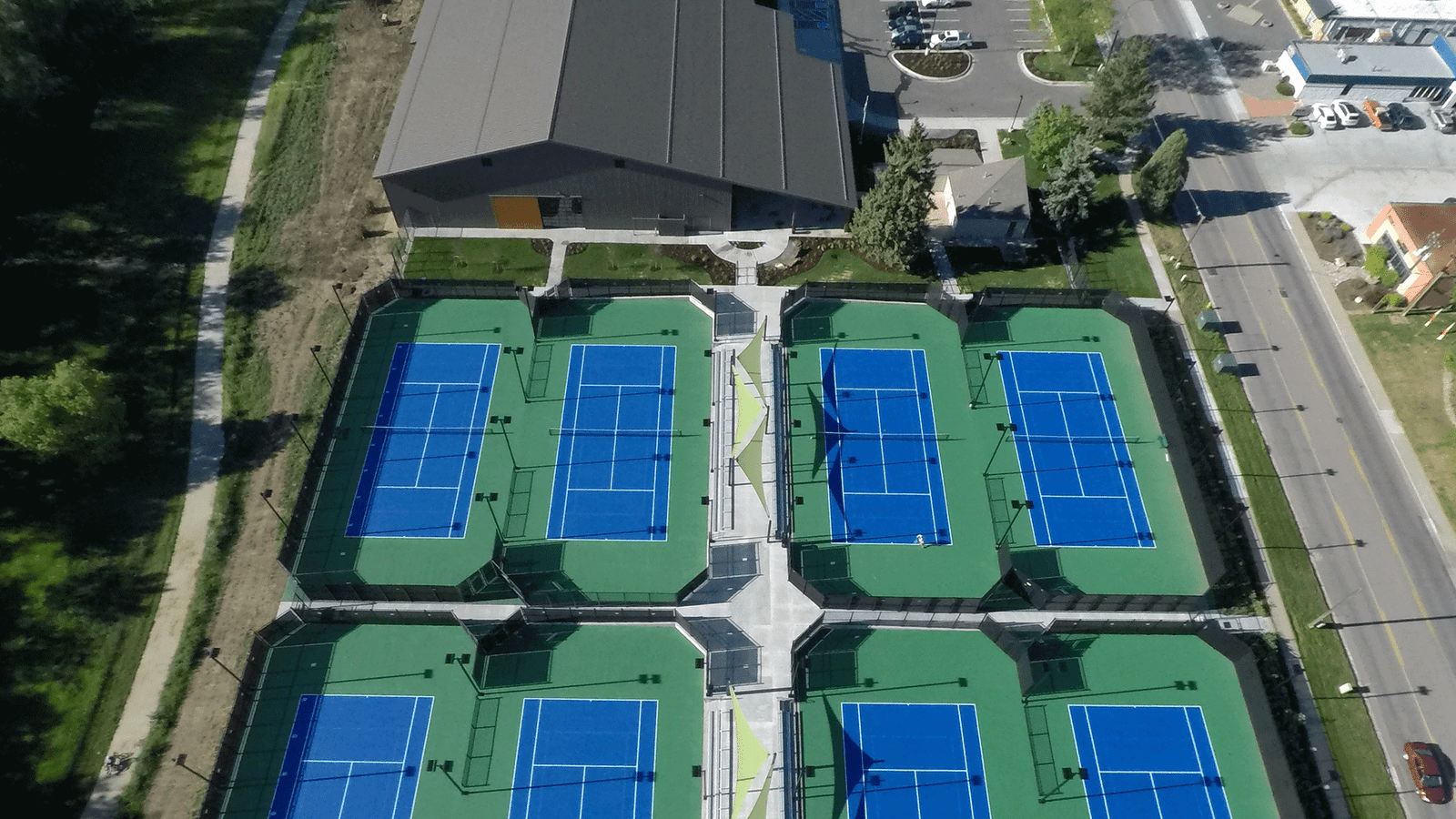
Standard court is 20×44 ft; California corners and sides adjust runoff only.
If you want a clean, safe build that fits tight spaces, you need more than a tape measure. In this guide, I break down pickleball court dimensions with california corners and sides in simple terms. I cover exact sizes, safe runoffs, and how the corner and side tweaks work without touching the play lines. I have laid out and painted many courts, and I will share what saved money, time, and headaches.

Official Pickleball Court Dimensions At A Glance
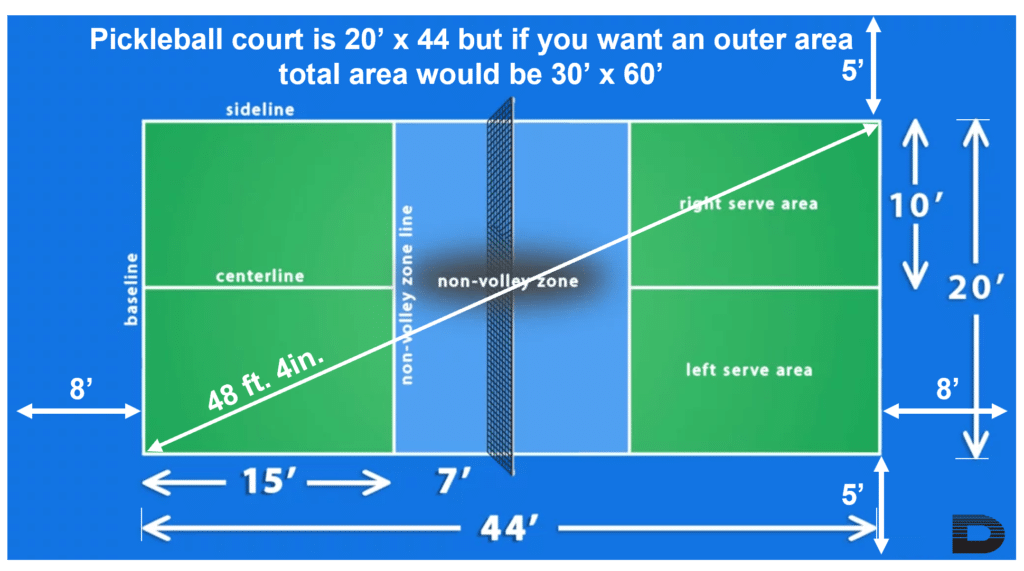
A regulation pickleball court is 20 feet wide by 44 feet long. This is the same for singles and doubles. The non-volley zone, also called the kitchen, is 7 feet deep on each side of the net.
The net is 36 inches high at the sidelines and 34 inches at the center. All court lines are 2 inches wide. Lines include sidelines, baselines, non-volley lines, centerlines, and service lines.
Service boxes are formed by the non-volley line, the baseline, and the centerline. Each service box is 10 feet wide by 15 feet deep. Posts sit outside the sidelines, and the net spans the full 20 feet.
These play sizes are set by the official rulebook. They do not change with California corners or California sides. When people ask about pickleball court dimensions with california corners and sides, remember the 20×44 play box never moves.
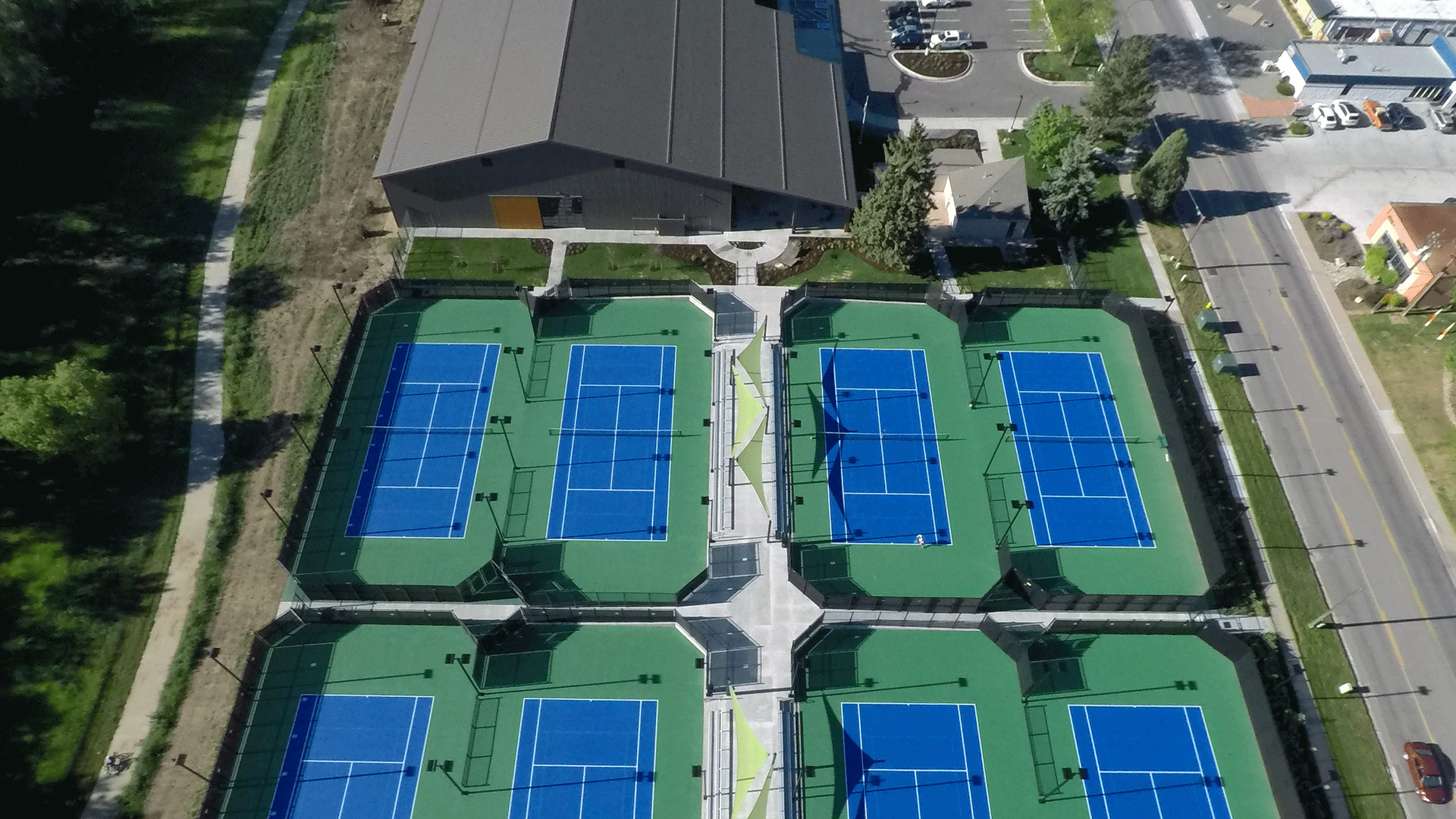
What Are California Corners and California Sides?
California corners are trimmed or angled outer corners of the court footprint. They protect the play space while saving room and fence material. You can chamfer the slab or adjust the fence line to remove dead zones where players never step.
California sides are side fence alignments that flare or angle to fit tighter sites or to keep more room where players need it most. These sides can widen near the baselines and draw in near the net area. The goal is to boost safety and flow without changing the play lines.
In short, pickleball court dimensions with california corners and sides keep the 20×44 area intact. You only shape the space outside the lines. This helps on small lots and when you build many courts in one block.
Space Planning: Overall Footprint With California Corners
Minimum overall space for one court is 30 by 60 feet. That gives about 5 feet of side clearance and 8 feet behind each baseline. The preferred size is 34 by 64 feet, which gives 7 feet on the sides and 10 feet behind the baselines.
California corners let you clip the outer corners of the 30×60 or 34×64 area. You keep the long run paths behind the baselines and the key side lanes by the kitchen. The trimmed corners save concrete, asphalt, or fence panels.
For multi-court sites, plan at least 8 feet between side fences or center lines when courts sit side by side. Ten feet is better for adult play. If you use California sides, you can angle fences to open these shared lanes where traffic is heavy.
If you plan pickleball court dimensions with california corners and sides, think safety first. Keep clear emergency paths. Avoid sharp fence returns near the baselines. Use smooth radii or 45-degree cuts that guide players, not trap them.

Step-by-Step Layout Guide
Use a long tape, string lines, stakes, a carpenter’s square, and marking paint. A laser level helps, but you can do it with strings and good math.
- Square the 20×44 play rectangle first. Check corner diagonals. They must match.
- Snap all lines. Lay out the non-volley zone at 7 feet from the net line. Mark centerlines and service boxes.
- Place net posts outside the sidelines. Verify 34 inches at center, 36 inches at sidelines when tensioned.
- Mark the overall footprint next. Draw the 30×60 or 34×64 outline around the play box.
- Add California corners. Choose a radius or a 45-degree chamfer. Keep at least the minimum safety clearances in the main lanes.
- If using California sides, align fence runs to widen near baselines and narrow near the net. Maintain at least the minimum side clearance along the play box.
I always dry-walk the layout. I sprint a few points in court shoes. When planning pickleball court dimensions with california corners and sides, that walk shows where a corner might clip a step or where a side needs one more foot.
Construction Choices: Surface, Fencing, Lighting
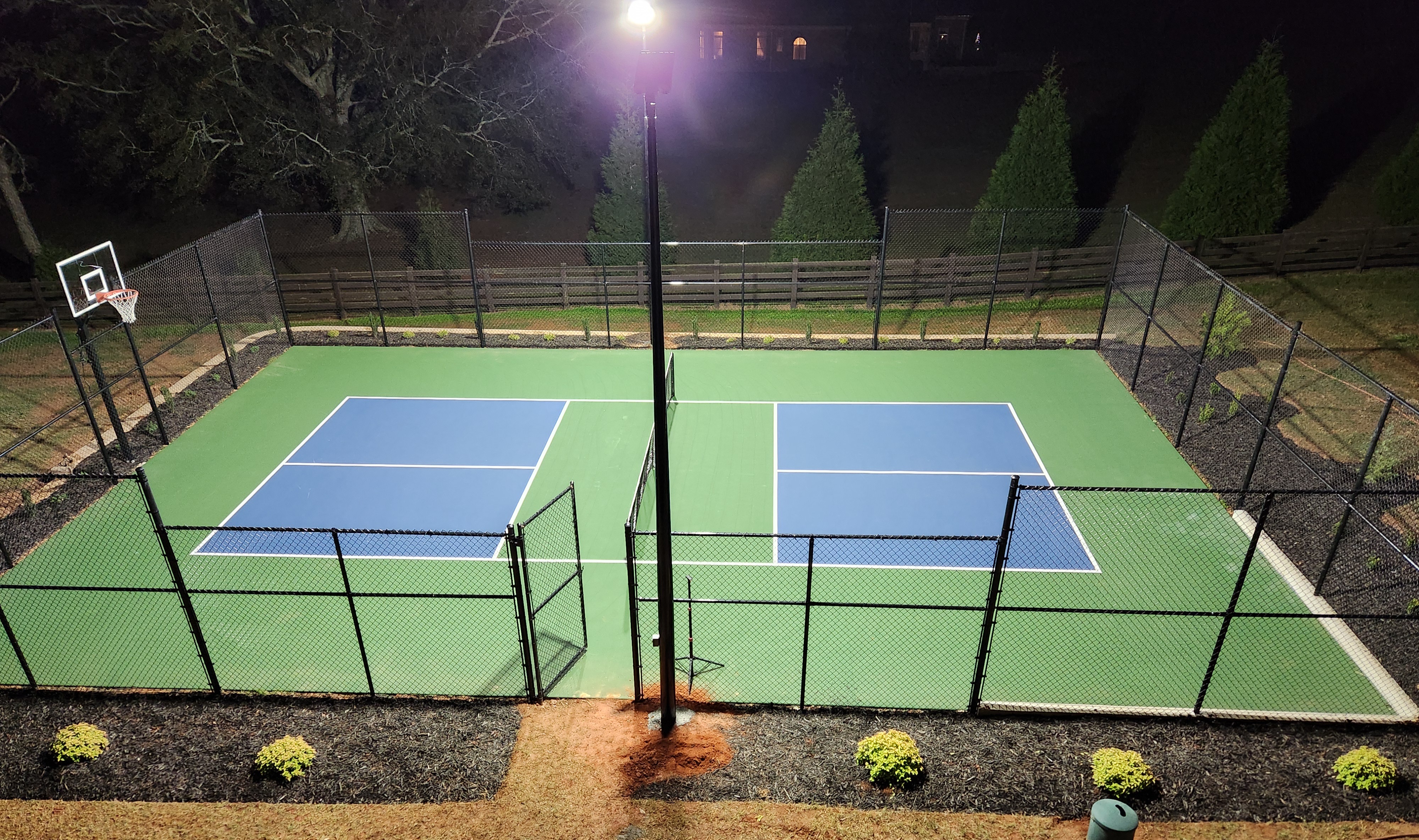
Most outdoor builds use post-tension concrete or asphalt with acrylic color coats. Concrete gives better crack control. Asphalt is budget friendly. Use color coats with some texture for grip and ball bounce.
Fence height is often 10 feet. You can use 8 feet in calm areas or indoors. Add mid-rails and bottom tension wire. Use gates at the ends, not mid-sides, so play lanes stay clear. Windscreens help with visibility and wind, but add only where needed.
LED lighting should give 30 to 50 foot-candles at the court surface. Poles at about 20 feet tall work well. Use full-cutoff fixtures to reduce glare. If you angle California sides, place poles where they do not cast harsh shadows into the kitchen.
Paint lines last, after the surface cures. Keep line width to 2 inches. Use high-contrast color for lines and a mid-tone color for the non-volley zone. This improves depth cues and reduces foot faults.
Budget, Timeline, and Maintenance
A single outdoor court with standard fencing often runs in the mid five figures. Post-tension concrete costs more up front but saves on cracks later. California corners and sides can trim fence and slab costs if they reduce total area.
Typical timelines range from 3 to 8 weeks, depending on permits and weather. Surface coats need dry days and proper cure windows. Always plan extra time for inspections and punch list fixes.
Sweep and blow the court weekly. Rinse as needed. Fix hairline cracks early. Tighten net hardware twice a year. When you set pickleball court dimensions with california corners and sides, also plan a simple care schedule. That plan protects your investment.
Pro Tips, Mistakes To Avoid, and Real-World Examples
From my builds, the biggest win is protecting the runouts. Do not over-trim a baseline corner to save a few square feet. Players need that step when they chase a lob.
Common mistakes include crooked centerlines, low net centers, and tight side gates that catch paddles. Another miss is setting fences square while using California corners on the slab. Keep the design language consistent, or balls will find odd traps.
At a school project, we used pickleball court dimensions with california corners and sides to fit four courts where three were planned. We trimmed the outer corners, widened the shared side lanes, and kept 10 feet behind baselines. Play felt open, and balls stayed in. That small change made a big impact.
Frequently Asked Questions of pickleball court dimensions with california corners and sides
Do California corners change the 20×44 court size?
No. They only change the outer footprint or fencing. The 20×44 play area and all lines stay the same.
What is the minimum overall space for one court?
Aim for 30 by 60 feet. If you can, use 34 by 64 feet for better safety and comfort.
How far is the non-volley zone from the net?
Seven feet on each side of the net. The non-volley lines are part of the zone.
What net height should I use?
Set 36 inches at the sidelines and 34 inches at the center. Check height after full tension.
Are line widths always 2 inches?
Yes, lines should be 2 inches wide for standard play. Keep them crisp and high contrast for visibility.
Can I use California sides between adjacent courts?
Yes. Angle or flare side fences to open shared lanes. Keep at least 8 feet between courts, and 10 feet is better.
Will California corners save money?
They can reduce slab and fence footage. Savings depend on site shape and material prices.
Conclusion
You now have the full picture on pickleball court dimensions with california corners and sides. The play area is always 20 by 44 feet. California corners and sides reshape only the space around it to fit tight sites, improve flow, and lower cost.
Take your plan, walk the layout, and protect the runouts. Use the steps here to mark, build, and finish with confidence. Ready to go deeper? Subscribe for more court specs, tools, and step-by-step build guides, or drop your questions in the comments.