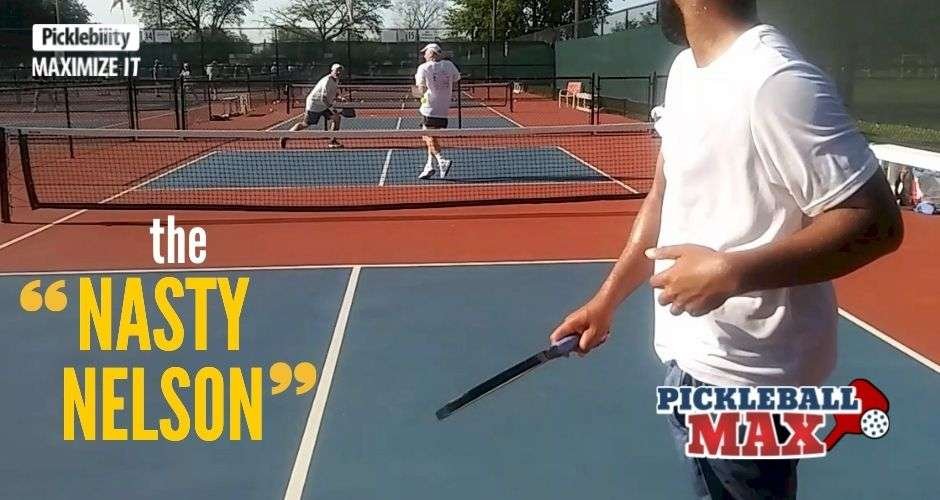
A Nasty Nelson is a serve that hits the non-receiving opponent for a point.
If you play doubles pickleball, you’ve heard the term nasty nelson. It is bold. It is legal. And it can flip a rally before it starts. I’ve coached, played, and tested this serve for years. In this guide, I break down what the nasty nelson is, when to use it, how to hit it, and how to defend it. You will leave with clear steps, real stories, and smart strategy you can use today.

What is a Nasty Nelson in Pickleball?
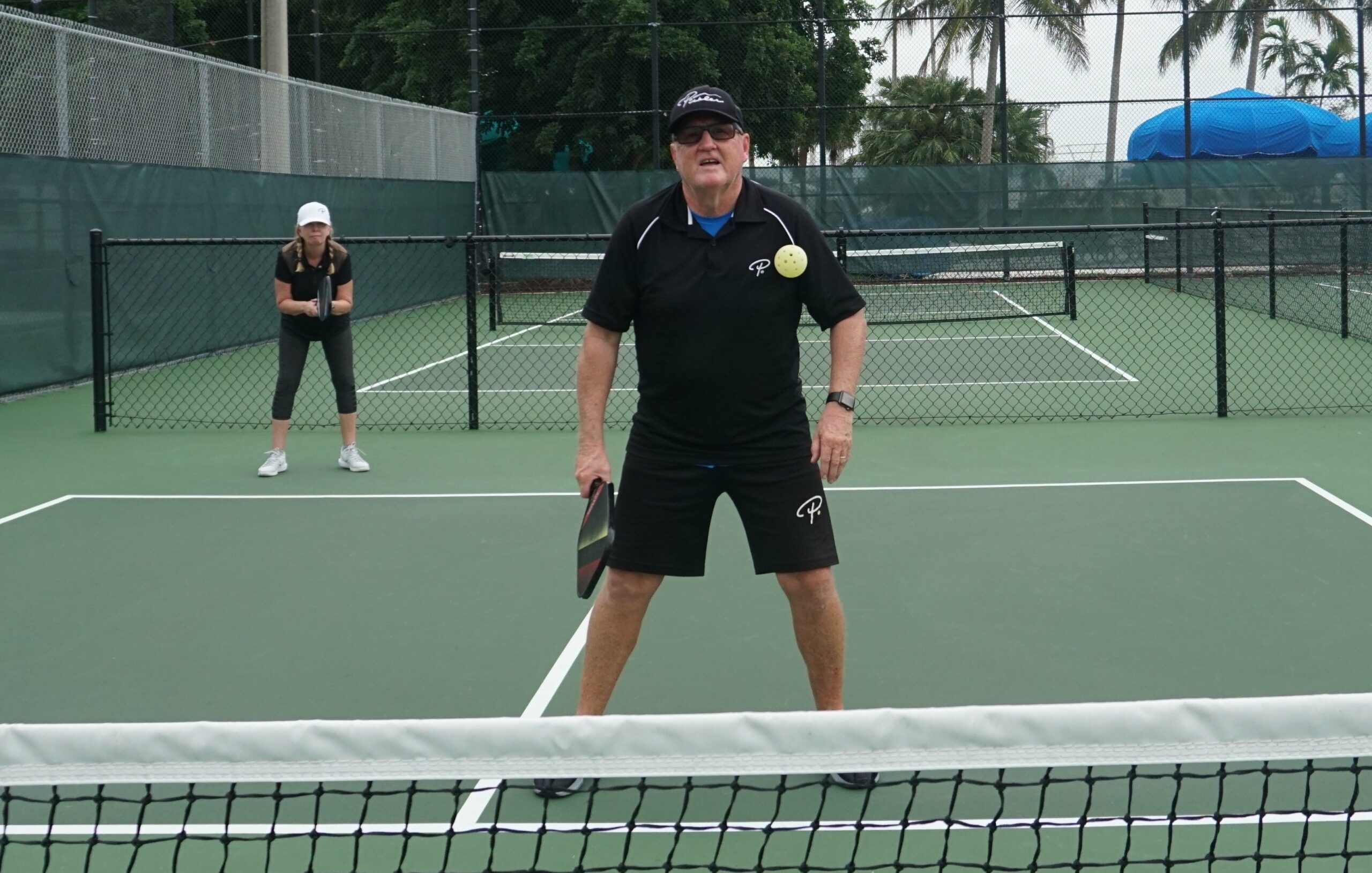
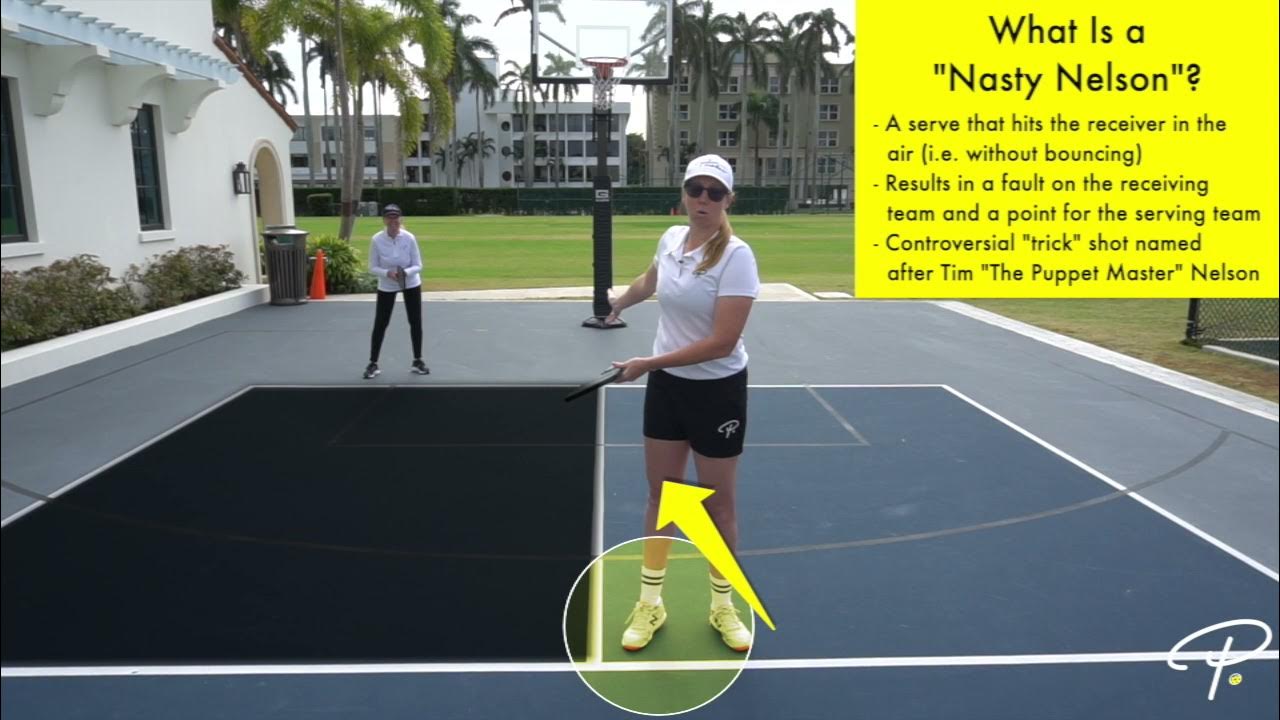
A nasty nelson is a serve aimed to hit the non-receiving partner before the ball bounces. If the ball hits that player or their gear, the serving team wins the point. It is cheeky, but it is legal under the official pickleball rules. The name nods to early pro player Tim Nelson, who made the tactic known on the tournament scene.
In real play, you see the nasty nelson when the non-receiving partner crowds the kitchen line. The server threads a low, flat ball near that player’s hip or paddle-side shoulder. If they flinch or drift into the path, you get a free point. Use the nasty nelson with care and control.
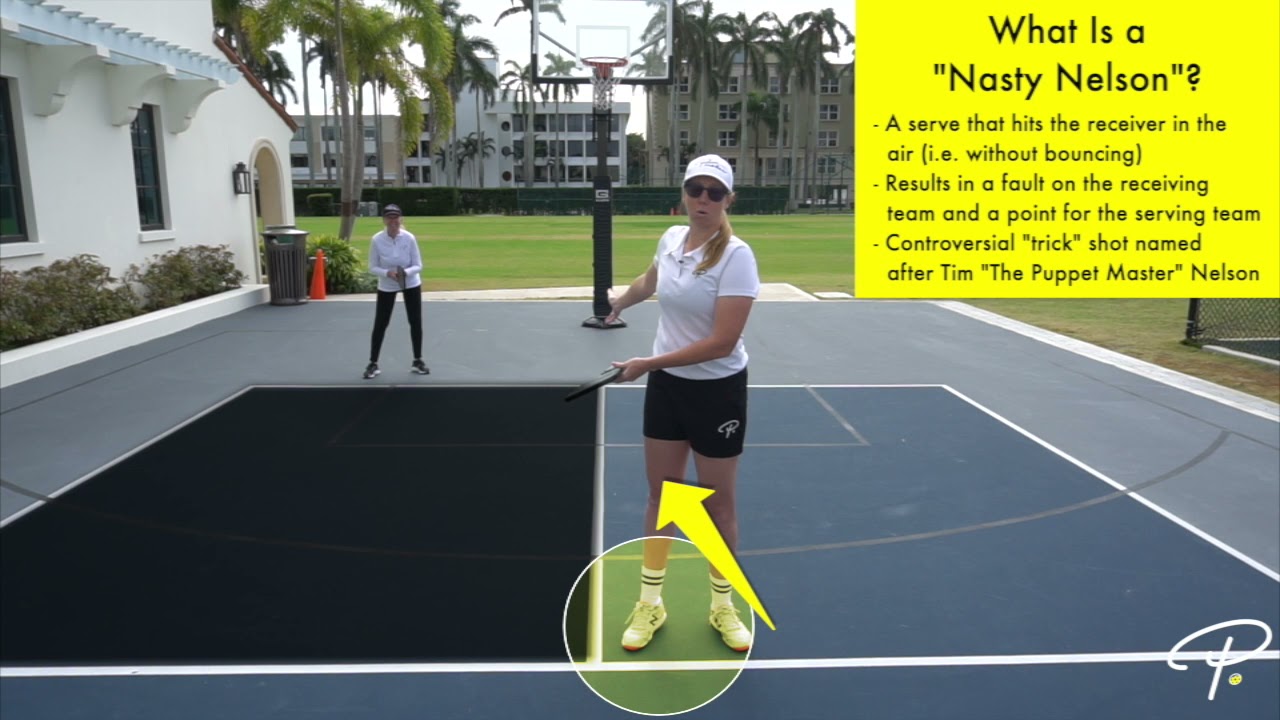
Is the Nasty Nelson legal? The rules that matter
Yes, the nasty nelson is legal. The serve can strike the non-receiving partner before bouncing, and that is a fault on the receiving team. The serving team wins the point. This holds even if the serve clips the net first and then hits the player, as long as the serve would have been in.
Key notes to keep it legal:
- The serve must be one continuous motion with a legal contact point.
- The ball must travel crosscourt and meet standard serve rules.
- If the serve misses and lands out, it is a fault on the server.
- If the ball first bounces in the correct service box and then hits a player, the receiving team still loses the rally.
Always check the latest official rulebook for updates. Local events may stress safety and sportsmanship.

When you should use a Nasty Nelson
The nasty nelson works best when your opponents crowd the kitchen line and stare at you, not the ball. It also works when the non-receiving partner leans into the centerline and blocks your lane. Use it to punish lazy positioning or to stop a team from poaching early.
Smart times to try it:
- The first serve of a game to set a tone.
- Against a team that refuses to back off the line.
- After you have shown a deep, safe serve many times.
- In windy conditions when a flat, fast ball will hold its line.
Avoid it if your serve is shaky. There is only one serve in pickleball. A risky miss can cost momentum.

How to hit a Nasty Nelson step by step
Use smooth form. Stay calm. Aim small. The nasty nelson is about precision, not power.
Step-by-step setup:
- Read the non-receiving partner. Note their distance from the kitchen line and the centerline.
- Pick a small target. Aim at the outside hip or forearm on their paddle side.
- Use a flat, low serve. Keep the trajectory waist high or lower as it crosses the net.
- Hide intent with your routine. Do not rush. Keep the same pre-serve rhythm.
- Commit to the line. A half-speed swing tends to drift wide.
Extra tips:
- Open your stance a touch to shape a direct path.
- Keep your head still through contact.
- Practice depth control so a last-second bail-out still lands in.
Source: insideden.com
Drills to build control and confidence
Reps make the nasty nelson safe and sharp. Add these to your weekly plan.
Target cone drill:
- Place a cone one foot inside the centerline on the non-receiving side.
- Serve 20 balls trying to pass within a paddle’s width of the cone.
Shadow lane drill:
- Put tape on the court to mark a narrow “nelson lane.”
- Serve 30 balls keeping flight inside the lane without touching tape.
Decision drill:
- Have a partner vary their stance at the kitchen line.
- Call “standard” or “nelson” after the toss to train quick choices.
Pressure set:
- Serve to a nasty nelson target only after you make three safe serves.
- This builds control under mini-pressure.
Source: youtube.com
How to defend against a Nasty Nelson
Great teams make the nasty nelson vanish by fixing their setup. If you hate getting tagged, adjust fast.
Simple, safe fixes:
- Take one full step back from the kitchen line until the serve crosses the net.
- Keep your paddle up in front of your chest with soft hands.
- Turn your body slightly sideways to reduce your “hit zone.”
- Give a clear lane to the legal service box. Do not block the center.
- Communicate. The receiver calls out server cues like stance and toss.
If you do get hit, shrug it off. Reset your spacing. Make the server pay on the next rally.

Common mistakes and etiquette tips
The nasty nelson walks a fine line between craft and bad form. Be sharp and be kind.
Avoid these mistakes:
- Aiming at the face. Keep it low and safe.
- Telegraphing intent with a big stare at the non-receiving partner.
- Trying it on every point. Overuse kills trust and reduces your serve variety.
- Forgetting wind and spin. A small drift can turn a great idea into a fault.
Etiquette tips:
- Use the nasty nelson to check poor positioning, not to humiliate.
- After a hit, offer a quick “All good?” and move on.
- In rec play, give a heads-up if someone is brand new.

Source: youtube.com
Advanced strategy, risk, and rewards
Think of the nasty nelson as a pressure test. It punishes tight lines and forces honest spacing. The reward is a free point and a mental edge. The risk is a fault that hands away serve or momentum.
Ways to raise the upside:
- Pair a nasty nelson with a deep crosscourt serve to keep rivals guessing.
- Use it once per game, then show the look again without pulling the trigger.
- Add slight sidespin. It keeps the ball on a rope and reduces float.
What I see across levels:
- At 3.0 to 3.5, a nasty nelson lands often because players crowd the line.
- At 4.0+, it becomes a setup tool. You show it to push opponents back, then feast on short returns.
Source: nasty-nelson.com
Personal lessons from the court
In one league match, I used a nasty nelson after two deep serves. Their non-receiving partner crept to the kitchen and leaned in. I hit a flat ball at their outside hip. Free point. For the next five points, both players stood a step back, and our third-shot drops felt easy.
What I learned:
- The best nasty nelson is the one you only need to show once.
- Aim small. Hip or forearm is safer and more reliable than center mass.
- Own the follow-up. Expect your next serve to draw a short return. Be ready to attack the third ball.
Gear and setup that help or hurt a Nasty Nelson
You do not need special gear to hit a nasty nelson. Still, small tweaks help.
Helpful choices:
- A paddle with a controlled face and medium grip size for steady aim.
- A lighter ball on cold days can sail. Aim lower to offset lift.
- Shoes with good grip for a steady base on the toss.
Court setup tips:
- Check sun and wind. Serve with the wind on your back for a truer line.
- Use the centerline as a visual rail. Keep the ball riding that rail.
Frequently Asked Questions of nasty nelson
Is the nasty nelson legal in pickleball?
Yes. If the serve hits the non-receiving partner before the bounce, the receiving team loses the rally. The serving team scores the point.
Can a nasty nelson hit the face or head?
It can, but it should not. Aim low at the hip or paddle side to keep play safe and respectful.
Does a net-cord nasty nelson still count?
Yes, if the serve would have been in and then hits the non-receiving partner, the serving team wins the point. Net-cords on serves are live.
How often should I use a nasty nelson?
Use it sparingly. Once per game is plenty for most players. The goal is to shape positioning, not to overplay a gimmick.
How do I avoid getting hit by a nasty nelson?
Stand a step off the kitchen line until the serve crosses, keep your paddle up, and leave a clear lane to the service box. Communicate early with your partner.
Conclusion
The nasty nelson is a sharp tool, not a blunt weapon. It is legal, useful, and best when used with care. Aim small, stay safe, and leverage it to fix bad spacing on the other side of the net.
Try one in your next match only after you warm up with steady, deep serves. Watch how your rivals shift. Then build a smarter serve plan around that reaction. Want more court-proven tips? Subscribe for weekly drills, strategies, and stories from real match play.