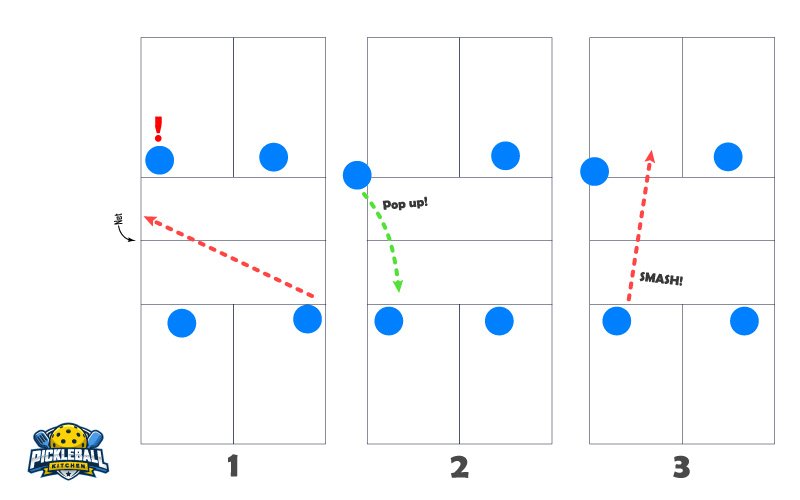
In pickleball, a dink is a soft, controlled shot that lands in the kitchen.
If you have ever typed what does dink mean in pickleball into a search box, you are in the right place. I coach new and mid-level players, and I have played hundreds of games where a simple dink changed the match. In this guide, I break down the meaning, the why, and the how, with real tips you can use today.
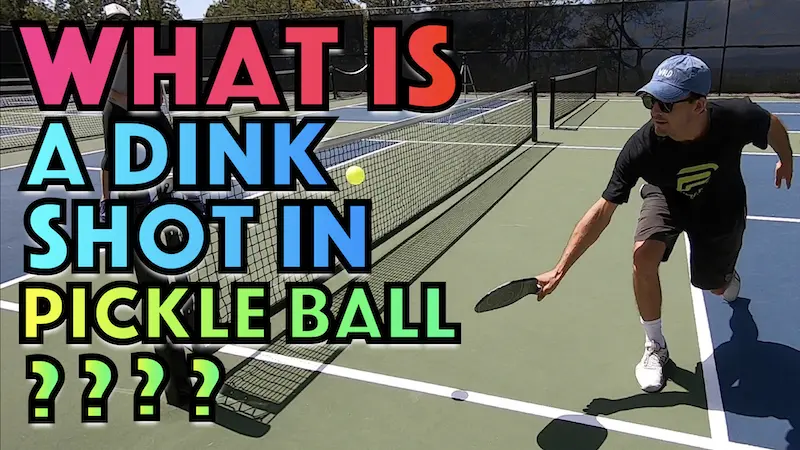
What Is a Dink in Pickleball?
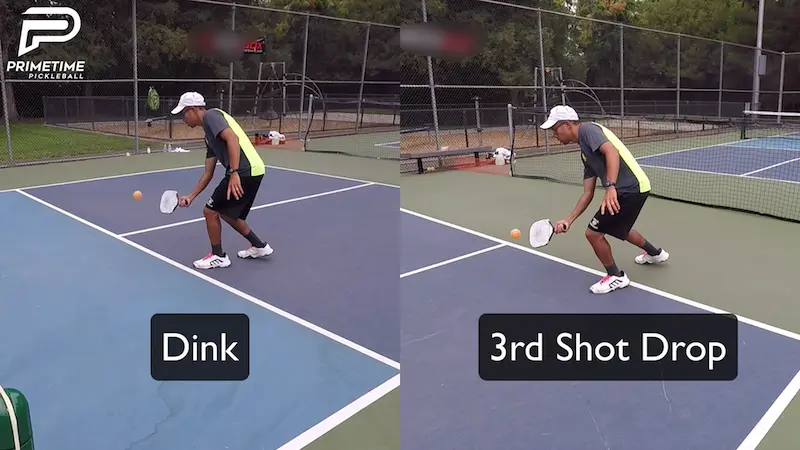
A dink is a gentle shot hit from near the non-volley zone line into the opponent’s kitchen. It travels low over the net. It lands short. It is hard to attack. That is why it is so powerful.
So, what does dink mean in pickleball? It is a control move. You slow the rally. You take speed away. You force errors. When people ask what does dink mean in pickleball, I tell them it is chess, not checkers. You set up the next shot.
Key traits of a good dink:
- Soft hands keep the ball low and slow.
- Arc clears the net by a few inches.
- Ball lands near the opponent’s feet in the kitchen.
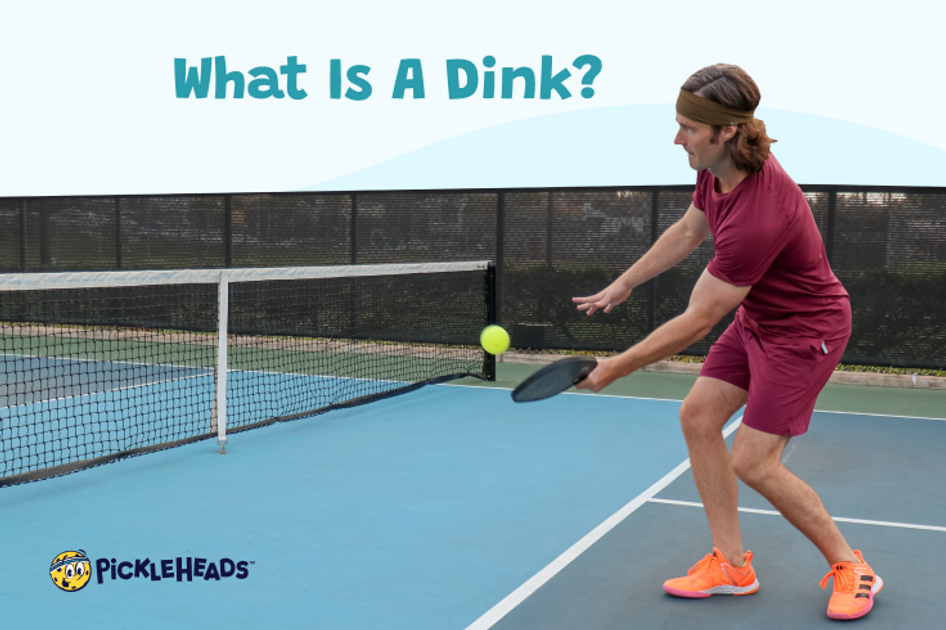
- Contact is in front of your body, not beside you.
When you master this, the question of what does dink mean in pickleball becomes muscle memory. It means you choose control over chaos.

Why the Dink Matters: Strategy and Benefits
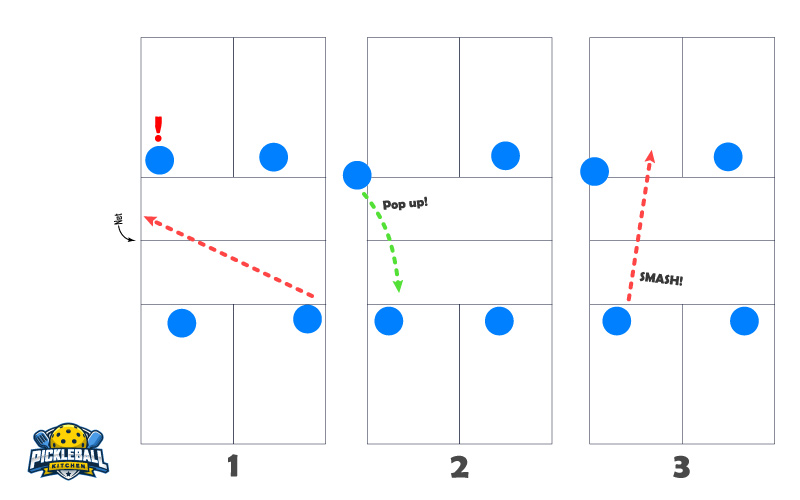
The dink is the heartbeat of high-level rallies. It lets you move an opponent out of position. It makes them hit up. Then you attack the next ball. If you have asked what does dink mean in pickleball in a tactical sense, it means you own the pace.
Benefits you will notice:
- You reduce your unforced errors.
- You force pop-ups for easy put-aways.
- You reset wild points and calm pressure.
- You win more points at the kitchen line.
At 4.0 and up, games are won at the kitchen. And if you still wonder what does dink mean in pickleball at those levels, it means control equals wins.
Mechanics: Grip, Contact, and Footwork
Use a light continental grip. Think of holding a hammer, but gentler. Keep your wrist quiet. Use your shoulder like a hinge. Let the paddle face be open a touch.
Core steps:
- Set your feet before you swing. Small steps beat big lunges.
- Contact the ball in front of your body.
- Push with your shoulder and a tiny bit of forearm.
- Keep the follow-through low and short.
- Watch the ball to the paddle face.
Personal tip: When I get tense, my dinks sail high. I breathe out as I hit. It keeps my hands soft. That simple breath solved my misses.
If the voice in your head asks what does dink mean in pickleball when it comes to form, it means soft hands, simple swing, and steady feet.
Kitchen and Rules You Must Know
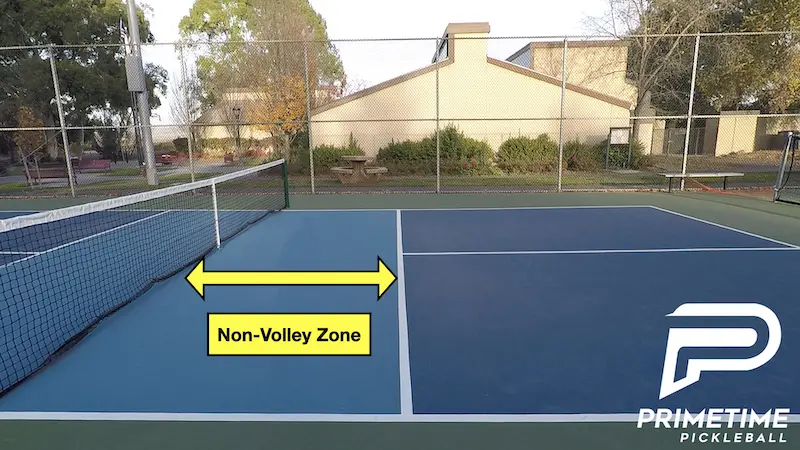
The non-volley zone is the kitchen. You cannot volley while standing in it or on its line. You can step in to hit a dink, since the ball bounces first. Then get back out fast. If you volley and your momentum carries you into the kitchen, that is a fault.
Key rule points backed by official guidelines:
- The line is part of the kitchen.
- You may enter the kitchen for any ball that bounces.
- You must reestablish outside before you volley again.
- Nothing on you or your paddle may touch the kitchen on a volley.
Many players who ask what does dink mean in pickleball also confuse it with a volley. A dink is a bounce shot. That is the difference that keeps you legal.
When to Dink vs Drive or Drop
Good players choose the right tool. Here is a simple guide.
Use a dink when:
- Both teams are at the kitchen and trading soft shots.
- Your opponent is off balance or stretched wide.
- You need to reset a fast ball to slow.
Use a drive when:
- The ball sits up high.
- You see a big gap or weak paddle position.
Use a third-shot drop when:
- You are at the baseline after the return.
- You want to join the kitchen without giving a high ball.
If you have asked what does dink mean in pickleball in real play, it means using a gentle shot to build the point, not to end it right away.
Drills to Master the Dink (Solo and Partner)
Practice turns a dink into a weapon. Keep it short and focused. Ten minutes a day is enough.
Solo drills:
- Wall dinks. Stand 7–10 feet from a wall. Aim low. Keep the ball under the waist.
- Box targets. Place four tape squares near the net. Drop feed and land in each box.
Partner drills:
- Crosscourt dink rally to 50 in a row.
- Down-the-line dinks, then switch sides.
- Speed to slow. One player speeds the ball up, the other resets with a dink.
Game-like drill:
- Dink to attack. After five clean dinks, the first pop-up must be sped up. Then reset and repeat.
If you think what does dink mean in pickleball for training, it means reps with intent. Quality beats power.

Common Mistakes and Fixes
I see the same errors often. They are easy to fix.
- Swing too big. Fix: Shorten the stroke. Use your shoulder as the engine.
- Contact too late. Fix: Move your feet sooner. Keep contact in front.
- Ball sits high. Fix: Close the paddle face a touch. Aim for the net tape.
- Feet in the kitchen on a volley. Fix: Call out “out” after you exit. Build the habit.
- Dinking to the strong side. Fix: Aim at the backhand hip or feet.
When players ask what does dink mean in pickleball and why it fails, it is often footwork or paddle angle, not talent.

Advanced Dinking: Spin, Angles, and Patterns
Once your base is solid, add layers.
Advanced tools:
- Crosscourt dink with heavy angle. Pull them off the court.
- Inside-out forehand dink. Aim across your body to change lanes.
- Topspin roll on a high bounce. Make the next ball kick up to you.
- Backspin stop dink. Take pace off and make it die near the net.
Patterns that work:
- Two to the backhand, one to the middle.
- Wide crosscourt, then sharp down-the-line.
- Middle, middle, then pull wide and attack the pop-up.
Doubles tip: Talk. Call “mine,” “yours,” and “middle.” If your team asks internally what does dink mean in pickleball for us, it means we share a plan and stick to it.

Gear and Court Conditions That Affect Your Dink
Small changes matter.
Paddle:
- A softer core helps touch.
- A textured face helps spin control.
- Thicker paddles add dwell time.
Ball:
- Indoor balls are softer and bounce higher.
- Outdoor balls are harder and faster.
Grip and feel:
- Overgrip can reduce tension in your hand.
- A lighter grip pressure equals better touch.
Conditions:
- Cold days make balls harder to lift over the net.
- Wind can push soft dinks wide. Aim more to the middle.
If you still wonder what does dink mean in pickleball on a windy day, it means safer targets and more net clearance.
Mindset and Match Play: Building Dink Confidence
Patience wins dink battles. Do not rush the finish. Wait for the ball that sits up. I learned this the hard way. I used to attack on the second dink and missed wide. Now I wait for two or three low shots in a row before I change speed. My error rate dropped fast.
Use these cues:
- Breathe out at contact.
- Count to three in a crosscourt rally before changing aim.
- Tell yourself, soft beats fast.
What does dink mean in pickleball for your mind? It means calm choices under heat.
Frequently Asked Questions of what does dink mean in pickleball
What does dink mean in pickleball in simple words?
It is a soft shot that lands in the kitchen after a bounce. It stays low and makes attack shots hard.
Is a dink the same as a drop?
No. A drop is hit from deeper in the court to get to the kitchen. A dink is played at or near the kitchen line during a rally.
Why do advanced players dink so much?
Dinking forces mistakes and creates easy put-aways. It also takes speed out of the rally and helps control the point.
Where should I aim my dinks?
Aim at the opponent’s feet, backhand hip, or the middle seam. Crosscourt is safer because you have more net and space.
Can I volley a dink?
No. A dink bounces first, so by definition it is not a volley. If you volley in or into the kitchen, it is a fault.
How do I beat a strong dinker?
Stay patient, change depth and angles, and target the middle. Wait for a pop-up, then attack to the open space.
What paddle helps with dinks?
A thicker, control-focused paddle with a soft core helps touch. Pair it with a light grip for better feel.
Conclusion
A dink is small, but its impact is huge. It slows the point, shapes the rally, and opens the door to attack. Start with clean form, simple targets, and steady breath. Practice a few drills each week, and you will feel your control grow fast. Next time you play, pick two dink goals and track them. Ready to level up more? Subscribe for weekly tips or drop your questions in the comments and I will help you dial in your kitchen game.