A regulation pickleball court is 20 feet wide by 44 feet long, with 7-foot kitchens.
If you are sizing a home court, laying lines at a park, or setting up a league, knowing the exact size of pickleball court is a must. I’ve lined and played on dozens of courts, and this guide shares what works in real life. Read on for clear dimensions, layout tips, and pro advice that make the size of pickleball court easy to understand and apply.
Official size of a pickleball court
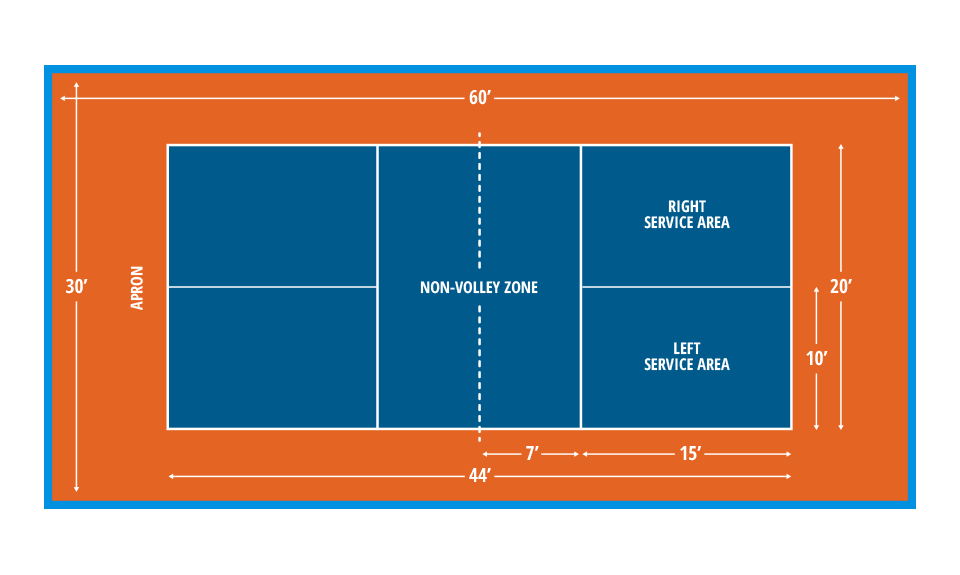
The standard size of pickleball court is 20 feet by 44 feet. This is the same for singles and doubles. The 20-foot width runs sideline to sideline. The 44-foot length runs baseline to baseline.
The net spans the 20-foot width. Each non-volley zone, also called the kitchen, is 7 feet deep on both sides of the net. From the net to the baseline is 22 feet. The total playing surface is 880 square feet.
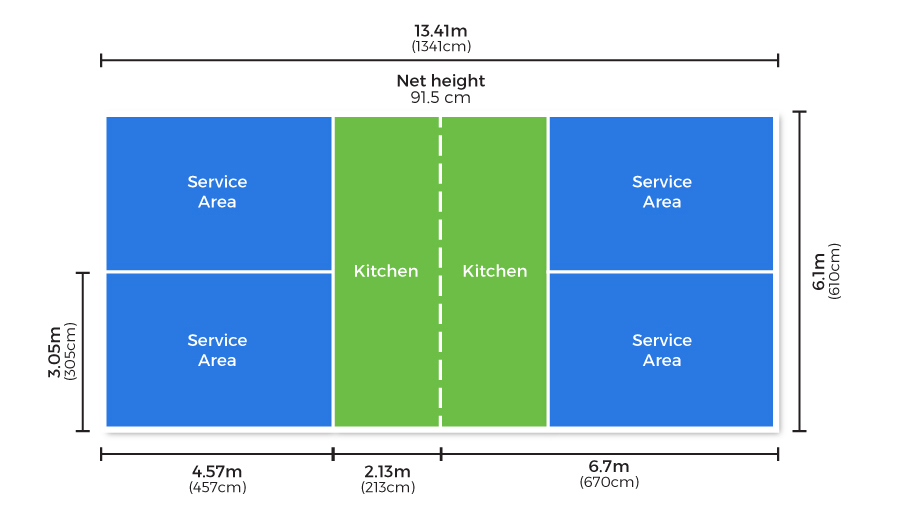
In metric terms, the size of pickleball court is 6.10 meters by 13.41 meters. The kitchen depth is 2.13 meters. The net height is 36 inches at the sidelines and 34 inches at the center, per official rules.
Court layout explained
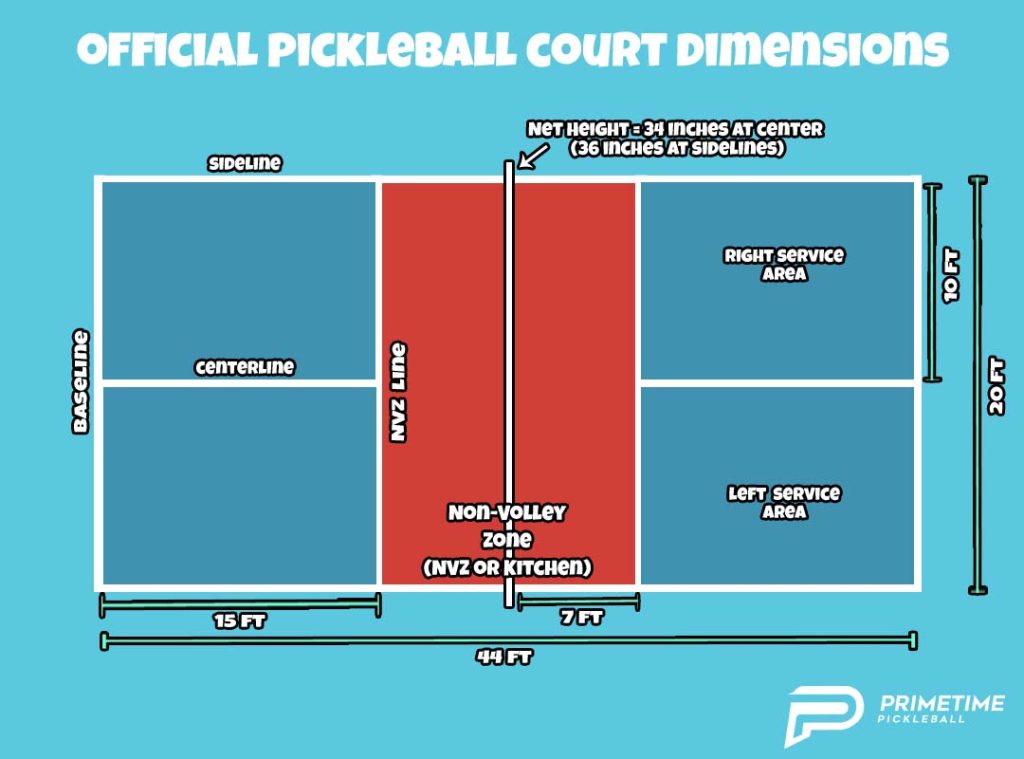
Understanding lines helps you set the correct size of pickleball court and avoid faults.
- Baselines: The back lines on each end. You serve from behind these lines.
- Sidelines: The side boundaries that set the 20-foot width.
- Non-volley zone lines: These sit 7 feet from the net on both sides. The line is part of the kitchen.
- Centerlines: These split each side into left and right service courts. They run from the kitchen line to the baseline.
- Service courts: Each measures 10 feet by 15 feet.
- Line width: All lines are 2 inches wide. Lines are part of the court, except the kitchen line is part of the kitchen.
Quick tip from the field: I always snap a chalk line for the kitchen first. That one line anchors the true size of pickleball court and keeps the rest square.

Playing area and run-off space
The official size of pickleball court covers the in-bounds surface. Safe play needs more room around it. Most facilities use a minimum total area of 30 feet by 60 feet per court. This gives 5 feet of run-off on the sides and 8 feet behind each baseline.
For events, a preferred footprint is about 34 feet by 64 feet. This adds breathing room for hard gets and lobs. Some venues go larger if space allows. When you plan the size of pickleball court at home, aim for at least 30 by 60 to reduce trips and injuries.
Singles vs doubles court size
The size of pickleball court does not change for singles or doubles. It is always 20 by 44 feet. What changes is movement and shot choices.
In singles, players cover more ground. Extra run-off is helpful. In doubles, fast hands and kitchen play rule. A standard run-off works well. Plan your space needs based on how you play most often.

Indoor vs outdoor considerations
The indoor or outdoor setting does not change the size of pickleball court. It does change how you build and maintain it.
- Surface: Outdoors often use asphalt or concrete with acrylic coatings. Indoors use wood, synthetic sports floors, or modular tiles.
- Ball choice: Outdoor balls are stiffer with more holes. Indoor balls are softer with fewer, larger holes.
- Lighting: Even lighting helps judge depth and spin. Indoors, try to limit glare. Outdoors, a north-south layout reduces sun issues.
- Ceiling height: Indoors, aim for at least 18 to 20 feet of clear height. Higher is better for lobs and safe play.
I once set lines under bright sodium lights in a gym. Shadows hid the kitchen edge. We switched to softer LED lighting and marked lines in a high-contrast color. The court felt bigger and safer without changing the actual size of pickleball court.
Building or marking your own court
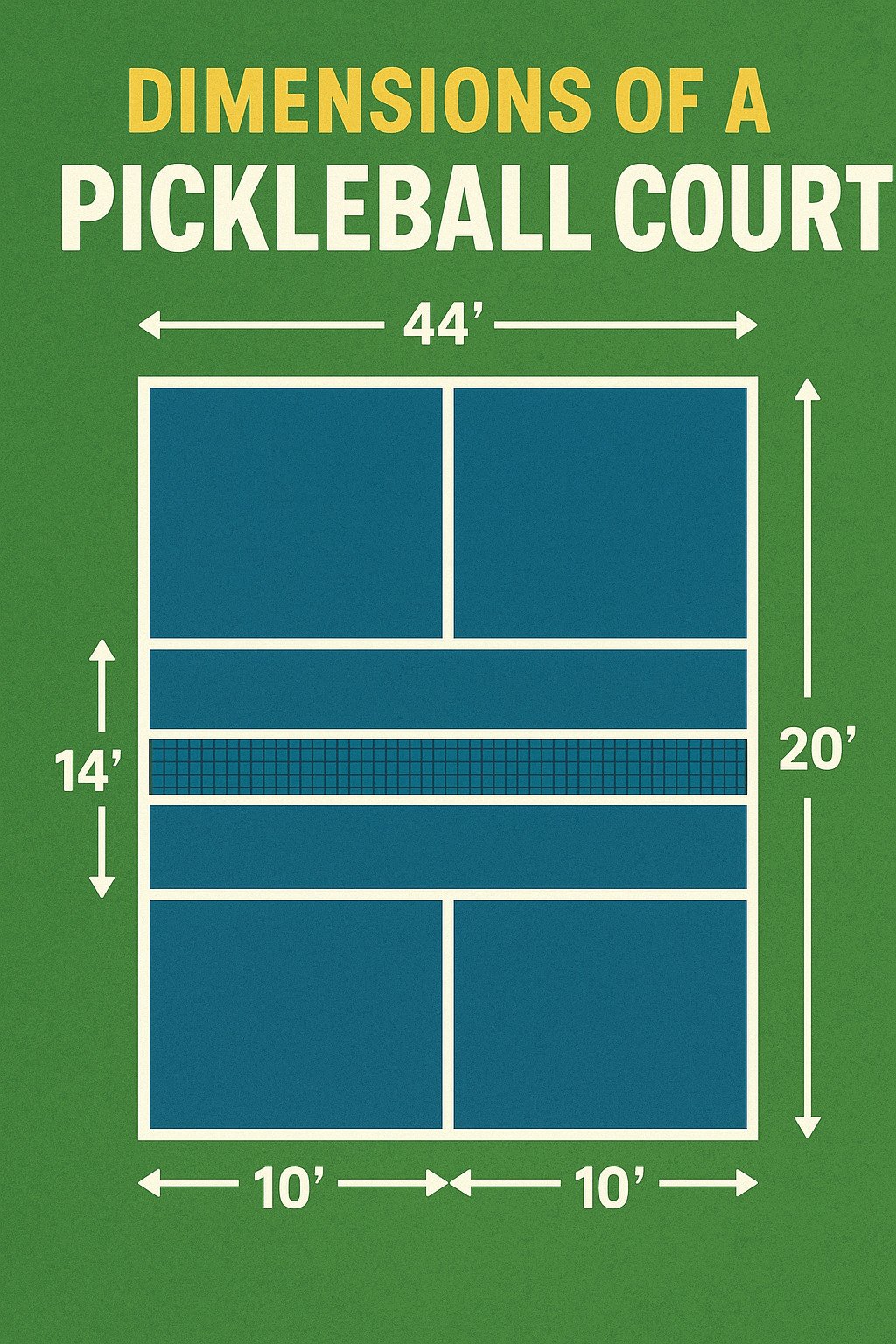
You can DIY the size of pickleball court with simple tools. Here is a step-by-step plan I use for parks and driveways.
- Gather tools: 100-foot tape measure, chalk line, painter’s tape or court tape, measuring wheel, square, and a level net system.
- Mark the 44-foot length: Snap baselines first. Measure corner to corner diagonals to confirm they match. That means it is square.
- Mark the 20-foot width: Add sidelines and check diagonals again.
- Set the kitchen lines: Measure 7 feet from the net on each side. Snap a clean line. This locks in the size of pickleball court in the middle.
- Add centerlines: Split each side into 10-foot halves and pull lines from kitchen to baseline.
- Paint or tape: Use outdoor acrylic paint or heavy-duty court tape. Keep line width at 2 inches.
- Install the net: Set 36 inches at the posts and 34 inches at center. Use a center strap for easy tuning.
Pro tip: Work from the net out. If the kitchen is right, the rest falls in place.

Converting a tennis or badminton court
Tennis conversion is common and cost-effective.
- On one tennis court, you can fit four pickleball courts. Use portable nets and tape lines. The tennis surface gives enough room for run-off.
- If you want more space, set two pickleball courts per tennis court. You get extra safety margins and fewer ball roll-throughs.
- Badminton doubles courts share the same 20 by 44 playing size. You may only need to adjust net height and kitchen marking.
Be sure to align courts to reduce sun glare if outdoors. A north-south layout helps. The size of pickleball court stays the same no matter where you place it.
Net height and equipment measurements
Net height and gear affect how true the size of pickleball court plays.
- Net height: 36 inches at the sidelines. 34 inches at the center.
- Net length: At least 21 feet 9 inches so it covers the width and attaches to posts.
- Post placement: Just outside the 20-foot width. No hardware should intrude on the court.
- Center strap: A strap keeps the middle at 34 inches. It also keeps tension even.
In my league, we check net center height before every session. A sagging net shrinks the sweet spot and changes play. A quick measure protects fairness and the intended size of pickleball court.
Common mistakes and pro tips
Avoid these errors to keep the size of pickleball court safe and accurate.
- Short run-off: Less than 30 by 60 total space invites injury. Leave room to stop.
- Wrong kitchen depth: The kitchen is a full 7 feet from the net. Measure twice.
- Thin lines: Keep lines at 2 inches wide for clear calls.
- Net too high or low: Confirm 36 inches at posts and 34 inches at center.
- Poor orientation: If outside, avoid east-west. Sun can punish servers and dinkers.
Pro tips that help day one:
- Use bright tape for indoor courts. Choose a color that contrasts the floor.
- Start with the kitchen and centerlines. These define service boxes and the feel of the court.
- If multiple courts sit side by side, leave at least 6 feet between sidelines. More space reduces interference.
These small choices preserve the intended size of pickleball court and improve play for all skill levels.
Frequently Asked Questions of size of pickleball court
What is the official size of pickleball court?
The standard playing surface is 20 feet wide by 44 feet long. This is the same for singles and doubles.
How big should the total court area be with run-off?
Aim for at least 30 by 60 feet per court. Many venues prefer about 34 by 64 feet for added safety.
How deep is the non-volley zone (kitchen)?
The kitchen is 7 feet deep on each side of the net. The kitchen line counts as part of the kitchen.
Is the net the same height across the court?
No. It is 36 inches high at the sidelines and 34 inches at the center. Use a center strap to keep it accurate.
Can four pickleball courts fit on one tennis court?
Yes. A standard tennis court can hold four pickleball courts with portable nets. You can also set two for more spacing.
Do singles and doubles use different court sizes?
No. The size of pickleball court stays 20 by 44 feet. Only tactics and movement patterns change.
What are the line widths on a pickleball court?
All lines are 2 inches wide. Lines count as in-bounds except the kitchen line, which is part of the kitchen.
Conclusion
Getting the size of pickleball court right unlocks safe play, fair points, and pure fun. Remember the basics: 20 by 44 feet for the court, 7-foot kitchens, and a total area of at least 30 by 60 feet for comfort. Take time to measure, square your corners, and set the net to 36 and 34 inches.
Now it is your turn. Use this guide to mark your space, convert a court, or audit your facility. If this helped, share it with a friend, subscribe for more how-tos, or drop a question in the comments.