16 mm paddles feel softer and steadier; 14 mm paddles feel faster and hotter.
You want the right blend of pop, control, and spin. I’ve tested dozens of paddles side by side and coached players through upgrades. This guide breaks down 14 mm vs 16 mm pickleball paddle in clear, simple terms, with real court results and practical tips. Read on to pick the thickness that matches your game.
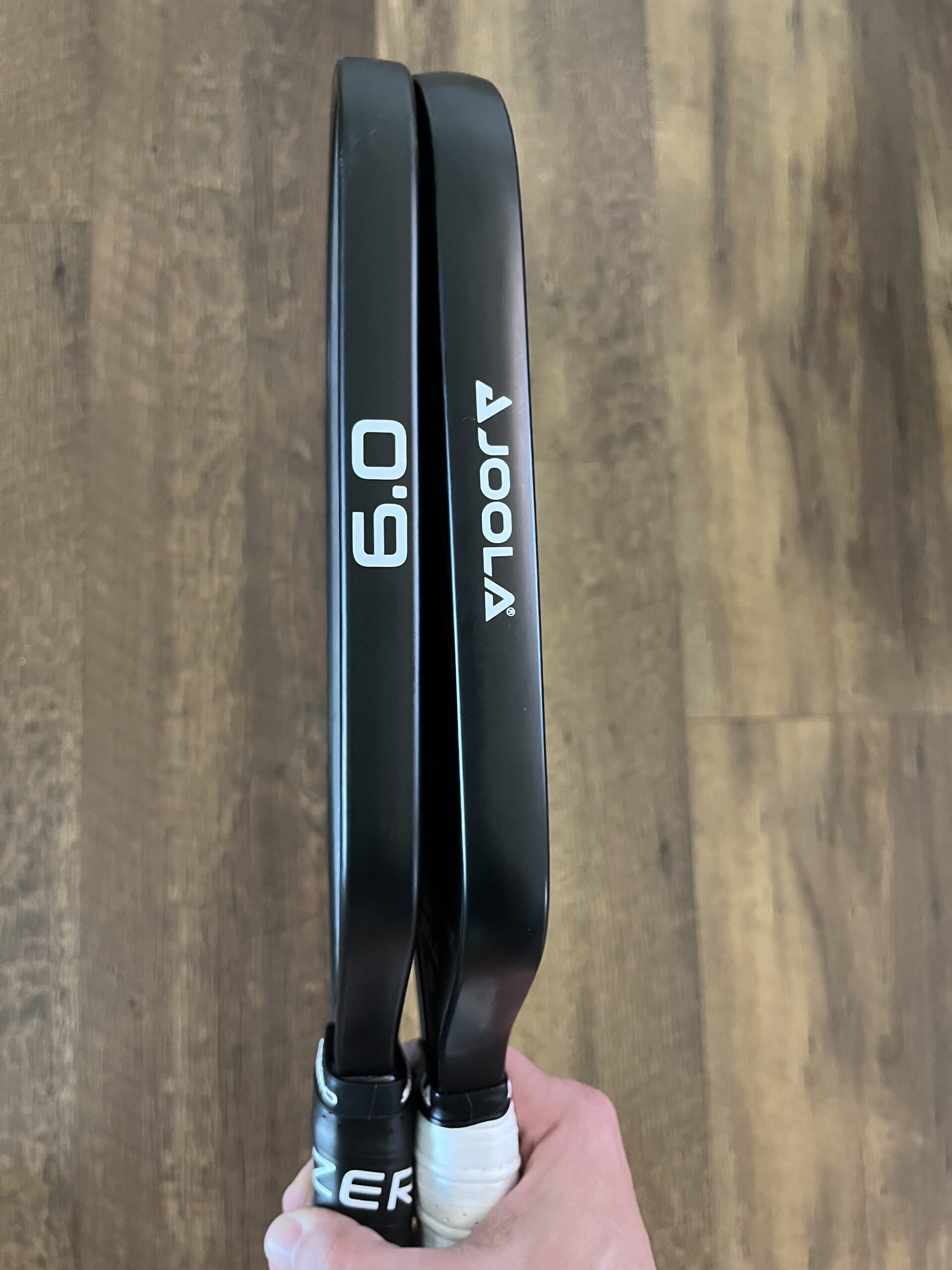
What paddle thickness means and why it matters
Paddle thickness is the depth of the core. Most modern cores are polymer honeycomb. In short, thickness affects stiffness, dwell time, and vibration. Those traits shape power, control, spin, and comfort.
A 14 mm vs 16 mm pickleball paddle may look alike on the shelf. On court, the feel is not the same. Thinner cores bend less and rebound fast. Thicker cores flex a bit more, calm the ball, and grow the sweet spot.
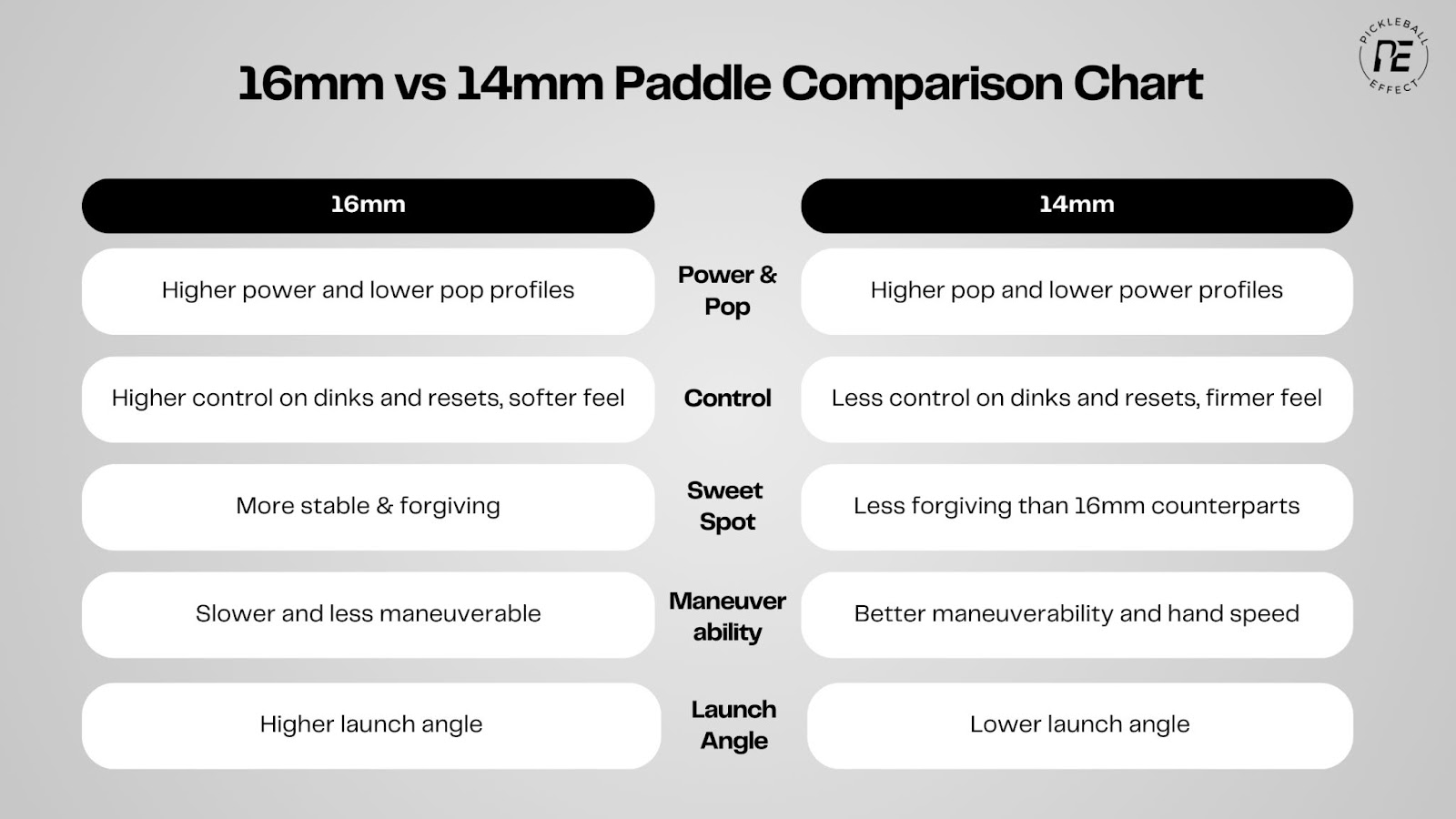
If you want a clean way to decide, think power-to-control. 14 mm leans power and pop. 16 mm leans control and stability. Face material, foam walls, and weight still matter, but thickness sets the base feel.
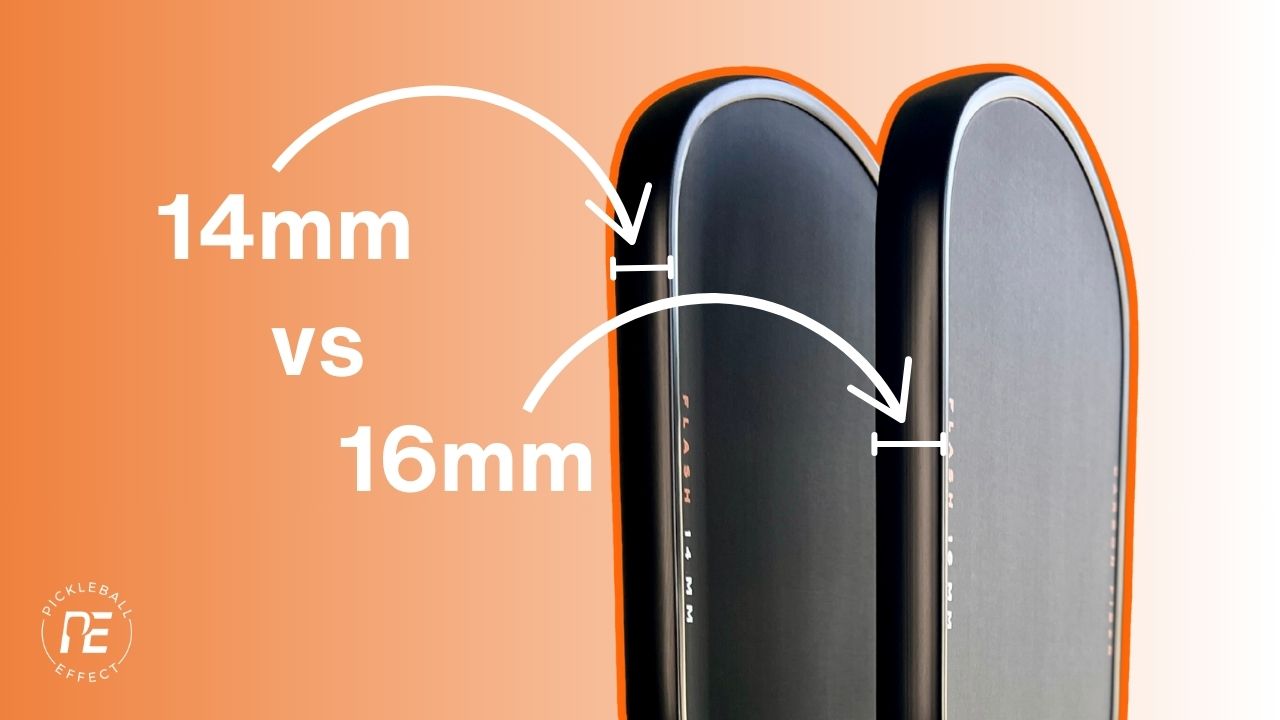
14 mm vs 16 mm pickleball paddle: key differences at a glance
Here is how the two sizes tend to play for most players.
- Power and pop: 14 mm hits hotter on fast hands battles and drives.
- Control and softness: 16 mm tames pace and helps with drops and dinks.
- Sweet spot and stability: 16 mm feels steadier on off-center hits.
- Spin help: Both can spin. 16 mm adds dwell time that can boost bite.
- Vibration and comfort: 16 mm often feels kinder on the arm.
- Touch at the net: 16 mm makes resets and blocks easier to land deep.
- Speed-ups: 14 mm jumps off the face for quick counters.
I see these traits repeat across brands. That said, a rough carbon face or foam edge can shift the needle. Compare same-model 14 mm vs 16 mm pickleball paddle for the fairest test.
Which players should choose 14 mm vs 16 mm pickleball paddle
Match thickness to your style and goals. Use these cues.
-
Choose 14 mm if:
- You like to finish at the kitchen with speed-ups.
- Your drives and counters need more heat.
- You have clean timing and want a snappy feel.
- You play more singles and value power.
-
Choose 16 mm if:
- You want fewer mishits and more forgiveness.
- You love soft games, drops, and reset battles.
- You want arm comfort and less shock.
- You play more doubles and prize stability.
New players often do best with 16 mm. It forgives more mistakes. If you crave offense and already control the ball well, a 14 mm vs 16 mm pickleball paddle test may steer you to 14 mm for extra pop.
Lab metrics and pro-style insights
You can feel the difference. You can also measure it. Here are the key numbers that shape play.
- Static weight: The paddle’s scale weight. Similar across 14 mm vs 16 mm in many lines.
- Swingweight: How heavy the paddle feels in motion. Higher swingweight adds power and steadiness.
- Twistweight: Resistance to twisting on off-center hits. 16 mm builds this up in many models.
- Coefficient of restitution: Rebound speed. Thinner cores tend to rebound faster.
- Dwell time: How long the ball stays on the face. 16 mm often shows a touch more, aiding touch and spin.
- Vibration and frequency: Thicker cores and foam walls can cut harsh feel.
USA Pickleball tests for size and surface compliance. Thickness is not capped, but most premium paddles cluster at 14 mm or 16 mm. In my hands, top 16 mm builds show higher twistweight and cleaner blocks. Top 14 mm builds show faster rebound on counters and flicks. A same-model 14 mm vs 16 mm pickleball paddle demo will reveal this fast.

Real court tests: my side-by-side results
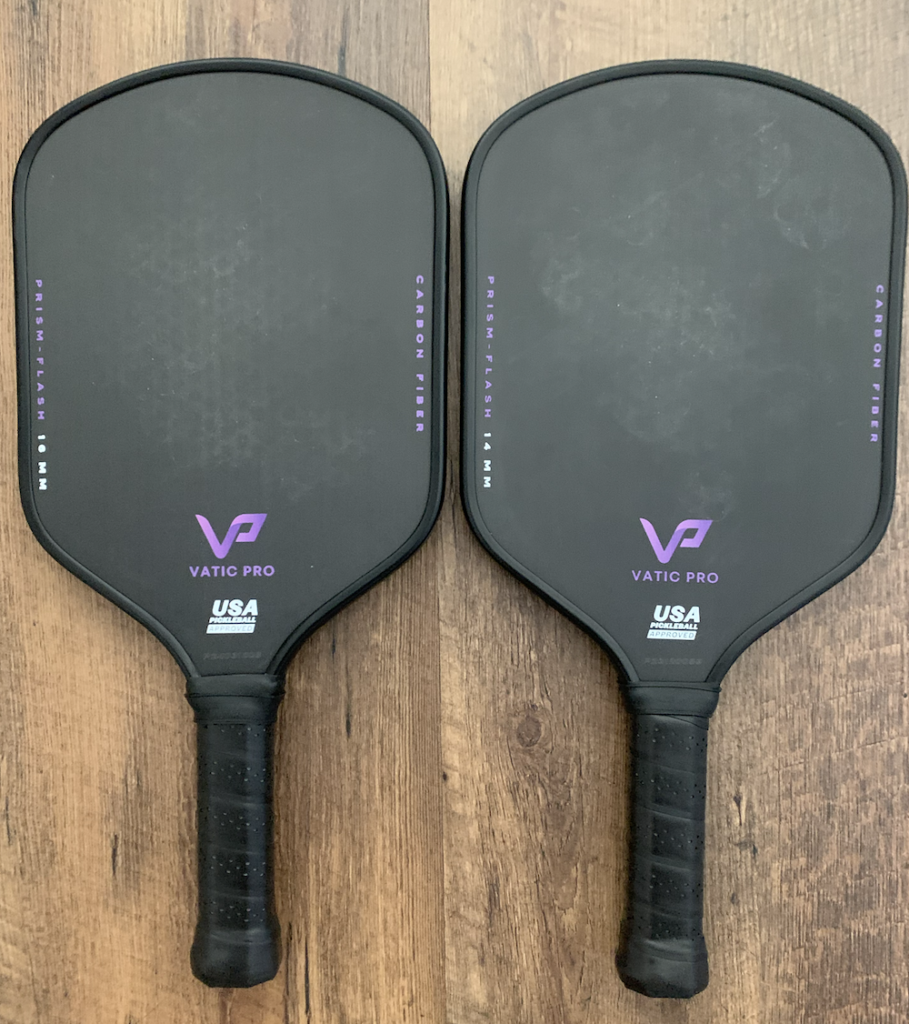
I ran simple drills with matched paddles, same brand and face, one 14 mm, one 16 mm. I kept weight equal with lead tape to be fair.
- Third-shot drops: The 16 mm held shape on mishits. Misses landed in more.
- Dinks: 16 mm helped me keep the ball soft under pressure.
- Drives and speed-ups: 14 mm jumped off the face. I won more hand battles.
- Blocks and resets: 16 mm soaked up pace and stayed straighter on the line.
- Spin: Very close. The 16 mm felt like it grabbed the ball a hair longer.
If I had a tournament on a slick indoor court, I would pick the 16 mm for control. In rec games where I hunt speed, the 14 mm vs 16 mm pickleball paddle choice tilts to 14 mm for fast counters.

How to test 14 mm vs 16 mm pickleball paddle before you buy
Bring both sizes of the same model if you can. Keep the test short and focused.
- Warm-up dinks and drops. Note if one face helps you land deep with ease.
- Block hard drives at you. Check which holds the line on mishits.
- Hit 10 drives each side. See which one adds pace without effort.
- Try five speed-ups per side. Watch how fast the ball jumps off the face.
- Serve and return. Track depth control.
- Play one to two games. Focus on resets at the kitchen.
Take quick notes. Write one sentence per paddle. Your first feel is often right. A clear 14 mm vs 16 mm pickleball paddle test keeps emotion out and facts in.

Common myths about 14 mm vs 16 mm pickleball paddle
Let’s clear the air so you can choose with confidence.
- Myth: 16 mm is always heavy. Reality: Many 16 mm paddles weigh the same as 14 mm.
- Myth: 14 mm cannot control. Reality: You can add control with weight and softer balls.
- Myth: 16 mm kills power. Reality: Good swingweight still brings heat.
- Myth: Thickness sets spin. Reality: Face texture and your stroke matter more.
- Myth: Pros only use thin paddles. Reality: Many pros use 16 mm for stability.
Your technique still drives results. Thickness just nudges the feel. A fair 14 mm vs 16 mm pickleball paddle demo will tell you more than myths.

Popular models in 14 mm vs 16 mm pickleball paddle
Many lines offer both sizes. Here are common patterns you will see in catalogs and pro shops.
- Raw carbon fiber face models: Often sold in 14 mm and 16 mm versions.
- Thermoformed frames with foam edges: Both sizes exist; 16 mm adds stability.
- Control-themed paddles: Usually 16 mm with softer cores.
- Power-themed paddles: Often 14 mm, sometimes with higher swingweight.
Look for the same face layup when you compare. That isolates thickness. A store or demo day with a clear 14 mm vs 16 mm pickleball paddle lineup is gold.
Care, maintenance, and longevity by thickness
Both sizes can last a long time with care. Edge guards protect the core from chips. Wipe the face to keep texture clean for spin. Store paddles out of hot cars.
Thicker cores can resist twisting over time. That may hold the sweet spot shape longer. But build quality matters more than thickness alone. If you hear rattles or dead spots, contact the brand. Keep proof of purchase for warranty help on your 14 mm vs 16 mm pickleball paddle.
Budget and value: is 14 mm or 16 mm worth it?
Price is set by brand, face tech, and build, not just thickness. You will find both sizes at entry and premium tiers. Do not pay more for thickness alone.
If you break down wins per dollar, buy the paddle that fixes your weakest link. If your resets float, 16 mm could be the best value. If you struggle to finish points, 14 mm may be smarter. A short test of a 14 mm vs 16 mm pickleball paddle can save you money and guesswork.
Frequently Asked Questions of 14 mm vs 16 mm pickleball paddle
Which is better for beginners, 14 mm or 16 mm?
Most beginners do better with 16 mm. It forgives mishits and aids soft shots.
Does a 16 mm paddle reduce elbow pain?
It can help. The thicker core often cuts vibration and feels softer on contact.
Will I lose power if I switch to 16 mm?
Not always. A higher swingweight 16 mm can still hit very hard.
Can I add lead tape to a 14 mm to mimic 16 mm stability?
Yes, to a point. Lead boosts swingweight and stability, but it will not change dwell time.
Which is better for singles, 14 mm vs 16 mm pickleball paddle?
Many singles players like 14 mm for pace. Some still prefer 16 mm for control on passing shots.
Do pros prefer 14 mm or 16 mm?
Both see pro use. Many pros pick 16 mm for stability and consistency in doubles.
Is thickness regulated by USA Pickleball?
No. Size and surface limits apply, but thickness is not capped.
Conclusion
Pick thickness to match your goals. Choose 14 mm if you want more pop and fast counters. Choose 16 mm if you want control, a bigger sweet spot, and calmer hands. Your best bet is a same-model test of a 14 mm vs 16 mm pickleball paddle and a quick round of game-like drills.
Give yourself one week to adapt, then judge the results. If this guide helped, share it with a partner, subscribe for more gear tips, or drop your court results in the comments.